








June 16, 2026
The Caltech president on recommitting to American science
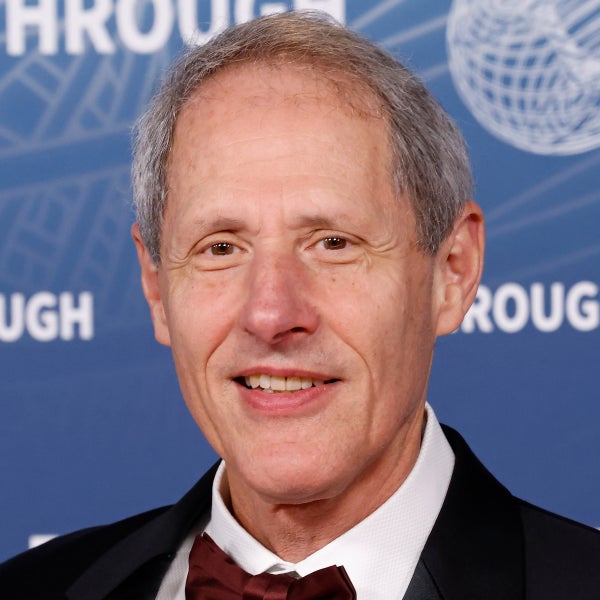
Taylor Hill/FilmMagic/Getty Images
Join Our Community of Science Lovers!
Thomas Rosenbaum is president of the California Institute of Technology and a physicist known for his research in quantum mechanics and condensed matter physics. He became Caltech’s ninth president in 2014 after serving as provost of the University of Chicago.
[This interview was edited for length and clarity.]
How would you describe the current state of American science?
On supporting science journalism
If you're enjoying this article, consider supporting our award-winning journalism by subscribing. By purchasing a subscription you are helping to ensure the future of impactful stories about the discoveries and ideas shaping our world today.
Marked by high levels of funding uncertainty, which can be incapacitating; a lack of vision for dreaming big at the federal level; and deleterious overtones of politics. At the same time, a juggernaut of discovery and innovation.
What needs to change in American science?
A recommitment to being the destination of choice for the most talented, creative individuals from every background, perspective and geographical location.
What gives you optimism right now?
The problems to be explored are compelling, and the tools available to push the boundaries of exploration have never been as powerful. Are we alone in the universe? What can quantum computers do that no classical computer can approach? How will artificial intelligence change the boundaries of disciplinary inquiry? How can genomics and proteomics and the immune system be harnessed most effectively to treat disease? We may know the answers to all these questions in the next decade or two.
What’s your best advice for an early-career scientist?
Stay true to your passions. Future generations depend on you.
How has your field changed in the past few years?
Unprecedented opportunity but also too much of a herd mentality.
It’s Time to Stand Up for Science
If you enjoyed this article, I’d like to ask for your support. Scientific American has served as an advocate for science and industry for 180 years, and right now may be the most critical moment in that two-century history.
I’ve been a Scientific American subscriber since I was 12 years old, and it helped shape the way I look at the world. SciAm always educates and delights me, and inspires a sense of awe for our vast, beautiful universe. I hope it does that for you, too.
If you subscribe to Scientific American, you help ensure that our coverage is centered on meaningful research and discovery; that we have the resources to report on the decisions that threaten labs across the U.S.; and that we support both budding and working scientists at a time when the value of science itself too often goes unrecognized.
In return, you get essential news, captivating podcasts, brilliant infographics, can't-miss newsletters, must-watch videos, challenging games, and the science world's best writing and reporting. You can even gift someone a subscription.
There has never been a more important time for us to stand up and show why science matters. I hope you’ll support us in that mission.