





June 16, 2026
Creating AI platforms to discover new therapeutics
Jessine Hein
Join Our Community of Science Lovers!
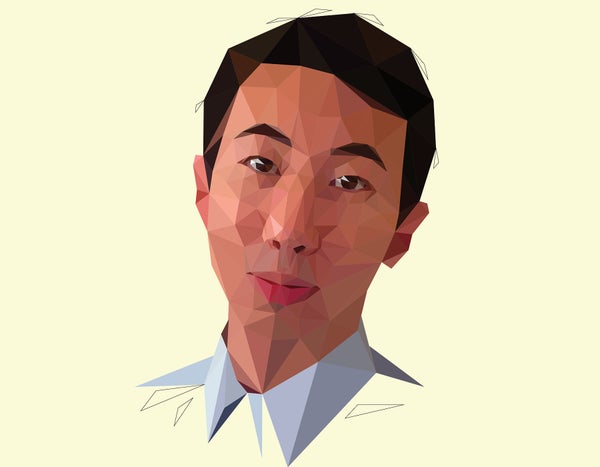
Kaiyi Jiang grew up in a family of doctors in China and saw the limits of the profession. No matter what the physicians in his family tried, sometimes their patients remained sick. So rather than go into medicine, he started thinking about how to design better drugs.
Now at Princeton University, Jiang hopes to use artificial intelligence to help answer a fundamental question in drug design: How do you get the right treatment to the right place in the body and have it work at the right time? His group is currently working on therapeutic antibodies, treatments that can spur the immune system to kill cancer cells or block cells from producing the molecules that cause inflammation. These therapies are powerful, but for some people they are toxic, and for others they stop working. That’s why Jiang’s lab is developing AI models to sort through the mind-boggling amount of data available about how the human body works. The idea is that these models will then spit out options for safer, more effective engineered antibodies and other protein-based therapies.
On supporting science journalism
If you're enjoying this article, consider supporting our award-winning journalism by subscribing. By purchasing a subscription you are helping to ensure the future of impactful stories about the discoveries and ideas shaping our world today.

Christie Hemm Klok
Jiang is worried about the current tumult in research funding. When he chose an academic path, he says, he had faculty offers from institutions in other countries, but he says the U.S. is the best place to do science. He believes industry partnerships, such as one he had with biotech firm Amgen, could help fill gaps in research funding, although industry goals can be very specific.
Jiang thinks about Nobel Prize–winning cancer therapies that came from basic questions about how the immune system controls itself, how it tells the difference between invaders and parts of the body it’s trying to protect. “People didn’t set out to cure lung cancer or to cure liver cancer or to discover the very important checkpoint-blockade drugs we have today,” he says. “They came from very basic immunology questions.”
This article is part of “The Young American Scientists,” an editorially independent project that was produced with financial support from Regeneron.
It’s Time to Stand Up for Science
If you enjoyed this article, I’d like to ask for your support. Scientific American has served as an advocate for science and industry for 180 years, and right now may be the most critical moment in that two-century history.
I’ve been a Scientific American subscriber since I was 12 years old, and it helped shape the way I look at the world. SciAm always educates and delights me, and inspires a sense of awe for our vast, beautiful universe. I hope it does that for you, too.
If you subscribe to Scientific American, you help ensure that our coverage is centered on meaningful research and discovery; that we have the resources to report on the decisions that threaten labs across the U.S.; and that we support both budding and working scientists at a time when the value of science itself too often goes unrecognized.
In return, you get essential news, captivating podcasts, brilliant infographics, can't-miss newsletters, must-watch videos, challenging games, and the science world's best writing and reporting. You can even gift someone a subscription.
There has never been a more important time for us to stand up and show why science matters. I hope you’ll support us in that mission.