

惯性聚合 高效追踪和阅读你感兴趣的博客、新闻、科技资讯
阅读原文 在惯性聚合中打开

推荐订阅源

AWS News Blog
AWS News Blog
Engineering at Meta
Engineering at Meta
T
Tailwind CSS Blog
博客园 - 【当耐特】
F
Fortinet All Blogs
博客园 - 司徒正美
Stack Overflow Blog
Stack Overflow Blog
罗磊的独立博客
Google DeepMind News
博客园_首页
A
About on SuperTechFans
博客园 - 聂微东
N
Netflix TechBlog - Medium
MongoDB | Blog
MongoDB | Blog
H
Help Net Security
GbyAI
GbyAI
O
OpenAI News
CTFtime.org: upcoming CTF events
C
Check Point Blog
S
Schneier on Security
D
Darknet – Hacking Tools, Hacker News & Cyber Security
Apple Machine Learning Research
让小产品的独立变现更简单 - ezindie.com
Martin Fowler
Martin Fowler
J
Java Code Geeks
T
Tor Project blog
T
Threatpost
G
GRAHAM CLULEY
P
Privacy & Cybersecurity Law Blog
Cyber Security Advisories - MS-ISAC
Y
Y Combinator Blog
The Register - Security
阮一峰的网络日志
阮一峰的网络日志
D
Docker
Vercel News
Vercel News
I
Intezer
Microsoft Security Blog
爱范儿
爱范儿
cs.AI updates on arXiv.org
H
Hacker News: Front Page
P
Privacy International News Feed
Cyberwarzone
Cyberwarzone
Spread Privacy
Spread Privacy
N
News and Events Feed by Topic
N
News | PayPal Newsroom
The GitHub Blog
The GitHub Blog
U
Unit 42
WordPress大学
WordPress大学
Threat Intelligence Blog | Flashpoint
Simon Willison's Weblog

Mapping the <mark>Internet</mark> on Netlas: Comprehensive Internet-Wide Scanning & OSINT Platform

Weaponized RMM: Hunting the Adversary Abuse of Remote Monitoring Tools Device Code Phishing: Technical Analysis and Proactive Hunting via Netlas Discovering Data Exposure with Netlas Telegram Bot API Abuse - Netlas Blog Using OWASP Amass with Netlas Module - Netlas Blog How we hunt C2 infrastructure at RST Cloud using Netlas - Netlas Blog Using Uncover with Netlas.io module - Netlas Blog Netlas Updates Terms and API & Data License Agreement - Netlas Blog Top 10 Hacking Devices for Ethical Hackers in 2026 - Netlas Blog Inside ClickFix: How Fake Prompts Took Over the Web Top 10 Critical Threat Actors to Watch in 2026: Ransomware, APTs & Defensive Strategies - Netlas Blog Bug Bounty 101 - A Complete Bug Bounty Roadmap for Beginners (2026) - Netlas Blog Supply Chain Attack - How Attackers Weaponize Software Supply Chains - Netlas Blog The Evolution of C2: Centralized to On-Chain - Netlas Blog From Starlink to Star Wars - The Real Cyber Threats in Space - Netlas Blog LLM Vulnerabilities: Why AI Models Are the Next Big Attack Surface - Netlas Blog When AI Turns Criminal: Deepfakes, Voice-Cloning & LLM Malware - Netlas Blog Zero-Click Exploits - Netlas Blog When Patches Fail: An Analysis of Patch Bypass and Incomplete Security - Netlas Blog I Analysed Over 3 Million Exposed Databases Using Netlas - Netlas Blog Post-Quantum Now: From AES & RSA to ML-KEM Hybrids - Netlas Blog Bug Bounty 101: Top 10 Reconnaissance Tools - Netlas Blog Mapping Dark Web Infrastructure - Netlas Blog Top Vibe-Coding Security Risks - Netlas Blog From Chaos to Control: Kanvas Incident Management Tool - Netlas Blog Bug Bounty 101: The Best Courses to Get Started in 2025 - Netlas Blog I, Robot + NIST AI RMF = Complete Guide on Preventing Robot Rebellion - Netlas Blog The $1.5B Bybit Hack & How OSINT Led to Its Attribution - Netlas Blog Hannibal Stealer: A Deep Technical Analysis - Netlas Blog Proactive Threat Hunting: Techniques to Identify Malicious Infrastructure - Netlas Blog The Pyramid of Pain: Beyond the Basics - Netlas Blog SOCMINT: Intelligence in the Social Media Era - Netlas Blog Hannibal Stealer vs. Browser Security - Netlas Blog The Largest Data Breach Ever? How Hackers Stole 16 Billion Credentials - Netlas Blog DNS Cache Poisoning – Is It Still Relevant? - Netlas Blog Modern Cybercrime: Who’s Behind It and Who’s Stopping It - Netlas Blog AI-Driven Attack Surface Discovery - Netlas Blog Netlas vs Urlscan: Tools Comparison - Netlas Blog Track Adversary Infrastructure Challenge 2025 Recap - Netlas Blog What is Threat Intelligence - Netlas Blog Netlas vs IPinfo: Tools Comparison - Netlas Blog Best Nmap Alternatives - Netlas Blog Whois History: How to Check the Domain Owner History - Netlas Blog Top WHOIS & RDAP Tools for Fast IP Address Lookup - Netlas Blog ASN Lookup Explained: Tools, Methods & Insights - Netlas Blog How to Detect CVEs Using Nmap Vulnerability Scan Scripts - Netlas Blog Nmap Cheat Sheet: Top 10 Scan Techiques - Netlas Blog Netlas vs ZoomEye: Platforms Comparison - Netlas Blog Top 6 Most Widely Used Port Scanners in Cybersecurity - Netlas Blog FAQ: Understanding Root DNS Servers and the Root Zone - Netlas Blog Domain Recon: Must-Know Tools for Security Professionals - Netlas Blog DNS History: Exploring Domains Past by Inspecting DNS Trails - Netlas Blog DNSSEC: Should You Use It? An Expert’s View on the Pros, Cons, and When to Implement - Netlas Blog Which DNS Servers Offer the Best Balance of Speed, Security, and Privacy? - Netlas Blog theHarvester: a Classic Open Source Intelligence Tool - Netlas Blog - Netlas Blog Top 15 OSINT Tools for Expert Intelligence Gathering - Netlas Blog A Deep Dive into the Open Web Application Security Project Top 10 Vulnerabilities - Netlas Blog Using Subfinder with Netlas Module - Netlas Blog Netlas Chrome and Firefox Extensions - Netlas Blog Netlas vs Censys: Platforms Comparison - Netlas Blog OSINT in Cybersecurity: Exploring Its Spectrum and Tech - Netlas Blog Best Honeypots for Detecting Network Threats - Netlas Blog Using Maltego with Netlas Module - Netlas Blog Using theHarvester with Netlas - Netlas Blog Using TLDFinder with Netlas - Netlas Blog Netlas vs Fofa: Platforms Comparison - Netlas Blog Netlas vs Shodan: Platforms Comparison - Netlas Blog Google Dorking in Cybersecurity - Netlas Blog 7 Tools for Web Penetration Testing - Netlas Blog Using DNS History in Cybersecurity - Netlas Blog Mastering Online Camera Searches - Netlas Blog Best Attack Surface Visualization Tools - Netlas Blog Complete Guide on Attack Surface Discovery - Netlas Blog
How to find unprotected databases with Netlas.io: Chapter 2 - Netlas Blog
Vyacheslav Makhrov · 2024-01-22 · via Mapping the <mark>Internet</mark> on Netlas: Comprehensive Internet-Wide Scanning & OSINT Platform

In the article I will continue to tell you about unprotected DBMSs that can be found using Netlas. In case you have not read the first part, it is available at OSINT Ambition Blog.

Here we will look at three new cases with completely unprotected databases, as well as several additional searches that may allow you to expand your perimeter. In addition, I added a small block devoted to the principles of checking databases for security. I hope it will be useful too.

In this article, as you already understood, we will touch on some published to the world databases. Some instances do not have password protection. You must remember that it still belongs to someone. Accessing such data without the owner’s permission may be considered a crime. Netlas does not access or copy any data from databases during the Internet scanning process. Therefore, there is nothing wrong with doing research by using Netlas. However, you should not attempt to access any databases found on Netlas without permission from the owner.

MongoDB

MongoDB is a database management system, one of the classic examples of NoSQL systems. It is widely used in thousands of projects due to its convenience. Let’s see how you can find these bases using Netlas.

To find all databases available in Netlas, use the following query:

This dork will return over fifty thousand results:
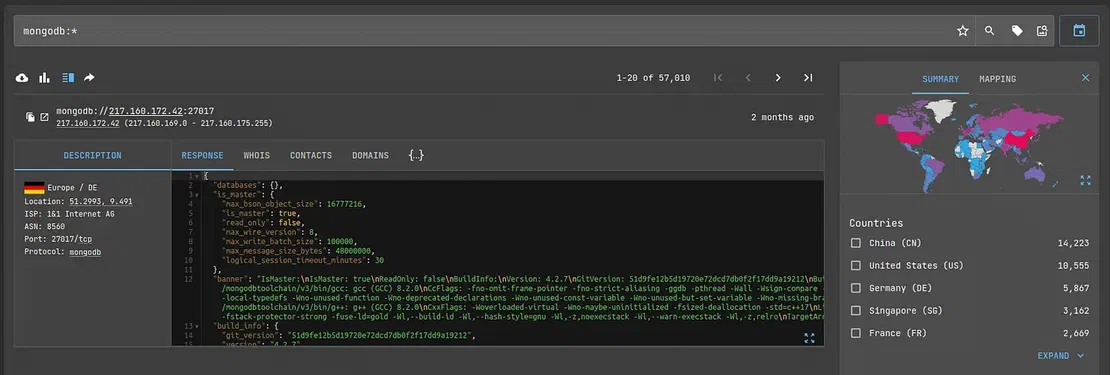
Netlas results for all MongoDB instances Netlas results for all MongoDB instances

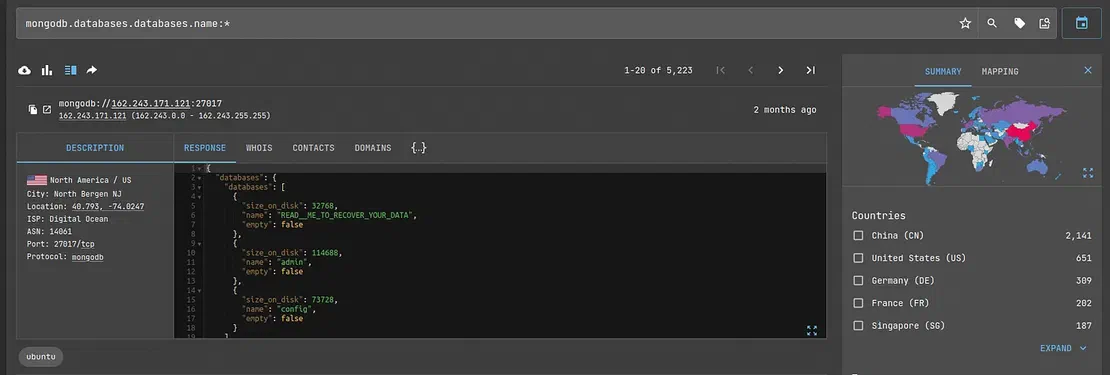
However, as in the first article, we are not interested in all available databases. To find unsecured MongoDB databases, use the following query:

mongodb.databases.databases.name:*
Open in Netlas →

Unsecured MongoDB databases found in Netlas Unsecured MongoDB databases found in Netlas

Often, the logic of requests may not be clear to those who are not familiar with Netlas or the object considered in it. It is for these people that I want to explain why the request was drafted in this way.

So what is the point of this request? The point is that if the database is password protected, Netlas will not get the name of the database, indices, etc. In this example, we are accessing the name field of the database. If such a field is present, regardless of what is entered, the scanner has gained access to it. Therefore, the database is not secure.

Therefore, we found an unsecured MongoDB. You can see that there are about ten percent of the total number of databases stored by Netlas. Not so much, but not little either. Can we find anything else related to this system?

Yes, actually, we can.

For simplified database management, there is the so-called MongoDB Express. This web-based interface provides administrators with convenient tools for their needs. Moreover, of course, such interfaces can become the target of an attack. Especially if the database itself is, for some reason, inaccessible from the Internet.

So, to find the desired interface without a password, use dork:

http.headers.set_cookie:"mongo-express" AND http.status_code:200

Open in Netlas →

This will return to you all Expresses available through Netlas that the scanner was able to successfully parse. There are few of them, but such a point of interest for an attacker is still worth keeping in mind.
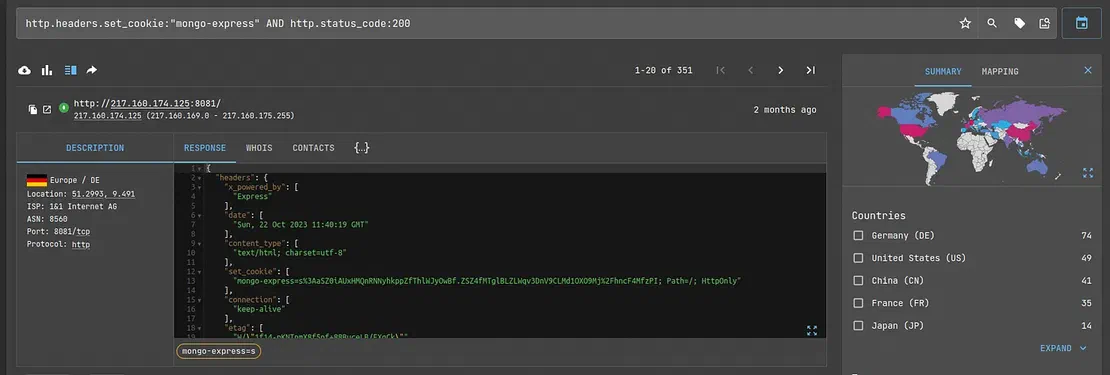
MongoDB Express interfaces exposed without authentication MongoDB Express interfaces exposed without authentication

At this stage, researchers may discover an interesting point. The vast majority of such databases have already been noticed and attacked by attackers. So, in one of the previous screenshots, you may have noticed the unusual name of the database:
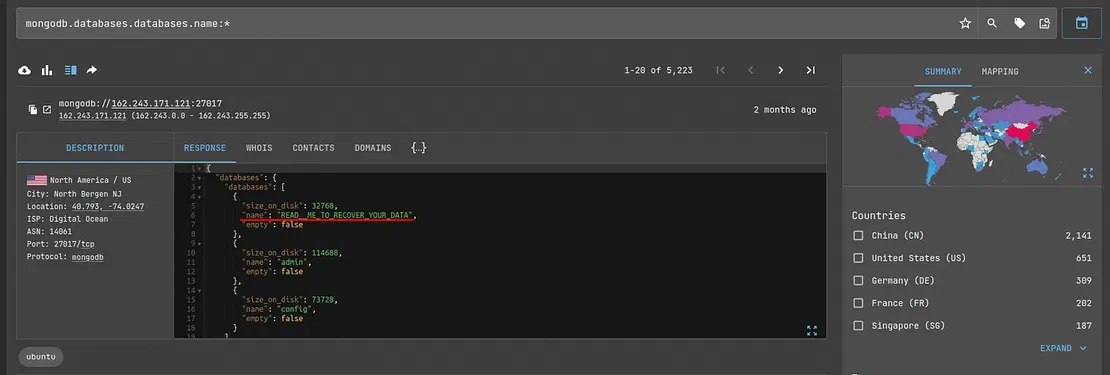
Compromised MongoDB database with attacker-created content Compromised MongoDB database with attacker-created content

Obviously, hackers have already reached this database and stolen all the valuable information from there. The situation is similar with Express. Almost all objects that are not password-protected look something like this:
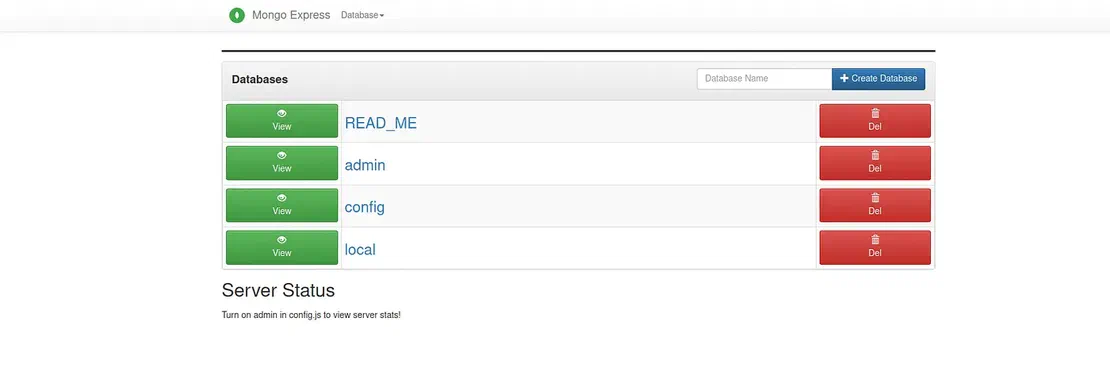
MongoDB Express instance showing ransom note MongoDB Express instance showing ransom note

The READ_ME file contains a ransom demand; otherwise, the data will not be returned.

As you can see, database security is a very important point.

CouchDB

Document-oriented database management system with open-source code and a free distribution model. It is a project of the Apache Foundation and is quite popular.

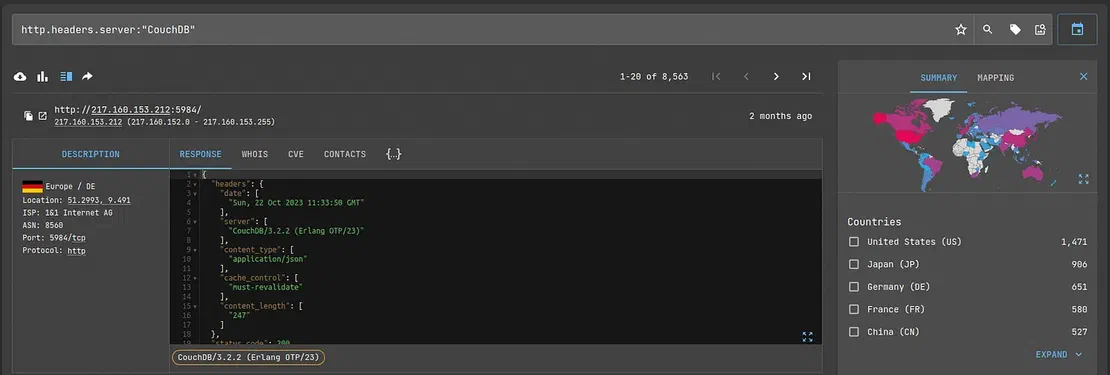
The following query will help you find these bases in Netlas:

http.headers.server:"CouchDB"
Open in Netlas →

Netlas search results for CouchDB instances Netlas search results for CouchDB instances

Now you need to check which objects a potential hacker can have access and which do not. There are two options for this:

  1. Use REST API (most convenient if you need to check many databases; it is convenient to automate);
  2. Use the Fucon interface, which is more suitable for manual processing.

Let’s say I chose the first option. Then, to open one of the databases, I need to enter the following query into the search bar:

http://IP_ADDRESS:PORT/\_utils/

Where IP_ADDRESS and PORT are the corresponding values from Netlas’ answer.

In most cases, you will see this:
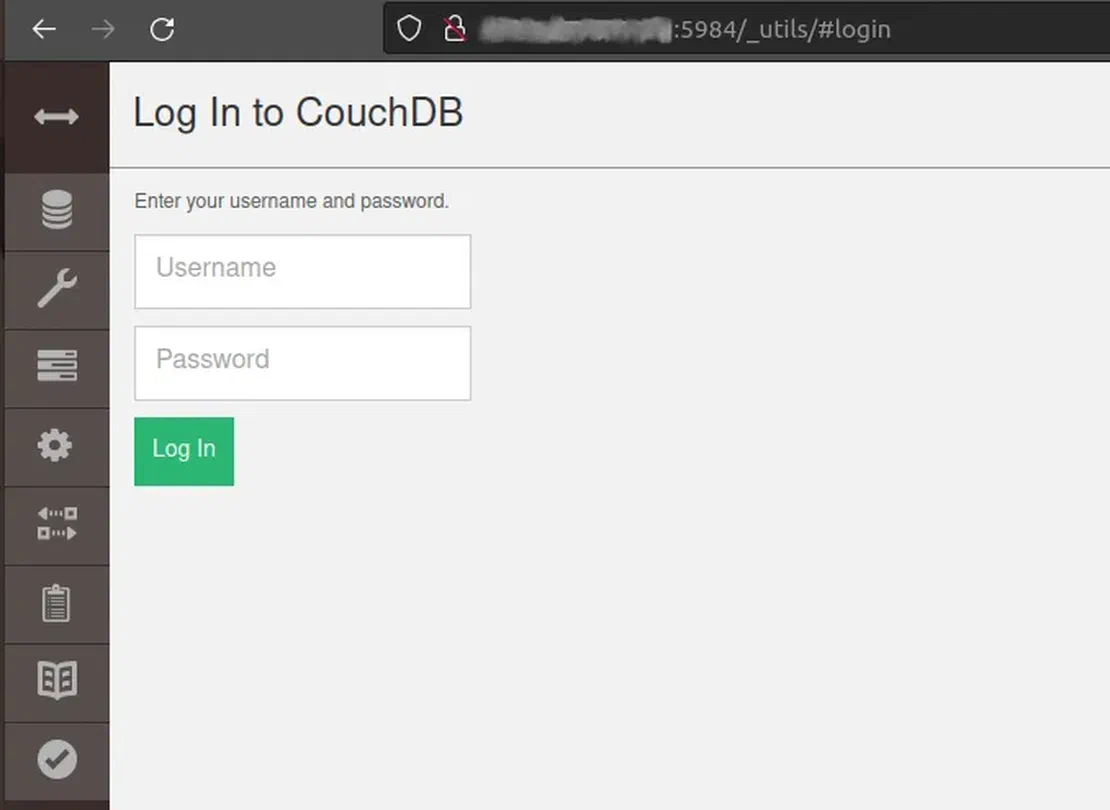
CouchDB interface requesting authentication CouchDB interface requesting authentication

However, we must not forget that CouchDB can create a database without password protection, which means that otherwise, I would be able to gain access to someone else’s information. Which, of course, would be disastrous for the owner.

Ceph

Ceph is a software object network that provides various data access interfaces.

To find objects of this network in Netlas, use the query:

http.favicon.hash_sha256:3db088b4089dee70dfd305a4e200dc72c9ad7d78ffd28ffe36608eaf46591bcd

Open in Netlas →

This will return several hundred results:
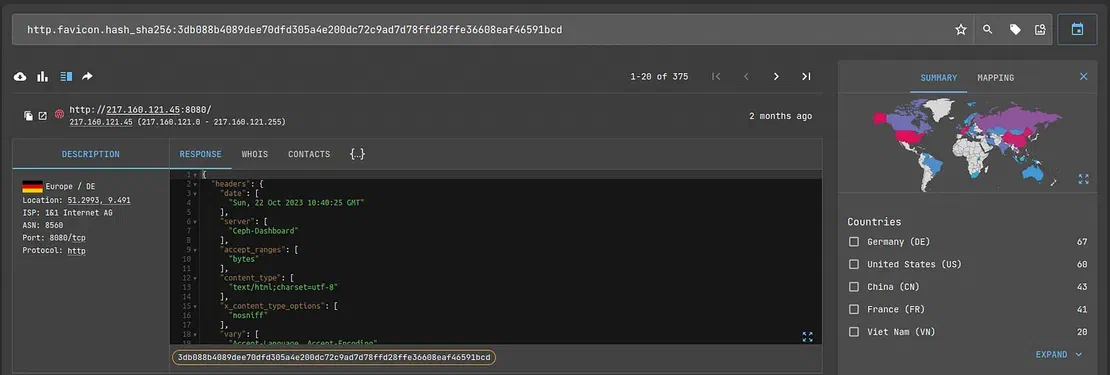
Netlas results for Ceph-related web interfaces Netlas results for Ceph-related web interfaces

Not very much results, and besides, these objects are usually protected by passwords. Go ahead.

phpMyAdmin

Web interface that allows you to administer MySQL. It is also quite a popular and often-used solution in practice.

To find these objects in Netlas, you can use two different queries.

If your subscription supports the use of tags, write:

Otherwise, use:

http.favicon.hash_sha256:e2905705920b2636309d785c2df3f155d6379b0aa9a44dc7831524505fa2defd

Open in Netlas →

The second option will return slightly fewer results, but even so, their number is close to one hundred thousand.
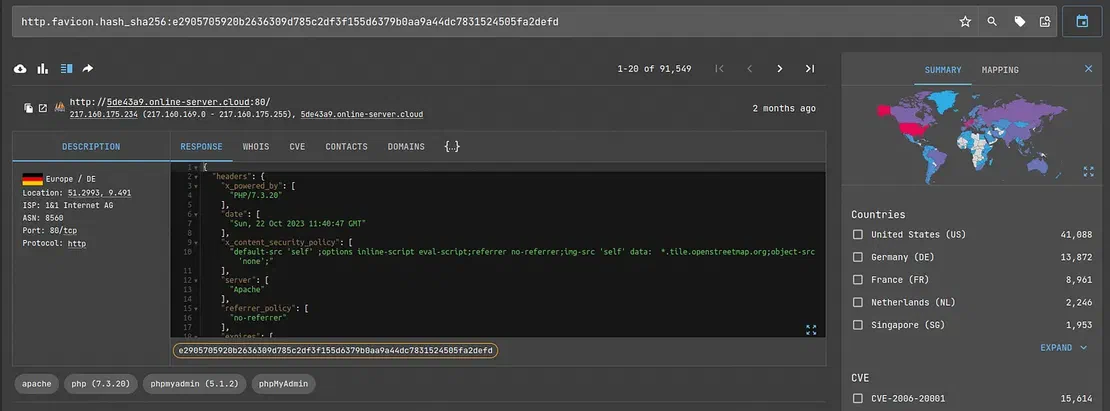
Netlas results for phpMyAdmin interfaces Netlas results for phpMyAdmin interfaces

PostgreSQL

PostgreSQL is a free object-relational database management system. You can use it on a variety of operating systems, including BSD, Linux, macOS, Windows, and others. Perhaps, of all the databases considered, it is the most popular.

To find all these databases in Netlas, use the following query:
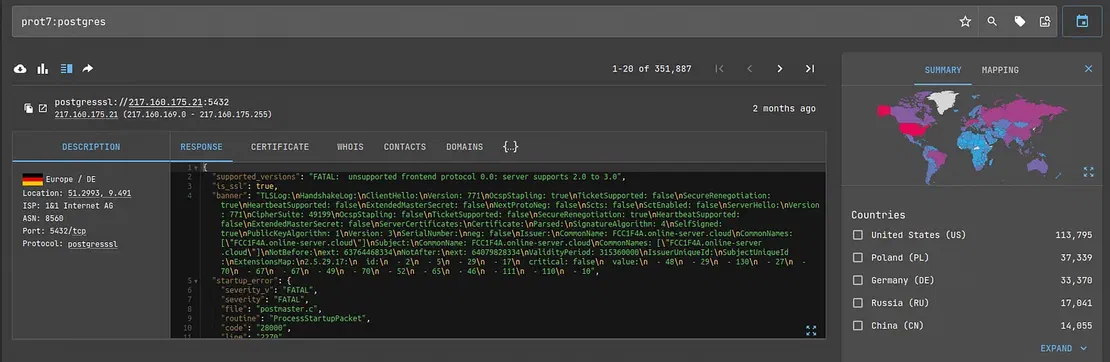
Open in Netlas →

Netlas results for PostgreSQL services Netlas results for PostgreSQL services

These are not all DBs and storages that Netlas can detect. You can see a more complete (but not the maximum possible!) list in our dork repository:

https://github.com/netlas-io/netlas-dorks

Security check

So how can you check if the database you are researching is secure?

The first option is to select a password. Let’s say the client you’re pen testing didn’t change it when they brought up the database. It looks secure, but it is enough to enter the well-known “root” or “admin” to gain access to the information.

You can look at examples of standard passwords on our GitHub repository (in fact, there are many interesting things there):

https://github.com/netlas-io/netlas-cookbook#default-logins-and-passwords

You can also send commands to the database to see its response/lack thereof. This is especially convenient with SQL databases. If a response was received, then, obviously, the information is not protected in any way.

Recommended Reading

I Analysed Over 3 Million Exposed Databases Using Netlas

Conclusion

This article closes the topic of databases that can be found using Netlas. There are undoubtedly many more, and I will be very glad if you find something that was not mentioned in this article.

In any case, I recommend that you be as careful as possible with the information that belongs to you. As we saw with the unfortunate MongoDB nodes, bad guys are not asleep.

Good luck!