







Compliance expectations across SMB markets are rising as supply chain regulations and cyber insurance requirements raise the baseline for security maturity. Regulatory standards such as CIS Controls v8, the NIS2 Directive, ISO 27001, SOC 2, PCI DSS, HIPAA, Cyber Essentials, CMMC 2.0, DORA, and the Essential Eight now shape what that baseline looks like.
These requirements now extend beyond traditionally regulated sectors into manufacturing, retail, financial services, healthcare, defense supply chains, and technology providers, requiring even small businesses to demonstrate verifiable technical security controls.
MSPs must now deliver security architectures that are both prevention-first and audit-ready without increasing operational friction. Compliance is no longer a periodic documentation exercise. It is an operational expectation embedded in daily security practices.
In our recent webinar, MSP Strategic Defense: Where Prevention Meets Compliance, we outlined why dynamic attack surface reduction is foundational to modern MSP compliance strategies and a driver of recurring revenue growth.
Below are the key questions MSPs are asking about dynamic attack surface reduction, compliance, and Compliance-as-a-Service, with clear, practical answers drawn from the session.
Compliance is no longer limited to healthcare and legal sectors. Supply chain mandates, cyber insurance underwriting standards, and recognized security frameworks are raising expectations across industries, including manufacturing, retail, automotive, professional services, and technology suppliers. As regulatory requirements cascade through supply chains, and insurers demand verifiable technical safeguards before issuing or renewing policies, even small businesses must demonstrate measurable security controls.
For MSPs, this shift creates both responsibility and opportunity. Demand for structured compliance management is increasing as organizations seek help navigating regulatory mandates and meeting cyber insurance underwriting criteria. Regulated industries offer stronger competitive positioning, and Compliance-as-a-Service is emerging as a recurring revenue model. What was once treated as a checkbox exercise is now a strategic growth lever for MSPs prepared to align prevention with compliance.
While compliance does not automatically ensure security, strong security controls directly support compliance requirements. Modern regulatory and industry standards increasingly emphasize identity and access management, attack surface reduction, controlled use of administrative tools, and operational resilience. These security controls reflect how modern attacks operate, particularly those that abuse legitimate system functionality.
By reducing unnecessary privileges and restricting misuse of native tools such as PowerShell, WMI, and BitLocker, MSPs can prevent living-off-the-land techniques frequently used in ransomware and lateral movement campaigns. Prevention-first security reduces attacker dwell time, strengthens audit readiness, and makes compliance measurable and defensible.
Living-off-the-land (LOTL) attacks occur when threat actors use legitimate system tools to perform malicious actions. Because these tools are native to the operating system, traditional detection mechanisms often struggle to distinguish legitimate administrative activity from abuse. This makes LOTL techniques particularly difficult to detect in environments that rely primarily on reactive controls.
These techniques are frequently used in ransomware and lateral movement campaigns because they bypass legacy signature-based defenses and exploit trusted system functionality. From a compliance perspective, this creates measurable risk, as modern standards increasingly require organizations to control administrative tool usage and reduce unnecessary attack surface. Reducing tool misuse and enforcing least privilege directly strengthens compliance posture and overall security maturity.
Dynamic attack surface reduction is a prevention-first security approach that continuously limits unnecessary system functionality, administrative tool access, and privilege exposure to reduce opportunities for attackers. Rather than relying solely on detection, it restricts how legitimate system tools can be used, limiting the techniques frequently exploited in living-off-the-land attacks.
In the context of compliance, dynamic attack surface reduction provides measurable control over administrative tool usage and privileged access. This aligns directly with modern requirements around identity management, least privilege, system hardening, and attack surface reduction mandates found across major regulatory standards. By shrinking the attack surface before exploitation occurs, MSPs strengthen both security posture and compliance readiness.
Manual audits and static compliance checklists do not scale across diverse SMB environments. As regulatory expectations and cyber insurance requirements expand, MSPs require continuous visibility into technical controls rather than periodic assessments that quickly become outdated.
To operationalize compliance management efficiently, MSPs need continuous validation of security controls, automated mapping to recognized standards, and real-time reporting that supports audit readiness. When combined with dynamic attack surface reduction, automation minimizes ticket noise and administrative burden while delivering measurable compliance outcomes, strengthening insurability, and protecting service margins.
Compliance-as-a-Service for MSPs is a structured offering that integrates continuous compliance management, security control validation, framework alignment, reporting, and advisory support into an ongoing managed service. Rather than treating compliance as a one-time audit preparation exercise, it embeds compliance monitoring and evidence generation into daily security operations.
When built on dynamic attack surface reduction and automated control validation, Compliance-as-a-Service becomes scalable and defensible. MSPs can provide measurable visibility into technical safeguards, demonstrate alignment with recognized compliance standards, support audit readiness, and help clients meet evolving cyber insurance underwriting requirements without significantly increasing operational overhead. This transforms compliance from a reactive requirement into a recurring revenue model anchored in prevention-first security.
Compliance-as-a-Service shifts compliance management from periodic documentation to continuous control validation. Instead of preparing for audits once a year, MSPs embed compliance monitoring into daily operations through automated control mapping, reporting, and dynamic attack surface reduction.
By combining prevention-first security with real-time compliance visibility, MSPs can provide defensible evidence of technical safeguards rather than static attestations. This approach reduces risk, supports regulatory alignment, improves insurability, and transforms compliance from a checkbox exercise into an operational maturity model.
Compliance no longer begins with documentation. It begins with architecture. As regulatory scrutiny and cyber insurance underwriting standards become more stringent, embedding dynamic attack surface reduction into daily security operations allows MSPs to strengthen security posture, simplify compliance management, and build scalable Compliance-as-a-Service offerings. Prevention-first security is not an add-on to compliance. It is the foundation.
Watch the On-Demand Webinar
To see how dynamic attack surface reduction enables scalable compliance in real MSP environments, watch our on-demand webinar, MSP Strategic Defense: Where Prevention Meets Compliance. 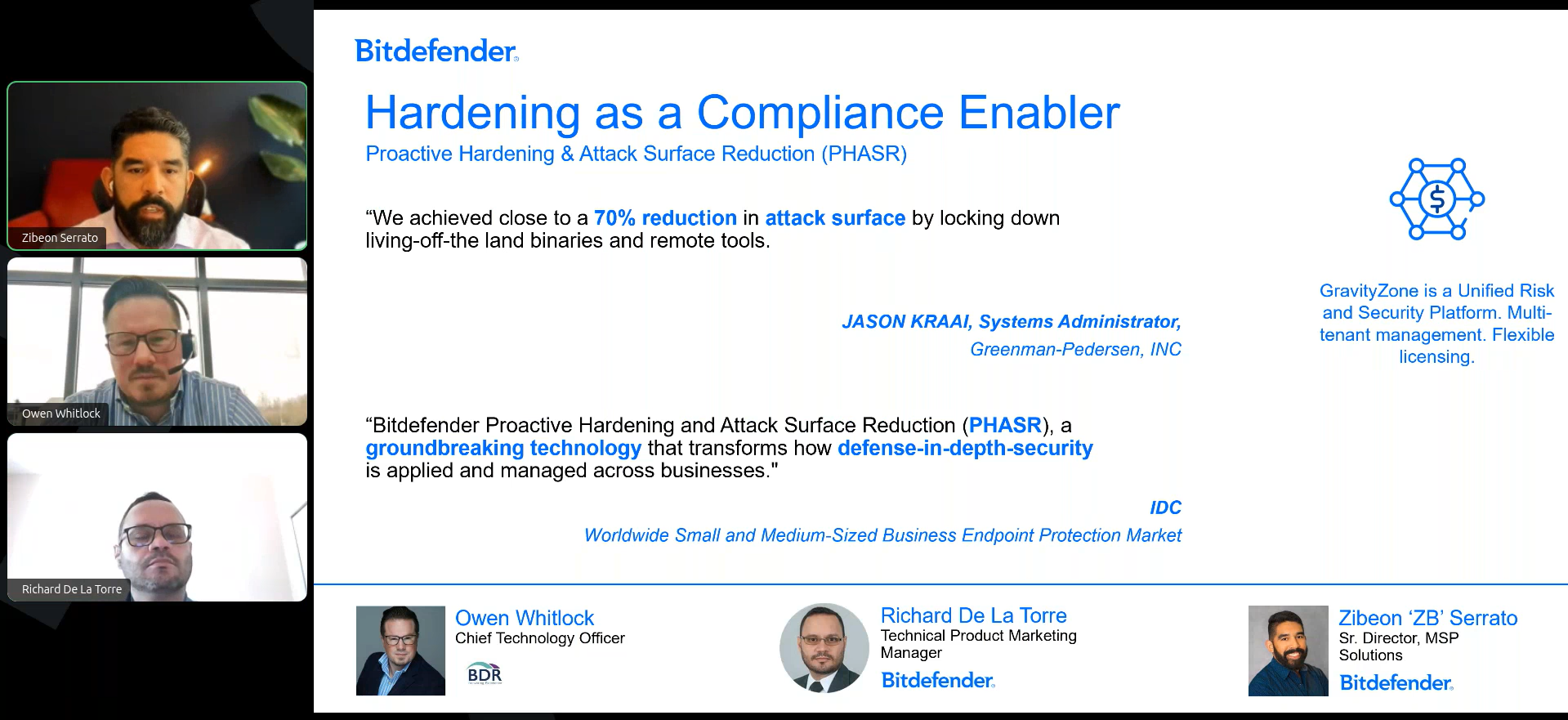
此内容由惯性聚合(RSS阅读器)自动聚合整理,仅供阅读参考。 原文来自 — 版权归原作者所有。