
While the current chief, Dror Bin, faced economic turbulence with the pandemic and the Hamas war, the next CEO will be in charge of guiding Israel to the age of AI, experts told the Post.




The dollar, Israel’s expansion into deep tech fields, and expansion into global markets are what experts see as the main challenges that the new head of Israel Innovation Authority will face, following Dror Bin's announcement that he is stepping down from his role.
Bin, who has been CEO of IIA since 2021, led the authority during challenging times, including the post-pandemic period and the war with Hamas, amid economic turbulence marked by fighting and a workforce with many people on reserve duty.
But the challenges ahead are different, according to several experts who talked with The Jerusalem Post. Moran Ben Gigi, head of technology consulting at KPMG Israel, said that one challenge will be keeping Israel’s workforce competitive even amid a weak dollar and high salaries.
“We must invest heavily in 'AI Fitness' for junior developers, maximizing their productivity to maintain Israel's hiring attractiveness while simultaneously building our next generation of talent,” he said.
Tal Lutzky, Co-founder and CEO of Plantopia, told the Post that exchange rate fluctuations pose a challenge that also helps create strong, successful, and profitable companies.
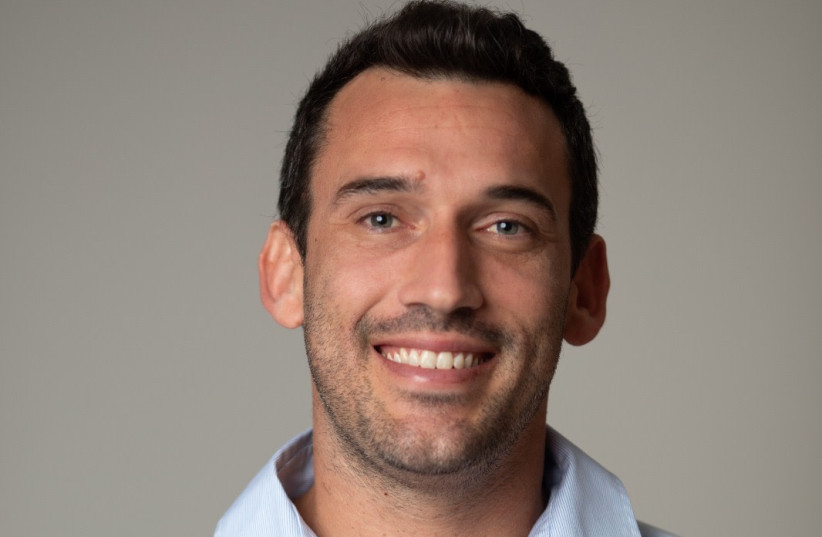
“Beyond short-term support mechanisms, the Innovation Authority's long-term role is to help Israeli companies build sustainable competitive advantages, scale globally, and become strong enough to withstand macroeconomic shocks, including currency volatility,” he explained.
In the short term, Lutzky argued that “while exchange rate policy is not within the Authority's mandate, it could consider temporary grant adjustment mechanisms that take material currency fluctuations into account, helping companies maintain the purchasing power and development capacity originally reflected in approved budgets.”
Or Haviv, head of innovation at Arieli Group, said that a key challenge will be the push towards “deep tech,” investing in more complex, science and engineering-driven fields such as semiconductors, hardware, energy, biotech, and life sciences.
Haviv explained that Israel’s innovation ecosystem has a large number of Software-as-a-Service (SaaS) and cybersecurity companies that serve as the engine of the sector, but this needs to change over the next few decades.
“Around the world, we are seeing an accelerating shift toward deep-tech investment, driven by the understanding that these are the sectors that will generate competitive advantage and economic value in the decades ahead,” he said.
Lutzky agreed with this, saying that the next IIA CEO needs to push for Israeli companies not only to be founded in the country but also to keep operating, developing products, and even manufacturing locally.
“The next decade will be defined not only by startup creation, but by the ability to build globally significant companies that create long-term economic value, jobs, and strategic capabilities locally,” he said.

For Arik Feingold, chairman and president of Commit, the next milestone will be the development of “Physical Artificial Intelligence,” which is systems that intersect AI with the physical world.
“This is where our comparative advantage in planning, creativity, and integration truly shines,” he explained.
“If we steer the Innovation Authority toward encouraging deep-tech solutions that bridge AI with field operations, manufacturing, and industry, we will ensure the resilience of our ecosystem during these challenging times and also the next growth engines for the Israeli economy," he added.
Finally, attorney Yael Baratz, a partner at the Pearl Cohen Zedek Latzer Baratz firm, said that the investment in AI creates a legal framework challenge for Israel that will be among the first tasks for the next IIA CEO.
“What is known as the 'R&D Law' was drafted for an earlier era, when innovation was more closely associated with traditional industrial R&D, manufacturing infrastructure, and tangible products. Today, much innovation is software-based and service-oriented,” she explained.
“The challenge is even sharper in AI, where value may lie in training data, models, algorithms, compute infrastructure, and continuous post-deployment learning on a cloud, rather than in a standalone end product that was developed and is manufactured in Israel,” she added.
According to her analysis, the authority’s new leadership will have to deal with this “legal uncertainty” by “adapting interpretation, regulations, guidance, and potentially legislation to technology the original law did not anticipate.”
此内容由惯性聚合(RSS阅读器)自动聚合整理,仅供阅读参考。 原文来自 — 版权归原作者所有。