






Architect Dov Koren was 61 years old when the chest pains started. For several weeks, he went between doctors who insisted it was nothing: A cracked rib at most. Only after he arrived at the emergency room did the harsh diagnosis land on the family. Out of nowhere, with no history of underlying illnesses or heavy smoking, it turned out he had metastatic lung cancer.
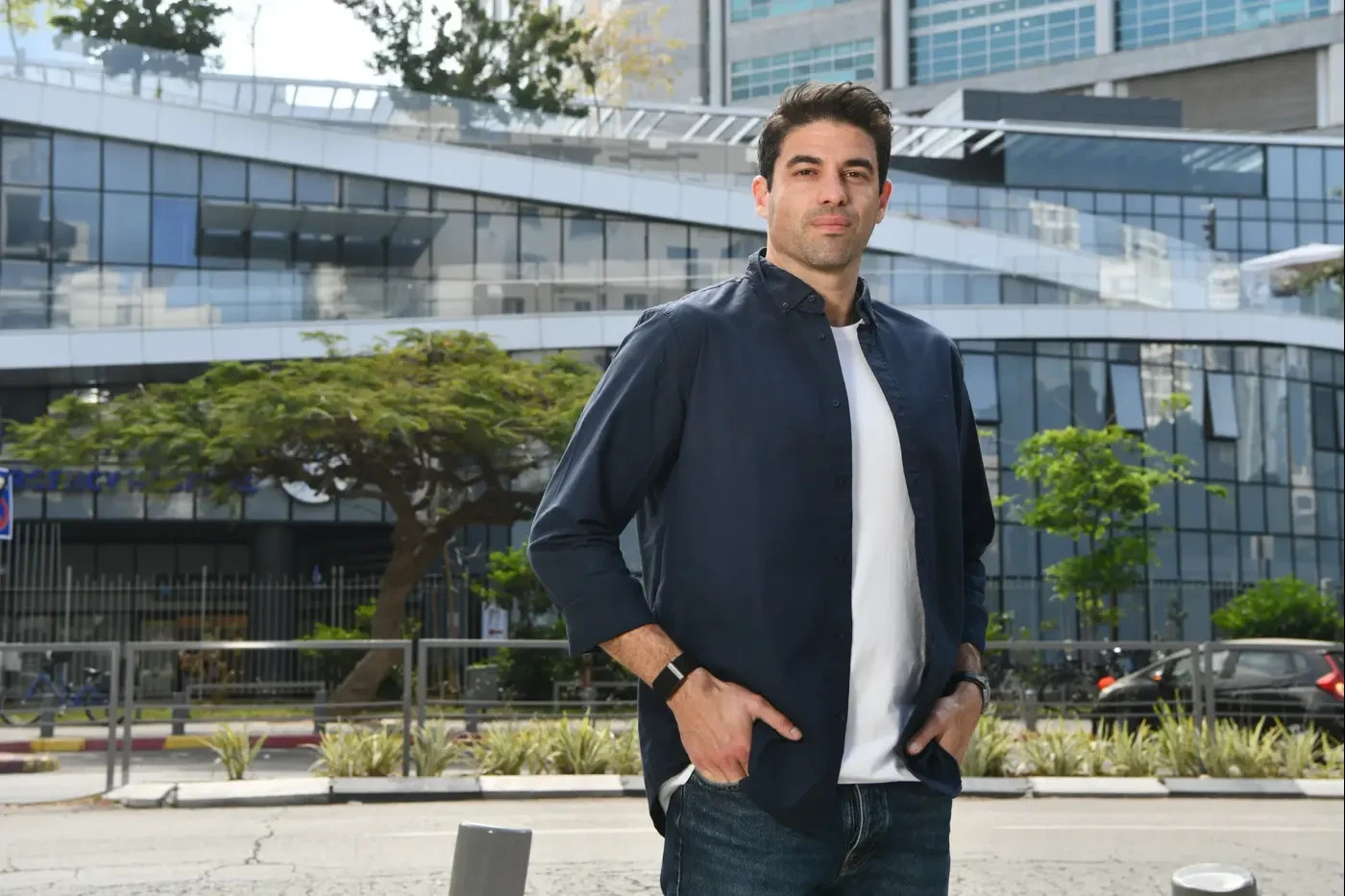
His son, Daniel, currently a development manager at the high–tech company Lemonade, never imagined that the devoted care for his father would turn into a groundbreaking social enterprise. Back then, in 2018, he was optimistic and determined to fight for him with all his might. Together they went to every possible expert, seeking a third and fourth opinion, only to realize very quickly that treatments according to the standard protocol would not help.
"I started reading everything possible", Daniel recalls. "On a cancer forum, someone gave a tip to look for a clinical trial. I started digging online, thinking that maybe I could find something experimental. Pretty quickly I reached the American database, the largest database in the world, which aggregates the studies conducted by pharma companies for all types of diseases, and is regulated by the US Department of Health. The law requires registering every trial conducted in the country there. At the same time, I also reached the European database which back then, in 2018, was terrible because it was only four years later that regulation came into effect requiring European countries to list their trials there. Trials conducted in Israel are also included in it."
A clinical trial is a controlled and phased research process that examines the safety and efficacy of new drugs and technologies in humans. Almost every drug in use today went through this pathway. For the patient, it represents an opportunity to gain access to medical innovation years before its official approval, alongside close medical accompaniment by experts and full funding of treatment and test costs by the study's initiators. The process is conducted with full transparency and protection of privacy, while allowing the option to withdraw at any stage without harming the regular continuity of care.
With the help of the oncologist who accompanied them at Sheba, they managed to locate a clinical trial being conducted at the hospital. Dov underwent a long series of tests to ensure whether he could fit the trial. "In the beginning, the treatment worked amazingly, and it gave Dad a few more priceless months. He started working out, went to a psychologist. After a few months, the effectiveness of the drug decreased, and we had to look for another trial.
"We found a trial at Meir Hospital. Again we went through tests and adjustments accompanied by great tension until we were accepted, and it gave another few months of hope. When the drug stopped being effective, we reached a dead end with trials in Israel, and I found a clinical trial in Boston. They told us we would have to move there for a few months to receive the treatment. I was ready to leave my job and fly there, but then Covid broke out."
The pandemic not only halted flights but also clinical trials, and they were forced to stay in Israel. Three months later, Dov passed away. "Dad passed away two years and three months after the discovery of the disease. They didn't tell us explicitly how long he had left to live, but when we understood that the regular treatments were not suitable for him, it was a matter of a few months. Equivocally, I can say that the clinical trials not only extended his life but also gave him quality of life.
"I managed to get married quickly in between so he could be with us. Dad had no medical problems, and he was 100% invested in work and family. He was not a classic businessman. He loved the creation, the problem–solving. In the final period of his life, he focused on construction: He designed centers for the third age, designed the Beit Balev medical rehabilitation center, and several assisted living facilities for Migdalei Hayom Hatichon. The fortified Clalit hospital that was established within 24 hours during the war in Iran: He designed it."
Tens of thousands of visits
A few months after the funeral, a close friend called Daniel and told him that when a family member was diagnosed with brain cancer, even though there are doctors in the immediate family, they have no idea how to find clinical trials. He said he would be glad if Daniel spoke with them and explained how it works.
"I was surprised. There is a person here who is a doctor—not like me, coming from high–tech—and he has no idea how to search for a clinical trial. I explained to them how to find the databases and navigate within them, and since then, once every few weeks, I started receiving a request from someone for help. I would sit with the medical summary and start manually searching for trials for hours. Over time, it shortened to an hour and a half of searching. I have helped a lot of people over the past five years. There were those who updated and consulted during the process, told me what happened after, or announced that their loved one had passed away."
The turning point came three weeks ago, during military reserve duty. The reservist sitting next to him mentioned that his mother had contracted pancreatic cancer. Daniel suggested he check if there was a clinical trial suitable for her. He found himself sitting with his cell phone, helping him find an appropriate clinical study. "And then I thought that there must be other people like him, and instead of helping one person at a time with a manual search, I would build a tool that allows a user–friendly search that would give simple results with a simple translation of the essence of the study, the drug, and the criteria for entering the clinical trial. I went with my wife and daughters for a vacation at a hotel, and at night I sat on it. I released an initial version—and it exploded."
Thus TrialFinder was born: A website that includes a system operating as a free search engine, which scans trial databases around the world and uses artificial intelligence to translate the complex information into clear and friendly language, in Hebrew and English. Beyond locating the studies, the tool assists users in checking initial compatibility for the trial, guides them on how to manage the dialogue with the treating physician, and even drafts an official application letter for them to the research teams.
It is important to Koren to emphasize that the service does not constitute a substitute for professional medical advice, but rather serves as an auxiliary tool that allows the patient to arrive at the conversation with the medical team equipped with relevant and evidence–based information, while strictly maintaining the privacy of the users: It does not require registration and does not save identifiable medical information.
He announced the launch of the website on social media. "And since then, I receive private messages on Twitter, everywhere. The amounts of feedback I received from developers, product managers, and doctors who offered help are immense. The site has only been live for two weeks, and there are tens of thousands of visits, and already 200 users have sent an inquiry email for a clinical trial through the website.
"I put a button for small donations to support the project. I didn't think anyone would donate at all, and I said I would bear the expenses of a few hundred dollars a month myself. They donated an amount that will cover the operating cost for several months."
Even "no" is legitimate
One of the inquiries he received was from a guy who asked for help persuading his mother–in–law, who had fallen ill, to be open to clinical trials. "I am not a doctor and not a qualified psychologist, but from my experience, there is a strong desire from family members to find another treatment and hope, whereas the patients are physically and mentally tired, and this gap can be bridged if you explain what a clinical trial is: That there is nothing binding about it and it can be stopped at any moment."
The attempt to suggest to a sick family member to examine the possibility of a clinical trial is one of the most complex moments for caregivers. Often, a deep emotional gap is created between the family's desire to find any shred of hope and the patient, who may be focused on maintaining a familiar routine or simply experiencing mental fatigue from the journey they have already traveled. To bridge this gap, it is important to understand that the conversation needs to be factual and practical, and to neutralize the initial fears stemming from lack of familiarity with the process.
"One of the central messages that is important to convey is that the participation process is not binding. Knowing that the door is always open can lift a heavy weight from the decision of the patient, who can return to regular treatment. Many trials, especially in immunotherapy and targeted biological treatments, test drugs that are more precise and usually cause fewer side effects than traditional chemotherapy. Entering a trial can be access to something gentler, not something harder."
Logistically as well, joining a study might actually ease the burden. Instead of dealing alone with medical bureaucracy, patients receive close accompaniment from a research coordinator who handles coordination and order. "The key to a successful conversation lies in timing and partnership. It is advisable to use the word 'we' to turn the task into a joint project. Even the answer 'no' is legitimate. The role of the family is to ensure that they have the information and the choice. In the end, the decision is theirs."
You have an enterprise in your hands that people would be willing to pay a lot of money to use. Why not turn it into a commercial business?
"Beyond the fact that I really love Lemonade, I remember myself looking for answers in the mental state after the heavy blow. I don't want anyone to think that there are hidden interests here; I don't want considerations that are not for the benefit of the user to enter. My dream is to find collaborations with the health funds, insurance companies, and hospitals that can give their clients the option to receive updates on clinical trials that suit them. These drugs are so expensive if you receive them outside the framework of a trial. The payment can also reach $60,000.
"The goal is to spread this knowledge as much as possible. 80% of clinical trials do not finish on time because they do not manage to recruit enough patients, and the reason for the cancellation of about half of those that do not get underway is a shortage of participants. This is my dream: To share updates on trials in masses, and the unique data that exists in the health funds in Israel can help bring more participants into the system."
Does the intensive engagement with difficult illnesses not evoke the pain over Dad?
"When I send someone a loose end about a trial, it's a small victory, a sense of control. But if it doesn't work, and when someone passes away, it's a punch to the stomach."