
Industry veterans and Arab Israeli leaders are redefining tech leadership. Moving away from "command and control" models, they prioritize productivity and diversity over traditional military norms.
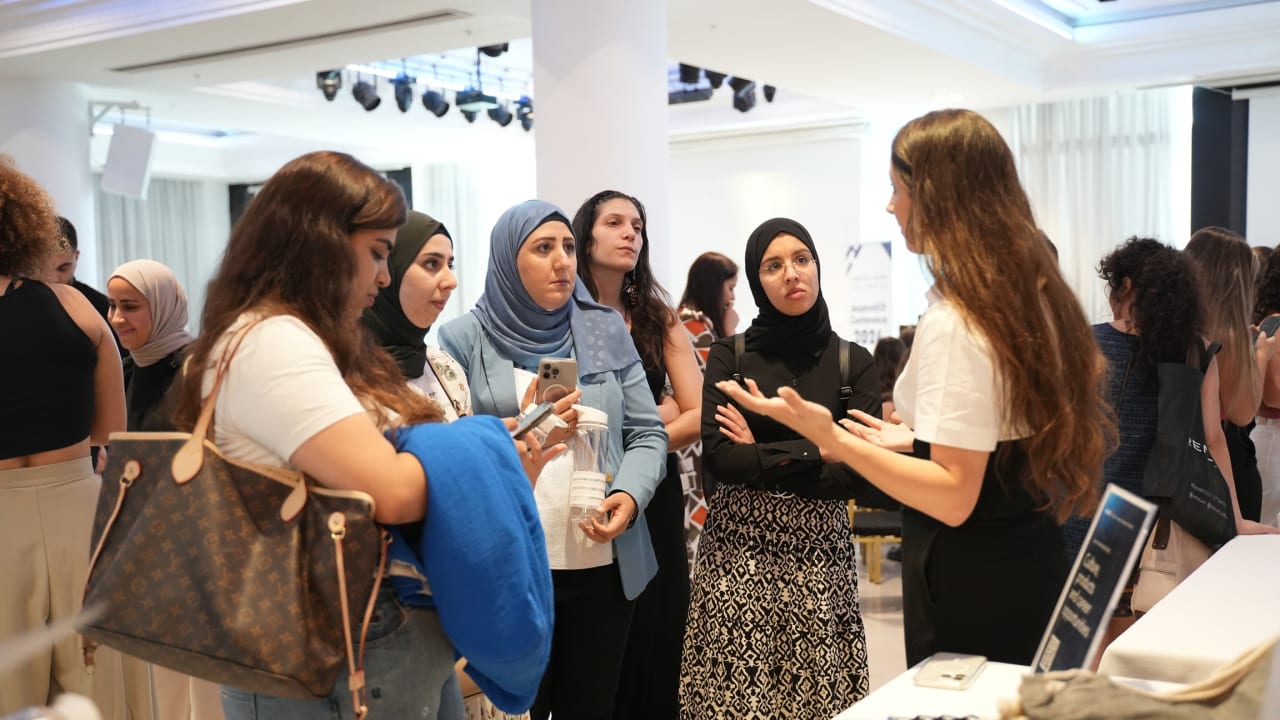





The journey to the top of Israel’s high-tech pyramid has historically been paved by a specific demographic, but a new narrative is emerging through the lived experiences of women who are shattering the industry’s most persistent glass ceilings.
For industry veterans Lilyan Pinchas and Linur Serero, CEO and CTO of Libi Software Technology, part of One Technology group, leading in high tech has required a conscious decoupling from the “tougher” environments of two decades ago. “The confidence that you present your solution speaks for itself,” they told The Jerusalem Post, addressing the common pressure for women to be “loud” to be heard in a room full of men. For them, if a solution works better, there is no need to be the louder person in the room.
Even if the sector, long the engine of the national economy, is facing a reckoning, with the industry displaying its innovation and “flat” hierarchy, the reality for women remains a complex gauntlet of structural barriers and outdated corporate norms.
For Pinchas and Linur, it used to be much tougher, with a huge change nowadays in women’s inclusion in the industry, especially in leadership roles. Their leading style represents change: they described it as a move away from the traditional military-influenced "command and control" model toward one based on transparency and professional confidence.
They also describe this in the way they measure success. “We don't measure employees, team members, by work hours... We measure productivity and outcomes. We don’t sit with a stopwatch and like, ‘you have nine hours, you have to work,’” they explained.

Maisam Jaljuli, CEO of Tsofen-Tashbik (a public benefit company promoting hi-tech in Israeli Arab society), agreed with Pinchas and Serero. “We shouldn’t act like men. We shouldn’t take these men as our role models. We should take other women who succeeded as our role models and build our own identity in the tech industry,” she told the Post.
“What’s most important nowadays is the way you live, the culture you present within your company... Once you do that, you can lead your own agenda, and you don’t have to stick with the past,” Pinchas added.
“I don’t think that women or men lead differently. I think that depends on the character... Regardless of gender, I think the most challenging thing in leadership is just to take the responsibilities you have and handle the emotional side with the employees,” they concluded.
While the general tech population navigates gender bias, the struggle for Arab Israeli women represents a unique intersection of societal expectations and geographical isolation. According to Jaljuli, a quiet revolution has been brewing in the classroom for the last 15 years.
At the Technion Israel Institute of Technology, the most important technological university, 65% of Arab students are women. This surge is not merely a pursuit of interest but an economic necessity. With over 10,000 Arab women teachers currently unemployed due to market saturation, the younger generation is pivoting toward STEM to find “meaningful employment.”
However, these women approach the glass ceiling that society has placed on them much more quickly than their Jewish counterparts. “The challenges that Jewish women are facing in the industry are similar to the challenges that Arab men face; but the challenges that Arab women face are much bigger than both,” she said.
For example, Jaljuli says that the lack of infrastructure and transportation ends the career of many Arab Israeli women prematurely. “With most tech hubs centered in the Gush Dan area, women from the periphery face daily commutes of three to four hours,” Jaljuli explained, noting that the government has yet to invest sufficiently in the infrastructure required to bridge this gap.
When women enter the workforce, the pressure to conform to traditional roles also intensifies. Jaljuli said, “Nobody asks a man if he is working too much and not taking care of his children, but they will still ask the woman.” This often forces talented engineers to quit their high-flying roles for local positions that offer less growth but more proximity to home.
For Jaljuli, the high-tech environment will benefit enormously from including more women (and Arab Israeli women) in its ranks. “The industry cannot succeed without this variety of opinions and visions,” she said, and shared a message for young women aiming to succeed in high tech: “Don't be shy to bring your qualities. No other person knows more than you. No other person is privileged over you.”
此内容由惯性聚合(RSS阅读器)自动聚合整理,仅供阅读参考。 原文来自 — 版权归原作者所有。