
More than 70% of the women who lost their jobs during the 2026 Iran War were also harmed in another emergency crisis in the last six years.
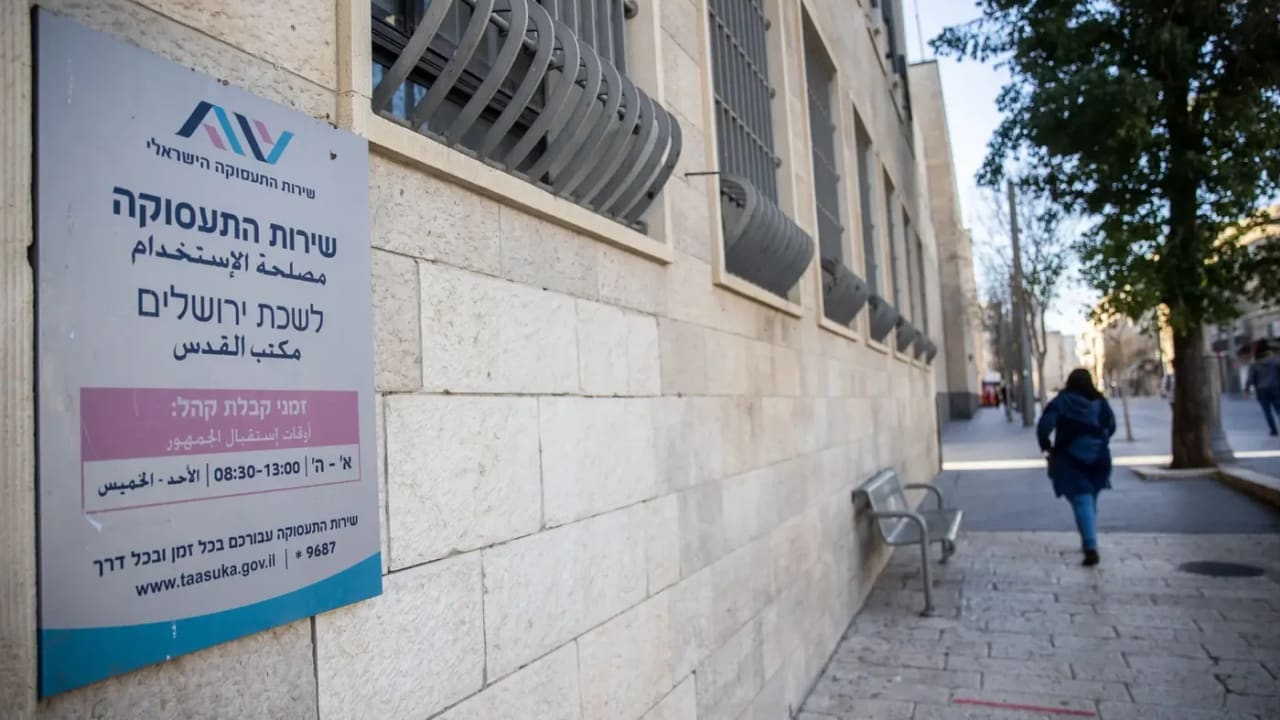





The Israeli labor market manages to recover from crises at an ever-increasing pace, but behind the recovery data hides a worrying phenomenon: The exact same male and female workers are repeatedly pushed out of the workforce during every emergency event, according to a special report by the Employment Service. The report was published this week and addresses employment patterns in the crises of the last six years, from the COVID-19 lockdowns, through the Operation Swords of Iron and the Twelve-Day War, to the 2026 Iran War.
According to the report, 71.3% of the women who were pushed out of the workforce during the 2026 Iran War were also pushed out in at least one additional emergency event in the last six years. Half of the women were even harmed in at least three emergency events, and over a third of them in four or more events.
The Employment Service calls this phenomenon "the revolving door." This refers to a situation where it is not just certain population groups that are harmed more by crises, but the exact same individuals find themselves time after time outside the labor market. Alongside women, young people up to the age of 34 and the ultra-Orthodox are among the most vulnerable groups.
The report also points to professions in which the risk of being pushed out of the workforce is particularly high. Thus, 78% of the personal caregivers who registered as job seekers during the 2026 Iran War also registered in at least one additional emergency event in recent years. Among sales workers, this rate stands at 75%.
It also emerges that professions involving physical encounters, public reception, outdoor work, or gatherings are harmed more during emergencies. Conversely, work that can be performed remotely constitutes a sort of "vaccine" against employment harm. A comparison between the COVID-19 period and the 2026 Iran War shows that the more a profession enables hybrid or remote work, the smaller the risk of its workers being pushed out of the workforce during a crisis.
Alongside the worrying data, the report also points to a positive trend – the Israeli labor market is recovering from crises at an ever-increasing pace.
While after the COVID-19 crisis it took about two years to return to the number of job seekers that prevailed before the crisis, after the Operation Swords of Iron the recovery lasted about a year, after the Twelve-Day War only about four months, and in the 2026 Iran War the fastest recovery to date was recorded.
In March 2026, in which the main fighting in the 2026 Iran War occurred, the number of job seekers surged by 154% – from 155.4 thousand in February to 395.6 thousand. With the removal of the Home Front Command restrictions, their number began to drop rapidly, and at the end of May already stood at about 180 thousand, representing a 54% decrease from the peak recorded during the operation.

Against the backdrop of the findings, the Employment Service recommends re-examining the unpaid leave mechanism, which they say encourages a mass exit from the workforce and does not provide an adequate response to the cumulative harm to vulnerable groups. Among the proposals: Flexible unpaid leave that enables partial work alongside income supplementation, splitting unpaid leave days between spouses, and expanding the possibility for remote work as a tool for retaining workers during emergency periods.
The Director General of the Employment Service, Inbal Mashash, concluded: "The report's findings reveal a worrying 'revolving door' phenomenon, and not just in the same population groups vulnerable in crisis situations, but in the exact same people, over and over again. This reality exacts a heavy price – cumulative harm to social rights, employment security, and pension savings over years. The recurring findings teach us that there is no more room to wait for the next crisis. We must act right now to re-examine the existing safety nets, and consider adopting advanced models of flexible unpaid leave, combining partial work and expanding remote work capability. This is the way to build true economic and employment resilience for all citizens of Israel, both during a crisis and after it."
此内容由惯性聚合(RSS阅读器)自动聚合整理,仅供阅读参考。 原文来自 — 版权归原作者所有。