











In today's digital world, websites have become a crucial part of our lives. They are not only used for business purposes but also for entertainment, communication, and education.
However, the increasing use of websites has also resulted in a significant increase in carbon emissions. As we become more conscious of our environmental impact, it is important to reduce the carbon footprint of websites.

In this article, we explain how you can measure your website’s carbon footprint and explain how you can limit it.
- Websites also emit
- Why reduce the carbon footprint of websites?
- How to reduce the carbon footprint of your website?
- Lead by example
Michelin chose Simple AnalyticsJoin them
Websites also emit
A carbon footprint is the total amount of greenhouse gas emissions caused by an individual, organization, or product. In the case of websites, carbon footprint refers to the amount of carbon emissions produced during the website's operation. These emissions can come from the use of electricity to power servers, cooling systems, and other equipment required to keep the website running.
In essence, the more complicated a website is, the more emissions there are. But it doesn’t have to be this way.
It seems a bit of an open door, but reducing the carbon footprint of websites has become increasingly important in recent years. Climate change is a global crisis that is affecting our planet in many ways, from rising sea levels to more frequent and severe weather events. By reducing the carbon footprint of websites, we can help mitigate the effects of climate change.
Reducing your website’s carbon footprint can also be interesting from a business perspective. Consumers are becoming more environmentally conscious and will look for companies to take steps to reduce their carbon footprint. You want them to know that you care about the environment.
We already see this with Simple Analytics as well. Quite a few customers have our badge on their website to signal to visitors they care about their privacy.
Also, it's pretty mindblowing that IT uses 20% of all energy. We just need to do something about it. It’s time to step down and change our behavior collectively.
There are several ways to reduce the carbon footprint of websites. But it all starts with being in the know. Simple Analytics partnered with Zifera, a Dutch-based company that developed a free-to-use tool to test your website.
Do the Carbon Test to check your website’s emissions.
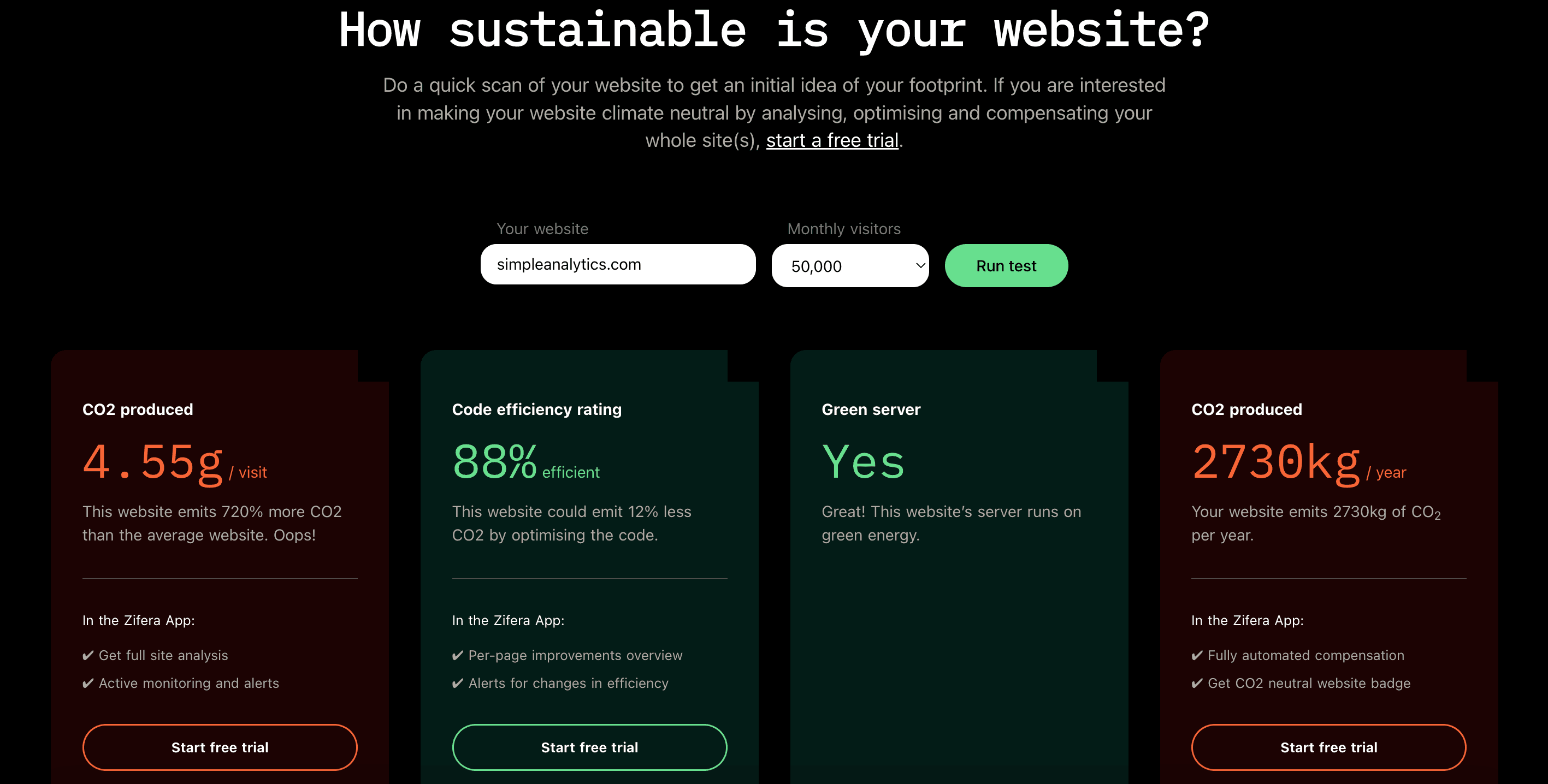
Whoops! Simple Analytics is apparently a pretty big website.
We emit 720% more than the average website. It does make sense because we are not ‘just’ a website. However, if you are never confronted with the actual numbers, you don’t consider it that much (at least that's just me).
Zifera also shows you the equivalent of your emissions.
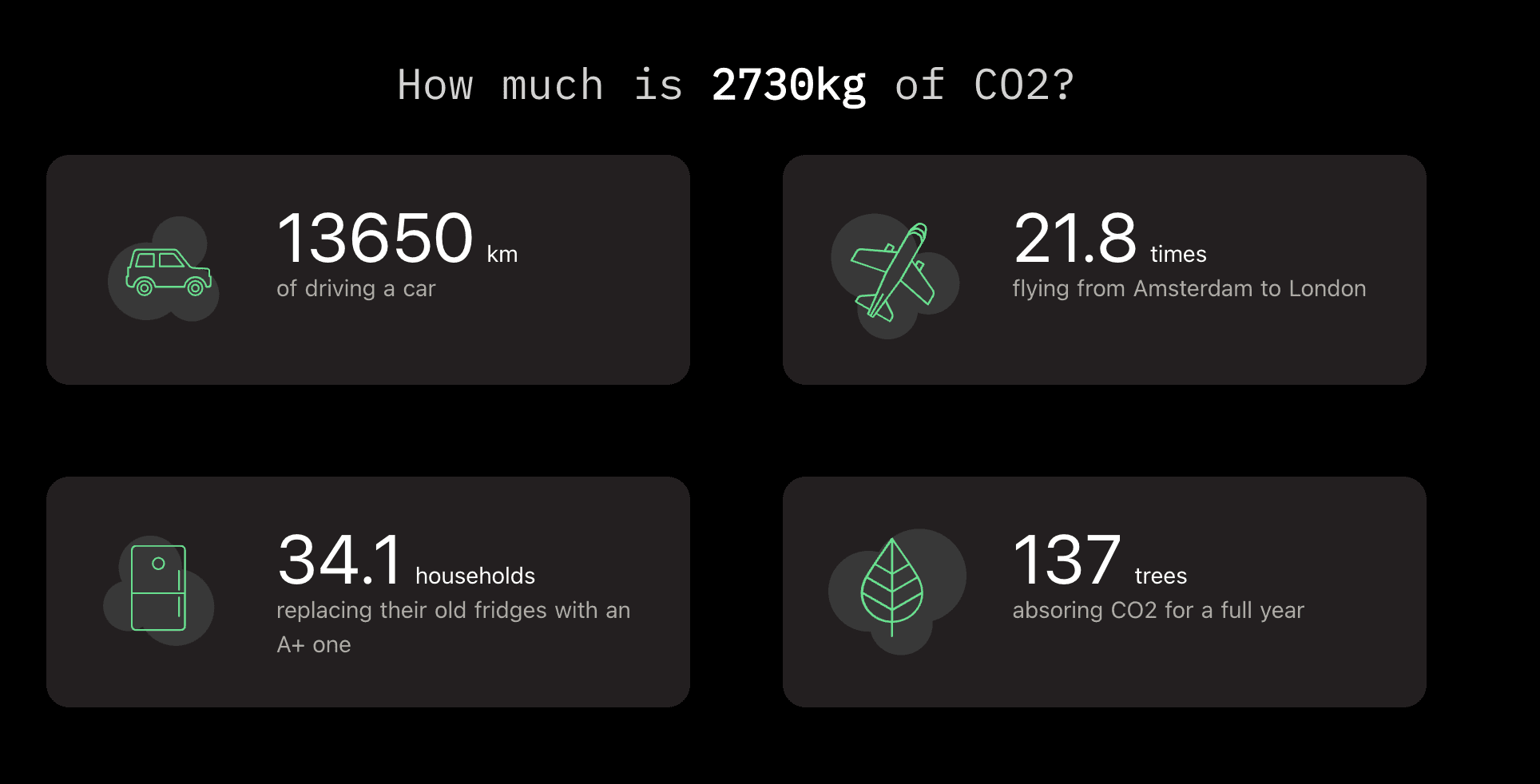
These numbers are not 100% accurate because Zifera does not have access to our actual website analytics in the free carbon test. However, once you sign up, Zifera directly integrates with Simple Analytics (and Google Analytics).
I like Zifera because it looks to optimize your website and doesn’t only depend on compensation. And you don’t have to be tech-savvy at all, as it's integrated with your analytics tool.
It works in four easy steps:
- They analyse your website and combine this with traffic flows to report on every page.
- Based on the data, you will receive all the tips and tools to lower your carbon footprint.
- They will compensate the remaining emissions for you.
- You can display a badge of honor on your website.
The analysis checks for unnecessary code and looks for colors, images, and videos that can be optimized. Reducing the amount of data that needs to be transmitted reduces the energy required to load a website.
Lead by example
Reducing the carbon footprint of websites is becoming increasingly important as we strive to mitigate the effects of climate change. As businesses become more environmentally conscious, reducing the carbon footprint of websites can also positively impact your financial results.
By taking steps to reduce the carbon footprint of websites, we can all do our part to create a more sustainable future.
Stand out from the crowd and do your part!