

惯性聚合 高效追踪和阅读你感兴趣的博客、新闻、科技资讯
阅读原文 在惯性聚合中打开

推荐订阅源

A
About on SuperTechFans
Cloudbric
Cloudbric
C
CERT Recently Published Vulnerability Notes
G
GRAHAM CLULEY
V
Vulnerabilities – Threatpost
C
Cisco Blogs
T
Tenable Blog
P
Privacy International News Feed
T
The Exploit Database - CXSecurity.com
I
Intezer
AWS News Blog
AWS News Blog
IT之家
IT之家
博客园 - 司徒正美
C
Cybersecurity and Infrastructure Security Agency CISA
博客园 - 【当耐特】
The Hacker News
The Hacker News
奇客Solidot–传递最新科技情报
奇客Solidot–传递最新科技情报
Spread Privacy
Spread Privacy
S
SegmentFault 最新的问题
博客园 - Franky
人人都是产品经理
人人都是产品经理
cs.CV updates on arXiv.org
V
Visual Studio Blog
C
CXSECURITY Database RSS Feed - CXSecurity.com
H
Hacker News: Front Page
Latest news
Latest news
Scott Helme
Scott Helme
腾讯CDC
宝玉的分享
宝玉的分享
大猫的无限游戏
大猫的无限游戏
cs.AI updates on arXiv.org
A
Arctic Wolf
S
Securelist
雷峰网
雷峰网
The GitHub Blog
The GitHub Blog
Project Zero
Project Zero
Google DeepMind News
P
Palo Alto Networks Blog
F
Fortinet All Blogs
Schneier on Security
云风的 BLOG
云风的 BLOG
Security Archives - TechRepublic
The Last Watchdog
The Last Watchdog
WordPress大学
WordPress大学
MongoDB | Blog
MongoDB | Blog
L
LINUX DO - 最新话题
S
Schneier on Security
NISL@THU
NISL@THU
Jina AI
Jina AI
M
MIT News - Artificial intelligence

Blog — PlanetScale

Keeping a Postgres queue healthy — PlanetScale Patterns for Postgres Traffic Control — PlanetScale Graceful degradation in Postgres — PlanetScale High memory usage in Postgres is good, actually — PlanetScale Stripe Projects partnership: Provision PlanetScale Postgres and MySQL databases from the Stripe CLI — PlanetScale Enhanced tagging in Postgres Query Insights — PlanetScale Behind the scenes: How Database Traffic Control works — PlanetScale Introducing Database Traffic Control — PlanetScale Scaling Postgres connections with PgBouncer — PlanetScale Drizzle joins PlanetScale — PlanetScale Video Conferencing with Postgres — PlanetScale Faster PlanetScale Postgres connections with Cloudflare Hyperdrive — PlanetScale Introducing the PlanetScale MCP server — PlanetScale Database Transactions — PlanetScale Automating our changelog with Cursor commands — PlanetScale Postgres 18 is now available — PlanetScale Using MotherDuck with PlanetScale — PlanetScale $50 PlanetScale Metal is GA for Postgres — PlanetScale AI-Powered Postgres index suggestions — PlanetScale $5 PlanetScale is live — PlanetScale Announcing Vitess 23 — PlanetScale $50 PlanetScale Metal — PlanetScale Report on our investigation of the 2025-10-20 incident in AWS us-east-1 — PlanetScale $5 PlanetScale — PlanetScale Benchmarking Postgres 17 vs 18 — PlanetScale Larger than RAM Vector Indexes for Relational Databases — PlanetScale Partnering with Cloudflare to bring you the fastest globally distributed applications — PlanetScale Processes and Threads — PlanetScale PlanetScale for Postgres is now GA — PlanetScale Postgres High Availability with CDC — PlanetScale Announcing Neki — PlanetScale Caching — PlanetScale The principles of extreme fault tolerance — PlanetScale Announcing PlanetScale for Postgres — PlanetScale Benchmarking Postgres — PlanetScale Announcing Vitess 22 — PlanetScale The Real Failure Rate of EBS — PlanetScale IO devices and latency — PlanetScale Announcing PlanetScale Metal — PlanetScale PlanetScale Metal: There’s no replacement for displacement — PlanetScale Upgrading Query Insights to Metal — PlanetScale Automating cherry-picks between OSS and private forks — PlanetScale Database Sharding — PlanetScale Anatomy of a Throttler, part 3 — PlanetScale Introducing sharding on PlanetScale with workflows — PlanetScale Announcing Vitess 21 — PlanetScale Announcing the PlanetScale vectors public beta — PlanetScale Anatomy of a Throttler, part 2 — PlanetScale Instant deploy requests — PlanetScale Anatomy of a Throttler, part 1 — PlanetScale Increase IOPS and throughput with sharding — PlanetScale Tracking index usage with Insights — PlanetScale Faster backups with sharding — PlanetScale Building data pipelines with Vitess — PlanetScale The State of Online Schema Migrations in MySQL — PlanetScale Optimizing aggregation in the Vitess query planner — PlanetScale Dealing with large tables — PlanetScale Announcing Vitess 20 — PlanetScale Self-managed Vitess vs Managed Vitess with PlanetScale — PlanetScale Achieving data consistency with the consistent lookup Vindex — PlanetScale The MySQL adaptive hash index — PlanetScale Introducing global replica credentials — PlanetScale Profiling memory usage in MySQL — PlanetScale Summer 2023: Fuzzing Vitess at PlanetScale — PlanetScale How PlanetScale makes schema changes — PlanetScale Identifying and profiling problematic MySQL queries — PlanetScale The Problem with Using a UUID Primary Key in MySQL — PlanetScale Announcing Vitess 19 — PlanetScale PlanetScale forever — PlanetScale Introducing schema recommendations — PlanetScale Amazon Aurora Pricing: The many surprising costs of running an Aurora database — PlanetScale Three common MySQL database design mistakes — PlanetScale OAuth applications are now available to everyone — PlanetScale Deprecating the Scaler plan — PlanetScale PlanetScale branching vs. Amazon Aurora blue/green deployments — PlanetScale Databases at scale — PlanetScale Considerations for building a database disaster recovery plan — PlanetScale Working with Geospatial Features in MySQL — PlanetScale PlanetScale vs Amazon Aurora replication — PlanetScale Introducing the Vantage and PlanetScale integration — PlanetScale MySQL isolation levels and how they work — PlanetScale Introducing the schemadiff command line tool — PlanetScale $ pscale ping — PlanetScale Announcing foreign key constraints support — PlanetScale The challenges of supporting foreign key constraints — PlanetScale What is HTAP? — PlanetScale Introducing Insights Anomalies — PlanetScale Webhook security: a hands-on guide — PlanetScale Announcing the Fivetran integration — PlanetScale What is MySQL replication and when should you use it? — PlanetScale Sync user data between Clerk and a PlanetScale MySQL database — PlanetScale Introducing database reports — PlanetScale Distributed caching systems and MySQL — PlanetScale What is MySQL partitioning? — PlanetScale MySQL High Availability: Connection handling and concurrency — PlanetScale Personalizing your onboarding with Markdoc — PlanetScale PlanetScale vs. Amazon Aurora — PlanetScale PlanetScale vs. Amazon RDS — PlanetScale PlanetScale is bringing vector search and storage to MySQL — PlanetScale PlanetScale Managed is now PCI compliant — PlanetScale
Introducing webhooks — PlanetScale
2023-10-26 · via Blog — PlanetScale

Taylor Barnett, Mike Coutermarsh |

You can now automatically trigger a webhook to get notified when certain events occur inside PlanetScale.

Webhooks are an effective way to build integrations between systems that don't necessarily have strong ties with each other. A webhook, which is an outbound HTTP POST callback, can be triggered by various events. With webhooks, you can get near real-time data through automation. While an API must be polled by external services, webhooks can push information when an event occurs.

Along with the PlanetScale CLI and API, webhooks are another feature that makes the PlanetScale database platform extendable and easy to customize for your workflows.

PlanetScale webhooks in action

There are various examples where webhooks in PlanetScale can be helpful, for example:

  • Creating notifications in Slack, Microsoft Teams, GitHub, and other tools
  • Integrating with CI/CD processes for the automation of schema changes
  • Updating external issue trackers like Jira

These examples can be built with the events we are releasing today for webhooks. You can trigger a webhook for the following events in PlanetScale:

  • branch.ready: The branch is created and ready to connect.
  • branch.sleeping: The branch is now sleeping.
  • deploy_request.opened: The deploy request has been opened.
  • deploy_request.queued: The deploy request has been added to the deploy queue.
  • deploy_request.in_progress: The deploy request has started running.
  • deploy_request.schema_applied: The deploy request has finished applying the schema.
  • deploy_request.errored: The deploy request has stopped due to an error.
  • deploy_request.reverted: The deploy request has been reverted.
  • deploy_request.closed: The deploy request has been closed.

Note

If there is an event you want to use that is not included in this list, please contact us and let us know what event you want to trigger a webhook on.

PlanetScale Zapier example

Webhooks can notify your team about new and running deploy requests for your database. One way we've been using them internally is via Zapier and Slack. We've set up a Zapier webhook trigger, which gives us a URL to send our hooks. In PlanetScale, we created a new webhook that triggers all of the deploy_request events. Each time a webhook is received, we have Zapier post a message into a Slack channel notifying us of the progress of a deploy request.
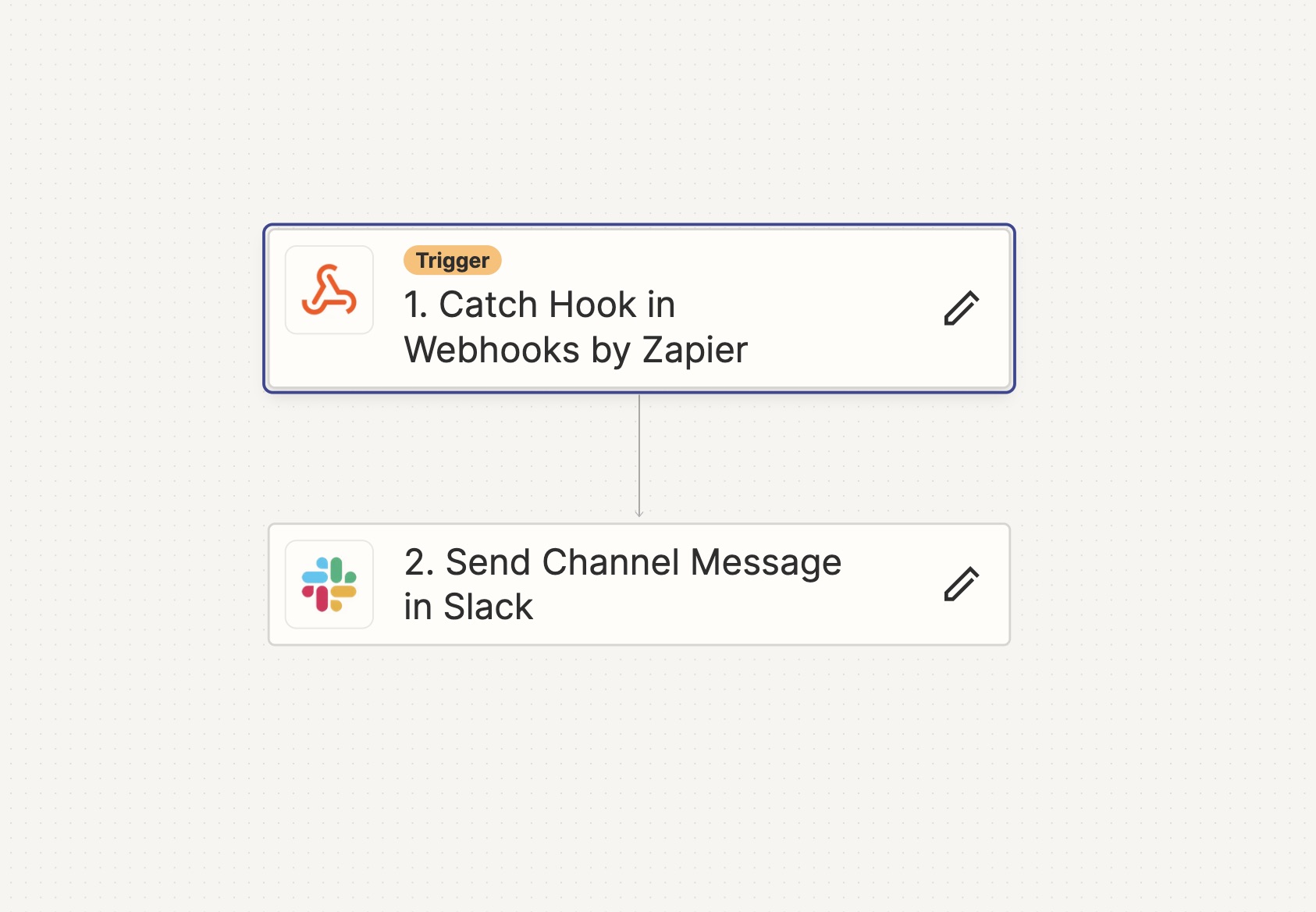
Screenshot of Zapier sending a slack message when triggered by a webhook

With the data available in the webhook, we were able to produce messages like this:

DR 16: deploy_request.schema_applied by Mike Coutermarsh - https://app.planetscale.com/mike/example-db/deploy-requests/16

Keeping our team informed right in Slack as changes are being made to our database.

PlanetScale API and webhooks

With webhooks, you no longer need to poll the API for updates, like the latest status of a deploy request or when a branch is ready. If you need to take action or need more data, each webhook event pairs nicely with the PlanetScale API for further information or action.

Getting started with webhooks in PlanetScale

If you are on a Base plan and are a database administrator in your organization, you can start using webhooks today. You can create a webhook by visiting your database's settings page.

If you are on an Enterprise plan, contact your account manager to enable webhooks in your organization.

See our webhooks overview docs for how to create and validate a webhook and what events can trigger a webhook.

Webhooks beta

Currently, webhooks are in beta. During this beta phase, we want to hear from you. We picked the webhook events based on the feedback we have heard from users. If you want to see other events for future integrations, please contact us to share. Also, we would love to see what you are building on top of webhooks! Let us know on Twitter by tagging @planetscale!