









The underground market for criminally oriented generative AI has moved beyond the early hype surrounding 'malicious chatbots.' The gradual integration of AI as a productivity layer within cybercrime operations has become the dominant story, indicating that while the potential for fully autonomous AI hacking systems is possible, attackers are not embracing them as expected. Instead, threat actors are increasingly using AI to accelerate routine, but operationally significant, tasks to scale their operations. Drafting phishing lures, profiling targets, debugging code, generating forged documents, modifying malware, translating victim communications, and processing stolen data at scale were once time-consuming activities that AI has made significantly easier. AI does not replace cybercriminals; it lowers friction, increases speed, and expands the range of actors able to perform tasks that previously required more time, skill, or external support.
AI is being absorbed into criminal tradecraft, embedding itself in social engineering, fraud enablement, impersonation, identity abuse, and post-breach data exploitation. The market supporting this demand is not a single coherent product category, but a broader ecosystem of jailbreak wrappers, Telegram-based bots, prompt packs, open-weight model deployments, stolen AI accounts, and hijacked API keys. Their importance lies less in technical elegance than in usability. They provide criminals with accessible, repeatable, and commercially packaged ways to apply AI to operational problems.
This ecosystem should not be mistaken for a stable or fully mature criminal market. Compared with more established sectors, criminal AI remains volatile, uneven, and heavily exposed to hype. Some services offer genuine operational utility while others are little more than repackaged public models marketed at inflated prices. Many are short-lived, deceptive, or opportunistic rebrands.
Even so, the demand is real. The core shift is not the arrival of a single dominant criminal model, but the commercialization of access to AI-enabled criminal capability. The strategic significance of criminal AI lies in compressing time, lowering skill barriers, improving communication quality, and scaling existing criminal workflows.
The defining features of this market have little to do with any technical novelty, but rather the packaging and monetization of access. By early 2026, many underground services were marketed through familiar commercial mechanisms like subscriptions, private support channels, Telegram-based delivery, gated communities, and promises of uncensored output, privacy, or reduced logging. These are clear signs of SaaS-style commercialization, albeit far less mature or stable than its legitimate counterparts.
The market should be best understood as “Criminal AI-as-a-Service.” Most offerings do not appear to rely on original foundational models built by threat actors. Instead, they typically depend on jailbreaks, wrappers around commercial services, fine-tuned open-weight models, repackaged interfaces, or modular combinations of existing capabilities.
Pricing patterns suggest growing commercialization, but not a stable market structure. Entry-level access may be inexpensive, while premium services can be marketed at significantly higher rates with promises of priority support or additional functionality. These prices should be treated as indicative, not definitive (Figures 1 and 2). They are highly volatile and shaped by takedowns, fraud, rebranding, and shifting demand.
At the lower end, free tools and stolen access to legitimate AI services often remain the default. In the middle of the market, recurring subscriptions are increasingly common. At the upper end, some services claim to use more modular or self-hosted architectures to reduce dependence on mainstream platforms. Together, these patterns point to a market that is becoming more operationalized, even if it remains unstable and hype-driven.
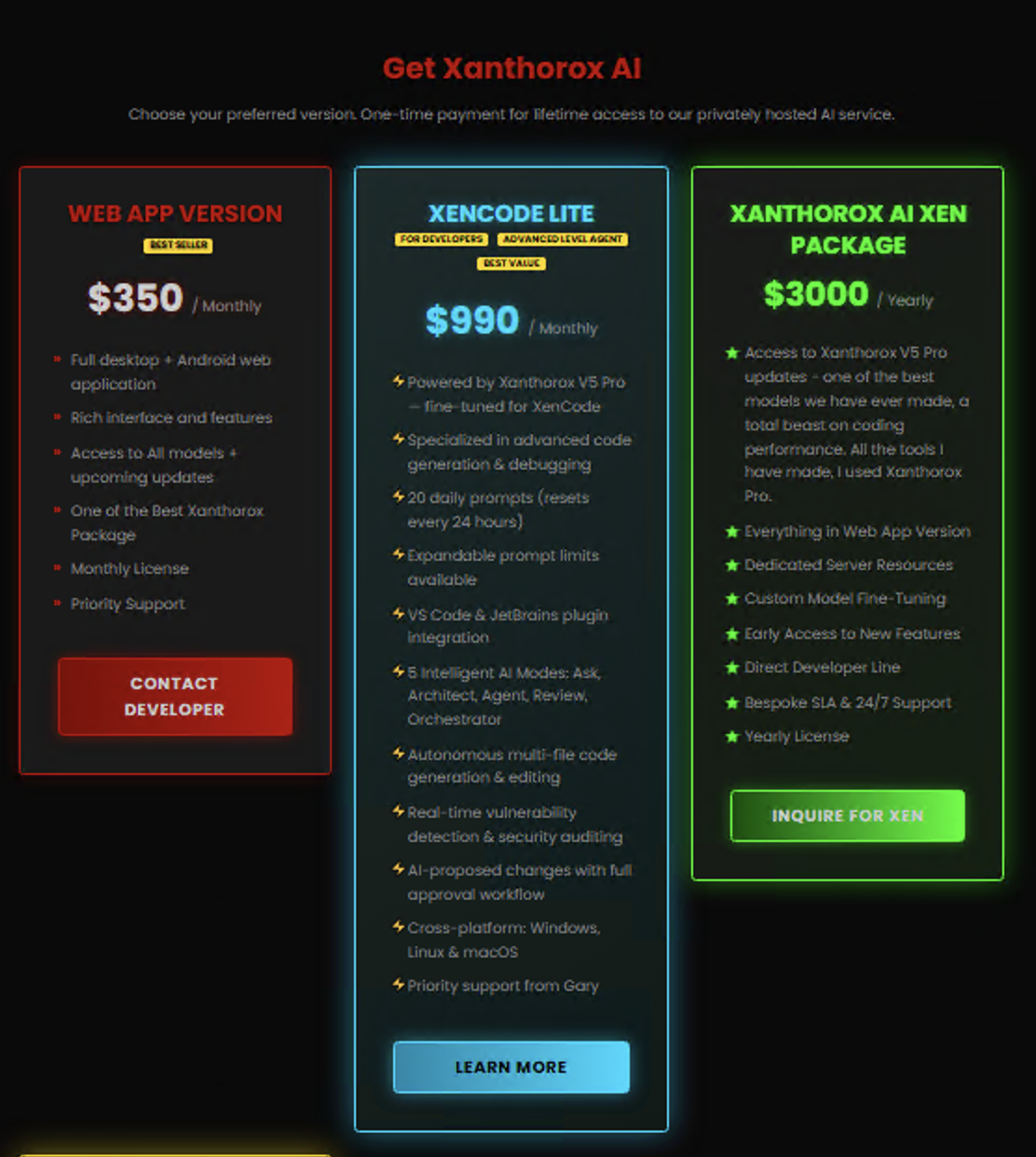
Figure 1: Xanthorox’s pricing
⠀
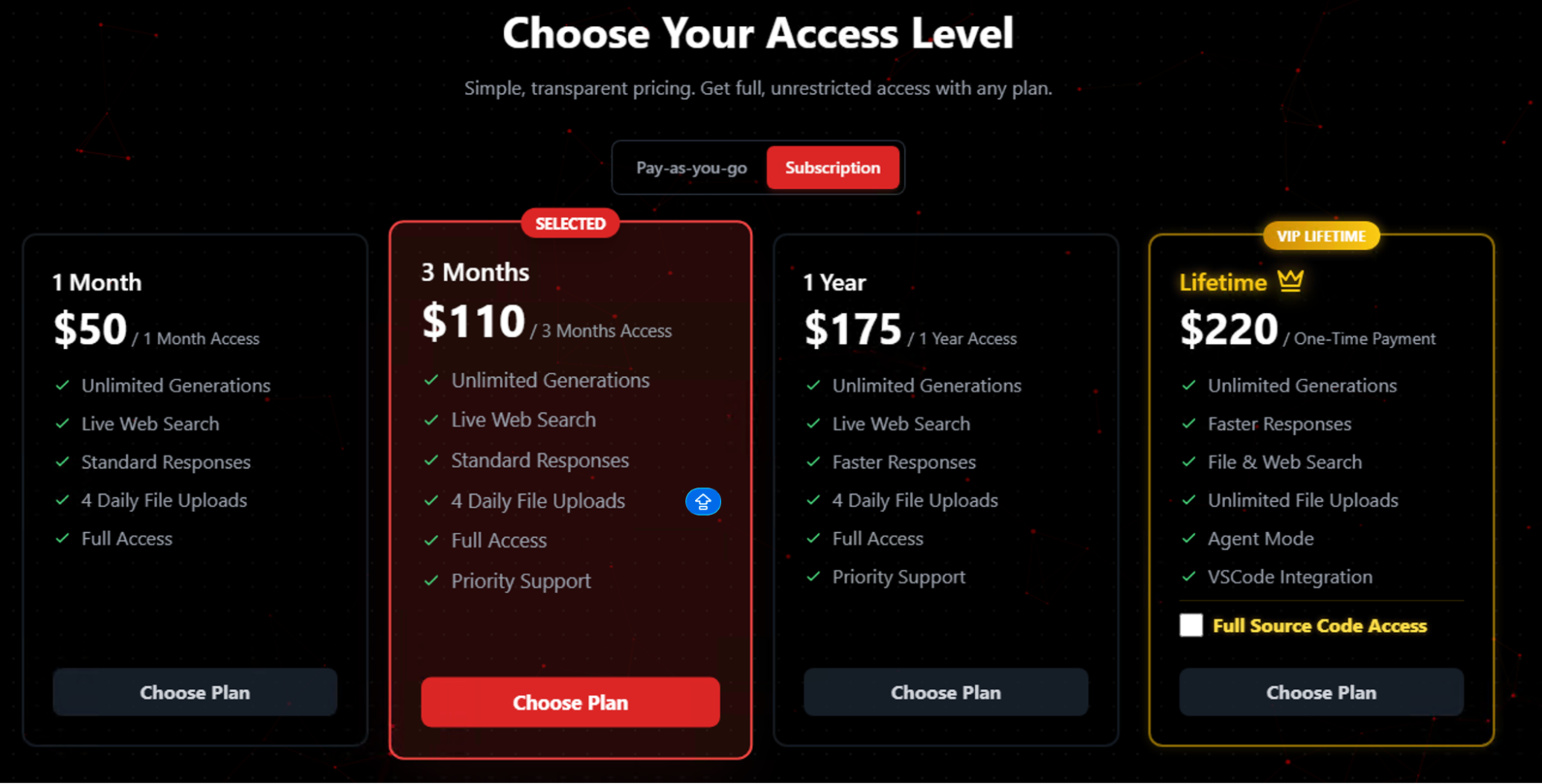
Figure 2: WormGPT's pricing
The criminal AI ecosystem is defined by several distinct tool families that reflect how threat actors adopt, package, and market generative AI for illicit use. Some platforms function as fraud-enabling assistants, others as uncensored Telegram-native chatbots, modular offensive frameworks, or low-barrier tools aimed at novice users. Examining these categories is more useful than focusing solely on individual brand names, as it reveals the market’s underlying operational logic. That logic is based on how these tools are distributed, which users they target, and which stages of the criminal workflow they are designed to support.
Overall, the market is increasingly splitting into two complementary directions. At one end are low-cost, mass-market tools that help less experienced actors produce phishing content, scam scripts, malware prompts, forged material, and social engineering narratives at scale. At the other end are more specialized platforms that integrate AI into execution workflows, supporting targeting, automation, and operational optimization for fewer but more precise attacks. This volume-versus-precision dynamic shows that criminal AI is no longer only about accelerating malicious content generation; it is also becoming a way to make illicit operations more scalable, quieter, and strategically targeted.
This tool family represents the distribution model for criminal AI by fraud shops. Emerging in mid-2023 for a few hundred dollars per month, its longevity on the black market stems from its positioning as an "all-in-one" operational assistant rather than a simple programming tool. Most buyers are not using it to engineer highly complex malware; instead, they treat it as a productivity engine to orchestrate the entire fraud chain.
Threat actors use it to systematically design lookalike phishing pages, scrape target data, draft convincing spear-phishing lures, and generate scam scripts. Even as the underlying architecture has evolved away from standalone models and toward basic wrappers around legitimate, jailbroken corporate APIs, FraudGPT remains a staple of the underground economy because it effectively democratizes advanced social engineering, allowing entry-level scammers to execute highly localized, grammatically flawless, and high-volume fraud operations (Figure 3).
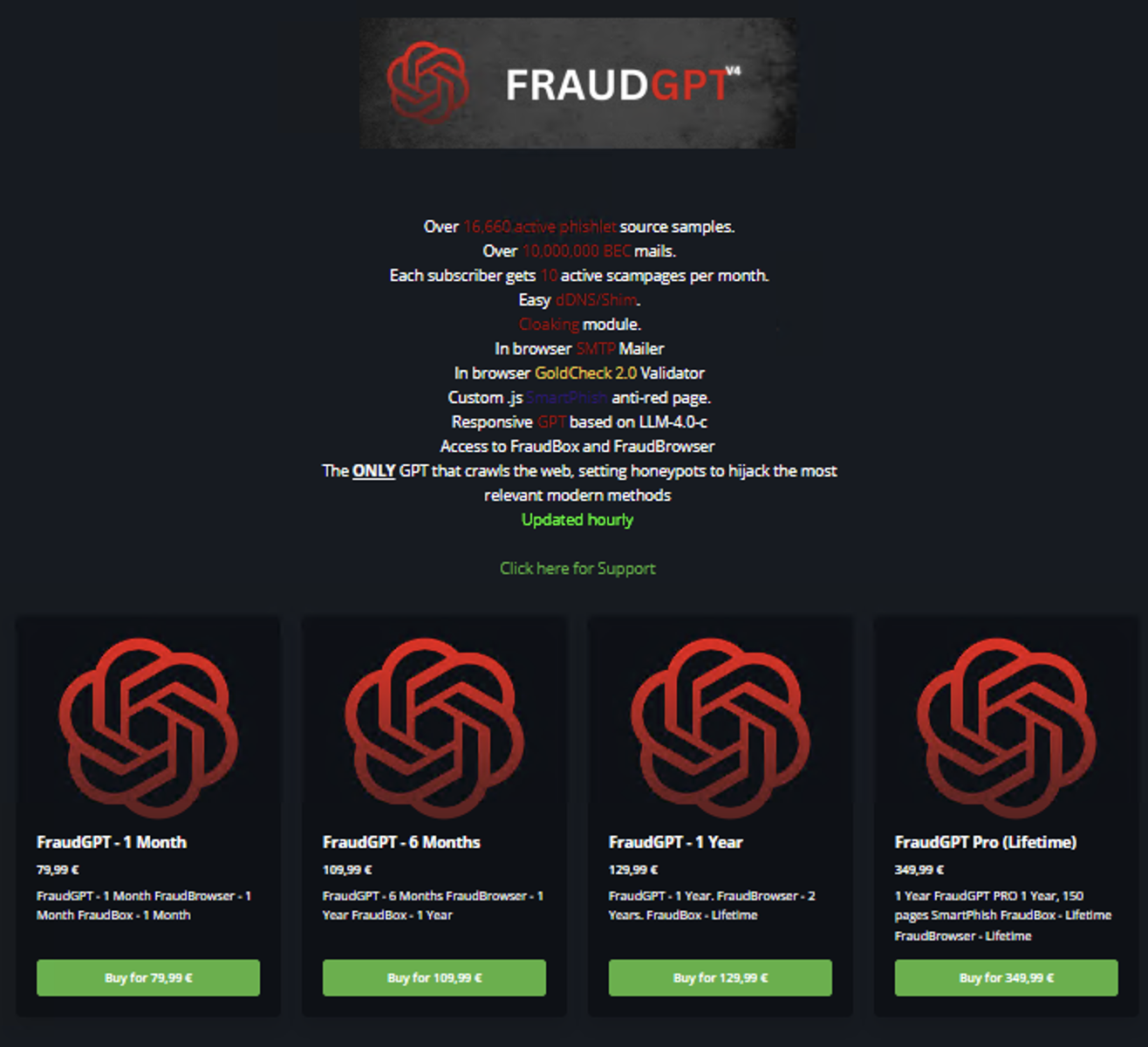
Figure 3: FraudGPT’s website
⠀
This tool family reflects the Telegram-native distribution model. Its reported selling points — uncensored output, ease of access, and reduced operational friction — illustrate the convenience and perceived safety many criminal buyers claim to value most. However, like many tools in this category, independent verification of its capabilities is limited, and its significance lies more in what it signals about buyer preferences than in any confirmed technical differentiation.
This tool family serves as the ultimate case study in the power and persistence of criminal branding. While the original, headline-grabbing tool was officially shut down by its creator in August 2023 following intense law enforcement and media exposure, the name has essentially become a generic dark-web trademark for unrestricted AI. The market is saturated with opportunistic copycats, such as "WormGPT v4" and various Telegram bots trading on the name.
Threat intelligence analysis of these modern variants reveals that they share zero code with the original system; instead, they are highly volatile marketing shells, often basic API wrappers around commercial models like Grok or Mixtral that use specialized system prompts to bypass safety guardrails. WormGPT's relevance in 2026 lies not in its technical uniqueness but in its sociological impact. It is an entry-level gateway tool used by script kiddies and sophisticated actors alike to quickly generate functional exploit scripts, craft persuasive business email compromise (BEC) lures, and scale offensive workflows (Figure 4).
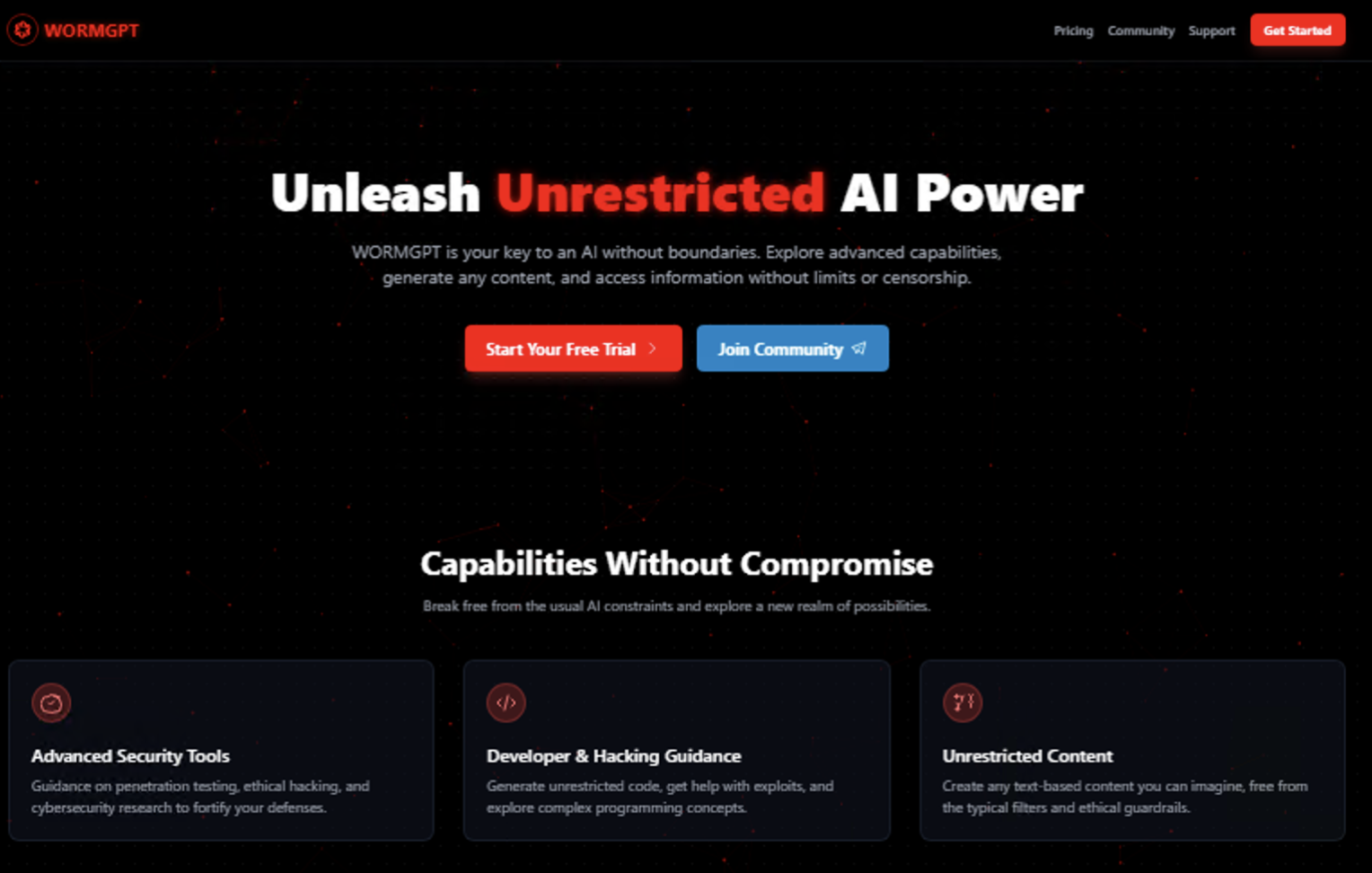
Figure 4: WormGPT‘s website
⠀
This is a freely accessible or low-cost criminally oriented AI chatbot/tool marketed in underground spaces to generate or support illicit content and cybercrime-related tasks. Its use highlights the problem of low-barrier access in the criminal LLM market. Its relevance does not lie in any demonstrated advanced capability and there is little evidence that it provides meaningful technical sophistication beyond basic generative AI functions. Rather, KawaiiGPT is important as an example of how free or near-free tools can normalize AI-assisted offending among less experienced users. Its significance is therefore sociological rather than technical as it lowers the threshold for participation, makes AI-assisted offending appear accessible and low-risk, and introduces novice actors to workflows such as phishing text generation, fraud scripting, impersonation, and other forms of low-level cybercrime support.
This tool family represents a meaningfully different category from the chatbot-style tools that dominate criminal AI branding. BruteForceAI prioritizes precision over content generation. It integrates large language models for intelligent form analysis and sophisticated multi-threaded attack execution. This distinction matters. The broader trend it reflects is one of attackers making fewer, better-targeted attempts rather than relying on brute volume. AI here is not a content tool. It is an execution layer, and the shift from noisy credential stuffing to quiet, optimized targeting is strategically more significant than any individual tool name (Figure 5).
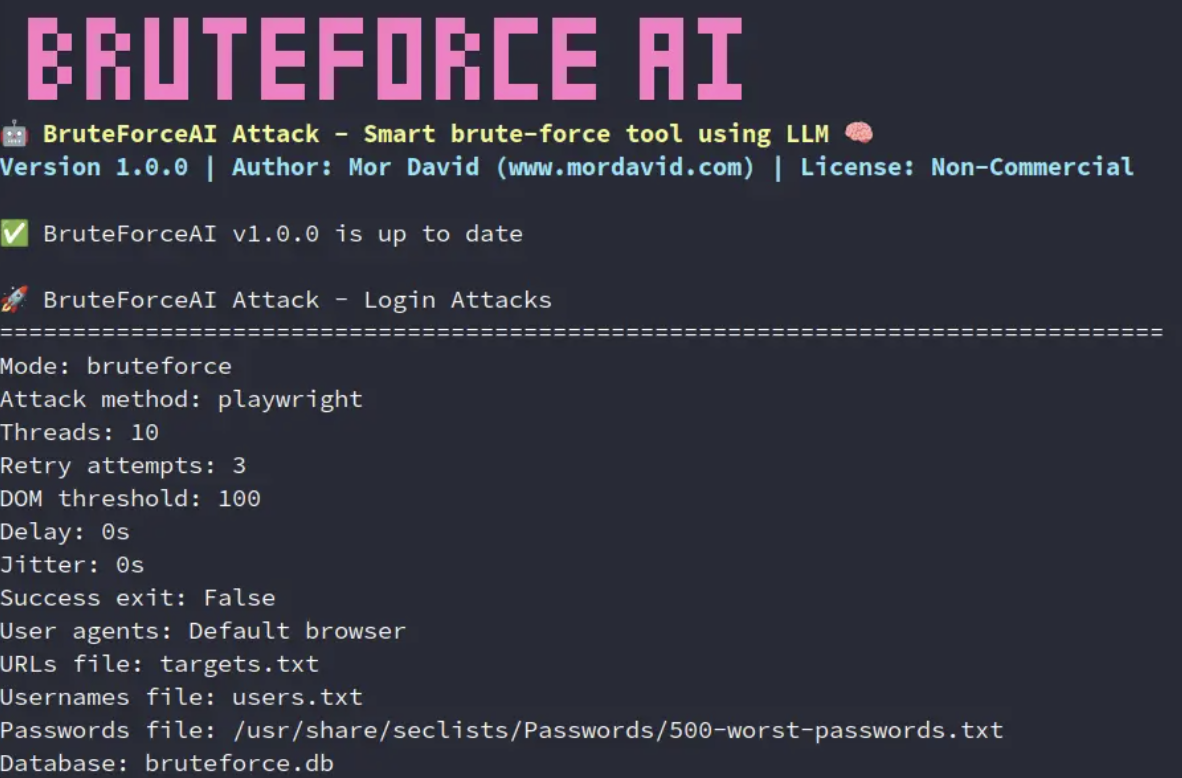
Figure 5: BruteforceAI program
⠀
This AI represents the modular criminal AI platform. Its significance lies in how it is marketed. Public reporting describes it as more than another “evil chatbot,” with claims around coding support, multiple model components, and broader operational utility. Still, Xanthorox should be framed cautiously. It is better treated as an emerging or ambitiously marketed platform than as a universally verified flagship of the underground market (Figure 6).
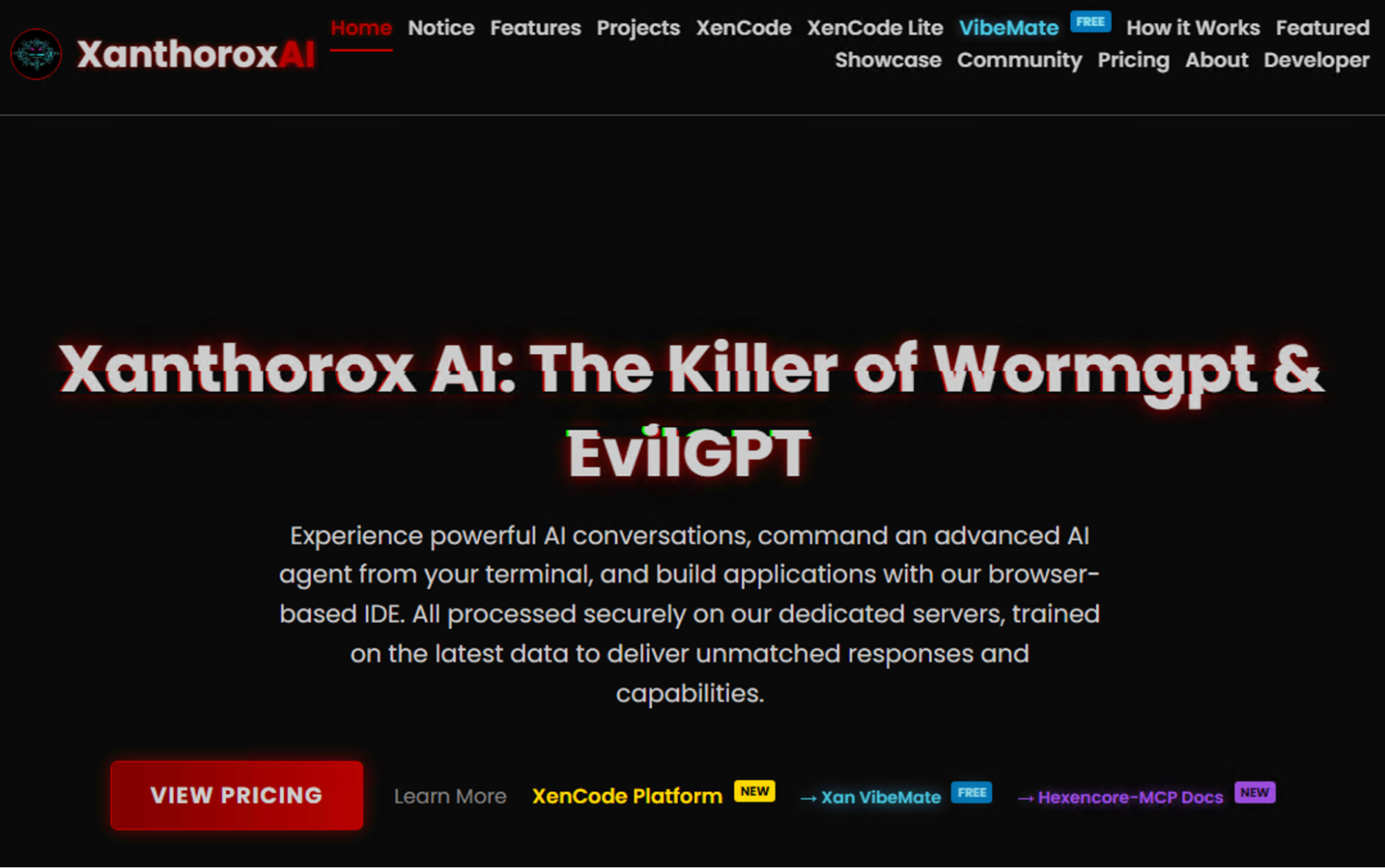
Figure 6: Xanthorox’s website
⠀
The wide variety of smaller adversarial AI tools in 2026, including names like DarkGPT, EscapeGPT, WolfGPT, Evil-GPT, XXXGPT, and BadGPT, should be viewed with caution. These brands do not constitute a coherent or reliable category; instead, they often function as short-lived rebrandings or simple interfaces built on public or open-source models. In many cases, these are "scam-of-the-month" services hosted on Telegram, designed to capitalize on hype, with entry-level memberships starting at a few dozen dollars. However, they should not be dismissed outright, as some do offer genuine un-censorship or serve as testing grounds for malicious exploits. The bottom line in 2026 is that the brand name matters less than the underlying architecture. Most "GPT" labels are disposable marketing shells used to evade takedown measures or rebuild credibility after a service failure.
What truly defines the threat is the infrastructure supporting them. While entry-level tiers cost very little, professional-grade systems can cost thousands of dollars. At this level, the value isn't in the name, but in the technical setup.: These include the specific model used, how the service is delivered, the reliability of the operator, and how well it connects with other criminal tools like phishing kits, stealers, and ransomware support. Ultimately, the market has shifted toward operationalizing AI, focusing on tools that can automate and maximize the efficiency of entire illicit workflows.
One of the most important and still underappreciated developments in this landscape is the resale and abuse of legitimate AI access. This pattern is not new. Every widely adopted and commercially valuable technology eventually generates a secondary criminal market around stolen credentials, compromised accounts, and unauthorized access. AI is now following the same trajectory. Threat actors do not rely only on underground “dark AI” tools. They also misuse mainstream AI platforms directly.
However, the abuse of stolen AI accounts and hijacked API keys may be more consequential than many earlier credential markets. Access to legitimate AI services can provide threat actors with scalable cognitive and operational capabilities, not just access to a single platform or dataset. A compromised AI account may enable faster reconnaissance, multilingual targeting, automated content production, code generation, malware troubleshooting, and the refinement of phishing or fraud workflows. Hijacked API keys may also allow actors to consume compute resources at the victim’s expense, bypass usage restrictions tied to their own identities, and access more capable models or enterprise-grade infrastructure. In this sense, stolen AI access is not merely another credential commodity. It can function as an operational force multiplier across multiple stages of the attack lifecycle, making its abuse both expected and potentially more impactful than many traditional forms of account compromise (Figures 7 and 8).
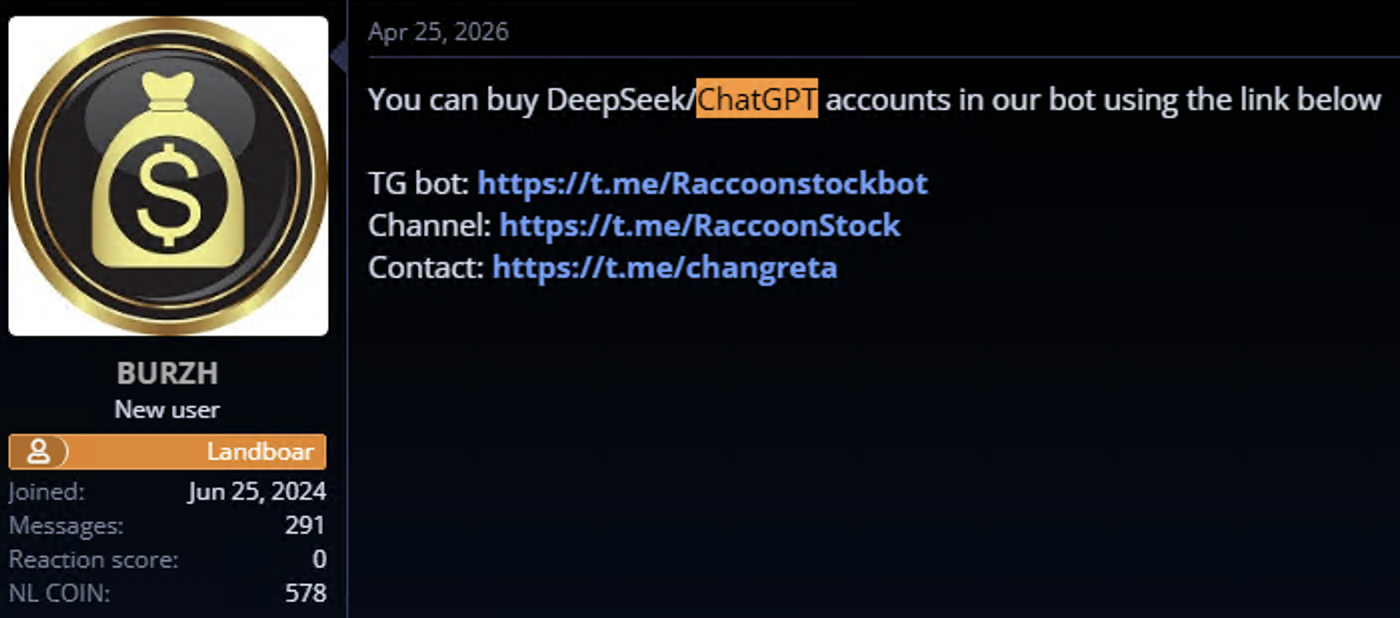
Figure 7: Stolen AI accounts for sale on a cybercrime forum
⠀
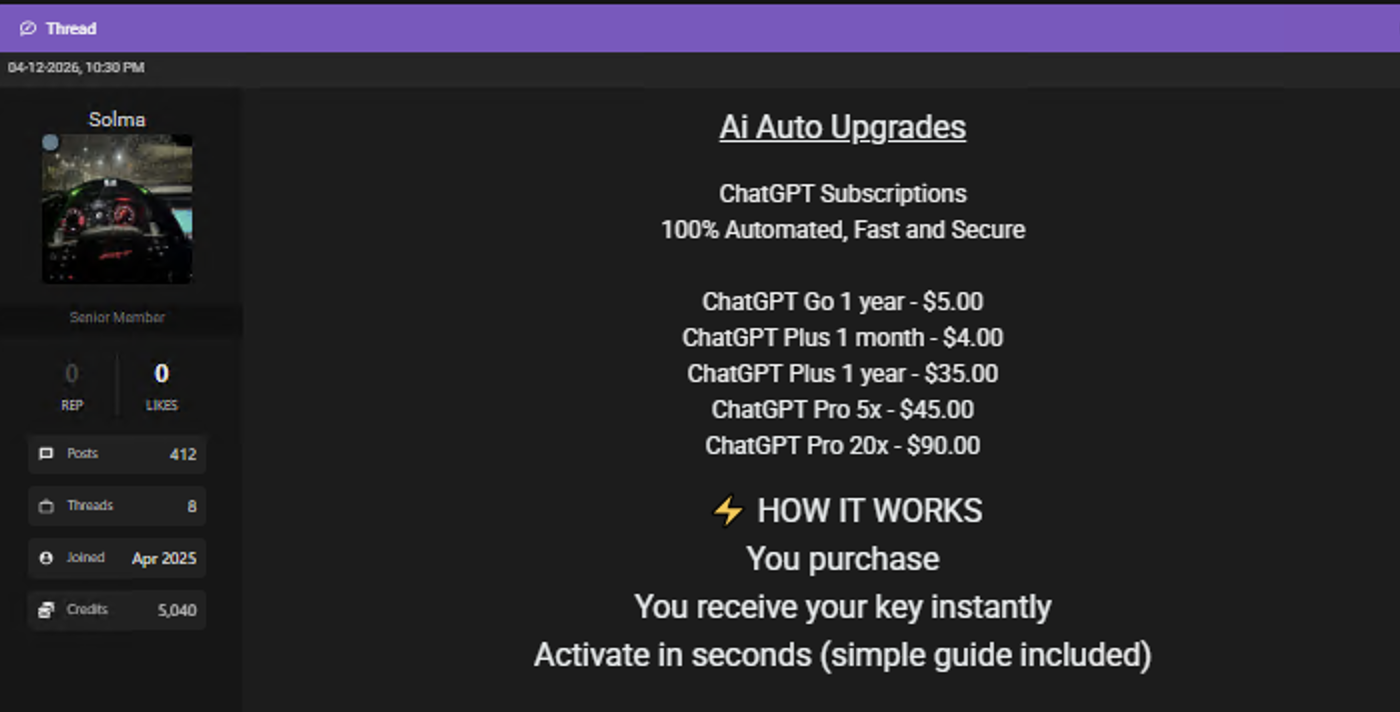
Figure 8: More stolen AI accounts for sale on a cybercrime forum
⠀
The impact on organizations can be serious as AI accounts may contain proprietary information such as prompts, uploaded files, source code, legal drafts, customer data, internal summaries, product plans, meeting notes, investigative material, or strategic analysis. If compromised, the exposure extends beyond the credential itself. Enterprise AI accounts and AI-related access tokens should therefore be treated like cloud credentials, developer secrets, email accounts, or administrative SaaS access.
Deepfake services have become one of the criminal AI market’s most important adjacent segments, particularly in fraud, synthetic identity creation, onboarding abuse, and KYC bypass. These services are marketed not as experimental technologies, but as practical fraud enablers. Common offerings include face swaps, voice cloning, fake selfie generation, synthetic profiles, document manipulation, virtual camera injection, video-call impersonation, and full onboarding bypass packages (Figure 9). Their significance stems from the fact that many digital platforms continue to rely heavily on remote identity verification and visual trust cues.
The purpose of bypassing KYC controls is to create, validate, or access accounts that should not exist or should not be available to the offender. Once established, such accounts can support money laundering, mule activity, romance scams, investment fraud, payment abuse, sanctions evasion, account resale, and marketplace manipulation. The threat is no longer limited to static fake images. Attackers can combine face swaps, synthetic video, animated media, and virtual camera injection to impersonate real individuals during onboarding or verification.
Deepfake services also strengthen broader fraud operations. Romance scams, fake recruitment schemes, executive impersonation, vendor fraud, and investment scams all become more persuasive when synthetic voice or video is added to the deception chain. These services should therefore be understood as part of the same criminal AI capability stack. LLMs generate scripts, refine pretexts, localize language, and support interaction at scale. Stolen data enhances personalization. Deepfake tools add the visual and audio layer that increases trust and makes deception harder to detect. Together, these capabilities form a more complete deception architecture.
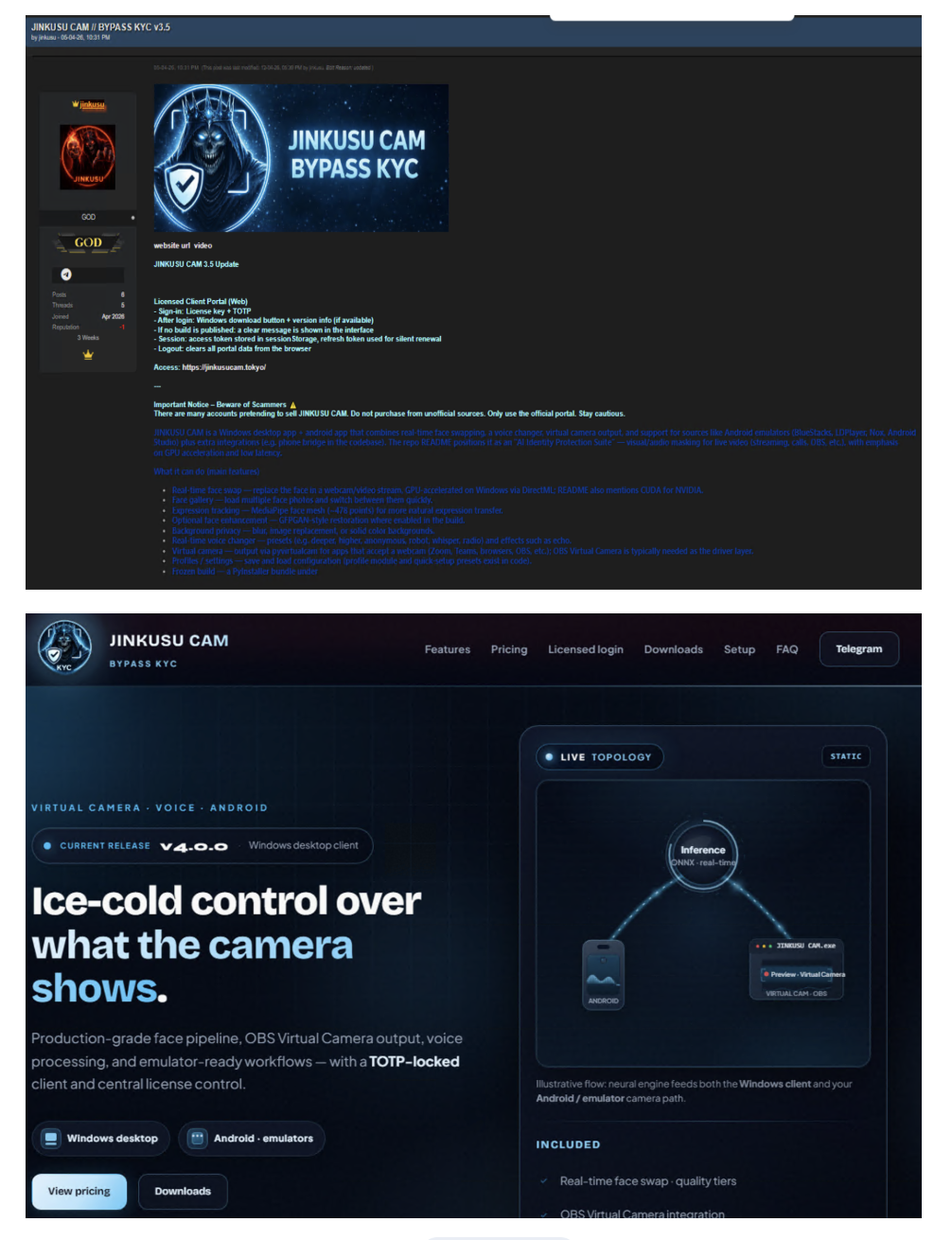
Figure 9: Cybercrime forum's advertisement for a Deepfake KYC bypass service website
For organizations, the impact of AI-enabled cybercrime is both economic and operational. The main concern is not the sudden arrival of fully autonomous AI hacking, but the steady increase in attacker productivity, deception quality, operational flexibility, and post-compromise efficiency.
This last concern is important to note. Once attackers obtain data, AI can help them review it more quickly and more systematically. Models can summarize large document sets, identify sensitive or monetizable material, extract victim-specific details, and support tailored extortion or fraud. This does not require a purpose-built criminal model. It requires access to a capable model, relevant data, and a clear criminal objective.
At the same time, enterprise AI environments are becoming part of the attack surface. AI accounts, API keys, prompts, uploaded files, connectors, retrieval systems, internal knowledge bases, and agentic workflows can all expose sensitive business information if they are compromised, misused, or poorly governed. These assets should therefore be managed with the same seriousness as other critical systems, including clear ownership, least-privilege access, logging, monitoring, retention rules, and periodic access reviews.
Organizations should respond by treating criminal AI as a challenge of trust, identity, workflow security, and data governance, rather than only as a malware issue. High-risk business processes should be reinforced with stronger approval controls, transaction verification, segregation of duties, and out-of-band confirmation, especially for financial transfers, access changes, sensitive data requests, and executive communications.
Phishing and fraud defenses must also adapt. Poor grammar and obvious language errors are no longer reliable indicators of malicious activity. Organizations should assume that many adversaries can now generate polished, localized, and credible communications at scale. Detection should therefore rely more heavily on behavioral indicators, sender validation, process anomalies, identity verification, and transaction integrity than on superficial language cues.
At the same time, organizations should prepare for AI-assisted post-breach exploitation by improving data minimization, segmentation, access controls, monitoring, logging, and incident response planning. They should also monitor the broader underground capability stack, including jailbreak services, stolen AI accounts, and synthetic media tooling, because these increasingly shape attacker tradecraft in practice.
The market will likely see more bundling of text generation, translation, impersonation, data analysis, and synthetic media into a single criminal offering. It will also likely see continued abuse of legitimate AI platforms alongside wrapper-based underground services. The ecosystem will likely remain uneven, opportunistic, and hype-heavy, while becoming strategically important because it makes cybercrime easier to execute, scale, and detectFor organizations, the main risk is not only higher financial loss, but also the growing operational strain created by AI-assisted attacks that are faster, more scalable, and harder to triage.
Enterprise AI accounts, API keys, prompts, uploaded files, connectors, retrieval systems, internal knowledge bases, and agentic workflows should be managed as critical assets, with clear ownership, least-privilege access, logging, monitoring, retention rules, and periodic access reviews. Sensitive data should be exposed to AI systems only when there is a clear business need, especially when AI tools connect to email, cloud storage, code repositories, customer databases, financial systems, or external services. High-risk AI connectors and workflows should be inventoried, risk-ranked, and monitored for abnormal access, bulk data movement, privilege escalation, or unauthorized agent actions.
As phishing tactics become better, core controls should include MFA, phishing-resistant authentication, conditional access, DLP, EDR/XDR, API security monitoring, secrets scanning, prompt and output filtering, and model-access controls. Incident response plans should also cover stolen AI accounts, exposed prompts, compromised API keys, leaked embeddings, abused connectors, and sensitive data retained in AI workspaces.
The organizations best positioned for the next phase will be those that integrate AI risk into existing security governance rather than treating it as a separate technical issue. As criminal use of AI becomes part of everyday attacker tradecraft, resilience will depend on the ability to verify identity, control access, protect data flows, monitor AI-enabled workflows, and maintain human oversight over high-impact decisions. The future defensive priority is therefore not to predict every AI-enabled attack, but to build security architectures that remain reliable when attackers become faster, more persuasive, and more efficient.
此内容由惯性聚合(RSS阅读器)自动聚合整理,仅供阅读参考。 原文来自 — 版权归原作者所有。