








We’ve helped sequence the genomes of 13 endangered species with Google’s AI, and we’re just getting started.
Andrew Carroll
Product Lead, Genomics
General summary
Scientists predict one million species may face extinction. To help preserve endangered species' genetic information, Google is providing funding and AI tools to the Vertebrate Genomes Project and the Earth BioGenome Project. Google.org recently awarded The Rockefeller University the AI for Science fund to expand the number of species being supported.
Summaries were generated by Google AI. Generative AI is experimental.
Bullet points
- This article, "How we’re helping preserve the genetic information of endangered species with AI," explains Google's role.
- Google is using AI to help sequence the genomes of endangered species, aiding conservation efforts.
- Understanding a species' genome helps scientists preserve genetic diversity and prevent extinction.
- AI tools like DeepPolisher make sequencing faster, cheaper, and more accurate than ever before.
- Google is funding efforts to sequence 150 more species, making the data openly available.
Summaries were generated by Google AI. Generative AI is experimental.
Basic explainer
Scientists want to save endangered animals by studying their DNA. It's like reading their instruction manual to understand them better. Google is helping by using AI to read the DNA of these animals faster and cheaper. This helps scientists protect these animals and learn about life on Earth.
Summaries were generated by Google AI. Generative AI is experimental.
Explore other styles:
Your browser does not support the audio element.
Listen to article
This content is generated by Google AI. Generative AI is experimental
[[duration]] minutes
Scientists predict that one million species may be at risk of extinction. If we don’t accurately capture their genetic information now, we risk losing many of them forever and destabilizing the ecosystems that provide us with food security, climate regulation and the biological foundations for modern medicine. Still, sequencing the genomes of millions of species on our planet is an extraordinarily difficult and expensive task — if not impossible —and it’s one the Vertebrate Genomes Project, led by Erich Jarvis at The Rockefeller University, is tackling with Google’s AI.
To help them and the Earth BioGenome Project achieve their goal of sequencing all known species on Earth, we’ve supplied funding, support and cutting-edge AI tools to help preserve the genetic code of 13 new endangered species across several animal classes, including mammals, birds, amphibians and reptiles — and recently announced more support. Here’s a look at nine of the species, whose genomes are free and available for use by conservation researchers.

The critically endangered cotton-top tamarin lives in the forests of northwest Colombia, and their fruit-rich diets contribute to seed dispersal. They are one of the most endangered species of primates in the world.
Source: Wildlife Conservation Society

The endangered golden mantella frog is found within fragmented forest habitats in a remote area of Madagascar. It is one of the smallest and rarest frog species on Earth.
Source: Frank Vassen, Torotorofotsy marshes, Madagascar via Wikimedia Commons

Grevy’s zebras, the largest of the wild equids, have undergone substantial reductions in their population over the last few decades. They are considered endangered in their natural habitat.
Source: Bernard Dupont, Samburu National Reserve, Kenya via Wikimedia Commons
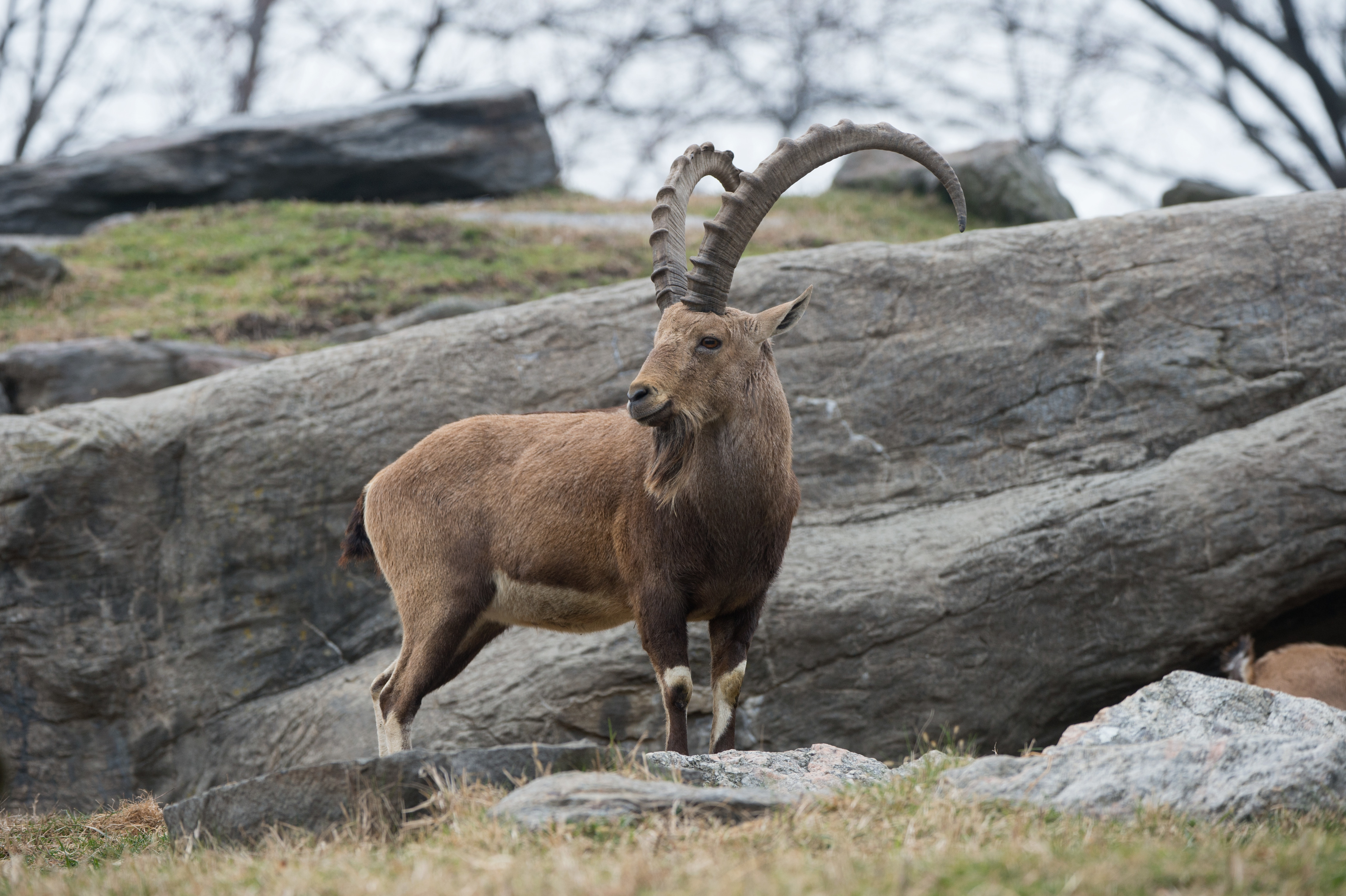
The vulnerable Nubian ibex once inhabited a significant range in the mountains of Northeast Africa and the Middle East, but today their populations are dwindling.
Source: Wildlife Conservation Society

The critically endangered elongated tortoise is native to South and Southeast Asia. Conservationists are working to protect remaining wild populations and reintroduce captive-bred tortoises.
Source: Wich’yanan (Jay) Limparungpatthanakij, inaturalist.org, via Wikimedia Commons

The endangered hog deer was once plentiful throughout in South and in Southeast Asia, including India, Pakistan, Burma and Thailand. The species now faces serious decline and a loss in genetic diversity.
Source: Shadow Ayush via Wikimedia Commons

Eld's deer is an endangered species indigenous to Southeast Asia. Managed populations exist around the world, but inbreeding is common, and cooperative cross-breeding is required if managed populations are to be genetically varied enough for reintroduction into the wild.
Source: Wildlife Conservation Society

The endangered golden lion tamarins live in the Atlantic coastal regions of southeastern Brazil, where their populations once dwindled to just a few hundred individuals. Intensive conservation efforts have helped, but the species need continued intervention to prevent inbreeding and extinction.
Source: Wildlife Conservation Society

The critically endangered African penguins have significantly declined in their native coastal waters of South Africa and Namibia. They are at risk of extinction without urgent conservation efforts.
Source: Wildlife Conservation Society
Understanding a species’ genome could be the key to their conservation
By sequencing these animals’ genomes — their complete set of genetic instructions (DNA) — scientists are able to support efforts to preserve the genetic diversity of these animals and prevent further loss of their species. Researchers at the University of Otago, for instance, analyzed the genome of every living kākāpō, the world's only nocturnal and flightless parrot, and executed a breeding and conservation plan that is now successfully pulling it back from the brink of extinction. Genomes not only help us understand how a particular species has adapted to life in its environment; when we compare the DNA sequences of different species, biologists can also better understand the history of life on this planet. These insights are critical to future breakthroughs in conservation, agriculture, and even global health and disease prevention.
Understanding the biological picture of life
For more than a decade, Google researchers have been building AI technology to help scientists achieve what once seemed impossible, from forecasting floods to mapping the connections in the human brain. It took thirteen years and $3 billion to sequence the very first human genome. Now, we can sequence humans, animals and plants in a matter of days, with a few thousand dollars and with stellar accuracy. AI tools developed by Google, like DeepPolisher, DeepVariant and DeepConsensus played an important role in these improvements, and what once felt like a moonshot is within reach: a comprehensive catalogue that encapsulates a complete biological picture of life, changing science as we know it.
The technologies we build at Google have the strongest impact when scientists use them to solve real-world problems. To further the important mission of the Vertebrate Genome Lab and Earth BioGenome Project, Google.org recently named The Rockefeller University as a recipient of the AI for Science fund to expand the above number to 150 additional species — all to be openly released to the scientific community and public.