






Why C4A metal is a great place to run Android and why Anbox Cloud makes that practical.
If you’ve spent even a small portion of time working with Android development at scale, you’ve likely encountered some pinch points.
The platform was built for Arm-based devices, mobile physical hardware, and tightly controlled system environments. Cloud platforms, on the other hand, are optimized for abstraction, elasticity, and shared infrastructure. Anbox Cloud has already bridged this gap, enabling Android developers to scale virtual instances in the cloud efficiently.
Yet, even with this flexibility, some use cases and workloads, like system-level Android development or large-scale Cuttlefish farms, call for native Arm performance and direct hardware access. For years, developers had to choose between genuine Android execution with physical device labs and cloud efficiency.
With the launch of Google Cloud’s new Axion-based bare-metal instance, C4A metal, that trade-off starts to disappear. C4A-metal brings native Arm hardware directly into the cloud, without the performance limitations or complexity of nested virtualization. For Android workloads, this is a big deal.
And it’s the perfect fit with Anbox Cloud.
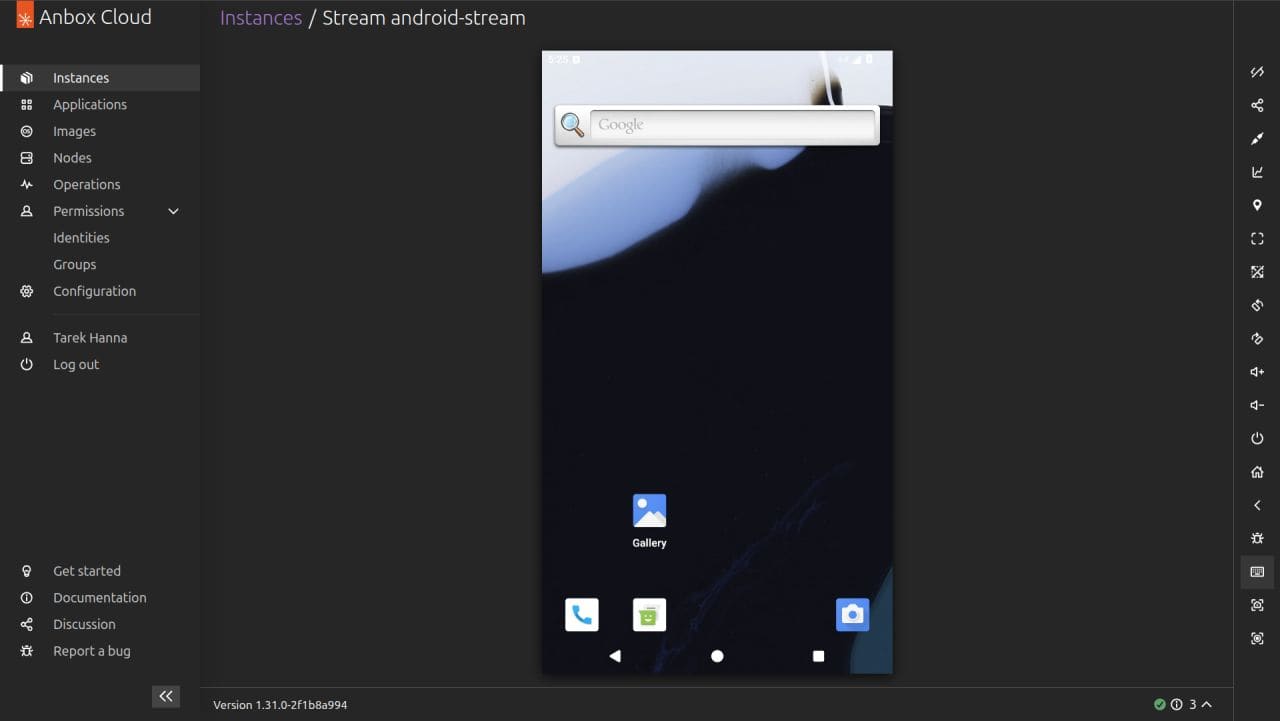
Anbox Cloud is Canonical’s platform for running Android at scale in cloud environments. It was built to manage, scale, and stream large numbers of Android instances reliably, whether for testing, CI/CD integration, automation, or interactive remote access.
On C4A metal, Anbox Cloud can run and orchestrate large fleets of Android systems directly on Arm hardware. There’s nothing special to configure, no alternative workflows to learn. You provision C4A metal, deploy Anbox Cloud, and Android workloads run exactly as you would expect, only now with native performance and cloud elasticity.
“Anbox Cloud’s support for fully virtualized Android provides an execution environment that closely matches the assumptions of AOSP and reference platforms such as Cuttlefish,” says Alistair Delva from Google’s Cloud Android team. “By allowing full Android system images, including the kernel, to run unmodified on scalable cloud and bare-metal infrastructure, such as C4A metal, Anbox Cloud enables system-level Android development, validation, and compliance workflows to move to the cloud with a level of fidelity that has traditionally required physical device labs. This combination of platform fidelity and cloud-scale operation represents a meaningful step forward for how Android systems can be built, tested, and operated.”
From a developer’s point of view, this is where things get interesting. Android instances start quickly, can be scaled up and down programmatically and effortlessly, and can be accessed remotely through streaming when needed. From a platform point of view, everything is automated, observable, and reproducible.
It just works.
Scalable Cuttlefish environments, finally done right
One of the most compelling use cases for C4A metal is running large-scale Cuttlefish environments.
Android Cuttlefish is widely used for Android platform development and system validation, but it has traditionally been difficult to scale. Physical labs don’t grow on demand, and running virtual devices on top of virtual machines quickly becomes inefficient and non-representative.
C4A metal removes that bottleneck. Anbox Cloud can launch and manage many Cuttlefish-based Android systems directly on bare metal, with no nested virtualization. The result is a cloud-native Cuttlefish farm that behaves like real hardware but scales like cloud infrastructure.
For Android platform teams, automotive OEMs, and system developers, this means faster feedback cycles, higher parallelism, and far less operational overhead.
Not just bare metal: one platform across C4A and N4A
Bare metal is powerful, but it’s not the whole story.
Thanks to our close collaboration with Google Cloud, Anbox Cloud is designed to run across the Axion portfolio. Teams can use C4A metal for high-fidelity system testing while running build pipelines, orchestration services, and supporting infrastructure on C4A or N4A instances. The same Anbox Cloud deployment can span all of these environments without changing tools or workflows.
This flexibility is the real value. You don’t need to choose between realism and efficiency up front. You can place each part of your Android workflow on the infrastructure that fits it best, and still operate everything as a single, coherent platform.
A natural fit for modern Android development
Android was built for Arm. C4A metal brings Arm-native bare metal into the cloud. Anbox Cloud connects the two with a platform that knows how to run, scale, and stream Android reliably.
Together, they make Android development simpler, faster, and more scalable, without asking teams to compromise on performance or fidelity.
As Android workloads continue to grow beyond apps into full systems and platforms, having infrastructure that matches Android’s assumptions matters. With C4A metal and Anbox Cloud, that infrastructure is finally available as an on-demand cloud service.
Try Anbox Cloud on C4A metal now and stay tuned for further developments in our upcoming releases. For detailed instructions on how to upgrade your existing deployment, please refer to the Anbox Cloud documentation.
Further reading
Learn more about Anbox Cloud or contact our team to discuss your use case
Android is a trademark of Google LLC.
Anbox Cloud uses assets available through the Android Open Source Project.
The Android robot is reproduced or modified from work created and shared by Google and used according to terms described in the Creative Commons 3.0 Attribution License.