



惯性聚合 高效追踪和阅读你感兴趣的博客、新闻、科技资讯
阅读原文 在惯性聚合中打开

推荐订阅源

宝玉的分享
宝玉的分享
NISL@THU
NISL@THU
E
Exploit-DB.com RSS Feed
L
LINUX DO - 热门话题
L
Lohrmann on Cybersecurity
K
Kaspersky official blog
Project Zero
Project Zero
Cisco Talos Blog
Cisco Talos Blog
T
The Exploit Database - CXSecurity.com
P
Palo Alto Networks Blog
C
CXSECURITY Database RSS Feed - CXSecurity.com
T
Threatpost
S
Schneier on Security
G
GRAHAM CLULEY
The Hacker News
The Hacker News
T
Threat Research - Cisco Blogs
Scott Helme
Scott Helme
Threat Intelligence Blog | Flashpoint
P
Privacy & Cybersecurity Law Blog
C
Cyber Attacks, Cyber Crime and Cyber Security
Cyberwarzone
Cyberwarzone
C
CERT Recently Published Vulnerability Notes
T
Tor Project blog
AWS News Blog
AWS News Blog
Simon Willison's Weblog
cs.CL updates on arXiv.org
爱范儿
爱范儿
P
Privacy International News Feed
云风的 BLOG
云风的 BLOG
P
Proofpoint News Feed
S
Securelist
G
Google Developers Blog
The Last Watchdog
The Last Watchdog
Google Online Security Blog
美团技术团队
F
Fortinet All Blogs
小众软件
小众软件
Recorded Future
Recorded Future
V
Visual Studio Blog
B
Blog RSS Feed
H
Help Net Security
CTFtime.org: upcoming CTF events
Google DeepMind News
Blog — PlanetScale
Blog — PlanetScale
博客园 - 聂微东
Stack Overflow Blog
Stack Overflow Blog
Martin Fowler
Martin Fowler
Latest news
Latest news
Spread Privacy
Spread Privacy
H
Heimdal Security Blog

TechEmpower

Agentic Coding in Practice How Our Benchmarks Led to a 25x MongoDB Performance Improvement Product meets Engineering in the AI Era Red Teaming Gen AI Building Reliable Autonomous Agentic AI Webinar – AI Coding Tool Metrics: DORA and CTOs Deep Dive AI Coding Tools Metrics Webinar – Leveraging AI Tooling Across Your Software Development Lifecycle 2-week spike to ramp up on AI Coding Tools Announcing TechEmpower’s AI Developer Bootcamp Real-time Monitoring of LLM-Based Applications
QA in the age of agentic coding: shift-left and shift-right
Tony Karrer · 2026-04-17 · via TechEmpower

You may have heard some version of this question already: “If AI can generate code and tests so quickly, do we still need QA?”

Yes we still need QA, but what “QA” means is rapidly changing.

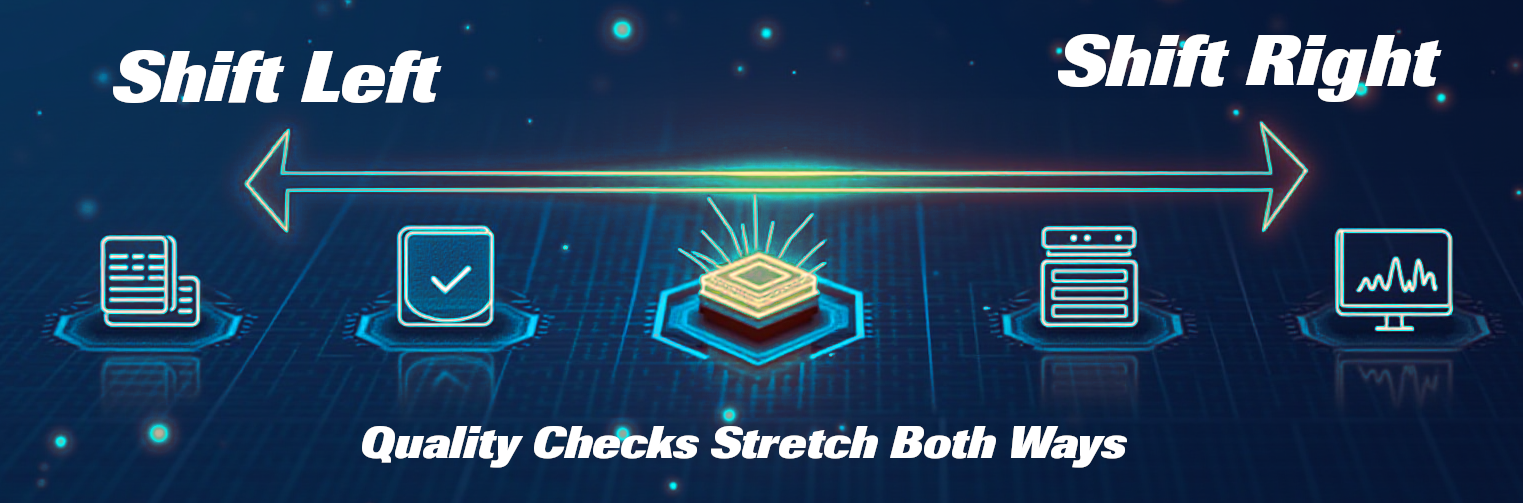
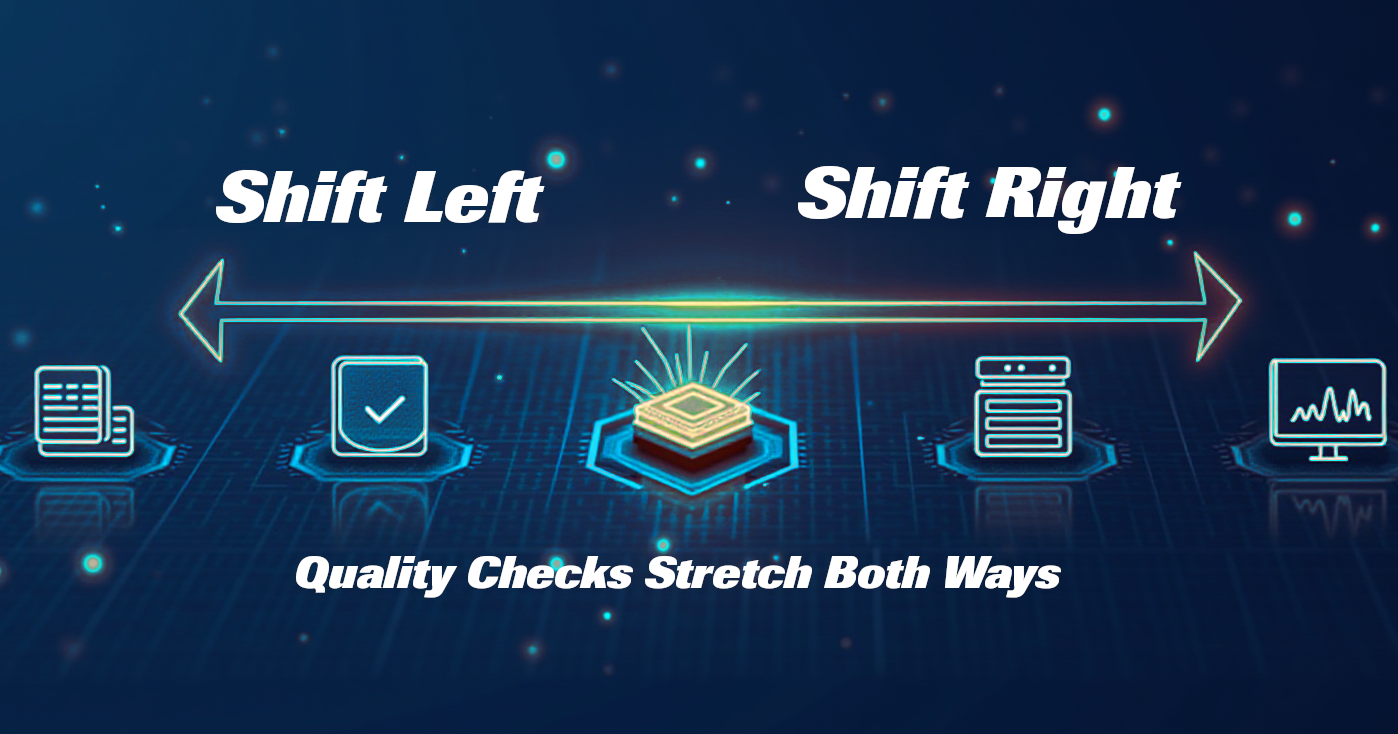
Teams using agentic coding are shifting quality both left and right. Left into work definition, acceptance criteria, and test architecture. Right into integration confidence, production signals, and release confidence.The shift matters because no downstream checkpoint can absorb the volume agentic engineering can produce.

QA has to stretch in both directions – into the decisions that shape the work, and into the signals that show it will hold up in production.

Where this is heading

The shape of QA is still in flux.

Some teams are pushing quality further left, with more rigor in specs, acceptance criteria, and engineering guardrails before agents ever start writing code. Fowler’s recent “harness” framing pushes even further in that direction: the goal is to create stronger guides, checks, and boundaries around agentic work so that quality is built into the system earlier, rather than rescued at the end.

At the same time, teams are also being pushed right. Faster code generation increases the need for integration confidence, release confidence, observability, and production feedback.

Both moves follow the same pattern: QA is no longer a stage in the pipeline. It’s a thread running through the whole SDLC.

Where AI helps

AI can be genuinely useful in QA work.

  • It can generate baseline unit tests quickly.
  • It can help fill gaps in integration coverage.
  • It can suggest edge cases.
  • It can help analyze failures faster.
  • It can reduce repetitive test-authoring work.

We worked with one client that had a 10+ year old Java application with almost no test coverage. Spending weeks writing tests by hand was not getting prioritized. AI generated a baseline suite in hours.

That was valuable. But “better than nothing” is not the same as “good enough to trust.” That is still the trap.

QA responsibilities still exist

Whether you call it QA or absorb the responsibility into other functions, the responsibilities still exist:

  • Helping define what “correct” means before work starts.
  • Shaping acceptance criteria, workflows, and edge cases.
  • Validating outcomes, not just checking whether scripts pass.
  • Improving release confidence across systems, not just within a single change.
  • Watching production signals and feedback after release.
  • Helping teams identify where AI-generated coverage looks good but misses the real risk.

QA’s future will vary by organization: some will keep a distinct function, some will shift testing into engineering, and others will refocus specialists on end-to-end validation, production risk, and release confidence.

What does not hold up is the idea that QA can remain a cleanup step at the end.

A more practical QA playbook

A practical approach for 2026 looks something like this:

  • Use AI aggressively to generate baseline unit and integration test code, followed by careful human review to finalize.
  • Involve QA earlier in shaping acceptance criteria and edge cases.
  • Put more energy into integration confidence and release confidence.
  • Spend less time maintaining brittle scripts and more time validating outcomes.
  • Treat QA as part of quality system design, not just test execution.

That last point is one of the biggest changes.

The QA teams that create the most value in an agentic world are not just writing or maintaining scripts. They are helping design the system that makes rapid change safe.

Additional reading