








Three Chinese women mathematicians gained global recognition after winning major awards at the 2026 Breakthrough Prize, widely known as the “Oscars of Science.”
The Breakthrough Prize honors leading scientists worldwide, with each prize valued at US$3 million across life sciences, fundamental physics, and mathematics.
At the April 18 ceremony, Wang Hong and Tang Yunqing received the New Horizons in Mathematics Prize, while Zhang Mingjia was awarded the Maryam Mirzakhani New Frontiers Prize for early-career women mathematicians, according to CGTN.
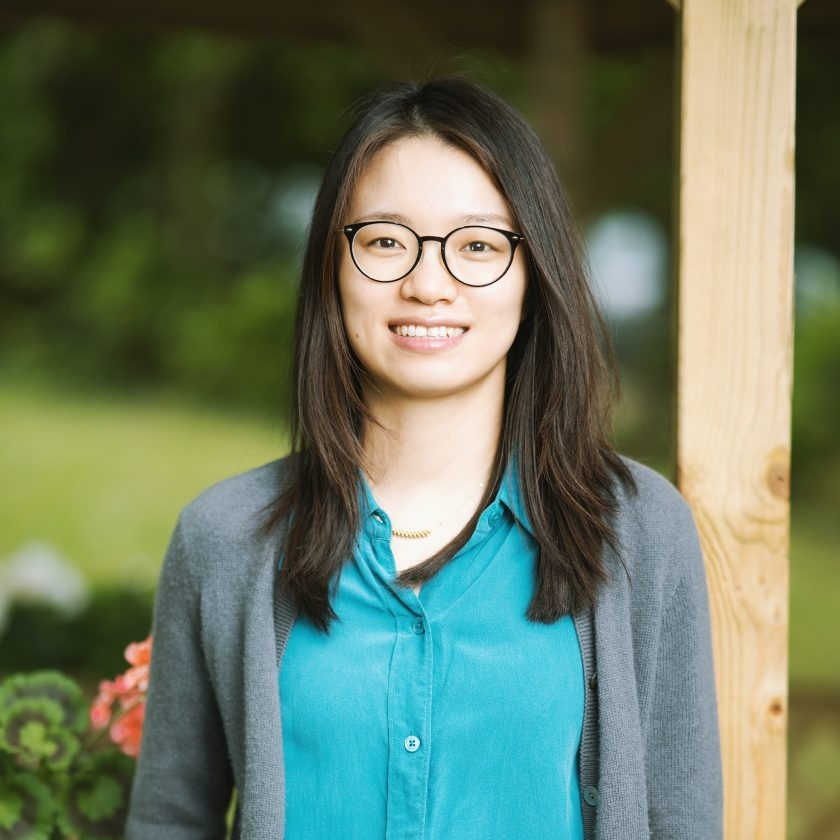
Wang Hong
 |
|
Chinese mathematician Hong Wang. Photo courtesy of IHES |
Wang, 35, was recognized for her work in harmonic analysis, partial differential equations, and geometric measure theory, including contributions to the local smoothing conjecture, the Furstenberg set conjecture, and the Kakeya conjecture.
On April 14, she was also named one of four recipients of the 2026 Clay Research Award by the Clay Mathematics Institute, alongside Tuomas Orponen of the University of Jyväskylä in Finland, Pablo Shmerkin of the University of British Columbia, and Joshua Zahl, now a chair professor at China’s Nankai University. The institute honored them for proving both the Furstenberg set conjecture in the plane and the Kakeya conjecture in three dimensions.
Her most notable breakthrough came in February 2025, when she and Zahl posted a 127-page paper on the arXiv preprint server resolving the three-dimensional Kakeya conjecture, a problem first posed by Soichi Kakeya in 1917 that had challenged mathematicians for more than a century.
According to the South China Morning Post, the result could have practical implications for imaging, data processing, cryptography, and wireless communication, fields that rely on how wave packets interact.
Wang is currently a professor at New York University’s Courant Institute of Mathematical Sciences and a permanent professor at France’s Institut des Hautes Études Scientifiques, a role she assumed in September 2025.
She previously received the Maryam Mirzakhani New Frontiers Prize in 2022, the Salem and Ostrowski prizes in 2025, and the 2025 Gold Medal of Mathematics from the International Consortium of Chinese Mathematicians, often referred to as the "Chinese Fields Medal." She was also named the 2026 recipient of the Sadosky Research Prize in Analysis from the Association for Women in Mathematics.
Her recent achievements have strengthened her position as a potential contender for the Fields Medal, often described as the highest honor in mathematics. In its 90-year history, only two women have received it: Maryam Mirzakhani in 2014 and Maryna Viazovska in 2022. If shortlisted, Wang would also become the third Fields Medalist of Chinese descent, after Shing Tung Yau in 1982 and Terence Tao in 2006.
Tang Yunqing
 |
|
Chinese mathematician Tang Yunqing. Photo courtesy of Princeton University |
Tang, currently an associate professor at the University of California, Berkeley, U.S., shared the 2026 New Horizons in Mathematics Prize with Bulgarian mathematician Vesselin Dimitrov for solving long-standing problems in number theory that had resisted previous approaches.
Together with Frank Calegari of the University of Chicago, they proved the "unbounded denominators conjecture," which concerns a class of mathematical objects known as modular forms, using methods that surprised experts in the field, according to Harvard University.
More recently, again with Calegari, they proved the irrationality of a number linked to a basic infinite series, marking the first such result since Roger Apéry’s work more than 45 years ago. The three were later awarded the 2026 Frank Nelson Cole Prize for Number Theory for the breakthrough.
Tang, a graduate of Peking University, earned her PhD from Harvard University in 2016. After research roles at institutions including the California Institute of Technology, she joined Berkeley in 2022. She has also received the SASTRA Ramanujan Prize, a Sloan Research Fellowship, and the AWM Microsoft Research Prize.
Zhang Mingjia
 |
|
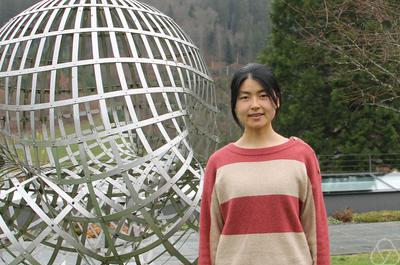
Chinese mathematician Zhang Mingjia. Photo courtesy of the Oberwolfach Research Institute for Mathematics |
Zhang, a rising star born after 1995, is an instructor in mathematics at Princeton University and a von Neumann Fellow at the Institute for Advanced Study in the U.S. She received the Maryam Mirzakhani New Frontiers Prize for contributions to the theory of Shimura varieties, a field combining number theory and algebraic geometry.
Her citation noted that she "provided a way to better understand the geometry of Mantovan’s celebrated ‘product formula’ in number theory," advancing knowledge of key structures in modern mathematics.
Zhang studied mathematics in Beijing and at the University of Bonn in Germany, where she completed her PhD in 2023 under the supervision of Peter Scholze, the 2018 Fields Medal winner.
Her research focuses on the Langlands program and p-adic Hodge theory, particularly the geometry and cohomology of Shimura varieties and their links to local mathematical structures.
此内容由惯性聚合(RSS阅读器)自动聚合整理,仅供阅读参考。 原文来自 — 版权归原作者所有。