








Professor Zhang Kai has left Yale University for the University of Science and Technology of China, citing stronger support for large-scale research and a more stable long-term environment for his students amid U.S. visa restrictions.
Zhang, one of the world’s most influential scientists in cryo-electron microscopy (cryo-EM), resigned from his tenure-track position at Yale on Jan. 12 and joined the School of Life Sciences and Medicine at USTC in Hefei, Anhui province.
The move surprised many in the academic community, as Zhang chose to leave in the middle of a promising career rather than remain at the Ivy League university and wait for promotion. But he said one of the decisive factors was the impact of U.S. visa restrictions on Chinese students.
He recalled that a PhD student in his lab was unable to return to the U.S. due to the so-called 10043 ban, forcing the student to withdraw.
In May 2020, Proclamation 10043, introduced during Donald Trump’s first term, allowed U.S. authorities to deny visas to Chinese students and researchers linked to China's "military-civil" instituitions, with around 1,000 scholars affected, according to Time magazine.
"That was the trigger that made me realise for the first time that educating young people is sometimes more difficult than writing a good article. After that, I started to rethink where I should do my research in the future, so that I can fulfil my dreams and give more young people the chance to grow in a long-term, stable environment," Zhang said in an email to the South China Morning Post on April 2.
 |
|
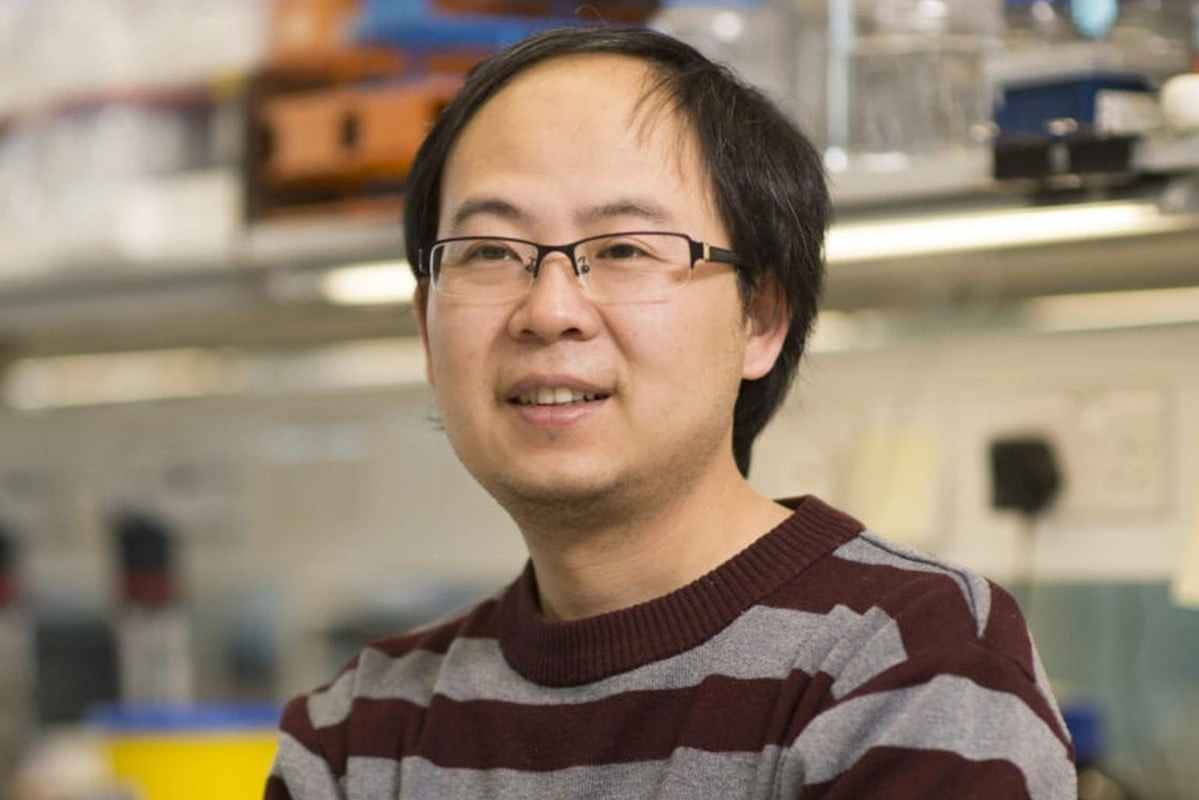
World-leading cryo-electron microscopy scientist Zhang Kai. Photo courtesy of Yale University |
Zhang earned his bachelor’s degree from Harbin Institute of Technology before joining the Chinese Academy of Sciences’ Institute of Biophysics, where he began working with cryo-electron microscopy, a technique used to study the structure of cells at near-atomic resolution.
After completing his PhD in biophysics in 2013, he conducted postdoctoral research at the Medical Research Council Laboratory of Molecular Biology in Cambridge, England, a leading center for structural biology.
Zhang said his scientific ambition is to observe mitochondria at the atomic level and push cryo-EM toward intracellular, in situ, multi-scale and dynamic analysis to better understand how life processes function inside cells. He also hopes to combine the technology with artificial intelligence, high-performance computing, large-scale disease models and drug development platforms to study life and disease at atomic resolution.
He said opportunities for this kind of large, resource-heavy research are limited in the U.S., and that even when they do exist, Chinese scientists are unlikely to be put in charge.
In an interview with China Science Daily newspaper last month, Zhang said it was "impossible for a Chinese scholar to take the lead" in such projects which often require long-term funding and cross-institutional collaboration, where Chinese researchers may face barriers to leadership roles.
"This is not to say that Chinese scholars in the U.S. don’t have opportunities ... But for major research projects that require long-term, large-scale resource investment and span multiple disciplines and institutions, it is often more difficult for Chinese scholars to be naturally seen as ‘the best person to lead this’," he said.
He also pointed to broader changes in the U.S. research climate, particularly for scholars of Chinese background, saying non-academic factors have increasingly influenced scientific work. Reflecting on his early years at Yale, he said such factors had already affected the development of his laboratory.
"The uncertain political environment in the U.S. inevitably affects scholars like me from such backgrounds with many non-academic factors; this is not a possibility, but a clear signal of the current broader context."
He said he had considered returning to China to visit some universities in 2023 but visa delays postponed his visit by more than a year. During a trip in the summer of 2024, meetings with researchers and university leaders at USTC convinced him to join the institution full-time in early 2025. He started there in January.
He said he did not choose China because he wanted to "leave the U.S.", but because he "wanted to go to a place where my scientific ambitions were more likely to be realised," adding that USTC was the "best fit" and offered a strong platform to pursue his academic goals.
"Personally, if I have the opportunity, I’d like to be able to take the lead in doing what I really want to do in China, but if it really involves strategic interests at the national level, I’d like to contribute to China."
此内容由惯性聚合(RSS阅读器)自动聚合整理,仅供阅读参考。 原文来自 — 版权归原作者所有。