


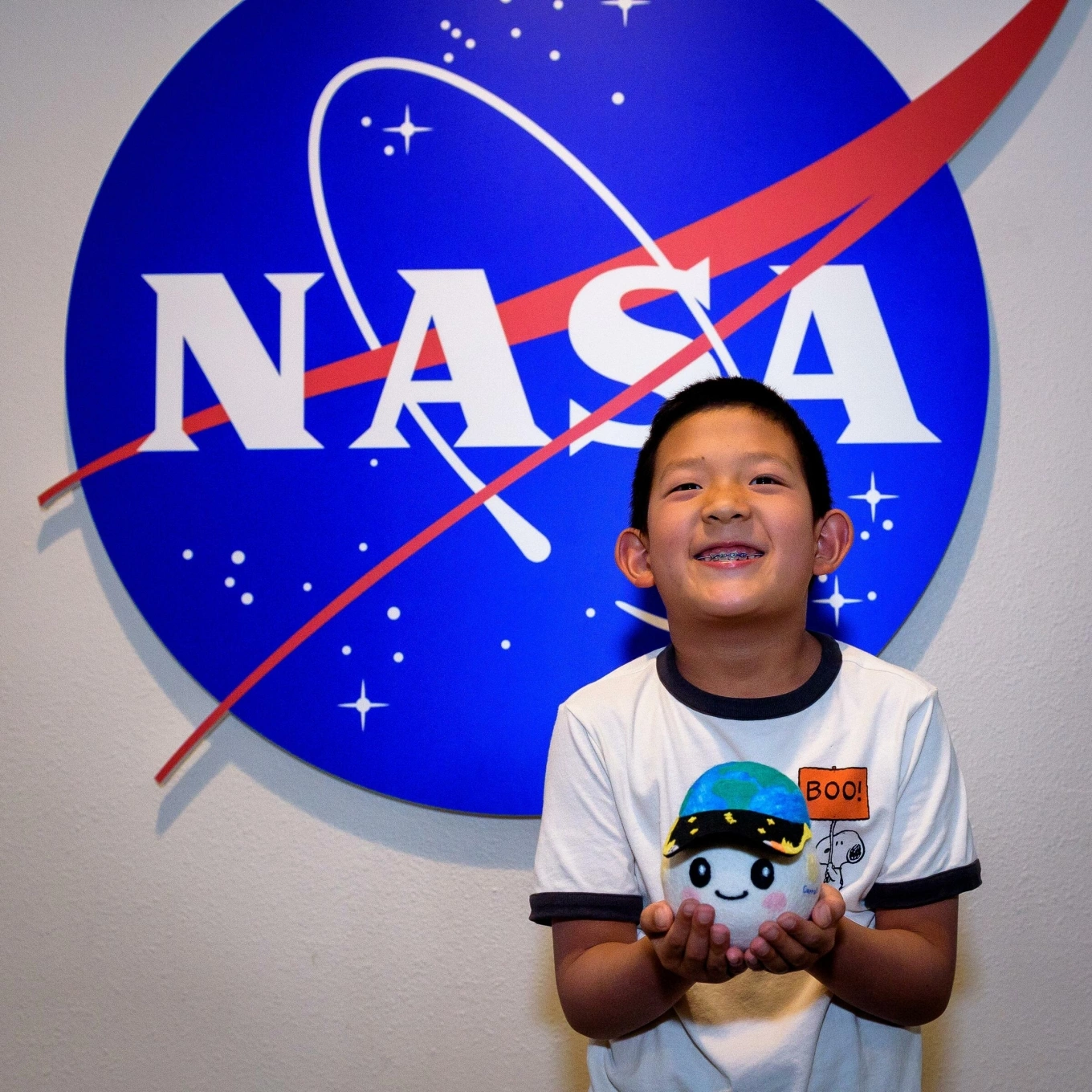
Second-grader Lucas Ye designed “Rise,” a plush toy that doubles as a zero-gravity indicator used by astronauts on the Artemis II mission during their historic flight around the Moon.
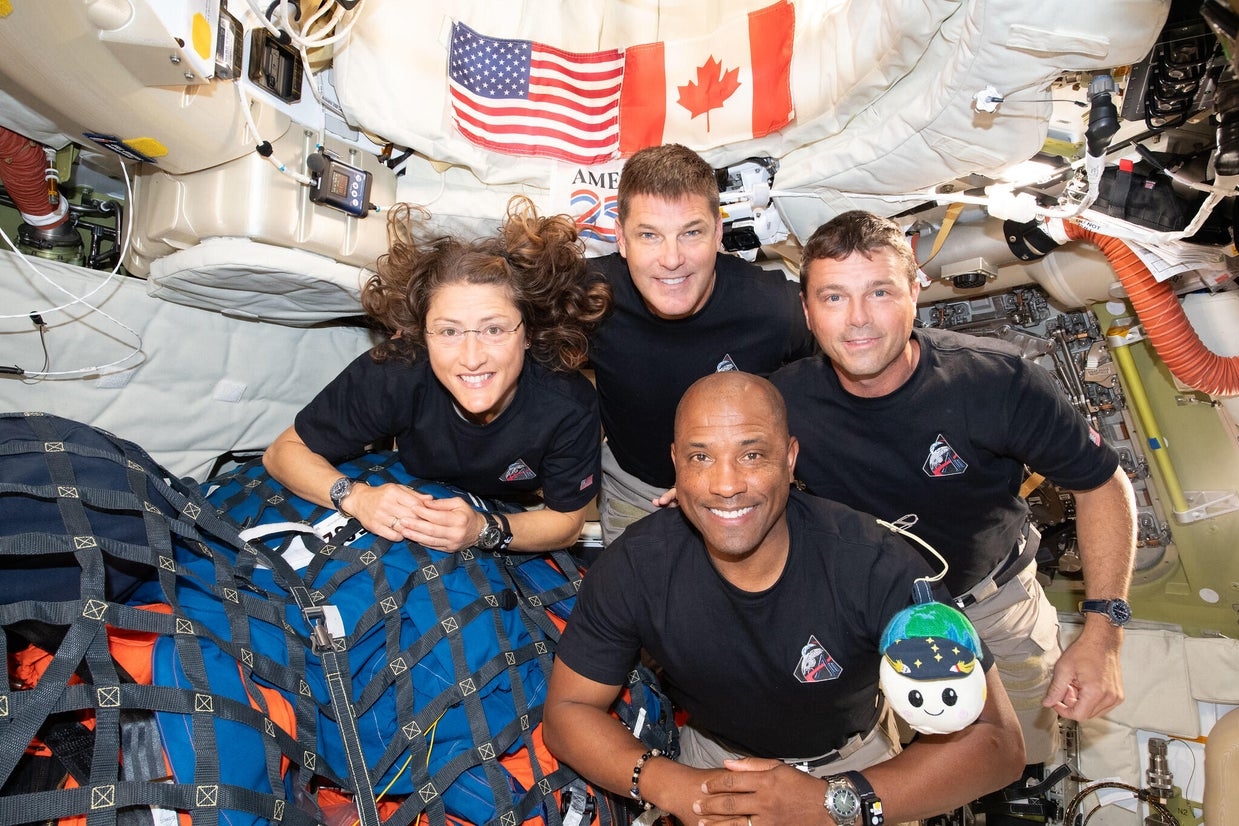
The Orion spacecraft carrying the Artemis II crew splashed down in the Pacific Ocean on April 10, concluding the first human lunar flyby mission in more than 50 years. Mission commander Reid Wiseman was seen carrying Rise, the zero-gravity indicator that accompanied the crew throughout the flight, as they were transferred by helicopter to the USS John P. Murtha for medical checks.
Rise was created by Ye as part of a global design competition launched in March 2025. NASA partnered with Freelancer, the world's largest crowdsourcing company, to invite submissions for a zero-gravity indicator, a small object that floats in microgravity to signal that weightlessness has been reached. Astronauts have long used such indicators during missions, including toys like Snoopy and Baby Yoda, according to ABC News.
Freelancer said entries had to fit within a 6x6x6-inch box, weigh no more than 12 ounces, use approved materials, and "represent humanity, exploration, and the spirit of the Artemis campaign." Lucas said some of his early ideas did not work, but after brainstorming, he developed Rise, sketching the concept and building the prototype himself.
 |
|
Lucas Ye, 8, hold Rise, a plush toy that doubles as a zero-gravity indicator. Photo courtesy of NASA |
The design incorporates references to major milestones in space exploration. It draws inspiration from the "Earthrise" image captured during the Apollo 8 mission, while the Moon-shaped body features a small footprint recalling the Apollo 11 Moon Landing. The visor represents past and future lunar missions, and the Orion constellation reflects the spacecraft’s name.
Out of 2,605 submissions from more than 50 countries, Rise was shortlisted among the final five before being selected by the Artemis II crew. Astronaut Victor Glover said choosing the final design was a "difficult decision", while mission specialist Christina Koch said the historical elements stood out.
"This little guy, Rise, really resonated with us, because the theme is actually the Earthrise photo taken on Apollo 8, which is inspirational to all of us," Koch said in a ceremony at the Kennedy Space Center on March 27. "It is a mission that sort of mirrors our own, and we've incorporated it into our mission patch and also into our ethos and values as a crew, so, welcome aboard, Rise."
The version used in the mission was produced by NASA using both machine and hand-sewing techniques, with specialized materials to meet strict safety standards. On April 1, Rise was placed aboard the Orion spacecraft ahead of launch. Lucas and his family watched the liftoff from Kennedy Space Center, according to CBS News.
"We never thought we got an opportunity to be part of this mission," Lucas’ father told Freelancer. "This is really meaningful to us, especially [since] Lucas has such a passion about space and rockets. It's a very meaningful project for the whole family."
Lucas told Freelancer that the experience inspired a dream for his future: to "work at NASA" and "be an astronaut."
 |
|
The Artemis II crew – clockwise from left: Christina Koch, Jeremy Hansen, Commander Reid Wiseman, and Victor Glover – pause for a group photo with their zero-gravity indicator "Rise," inside the Orion spacecraft on their way home. Photo courtesy of NASA |
The Artemis II mission carried four astronauts on a journey of 694,392 miles (1,117,515 km), completing two Earth orbits and a lunar flyby about 4,000 miles from the Moon’s surface. It marked the first crewed test flight in NASA’s Artemis program, which aims to return humans to the Moon. The mission reached a peak distance of 252,756 miles from Earth, surpassing the record of about 248,000 miles set by the Apollo 13 mission.
Following the uncrewed Artemis I flight in 2022, Artemis II serves as a critical step toward future missions. NASA aims to land astronauts on the Moon again by 2028 and eventually establish a long-term human presence as a foundation for missions to Mars.
此内容由惯性聚合(RSS阅读器)自动聚合整理,仅供阅读参考。 原文来自 — 版权归原作者所有。