



惯性聚合 高效追踪和阅读你感兴趣的博客、新闻、科技资讯
阅读原文 在惯性聚合中打开

推荐订阅源

Martin Fowler
Martin Fowler
爱范儿
爱范儿
博客园_首页
OSCHINA 社区最新新闻
OSCHINA 社区最新新闻
大猫的无限游戏
大猫的无限游戏
月光博客
月光博客
IT之家
IT之家
WordPress大学
WordPress大学
N
Netflix TechBlog - Medium
Microsoft Azure Blog
The GitHub Blog
The GitHub Blog
C
Check Point Blog
Apple Machine Learning Research
博客园 - Franky
G
Google Developers Blog
V
V2EX
雷峰网
雷峰网
美团技术团队
博客园 - 【当耐特】
人人都是产品经理
人人都是产品经理
有赞技术团队
有赞技术团队
MongoDB | Blog
MongoDB | Blog
V
Visual Studio Blog
J
Java Code Geeks

VnExpress English

Chinese robotics chip founder Wang Xinyang becomes billionaire as shares jump 144% post IPO US humanoid robot Digit deadlifts 29 kg Apple's Tim Cook to step down as CEO in September Canada Research Chair Janusz Pawliszyn, one of the world’s top analytical science figures, joins Chinese university Why Terence Tao is seen as one of the world’s greatest living mathematicians China builds ‘big science’ model to foster self-reliance Which is the only Asian country with two universities in the global top 5 for data science and AI? MIT named world’s best for mathematics for nine straight years Humanoid robots race past humans in Beijing half-marathon, showing rapid advances Meet Chris Espinosa, the only Apple employee still with the company since its founding 50 years ago Faulty wireless call buttons at Hanoi cafe disrupt car, motorbike smart keys ViTrox cofounder Chu Jenn Weng returns to Malaysia’s richest list as shares climb ondemand for chip inspection equipment Unitree humanoid robot goes viral after chasing wild boars on Warsaw street Over 300 humanoid robots race in China half-marathon Agibot humanoid robots conduct world-first tablet testing on live factory line Hanoi to add 53 electric buses from April 18 Thousands of mathematicians threaten boycott of US congress where Fields Medal is awarded Khan Academy to launch AI degree under $10,000 to rival Harvard, Stanford US scientists build spring-powered computer that runs without electricity Meet the only two female mathematicians to win Fields Medal in its nearly century-long history China deploys world’s largest all-electric container ship AI reshapes software development as firms adopt more iterative models Unitree starts selling cheapest humanoid robot from $6,800 Vietnam ramps up push for self-reliant semiconductor industry Why world's leading biologist Zhang Kai leaves Yale for China’s university at the height of career Nearly half of US college students consider changing majors over AI’s impact on jobs AI adoption faces hurdles as firms seek practical business value Vietnam's richest man Pham Nhat Vuong’s aerospace firm to launch satellite in 2027 China develops next-generation 2D chip with 1,000-fold faster production speed Chinese AI autonomously solves decade-old math problem in hours
China develops world's first crystal enabling GPS-free na...
2026-04-17 · via VnExpress English

By Phong Ngo   April 16, 2026 | 08:46 pm PT
China develops world's first crystal enabling GPS-free navigation for submarines

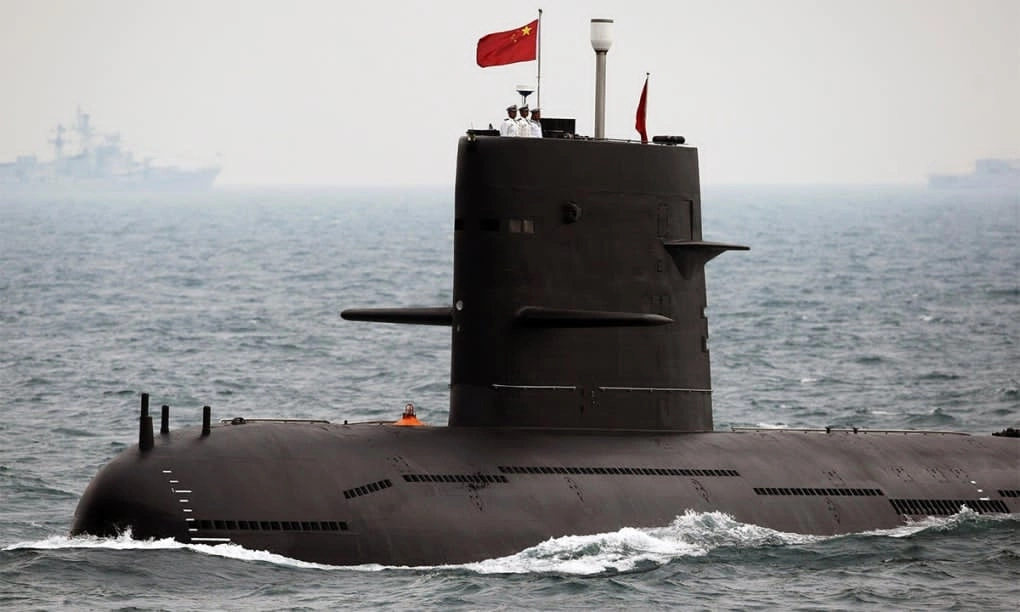
A Chinese Navy submarine attends an international fleet review to celebrate the 60th anniversary of the founding of the People's Liberation Army Navy on April 23, 2009 off Qingdao in Shandong Province. Photo by AFP

Scientists in Xinjiang have developed the world’s first crystal capable of producing ultraviolet light for ultra-precise nuclear clocks, enabling GPS-free navigation for submarines and deep-space probes.

Modern navigation systems rely on time-based calculations, in which devices such as smartphones determine location by receiving satellite signals and measuring how long they take to arrive. This data is then used to triangulate position, meaning higher clock precision leads to greater accuracy.

However, GPS systems can be jammed or spoofed with fake signals and do not function effectively underwater or underground, according to Interesting Engineering. For submarines, this presents a major limitation, as they must surface to obtain GPS signals, increasing their exposure to detection.

To reduce this risk, submarines use atomic clocks, which measure time based on electron vibrations around atoms. While highly accurate, scientists believe nuclear clocks, which rely on vibrations within atomic nuclei, could be 10 to 1,000 times more precise.

A research team led by Pan Shilie at the Xinjiang Technical Institute of Physics and Chemistry focused on Thorium-229, an isotope whose nucleus vibrates at unusually low energy levels, making it suitable for next-generation timekeeping.

Measuring these vibrations requires extremely precise ultraviolet lasers with wavelengths around 148.3 nanometers, which are difficult to produce. The newly developed fluorinated borate crystal addresses this challenge by generating ultraviolet light at a record 145.2 nanometers, meeting a key requirement for nuclear clock systems under development globally, including in the U.S.

The findings, reported in the journal Advanced Materials and cited by the South China Morning Post, surpass previous benchmarks set by potassium beryllium fluoroborate, a material developed in China in the 1990s that could only reach about 150 nanometers.

Researchers said the new crystal also delivers several times higher conversion efficiency than standard materials, allowing more input laser energy to be converted into the required ultraviolet light, improving overall system performance.

Yang Zhihua, a co-author of the study, said the work provides a more systematic method for designing such materials, moving beyond trial-and-error approaches. If produced reliably at scale, the crystal could help shrink nuclear clock systems from laboratory setups into compact devices suitable for real-world applications.