





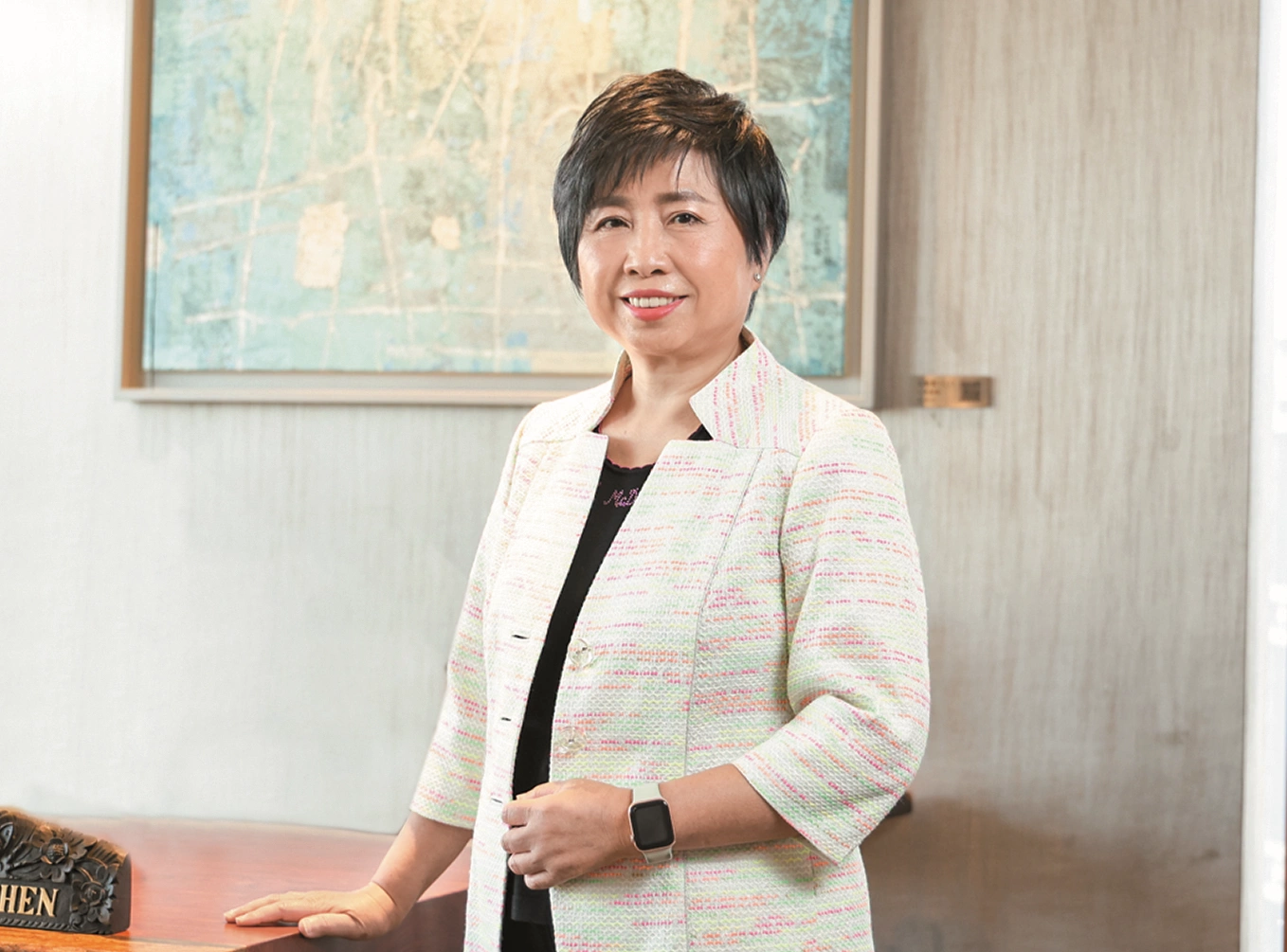
Maggi Chen, often dubbed the “queen of chassis,” spent the last four decades transforming her Taiwanese company Chenbro Micom from a small office to a global manufacturer of casings for computers and servers.
The 70-year-old chairwoman, who co-founded the company in 1983 with her husband Leon Chen and brother Frank Chen, saw its revenue jumping 52% last year to NTD22 billion (US$690 million), fueled by strong demand for AI server chassis, which are hardware systems that keep computers stack up for cooling and management purposes.
 |
|
Maggi Chen, chairwoman of Chenbro Micom. Photo courtesy of the company |
Chenbro, which reportedly makes products for major clients including Oracle and Microsoft, started out with an initial capital of NTD500,000 (about NTD1.1 million today) borrowed from informal lenders. The company’s first product, launched in 1984, was a simple tool that cut a notch in floppy disks to double storage capacity.
Maggie and her co-founders later realized that although they lacked the expertise and funding to make computer components, they could manufacture the casing that housed them. They decided to pursue the direction of making chassis, expecting strong demand for computers and servers in the future.
"You must have fire in your heart and dirt under your fingernails," she says, as quoted by Forbes, describing her leadership philosophy and her passion for manufacturing.
Her resilience stems from a difficult upbringing. The second of six children, she was born to parents in mainland China who moved to Taiwan in 1949.
With limited means, she worked part-time jobs as a teenager and later studied finance at National Chengchi University while her mother battled lymphoma.
"Hardship is the best teacher," she says. After graduating in 1977, she worked in a printing factory and a trading firm before co-founding Chenbro.
In 1985, they introduced a horizontal PC chassis and advertised for six months before securing U.S. PC maker Kaypro as their first client.
As orders grew, Chenbro expanded its U.S. customer base, with Maggi traveling extensively to trade shows carrying product samples.
The company managed cash flow through advance payments, kept costs low with a small office and outsourced early manufacturing to mainland China.
It opened its first factory in Taoyuan, Taiwan in 1994 and established a mainland plant in 1997. That same year, Chenbro introduced a tower chassis, its first server-oriented product, followed by a rackmount chassis in 1999, designed to house multiple servers for data centers.
Speed and flexibility remain Chenbro Micom’s primary strengths. Rather than beginning with standardized components, the company initially supplied a wide range of products in small quantities to computer product distributors. Today, it continues to operate in a similar manner, meeting server customers’ requirements with a broad mix of offerings produced in low volumes, according to Taiwan-focused publication Commonwealth Magazine.
Chen notes that one of her earlier lessons in the industry was the importance of understanding client needs.
When customers complained about bulky PC casings, Chenbro developed a stand to position horizontal units vertically. Strong demand for the stand led Chen to design a full vertical chassis, despite no explicit customer request.
"I believe in creating demand from the customer’s perspective," she says.
 |
|
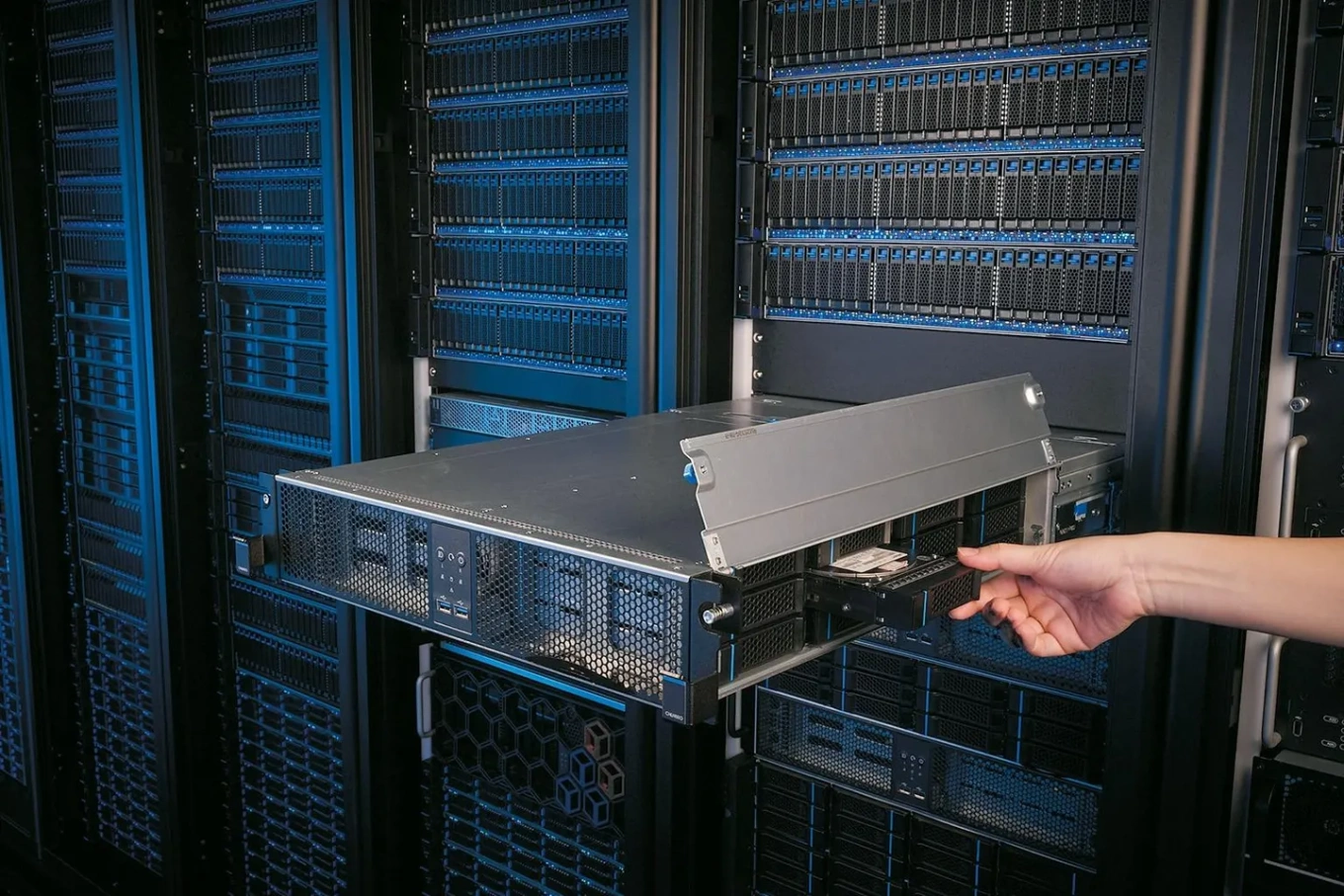
A server housing system made by Chenbro Micom. Photo courtesy of the company |
Leon and Frank stepped back from the business in the late 1980s, leaving Maggi to lead the company in a male-dominated industry. As president for three decades until 2013, she stood out for her hands-on approach, preferring to socialize with factory workers rather than clients.
"Those metal-stamping workers really sweated," she says. "So I drank with the workers, not the customers."
Corona Chen (no relation to Maggi), who joined in 2013 as her assistant and became CEO in 2023, describes her predecessor as detail-oriented, ambitious and "a genius at sales," noting the challenges women face in the hardware sector.
Today, Chenbro employs 3,300 people globally and operates offices in seven markets. But for Maggi, there are still more mountains to climb.
Chenbro must continue innovating to remain competitive, she says. "We need to move toward even higher-end materials, machines and advanced manufacturing."
Seeking to expand its footprint, Chenbro announced plans in August to build a factory in Texas at a cost of up to NTD2 billion. Two months later, it spent 49 million Malaysian ringgit ($11.7 million) on a six-hectare site in Johor, a key Southeast Asian data center hub. These facilities will complement its existing plants, two each in Taiwan and mainland China.
"We wouldn’t have imagined Southeast Asia as a market before, but with more mobile phones and young demographics, our customers are rapidly building more data centers in the region, so we should be there too," Chen says.
Maggi acknowledges that shifting to AI server chassis has been challenging as modern computers need to process much more data compared to those in the 1980s. Customization must be highly precise, with components that are lightweight, heat-dissipating and load-bearing.
Customer demands also change constantly, but, "Arguing with clients and losing means losing face; arguing and winning means losing orders, so we focus on finding solutions," she says.
Over the longer term, the biggest threat may stem from the very forces driving growth. "The biggest downside risk for the whole AI server industry is the over-investment in AI infrastructure and equipment," says Dale Gai, a Tokyo-based senior analyst at Mizuho Securities says.
"Any slowdown in AI capital spending is a big risk for Chenbro," he says, as cited by Forbes.
Maggi, however, is ready to face with any obstacle ahead. "Materials, machines, manufacturing, everything has changed," she says. "Only difficult things hold value. If it’s not hard, we don’t do it."
此内容由惯性聚合(RSS阅读器)自动聚合整理,仅供阅读参考。 原文来自 — 版权归原作者所有。