





Terence Tao, a UCLA mathematics professor widely regarded as one of the world’s greatest living mathematicians, rose from child prodigy to Fields Medalist at 31.
The 51-year-old Australian-American mathematician earned the nickname "Mozart of math" for displaying extraordinary talent at a very early age, as well as for his gentle personal style. "Terry is like Mozart; mathematics just flows out of him," UCLA professor John Garnett told UCLA Magazine, adding that such talent appears "only once in a generation."
Tao’s main field is analysis, the branch of mathematics that includes calculus and differential equations.
Yet his work has repeatedly extended far beyond that specialty. The Green-Tao theorem, for example, addressed a major question in number theory, a completely separate field. Smithsonian Magazine likened the feat to a violinist suddenly winning a major piano competition. For Tao, however, crossing disciplinary boundaries is part of what sets him apart.
His work has also had practical impact beyond pure mathematics. Some modern MRI advances have been linked to his research in compressed sensing, conducted with Stanford professor Emmanuel Candès. That work helped support imaging methods that can produce accurate results from limited data, making scans significantly faster while reducing costs and expanding access.
Such achievements have earned Tao many of the top honors in mathematics. At 31, Tao was awarded the Fields Medal, widely regarded as the "Nobel Prize of mathematics." The citation described him as "a supreme problem-solver" whose work combines technical depth with unusual creativity.
Later, he received a US$500,000 grant from the MacArthur Foundation, known as the "Genius Grant," and the Breakthrough Prize in Mathematics. In August 2025, he was also reported to have one of the highest IQ scores in the world, estimated at between 225 and 230, according to BBC Science Focus.
Sylvain E. Cappell, a professor at NYU's Courant Institute of Mathematical Sciences, calls him "the leading analyst of his generation."
Despite the acclaim, Tao has generally stayed out of the public eye, handling most press inquiries by email. Fellow mathematicians, however, describe him as open and approachable. "Terry is as normal as it comes," says Tony Chan of the National Science Foundation, a former chairman of UCLA's mathematics department. "He can easily be lost in a crowd of UCLA freshmen."
 |
|
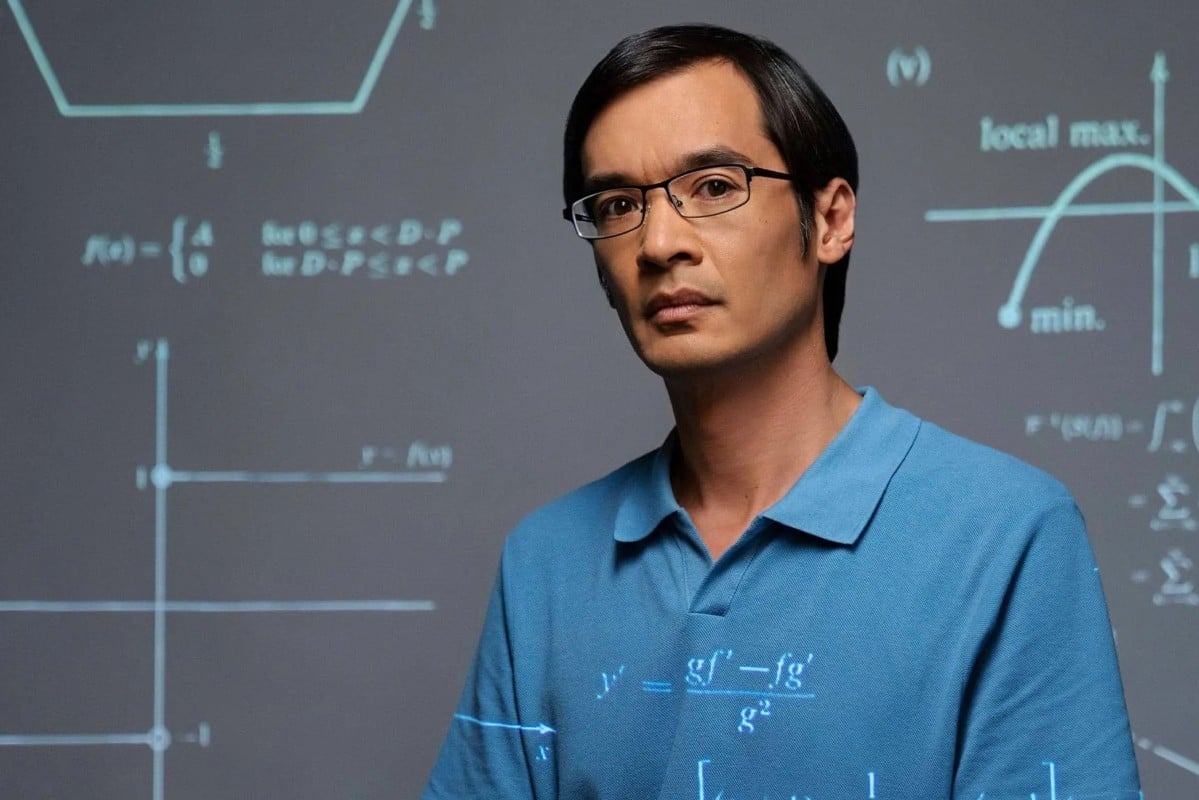
Australian-American mathematician Terence Tao. Photo courtesy of UCLA |
The making of a math prodigy
Born in 1975 in Australia to Chinese parents from Shanghai and Hong Kong, Tao showed extraordinary mathematical ability from an early age. He taught himself arithmetic at two.
According to his paediatrician father, Tao entered high school at eight after skipping five grades in primary school and soon afterward began taking part-time university classes. That same year, he scored 760 on the SAT math section, an achievement that placed him among only three children worldwide under the age of nine to do so, according to the Johns Hopkins Study of Exceptional Talent.
Julian Stanley, director of the Study of Mathematically Precocious Youth, once remarked that Tao had "the greatest mathematical reasoning ability he had found in years of intensive searching."
His remarkable progress continued. By 10, Tao had become the youngest competitor ever in the International Mathematical Olympiad, a competition for high-school students, and two years later he won its gold medal.
Tao has said a major reason for his success was the freedom his parents, Billy and Grace Tao, gave him from an early age, along with his own passion for learning, according to the South China Morning Post.
'They were happy to let me do what I liked and I'm very grateful for that. They didn't push me into something,' he said in an interview with the Australian Mathematical Society.
That sense of freedom was also reflected in his father’s account of his childhood. "Terry was given the freedom to enjoy life." He played bridge and dabbled in music dubbing.
At 17, Tao moved to the U.S. to study mathematics as a graduate student at Princeton. There, he says, he finally found his peer group, people who loved math as much as he did. According to classmate Allen Knutson, what set Tao apart from other child prodigies was his emotional maturity. "He was levelheaded enough that he didn't stand out," Knutson says.
As Tao was finishing his doctorate at 20, his adviser Eli Stein noticed a marked change. "He really started to take off in his last year, maybe his last semester," Stein says. "All of a sudden things started to click."
From there, Tao’s rise was rapid. He took his first postgraduate job at UCLA, which quickly realized it had an exceptional talent on its hands. Within four years, at 24, Tao became the youngest full professor in UCLA's history. "Terry brings prestige to the place, not the other way around," Smithsonian Magazine quoted Chan as saying.
Entering public debate
Tao was never argumentative, according to his father, and preferred collaboration over blaming others.
But in recent years, the famously low-key mathematician has stepped more visibly into public debate, emerging as a prominent critic of President Donald Trump’s policies that defund scientific research.
Explaining why he could no longer remain on the sidelines, he wrote: "In the more tranquil past, I myself was content to largely focus on technical or personal aspects of my own research, teaching, and mentoring, and leave the broader political debate and activism to others; but in our current environment, when even the most benign activities are subject to capricious disruption and political interference, the luxury of disengagement is no longer a viable option."
That shift became especially clear on Aug. 18, 2025, when Tao, who has spent most of his life in the U.S., published an open letter on the Home of the Brave platform criticizing what he described as Trump administration’s significant interference in the American scientific research system, according to the South China Morning Post.
The article was titled: "I’m an award-winning mathematician. Trump just cut my funding".
His criticism came amid sweeping funding cuts to major American research institutions. The National Science Foundation and the National Institutes of Health are among the major U.S. institutions hit by sharp funding cuts.
"So IPAM and my research group both have funds for now until the end of the year, but after that it is still unclear. This is no way to run a world-class scientific institution."
Even as he has taken a more public stand, Tao has remained notably restrained in the way he speaks about himself and his achievements. When asked how he views his success, Tao said: "I’m very happy."
"Maybe when I’m in my 60s, I’ll look back at what I’ve done, but now I would rather work on the problems."
此内容由惯性聚合(RSS阅读器)自动聚合整理,仅供阅读参考。 原文来自 — 版权归原作者所有。