







Janusz Pawliszyn, the recipient of the Chemical Institute of Canada’s highest honour and a fellow of the Royal Society of Canada, has joined Sun Yat-sen University in China.
The 71-year-old Polish professor has supervised more than 110 master’s and doctoral students, as well as nearly 200 postdoctoral researchers and visiting scholars, many of them from China, according to an announcement by the university in Guangzhou, a southern economic hub, as reported by South China Morning Post.
Among them was Ouyang Gangfeng, who was a postdoctoral fellow in Pawliszyn’s laboratory from 2004 to 2005. Ouyang is now a fellow of the Royal Society of Chemistry and serves as dean of Sun Yat-sen University’s School of Chemical Engineering and Technology, where Pawliszyn has been appointed a professor.
An internationally recognised analytical chemist, Pawliszyn is the inventor of two widely used techniques in the field.
He was named a Canada Research Chair in 2003, elected a fellow of the Royal Society of Canada in 2010, and awarded the Chemical Institute of Canada Medal in 2023.
"Janusz Pawliszyn’s impact on modern analytical chemistry can be described as truly foundational, with central contributions to detection technologies used around the globe in the chemical, environmental and medical arenas," John Corrigan, chair of chemistry at the University of Waterloo, Canada, said in a post on the university's website.
In 2019, Pawliszyn was ranked ninth on The Analytical Scientist’s Power List of the world’s top 100 figures in analytical science.
He has published more than 800 peer-reviewed papers and accumulated over 88,000 citations, and has appeared multiple times in predictions of Nobel Prize in Chemistry winners.
Born in Gdansk, Poland, in 1954, Pawliszyn earned a bachelor’s degree in engineering and a master’s in bioorganic chemistry from the Technical University of Gdansk, followed by a PhD in analytical chemistry from Southern Illinois University.
 |
|
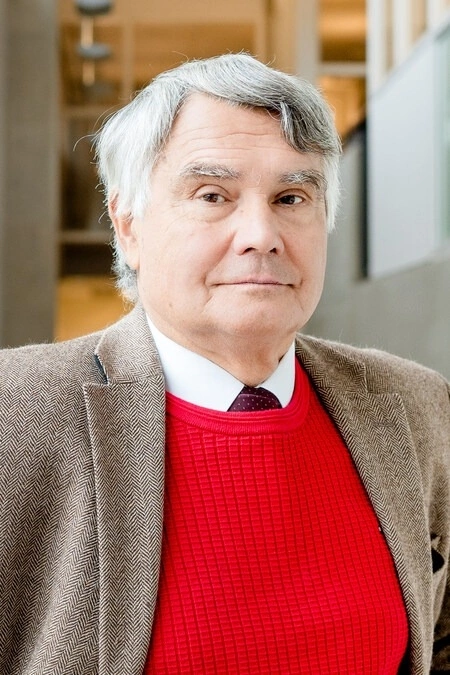
Professor Janusz Pawliszyn. Photo courtesy of Advanced Electrophoresis Solutions |
He remained in North America after completing his doctorate, undertaking a postdoctoral fellowship at the University of Toronto before joining the faculty at Utah State University.
He later moved to the University of Waterloo in Canada, attracted by research funding not available in the United States.
Among his major research is the development of solid-phase microextraction, a preparation method that uses a coated fibre to extract substances from biological fluids such as blood, plasma, saliva and urine for analysis. Compared with earlier approaches, it is faster, simpler and more practical.
Pawliszyn later developed whole-column imaging detection, a technique that captures images of proteins and other molecules as they are separated in a gel, allowing scientists to monitor the process in real time.
此内容由惯性聚合(RSS阅读器)自动聚合整理,仅供阅读参考。 原文来自 — 版权归原作者所有。