





The site where you found your first apartment and furniture started out as an email newsletter. Craig Newmark had recently moved to San Francisco for a programming role at Charles Schwab and, as he tells the story, got so much help from people recommending local shops and neighborhood info that “I decided I should give back,” says Newmark. “Started a simple mailing list.”
“San Francisco Events,” he planned to call his weekly email of local happenings. But to recipients, it was Craig’s list. First an email, then a community, then the site that single handedly changed the dynamics of classified ads and local print newspapers.
“People want something that is functional, effective, simple, and fast,” said Newmark of his inspiration in Craigslist’s brutalist, minimal-almost-to-a-fault design. The same could go for Craigslist’s MVP as an email newsletter, too. They’re functional, effective, simple, and fast. What more do you need to start a community?
Email as a natural community
An email newsletter is a community. A one-sided community, at least. You write, subscribers read (and, you hope, take your words to heart and bring them up in conversations down the road). A one-to-one community, at best. You write, subscribers reply, and you get some nice banter in the inbox, perhaps some ideas for the next newsletter.
It’s a calm, low-stakes, low-commitment community, for readers. Newsletters are private. There’s an “element of anonymity in signing up,” as researcher Zara Rahman puts it, “as nobody (apart from the admin) knows that you have.” There’s no promise to reply or contribute, no guilt in being inactive. The benefits of knowledge and the ability to reply to the writer, like a community, but without all the commitment.
Communities are the opposite. One could lurk, but will feel the pull to comment, to commit and keep coming back. And when you don’t—because, inevitably, life will get in the way—you feel bad about it, enough perhaps to keep you from reactivating and commenting again just in case others noticed your absence.
Email is a nice middle-ground. Enough interaction to stay connected, easy enough to join in and leave without overthinking it. And it’s the perfect launchpad for a larger community, where the most committed readers might want more interaction than a newsletter affords.
Ham and cheese. Peanut butter and jelly. Email newsletters and communities. Some pairings just make sense.
Turning replies into a community
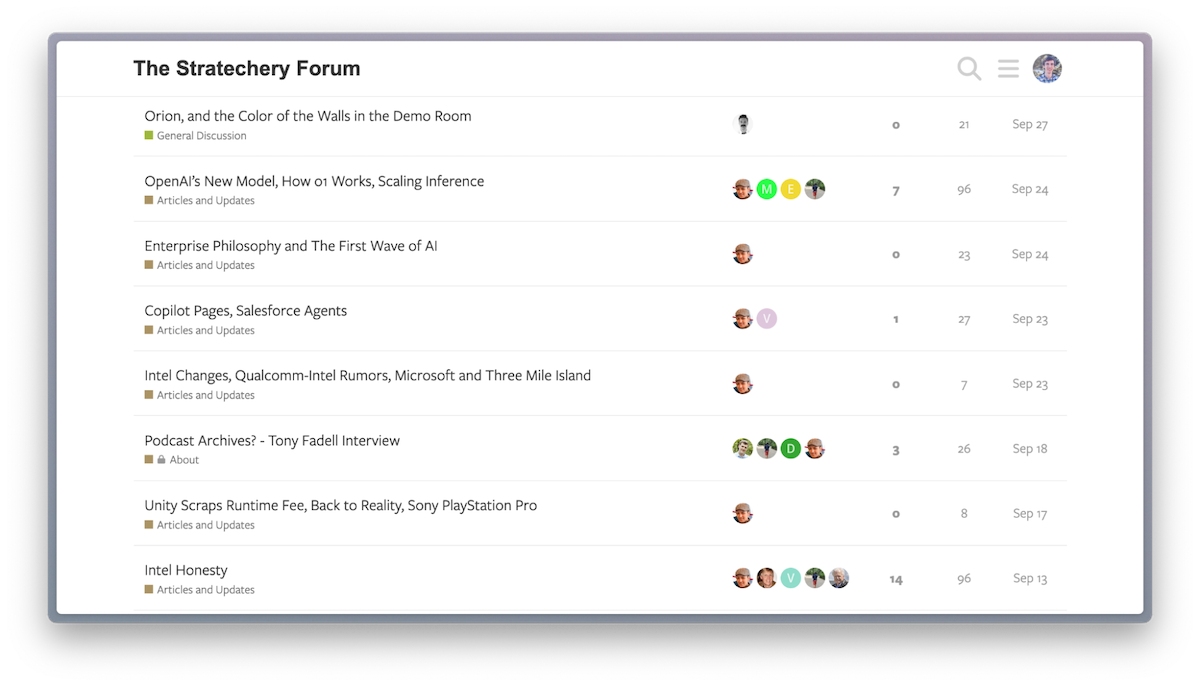
Eleven months after launching Stratechery, the “strategy and business side of technology and media”-focused site, founder Ben Thompson added a paid newsletter to his weekly publishing cadence. Billed as a “daily update” about current tech topics, the email came with a promise: Ben guaranteed he’d answer every reply.
Seven months and an overflowing inbox later, replies weren’t enough for the fledgling one-to-one community. In lieu of email conversations, Thompson launched a forum for all paid subscribers. “All blog posts will automatically have topics created in the forum for discussion amongst members, but members are also free to create their own topics,” said Thompson.
For Thompson, the emails fueled the community. The majority of discussions a decade later still involve Stratechery posts and newsletters.
A similar path led Dunbar founder Christian Bryant to start a Slack group for his software developer-focused newsletter. Every email triggered a flood of replies—a good problem to have, yet a problem all the same when wearing many hats. “After a few months of repeatedly addressing the same set of questions,” said Bryant, “I had the idea to throw together a Slack group where I could answer them all in one place.”
Questions beget more questions, which beget ideas for future newsletter editions, in a virtuous cycle. Soon enough, the Slack group took on a life of its own. “My newsletter became the catalyst that brought these like-minded individuals together, all driven by the common goal of becoming professional software engineers,” says Bryant.
The key values he found were in building 1:1 relationships, first through the lower commitment of a newsletter, then through the Slack group once trust was earned and value was proven. Readers jumped at a chance to be a larger part in something they already love, in a dedicated forum, Slack group—anywhere where they can interact with other subscribers.
Turning a community into a newsletter
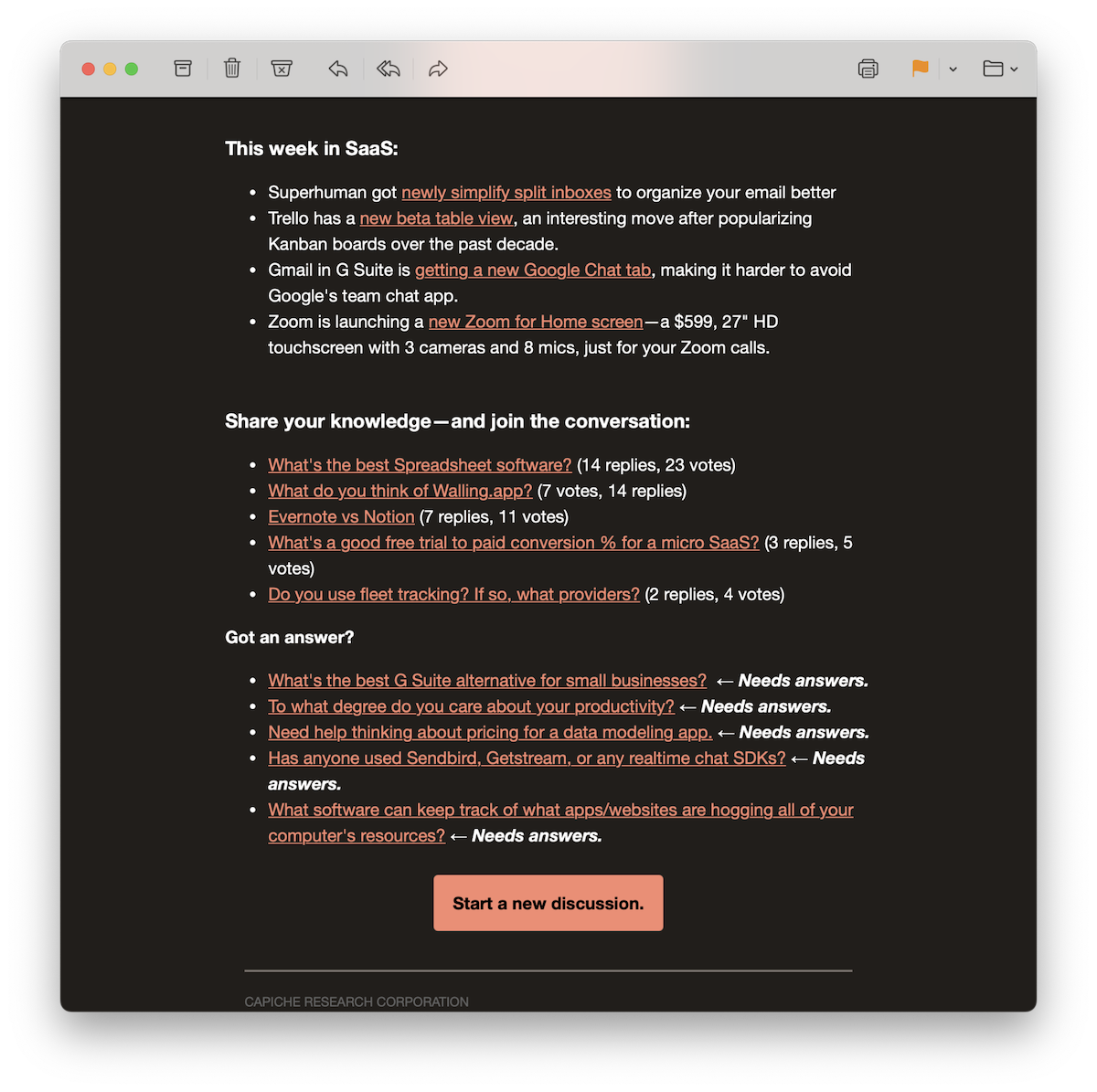
For others, the community fuels the newsletter and the newsletter, in turn, keeps the community alive.
That’s how fledgling software community Capiche built its active user base. Alongside the tech news of the week and product announcements, the emails included top community discussions of the week and new, as-yet unanswered questions from the community. “It wasn’t uncommon for community members to disappear for a month, before showing back up to join in discussions,” says founding editor Matthew Guay. “The email newsletter pulled people back in—and directed readers to the conversations that needed answers most to drive community growth.”
The Ministry of Testers has a similar email, with a weekly “summary of the community” newsletter featuring what’s happening in the world of software testers. “Being willing to spend time to research and share what is happening in the market is an act of love that most people aren’t willing to dedicate themselves to,” says founder Rosie Sherry. The value for the readers is the curation. They don’t have time to read through the full community, but they might be glad to jump into a highlighted thread that catches their eye.
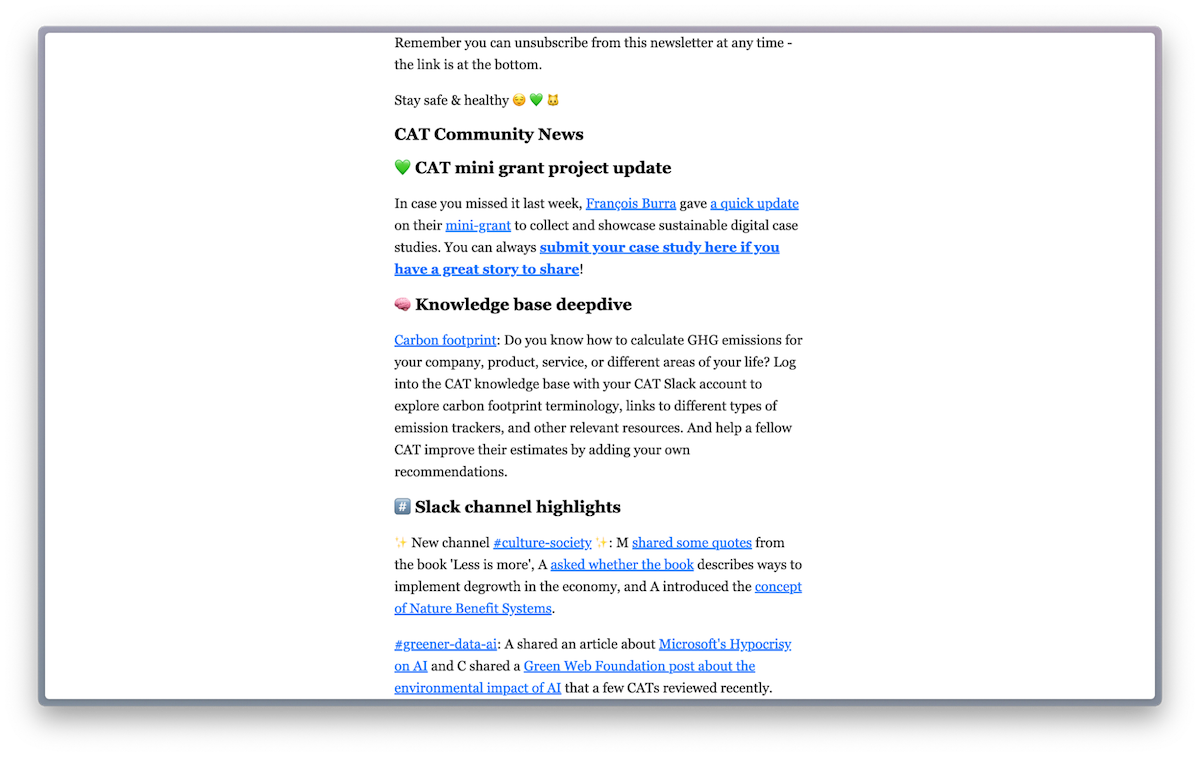
The ClimateAction.Tech (CAT) newsletter does something similar with its Slack community. Each edition includes news, blog posts, podcast episodes—the standard content you’d expect in a community newsletter—followed by community-submitted events, open roles from the #jobs channel, and Slack channel highlights featuring recently shared articles, discussions, and questions. Same for The Turing Way Community Newsletter, highlighting meetups, events, and discussion opportunities, each with a unique Slack channel, as a way to guide replies and give every reader an entry point to the community.
Curated content paired with community links gets readers to reply, which brings the person who started the discussion or Slack channel back in. “It’s all one big community flywheel,” says Sherry.
Turning a newsletter into a self-contained community
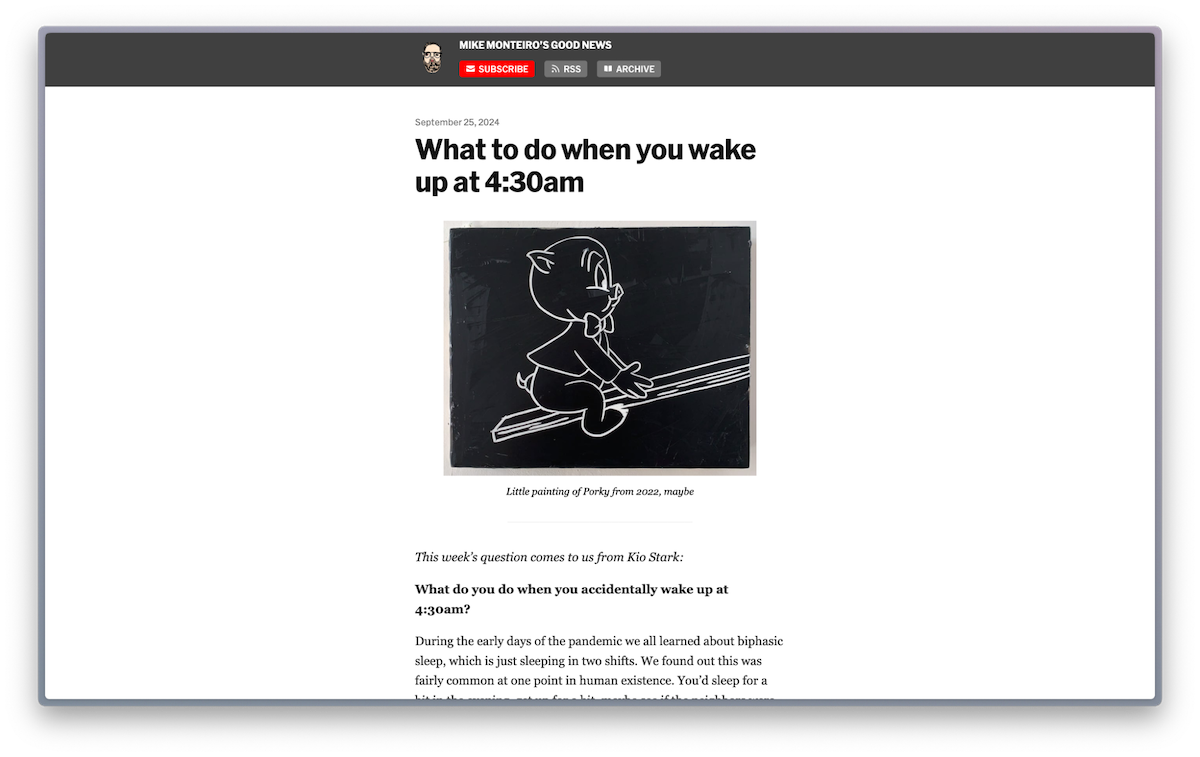
Or, you could keep things simple, and build a community right inside your newsletter. No need for a separate forum, nor extra work in curating community replies for a more in-depth newsletter. Just emails, replies, and a bit of community building to make your newsletters readers feel more involved and connected.
Like Mike Monteiro’s Good News, a self-contained community in a newsletter. Each email closes with an “🙋 Got a question for me? Ask it!” CTA. Then, sure enough, next week’s email starts with a “This week’s question comes to us from...” opening, followed by Mike’s riffs on the idea. Thus grew Mike’s eclectic collection of ideas around how to relax, how many hobbies are too many, how to become wise, how to talk to animals, and more. So much more.
“Once upon a time, I wrote. And then things happened and I stopped writing,” wrote Monteiro when he revitalized his newsletter into a community. “What I need from you is questions. You ask a question. I answer it.”
Readers held up their end of the deal, Monteiro held up his, and suddenly the newsletter went from a sporadic monthly cadence to consistent weekly delivery.
Like a radio station talk show, with “Long time listener, first time caller” sharing their thoughts live on-air, there’s something special about getting quoted in a newsletter you’ve faithfully followed for years. And there’s something inspiring, writer’s block-evading about having writing prompts show up from readers asking things they care about.
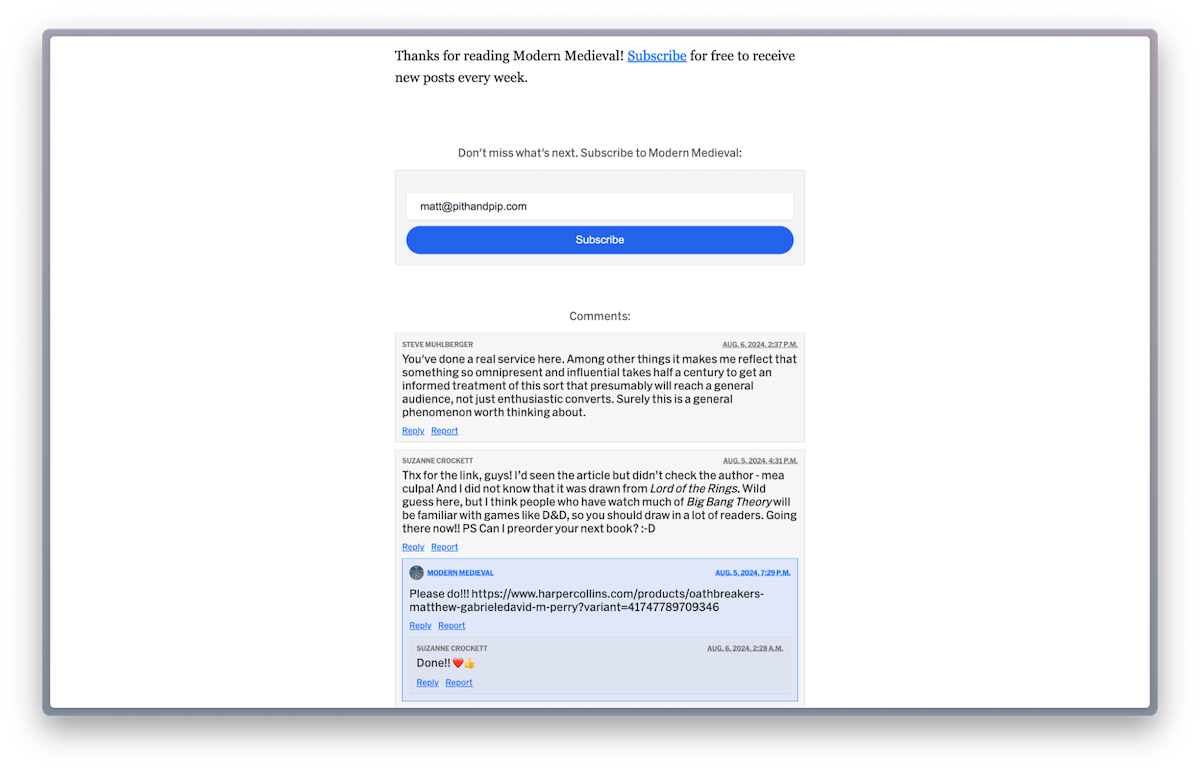
Or split the middle. Instead of building a full community in Slack, Discord, or a dedicated forum alongside your emails, or focusing your newsletter on replies, enable comments on your newsletter archives (here’s how, in Buttondown) and a community can form right alongside your messages. Modern Medieval did that, for instance, and instantly you started seeing a tiny community form around sharing thoughts and anecdotes related to the emails. It’s almost the value of a Stratechery-style forum alongside the newsletter, for zero additional overhead.
Earning your place in the inbox
The trick is in not overdoing it, in not making your email feel either like it’s spamming community content or forcing people into contributing more than you'd expect from a newsletter.
“I've been feeling a bit frustrated with our newsletter,” wrote a local community center volunteer on Reddit. “Could you let me know what you like about your local community newsletters?”
The top answer—with 2.5 times as many votes as any other, should give pause to anyone running a newsletter: “You mean that monthly newsletter that's all ads and a couple of generic ‘How to prepare your yard for spring’ articles?
Yeah, that goes straight in the blue bin.”
Same for your community newsletter. Without care, you’ll end up with something people delete as soon as it shows up in their inbox.
Your job is to cut, cull, curate. Everything isn’t interesting. Some discussions are destined to drop quietly to the bottom of the page. Some replies aren’t worth a follow-up. That’s fine. Better to pace yourself and skip this week’s email than to send an uninteresting email that your followers are more likely to delete.
With a bit of care, you can build the opposite, with a fledgling community forming around your weekly emails. And who knows: It just might take on a life of its own.