

惯性聚合 高效追踪和阅读你感兴趣的博客、新闻、科技资讯
阅读原文 在惯性聚合中打开

推荐订阅源

博客园 - 三生石上(FineUI控件)
O
OpenAI News
WordPress大学
WordPress大学
P
Proofpoint News Feed
J
Java Code Geeks
G
Google Developers Blog
freeCodeCamp Programming Tutorials: Python, JavaScript, Git & More
The Register - Security
Engineering at Meta
Engineering at Meta
H
Help Net Security
人人都是产品经理
人人都是产品经理
Vercel News
Vercel News
N
Netflix TechBlog - Medium
F
Full Disclosure
U
Unit 42
Latest news
Latest news
N
News and Events Feed by Topic
Threat Intelligence Blog | Flashpoint
I
InfoQ
L
LINUX DO - 最新话题
T
Threat Research - Cisco Blogs
OSCHINA 社区最新新闻
OSCHINA 社区最新新闻
爱范儿
爱范儿
K
Kaspersky official blog
Google Online Security Blog
小众软件
小众软件
I
Intezer
V
V2EX
S
SegmentFault 最新的问题
C
CERT Recently Published Vulnerability Notes
阮一峰的网络日志
阮一峰的网络日志
Security Archives - TechRepublic
Recent Announcements
C
Check Point Blog
C
Cyber Attacks, Cyber Crime and Cyber Security
Recorded Future
Recorded Future
博客园 - Franky
Project Zero
Project Zero
S
Securelist
Attack and Defense Labs
Spread Privacy
Spread Privacy
The Hacker News
The Hacker News
T
The Blog of Author Tim Ferriss
Google DeepMind News
aimingoo的专栏
aimingoo的专栏
博客园 - 叶小钗
NISL@THU
NISL@THU
云风的 BLOG
云风的 BLOG
S
Secure Thoughts
Exploit-DB.com RSS Feed

Rest of World -

Why state-owned AI won’t solve inequality The hidden cost of Myanmar’s rare earth mines Fed up with Big Tech, communities turn to data collectives for control The U.S. wants to contain China’s AI. Silicon Valley keeps using it China’s AI talent race is starting in high school AI is shrinking video game development teams to one Can AI beat a goldfish at calling the World Cup? The problem AI content moderation cannot solve The Gulf has billions to spend on AI. It still needs Nvidia India’s crackdown on a new WhatsApp feature risks setting a global precedent Older adults know AI is slop. They just like it Your next nurse may monitor you from the Philippines Data centers should benefit the cities that power them China’s AI boom is creating a different kind of entrepreneur China’s web novel platforms embraced AI. Now they are fighting it India is testing an alternative to Silicon Valley’s AI playbook China’s EV makers are taking over the European factories Ford and Nissan can’t fill America’s immigrant tech workers are paying an uncertainty tax I went to the Maldives. Everyone wanted to talk about Temu What happened to China’s overseas EV factory boom? China and the West are taking opposite paths on EV battery recycling The AI-powered World Cup runs on thousands of data workers Chinese universities are cutting language majors to make way for AI GoPro and Roomba were U.S. pioneers. Chinese rivals now dominate Chile turned to China for an undersea cable. The U.S. said no When Americans choose Chinese AI Spotify’s post-English AI future Can open-source beat OpenAI? What the SpaceX IPO reveals about Gulf money in AI China builds a rival satellite constellation as SpaceX goes public Big Tech, big cons: Scammers are hiding in the apps that make your life easy The Great AI Divide: Navigating U.S. and Chinese dominance As the world embraces EVs, the U.S. hits the brakes Silicon Valley’s lure is fading for India’s tech talent What to read: A summer book list Scarcity is driving AI innovation outside Silicon Valley China is training a robot future — one folded shirt at a time EVs are getting more affordable worldwide — except in the U.S. India’s AI deal with the UAE challenges U.S. cloud dominance Pope’s encyclical raises questions on who gets to shape AI China’s tech rise is creating a new kind of tourism U.S. companies have an AI problem. Indian IT wants to be the solution The agentic divide: Why "good enough" AI isn’t enough to survive the new economy U.S. versus China: Can open-source beat OpenAI? AI is minting new billionaires, and workers want their share What AI race? China and U.S. AI worlds are tightly connected Pushing back from Big Tech: Africa’s hard road to AI sovereignty The UAE’s OPEC exit frees up oil wealth as it bets big on AI Silicon Valley keeps misreading China’s role in tech The Filipino virtual assistants behind LinkedIn's "thought leadership" content mill India’s VCs are beating American investors at home Can we really keep kids safe online? What's at stake for tech at the Trump-Xi meeting Taiwan’s chips power the global economy. China holds the leverage Some Taiwanese drone math ahead of the Xi-Trump visit Five times AI hallucinations embarrassed governments The Chinese EV standard winning globally is banned in the U.S. The global cybersecurity gap deepens as AI-powered attacks surge Motorola’s India lawsuit could make platforms police speech faster How the vinyl revival fills the gaps streaming left behind Big Tech is moving data out of the Gulf through Iraqi oil pipelines An old railroad is key to U.S.-China race for critical metals in Africa South Korean probe tests U.S. willingness to protect its tech giants abroad The quiet layoffs sweeping China’s tech giants Humanitarian aid turns to AI as crises outpace capacity The global edtech boom is fading as investors look elsewhere Deadly deepfakes: A survival guide for the age of algorithmic war Why AI alone cannot fix social problems Netflix’s AI deal puts the global VFX workforce at risk Bangladesh's gig workers are stuck in gas lines as Iran-U.S. war strains fuel supply AI is about to make the global e-waste crisis much worse The Mexican security company with a $1.27 billion surveillance empire Voice actors fight to save their livelihoods and local cultures from Hollywood's AI push RedNote chases U.S. expansion after its "TikTok refugee" moment fades In its push to become Big Tech’s data center hub, India is overlooking local resistance Chinese entrepreneurs should go global before they go viral War in the Gulf could tilt the cloud race toward China A Mexican surveillance giant you’ve never heard of is now watching the U.S. border Winners of the 2026 Photo Contest India’s frugal AI models are a blueprint for resource-strapped nations “Data embassies” and safeguarding digital assets during wartime Amazon is betting on speed in a market that may not need it Nations priced out of Big AI are building with frugal models In the Gulf, GPS jamming leaves delivery drivers navigating blind “This is unprecedented”: America's AI boom is leaving the rest of the world behind Workers around the world are not getting what they want from AI The world’s largest humanoid robot maker is going public
AI powers citizen-led disaster relief from afar for Venezuela
Rina Chandran · 2026-07-15 · via Rest of World -

After twin earthquakes struck northern Venezuela last month, thousands of people took to social media, pleading for help locating friends and family. The interim government was slow to act, but help came quickly from an unexpected source: developers and programmers.

“Who knew when the government was going to respond?” Jorge Bastidas, a 31-year-old Venezuelan programmer who lives in Buenos Aires, told Rest of World. “We decided to take action.”

Bastidas and his team of six created Desaparecidos Terremoto Venezuela, a website for citizens to report, identify, and reunite with missing family and friends. Using Claude Opus 4.8, and facial recognition software donated by Mexican company Lab-Co, Bastidas designed the site to load quickly, without requiring users to register or download an app. It received more than 30,000 missing-person reports in the first two days, he said.

Without AI, “it would have taken me about 24 hours without rest to build something that took me three hours,” Bastidas said.
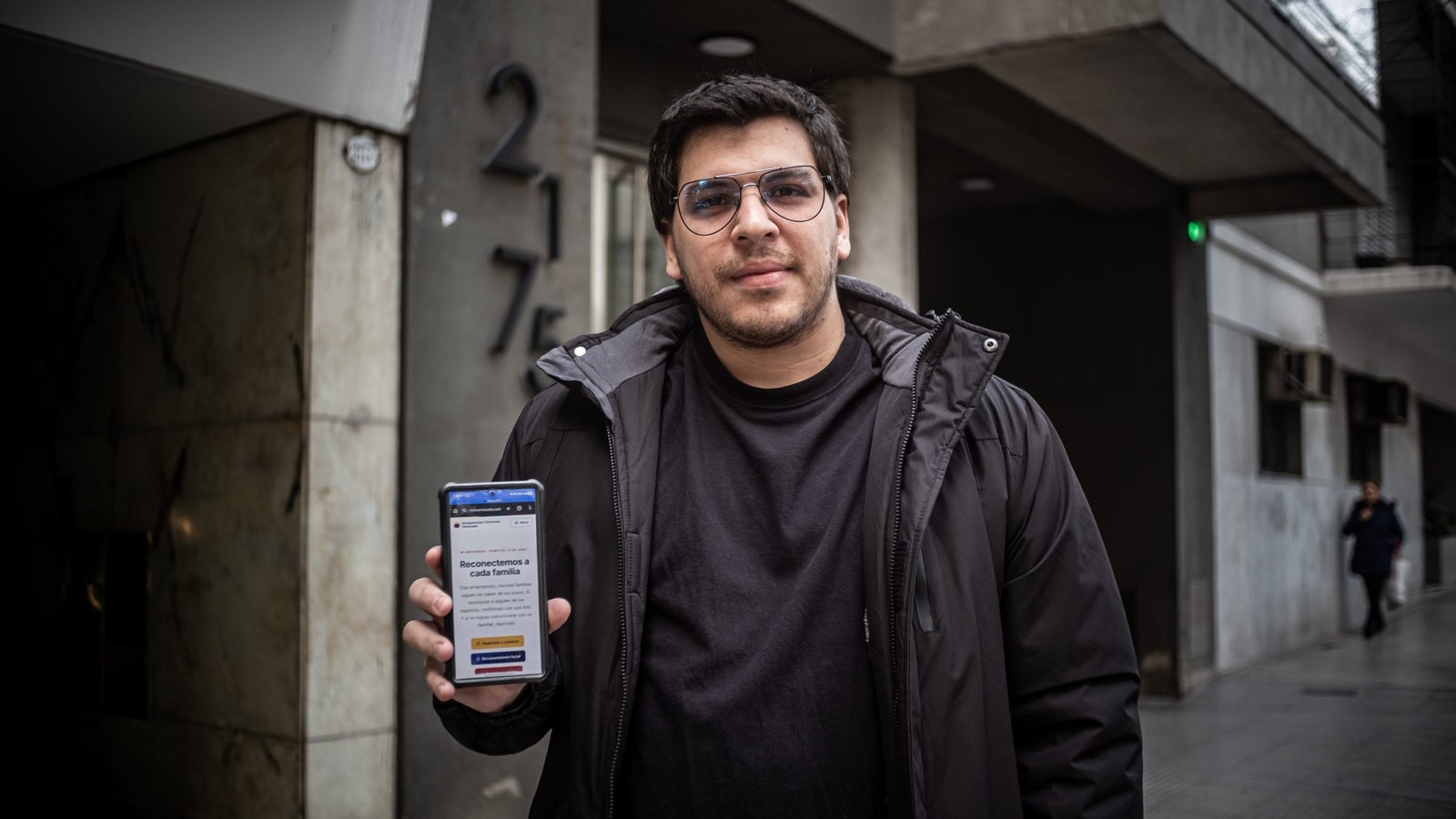
A man in a black jacket stands outside a building, holding a smartphone displaying a website. The building has the number 217 on it

Jorge Bastidas, a 31-year-old Venezuelan programmer who lives in Buenos Aires and built an app to help citizens in Venezuela after devastating earthquakes. Daniella Fernandez

The earthquakes killed more than 3,800 people, and destroyed homes and hospitals. Telecommunications infrastructure, including a submarine fiber-optic cable and mobile network towers, was severely damaged. Power outages added to the challenge of accessing the internet.

With a near-total absence of state support, Venezuelan citizens and diaspora members like Bastidas stepped in. Within hours of the quakes, volunteer developers in Miami, San Francisco, Chile, Argentina, and elsewhere used AI to quickly build websites to report missing persons, coordinate donation drives, assess structural damage to buildings, map hospital capacity, locate shelters, and reunite pets with owners.

AI “should never replace the state’s legal responsibility or its accountability mechanisms.”Nicole Sánchez, researcher, Fundación InternetBolivia.org

Venezuelan developer Samuel Mariña in California created Ayuda en Camino, or “help on the way,” a website for aid organizations, volunteers, donation centers, and people in need. He built it in four hours, with Replit. With limited connectivity in the affected areas, a WhatsApp assistant can check donations and requests without accessing the site, Mariña told Rest of World.

The internet was “drowning in disconnected information. It was hard to know what people had versus what people needed,” he said. “We wanted to centralize the information and make sure the aid wasn’t wasted, and reached where it was needed.”

Jorge Luis Chacón, CEO of AI engineering company Henkki, developed Somos Acompañamiento with religious organization Ministerio de Acompañamiento International, hours after the earthquakes. Besides missing-person reports, it has lists of survivors and the injured in hospitals. It has over 84,000 registrations, Chacón told Rest of World. With human rights group Laboratorio Migrante, he is also developing an AI system to monitor for human trafficking, he said.

The lack of official resources means that journalists are also using AI to gather data. The Venezuelan women journalists’ network created a search tool with AI tool builder Lovable, which compiles data from medical centers, hospitals, and shelters. Journalists in Venezuela and overseas verify all the data, Valeria Pedicini, a member of the network, told Rest of World. The extra steps for verification are “necessary,” given the lack of official information, she said.
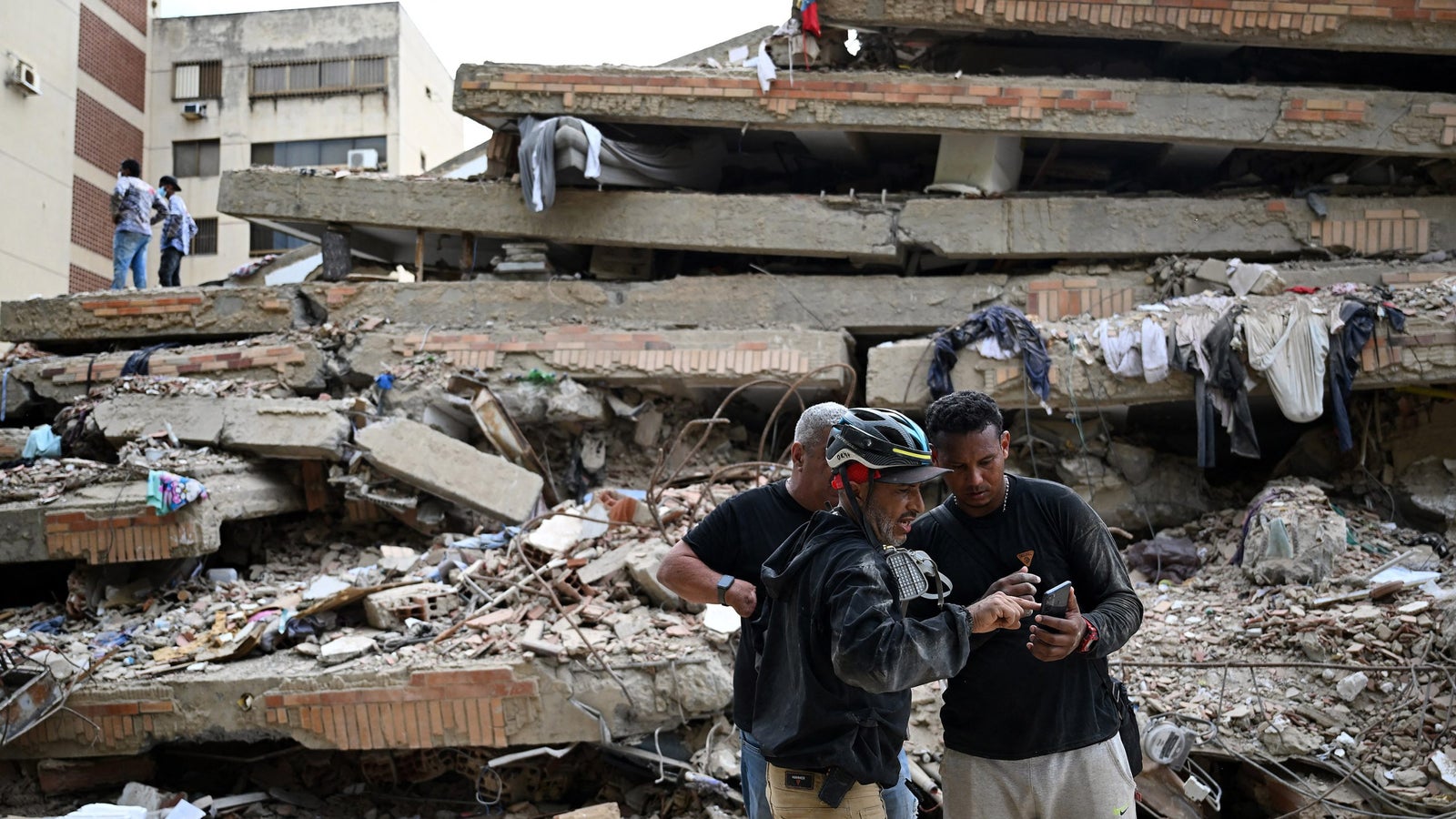
Two men examine a phone amidst the rubble of a collapsed building, with debris and scattered clothing around them

Rescuers check a mobile phone for possible locations of survivors trapped inside a collapsed building in Caraballeda, Venezuela, on July 9, 2026 following the June 24 earthquakes. Raul Arboleda / AFP via Getty Images

Marianne Diaz Hernández, a digital security expert and founder of the nonprofit Acceso Libre in Santiago, Chile, built terremotove.com, as she watched social media flood with desperate requests for help from survivors. It took her an hour to put together an emergency response map to locate collapsed buildings, search for missing persons, and post any information related to the earthquakes with Claude Code and Kobo Toolbox, she told Rest of World. By the time she launched the site, there were at least three others like hers, she said.

“Everything the state should be doing is being done by civil society,” Hernández said. “People could have been putting their efforts somewhere else, but what we did was fill the state’s role however we could, with what we had.”

AI is not a substitute for people

In humanitarian crises like the one unfolding in Venezuela, AI tools can help analyze large amounts of data to facilitate family reunification, identify the nearest resources for people, and optimize aid distribution, Nicole Sánchez, a researcher at digital rights organization Fundación InternetBolivia.org, told Rest of World.

“AI can complement these functions and make them more efficient,” she said. “But it should never replace the state’s legal responsibility or its accountability mechanisms.”

Citizens have said Venezuelan authorities have been slow to respond, and have failed to adequately address the crisis — a criticism that acting President Delcy Rodríguez has rejected.

As AI is used increasingly to aid people affected by conflicts, disasters, and other humanitarian crises, experts warn that the systems need human oversight to ensure data privacy, and to minimize errors that can have serious consequences for users.

In Venezuela, while speed is of the essence, developers must ensure that data is collected and stored responsibly, with adequate safeguards that “need to be even stronger” than usual, Sánchez said.

“It might seem like something we can think about later, something that isn’t a priority right now because we’re in the middle of a humanitarian crisis,” she said. “But it is a real problem” because of the sensitive data, including biometrics.

The people are the ones who make these tools valuable.”Jorge Bastidas, programmer

The Desaparecidos Terremoto site was kept “simple” for people to access and upload information easily, and came under cyberattacks, Bastidas said. They then added greater security, he said.

Three weeks on, international aid is reaching Venezuela, but the civilian-led  websites and apps remain the main source of information. While they have accelerated and democratized access to critical data, they cannot replace government aid, cybersecurity consultant Jorge Sánchez-Primera told Rest of World.

“Right now, information is disaggregated, incorrect, or doubled, and that’s without considering privacy and data protection risks,” he said. “The state should be centralizing efforts and protecting people’s privacy.”

Meanwhile, some developers have turned their attention to potential future crises. Arturo Nieve, who built a missing-persons registry called Civis, is adapting it to address what he believes is a bigger problem: the near lack of early-warning systems for floods and landslides. Nieve uses open-source satellite data and rainfall forecasts to send alerts via text messaging and WhatsApp to vulnerable rural communities, he told Rest of World.

The Desaparecidos Terremoto team plans to continue working for about three months, and keep the site accessible to the public in the event of a future disaster, Bastidas said.

Despite the tragic circumstances, “seeing the capacity for actions by citizens” was a positive outcome, he said.

“In less than a day, hundreds of different initiatives around the world were activated with AI,” said Bastidas. But “AI is a tool, it is not a substitute for people. … The people are the ones who make these tools valuable.”