





There are certain struggles that have their moment in the spotlight. Things that were once very difficult to admit become acceptable to reveal.
Problems with vulnerability are one example:
Shame is another:
And even a harrowing topic like depression is encouraged to discuss:

But there’s one struggle that is becoming more and more problematic, yet it’s still considered a taboo to openly admit:
The problem of envy.
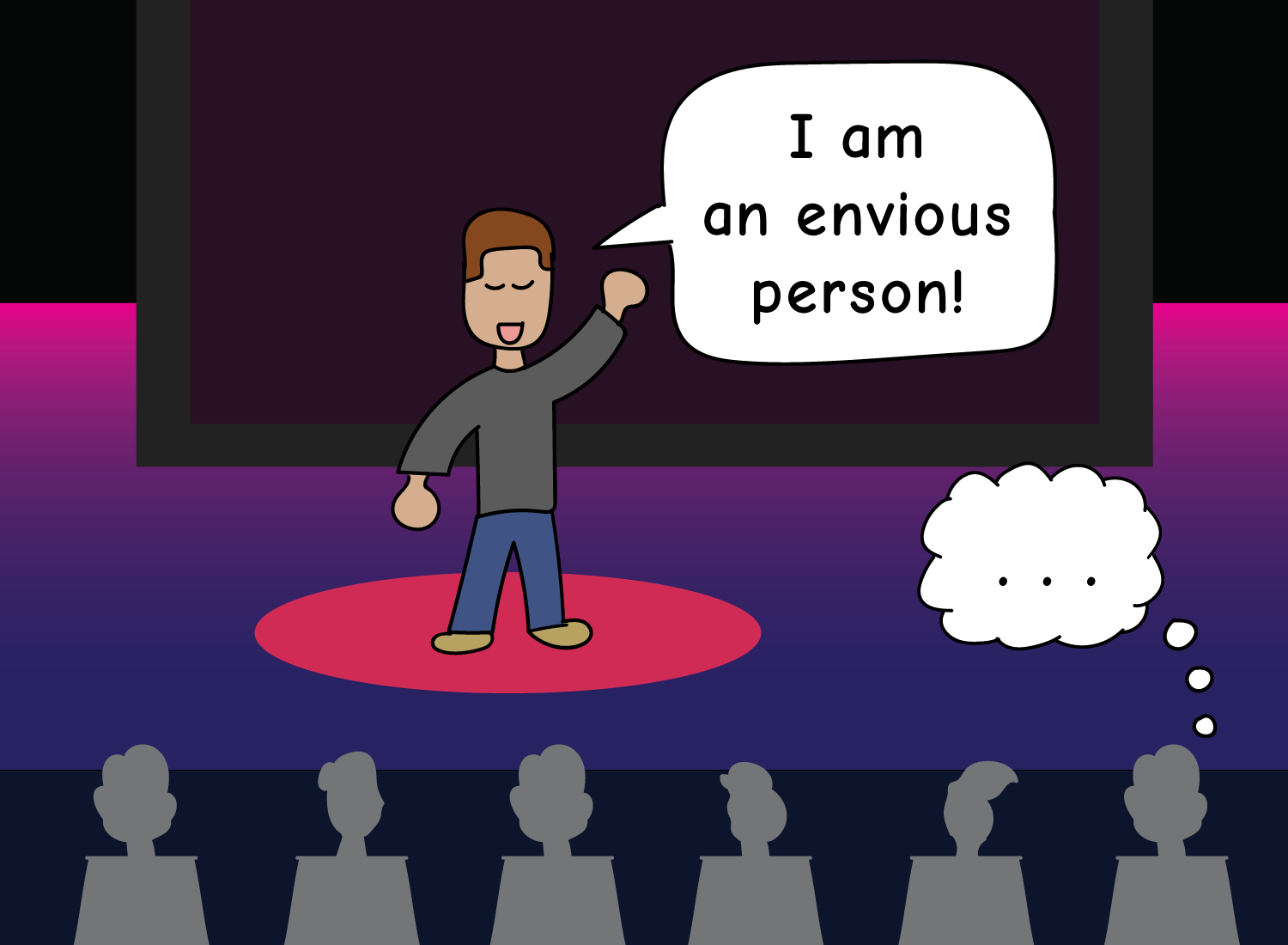
Revealing that you struggle with this emotion won’t yield much sympathy. Unless you’re discussing this with a close friend, we tend to judge someone who describes themselves as an envious person. There’s something off-putting about it, and we often feel that it’s a problem you should keep to yourself.
However, envy is one of the great struggles plaguing humanity today, and it’s only getting worse. The conditions that allow envy to thrive are being accentuated by technological progress, yet our norms have not updated to accommodate this reality. It should be just as acceptable to talk about envy as it is anxiety, especially because the former often feeds into the latter. Yet we keep our mouths shut in fear of being judged, and allow it to eat away at us over time.
This is my attempt to dissect the shit out of envy, and to go deep into the problem without any preconceived notions. How exactly does envy arise, and what about today’s world makes this especially problematic? How do we manage its presence, and diminish it as much as possible?
Well, to get to the end, we must start from the beginning.
Let’s jump in.
Say hello to John.

John has a pretty good life, but since he’s a human being, what he has today isn’t quite enough. He has visions of a future where he is just a bit happier, just a bit more content.
These visions are what we refer to as desires, and while he has many, he’s been trying to narrow them down lately. After some intense self-reflection, he’s come to realize that everything can be reduced down to one thing:
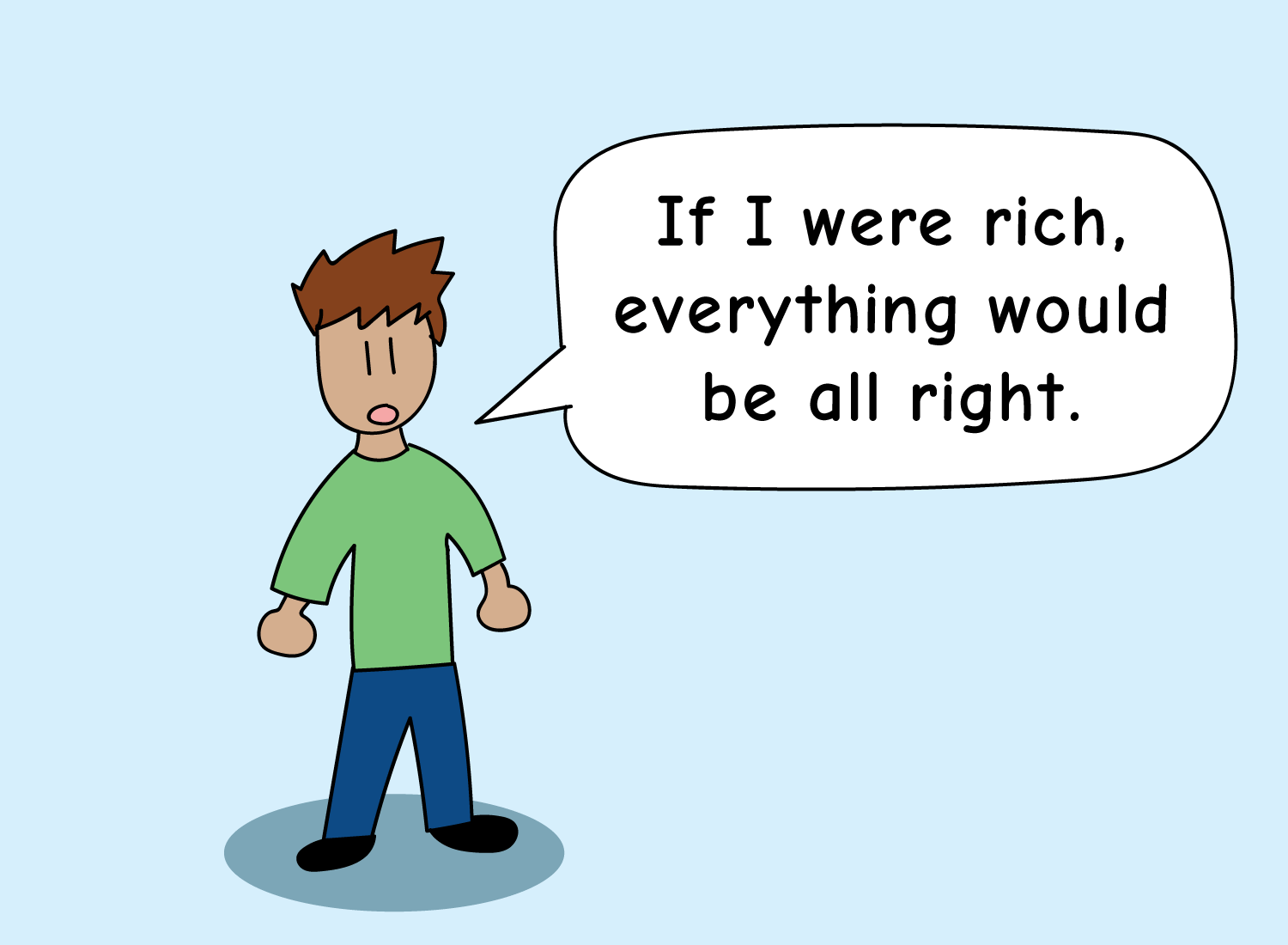
Fair enough, John. It’s not an especially unique thing to want, but hey, it’s honest.
Let’s represent John’s desire for wealth as this dollar-sign goalpost, which we will refer to as the “desired good.”
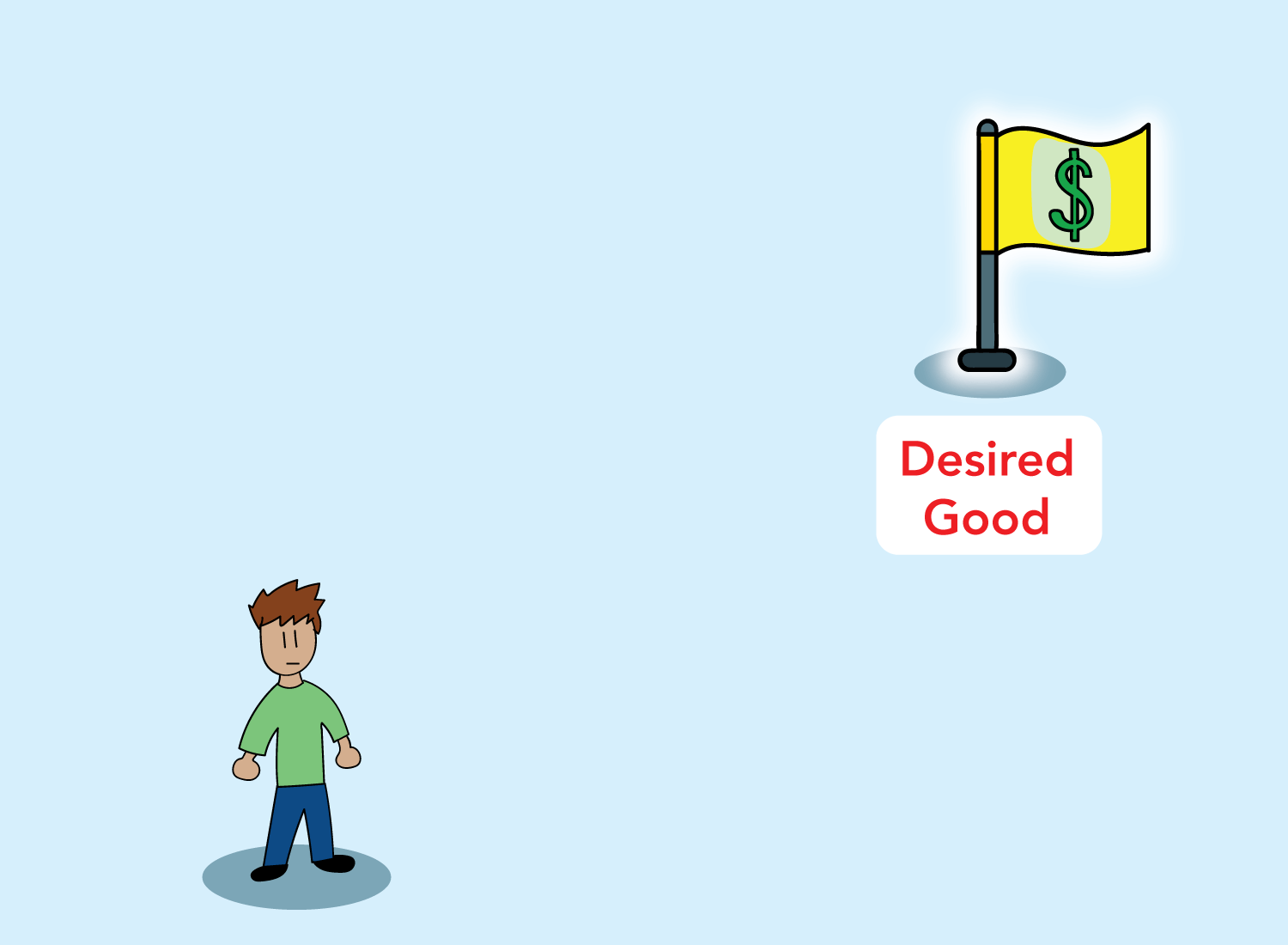
It may seem like John and the desired good are the only two players here, but in reality, there’s a lot happening.
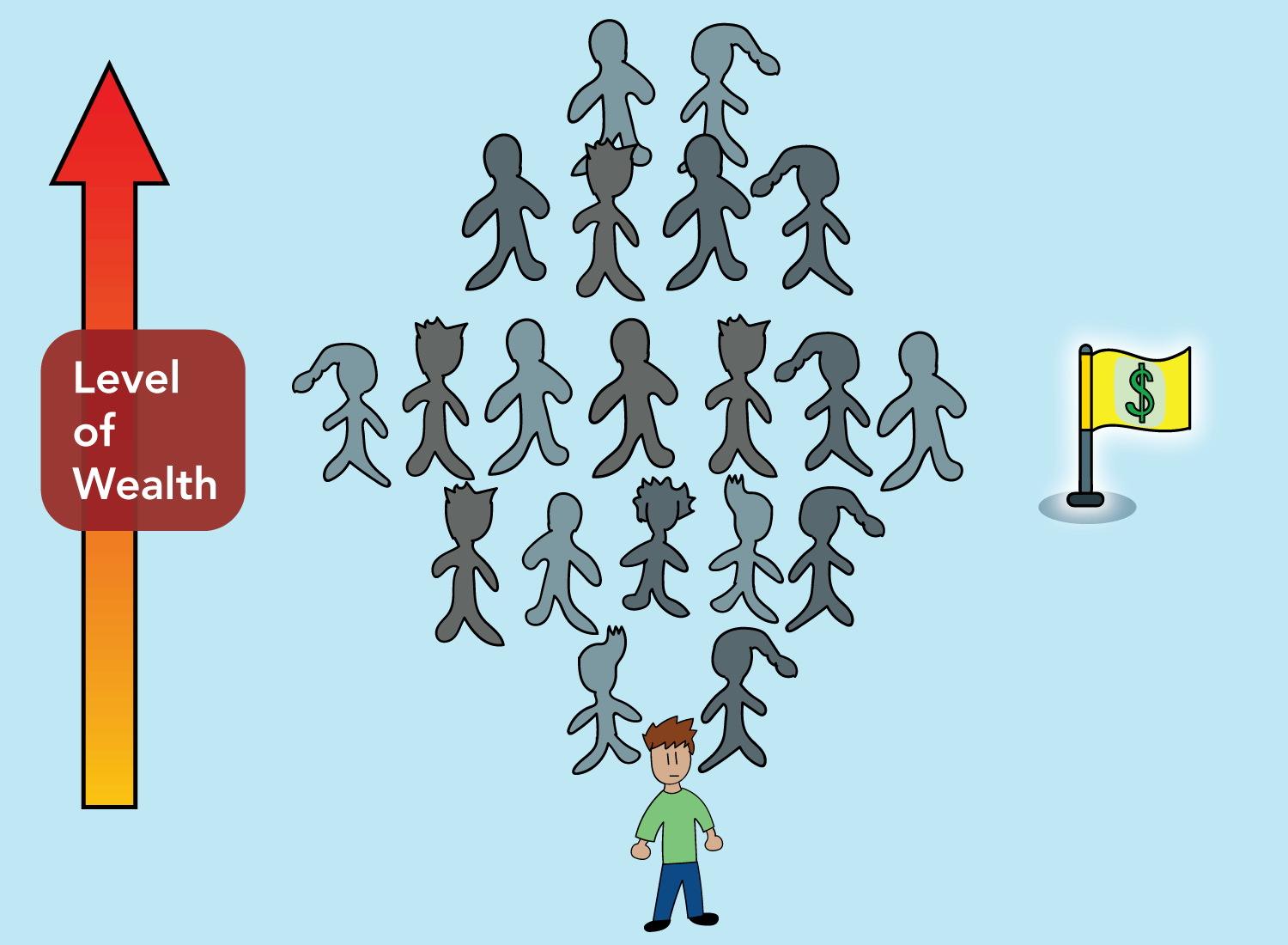
Once a desire is set, John’s view of the world shifts a few degrees closer to that want. When he looks out and sees people, he will position them according to where they stand in relationship to his goalpost. The further out they are, the more “unattainable” they seem, and the closer they are, the more reachable they feel:
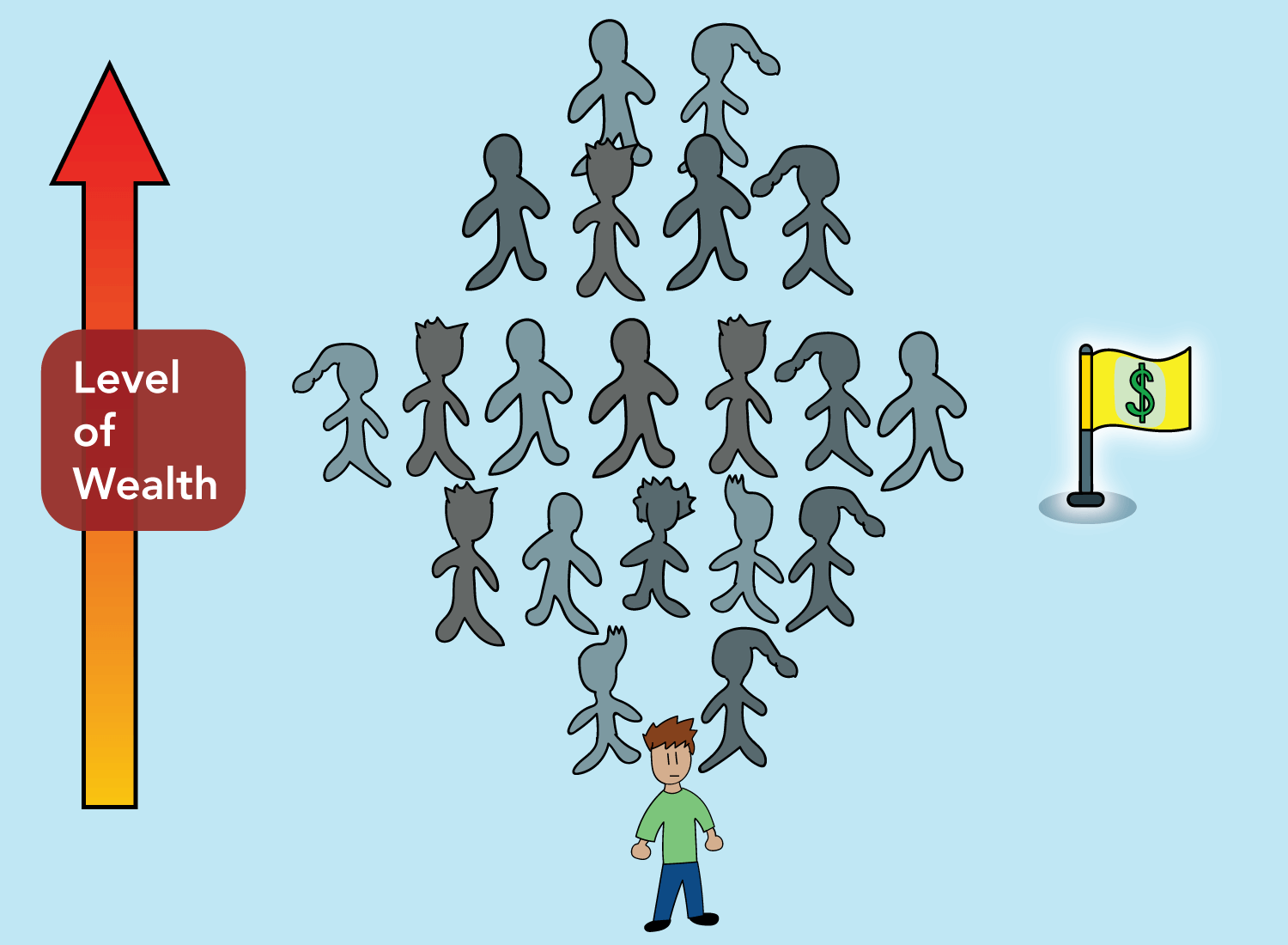
And here we arrive at the first rule of envy:
You will be envious of those that have reached your desired state, but are not too far removed from it. Those that are too far out will be sources of inspiration, not envy.
So in the context of John’s landscape, it will look something like this:
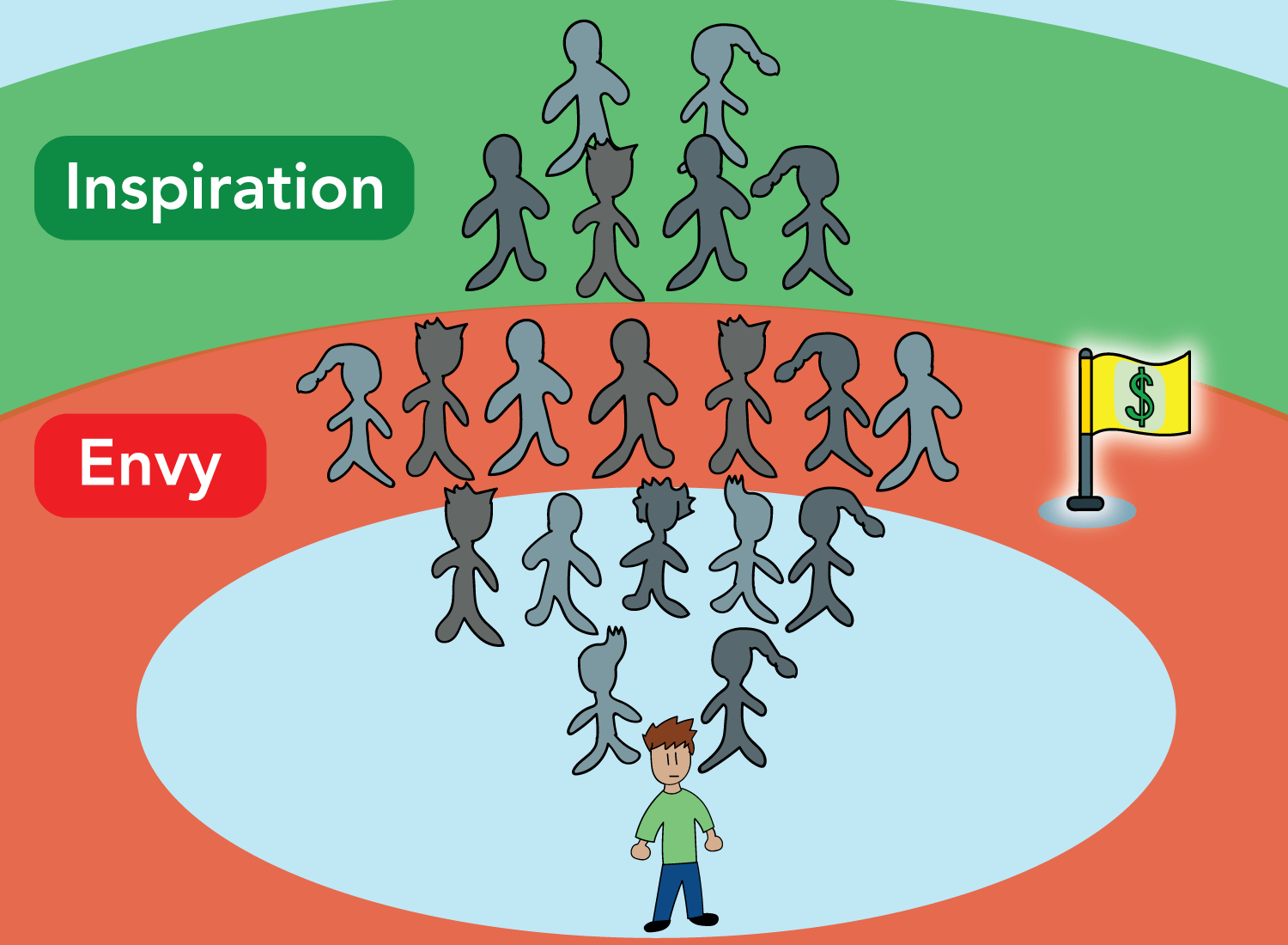
People like Elon Musk, Jeff Bezos, or Bill Gates will be in that green area. Their wealth is at an incomprehensible level in John’s mind, so instead of being envious of them, he will buy their biographies and seek to learn from them. The people that have taken John’s desire and achieved many multiples of it will feel like distant mentors as opposed to close rivals.
On the other end, the people that are in neither the green nor red areas won’t garner much of John’s envy too. Either John is already as wealthy as they are, or he simply doesn’t view these people through the lens of wealth to begin with. Healthy friendships and relationships tend to live in this zone, as there is nothing in particular that is desired from them (outside of having a good time).
That leaves us with this terrible red zone. The space where the potential for envy is at its highest:
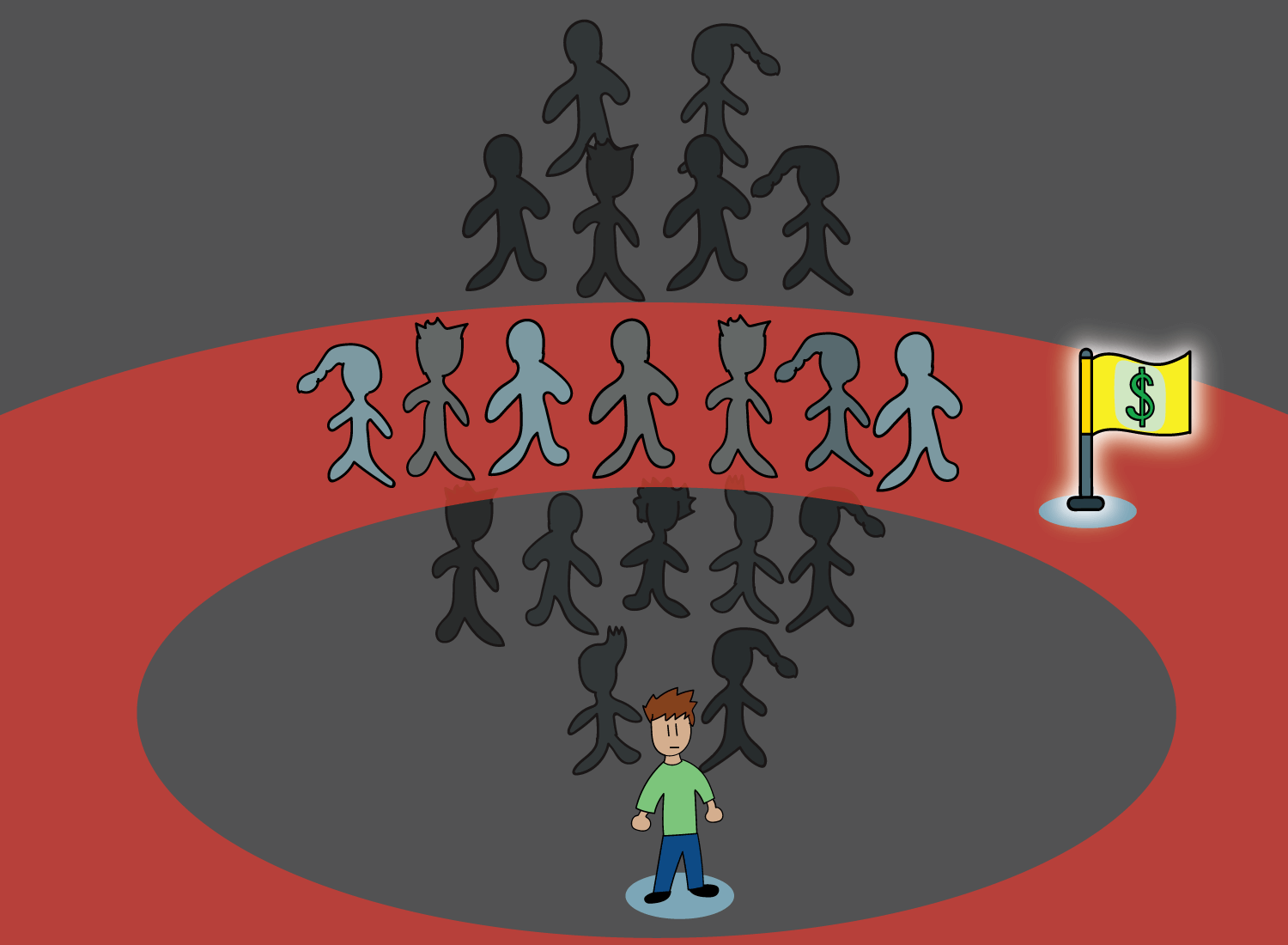
So the big question is: Out of all these people, how does envy choose who to target? After all, John will not be envious of everyone here; only a handful of them will personify his struggle with the emotion.
Well, it turns out that envy has a few guidelines it likes to follow, and someone who satisfies any one of them will make them a prime target (which I will now refer to as the “rival”). Let’s review what they are:
Envy thrives in the distance between you and someone you once knew.
This is because a shared history implies some form of equality, a starting point where both of you had a blank slate. In John’s case, it could his high school friend, his old college roommate, or his co-founder of the failed company they started. If any of these people then went on to reach the level of success that John now desires, then John will feel that he missed out on something that the other person clearly took advantage of.
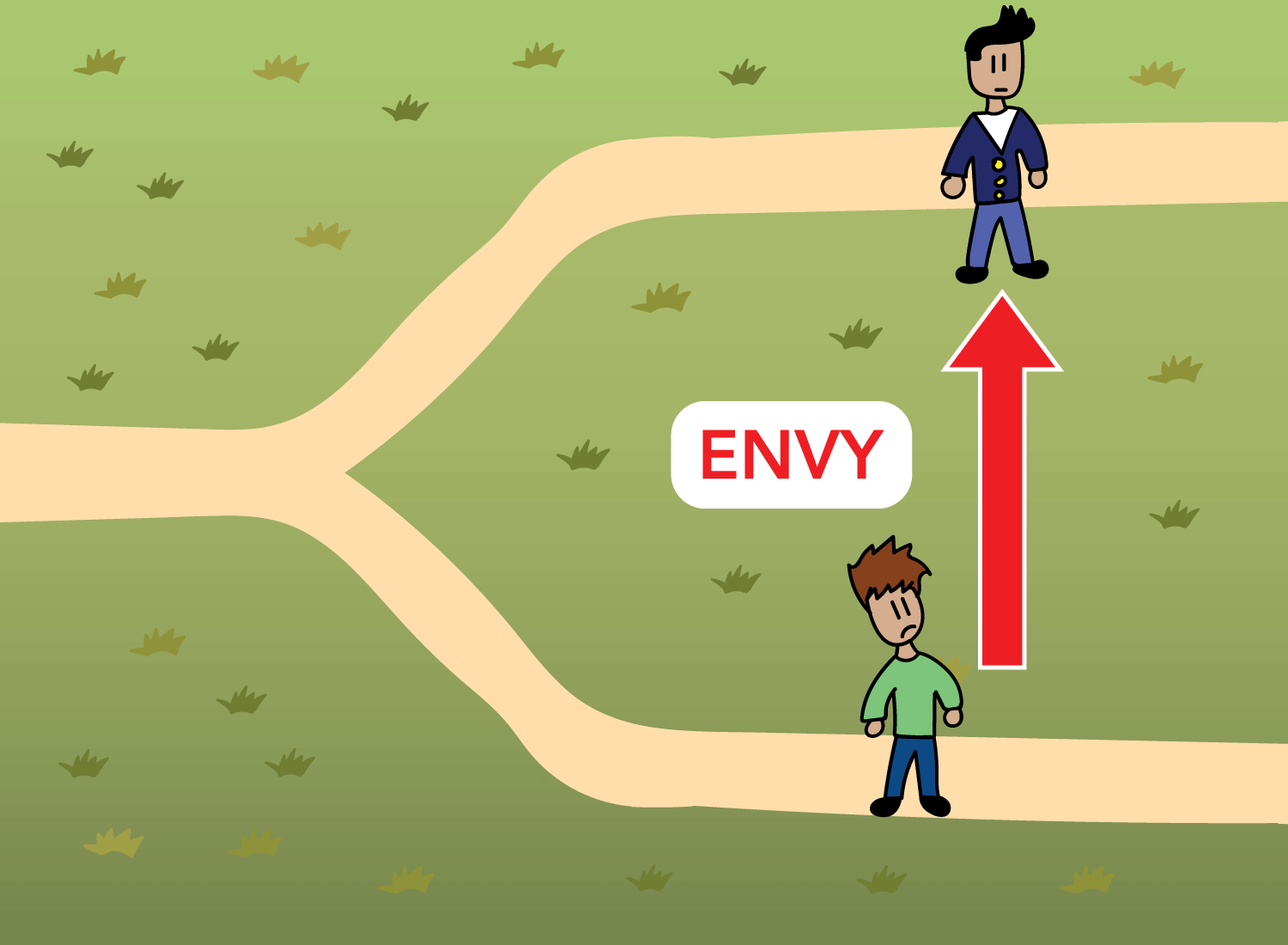
Here’s the strange thing: Envy is more likely to arise if you have not kept in touch with the rival during the course of this divergence. In other words, the more opaque the relationship, the stronger the envy. This is because we lack the insight to know just how long and winding the rival’s path actually was, and we instead assume that it was a neat trajectory from Point A to Point B. This makes us feel that we could have done it just as easily, and causes us to envy the rival for having made a decision that we should have made ourselves.1
This leads me to the next guideline envy uses to choose its targets:
At its core, envy is about attention. The more you pay attention to the rival and what they’re doing, the greater your envy toward them will grow. And there’s nothing that commands more attention than a neatly advertised path to success.
When someone’s showing you how easy it is to do what they have done, you feel inclined to accept their guidance. But by adopting their strategies, you also outsource your judgment to them, which means that you invest much of your precious attention to their path.
Whenever you do this, you tend to lose confidence in your capabilities, and any loss of confidence usually opens the floodgates to envy:
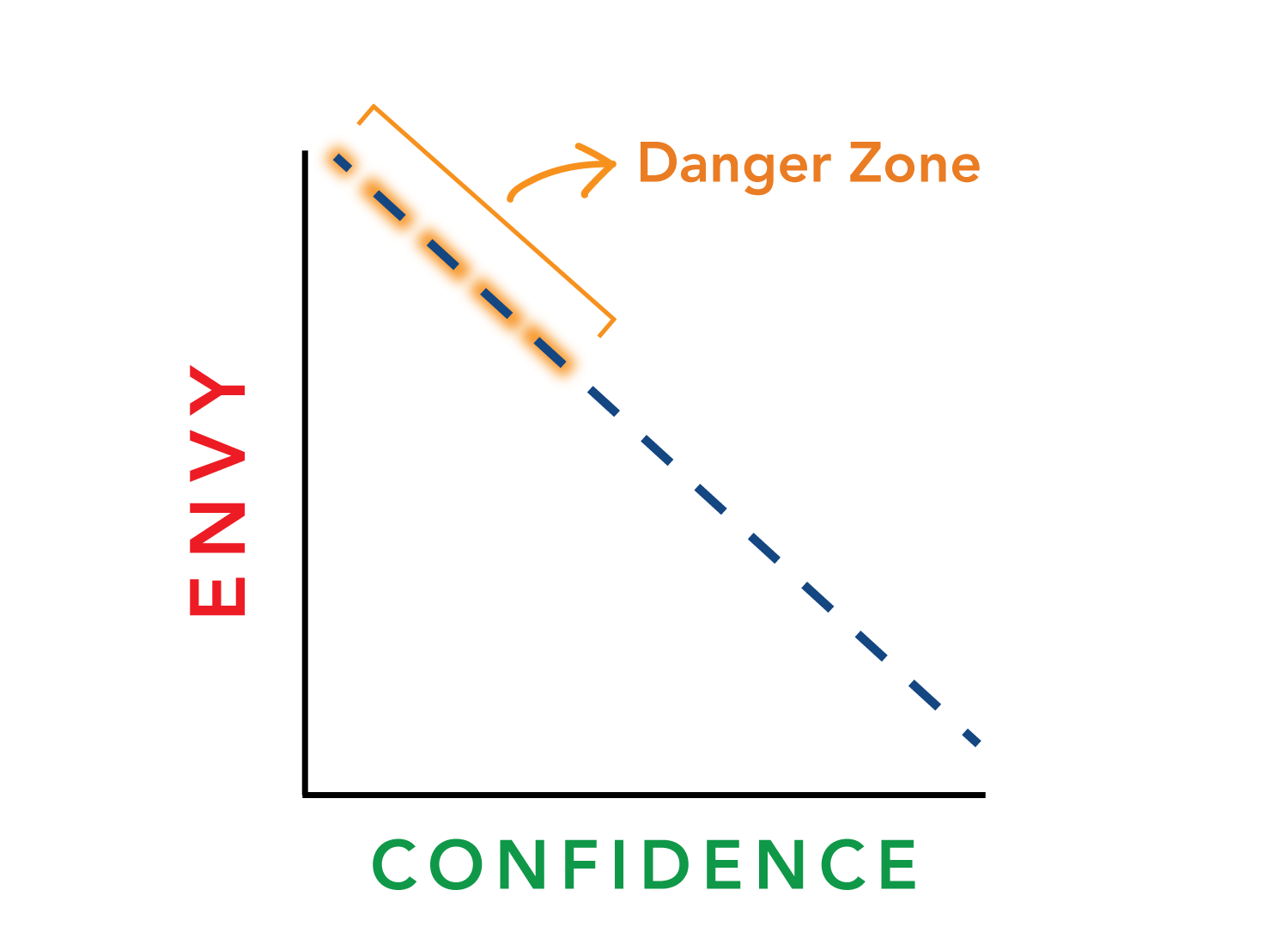
Envy loves it when you’re in the “danger zone”, and that happens the more you look outward to solve your problems as opposed to inward. And when it comes to looking outward, envy abides by this final guideline to choose the optimal rival:
Envy thrives on the feeling of “if they can do it, then why can’t I?”
In many ways, you often see yourself in the people you envy. You believe that you’re just as capable as they are, and are equipped with the same abilities that they also possess. But because of this, you are also disheartened by the fact that you feel so much further behind.
This is why envy tends to be high in any work setting. You are surrounded by colleagues that you once started with, but you may be passed up for promotions while they keep climbing the ladder. Or perhaps you’re an entrepreneur that’s been chugging along for 10 years, but someone who just entered the game last year is already breezing past you.
In order for there to be a proper point of comparison, there must first be a sense of relatability. In the past, these were the people that you would encounter on a somewhat regular basis, such as family members, classmates, and colleagues. Physical proximity is what gave you transparency into one’s character, and this is how you determined how relatable someone was.
Well, to say that things have changed would be the understatement of the century (thus far). We now live in a world where everyone is just one connection away, and when you combine this with the inability to openly discuss envy, you get the perfect shitstorm to smack you in the face.
All right, now let’s give John an iPhone and any social media app.

Prior to giving him the phone, you’ll recall that his landscape looked a little something like this:
So after a few months of familiarizing himself with social media, what will his landscape look like after this has become his new normal?
Well, the first noticeable change would be the dramatic increase in people that enter his field of awareness:
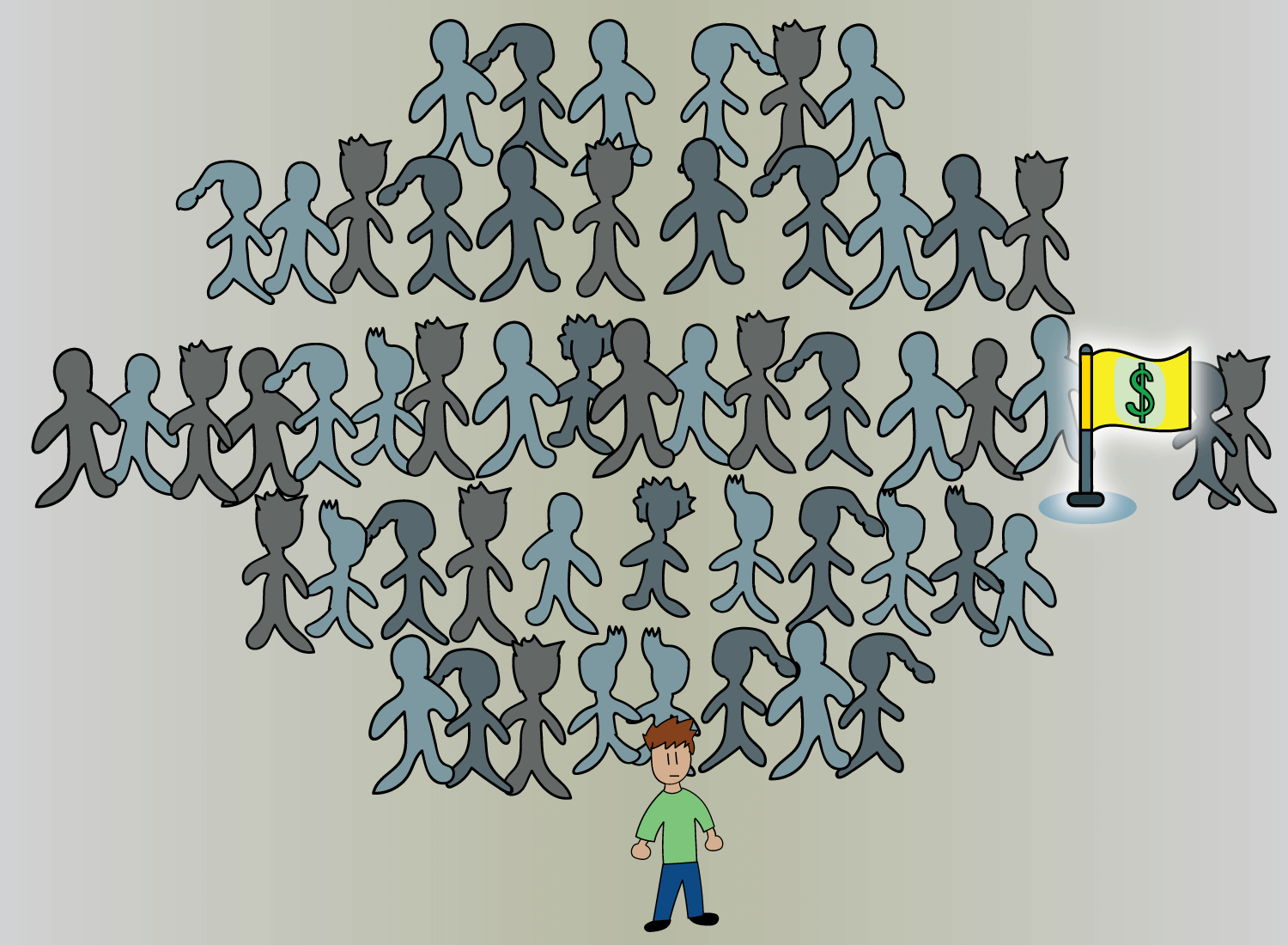
This makes sense, as the whole purpose of social media is to make the world feel smaller by bringing like-minded people together. But this type of dramatic congregation comes with its costs, and much of it has to do with the type of behavior that social media promotes.
First off, communication is asynchronous, meaning that conversations are not happening in real-time. People can take time crafting what they want to say, which means that they are editing themselves before any conversation has begun. And whenever someone is given the capacity to edit, they are given the opportunity to pick and choose how they want to present themselves.
This leads to everyone showing the polished versions of their lives, or what I call the avatars of their refined selves. Every thought is sculpted to be presentable, and every utterance has the purpose of attracting attention. This makes social media a place where everyone exudes an air of confidence, all while its participants know that there is some distance between what is shared and who they truly are.
The second cost masquerades as a benefit, which has to do with accessibility. Social media offers the promise of access – that the people who were once unreachable are now people you can connect with. While this may be true on its surface, this promise also has the unintended consequence of making everyone appear relatable. Social media makes the world smaller by making the size of your echo chamber larger, so all of a sudden, everyone around you appears to have similar skills, values, and perspectives as you do.
So people that were previously deemed “unreachable” are now “relatable.” And as we noted earlier, the more relatable someone appears, the more we compare ourselves to their advertised sense of progress. This means that the territory of envy extends outward in the landscape, enveloping more people as it grows in size.
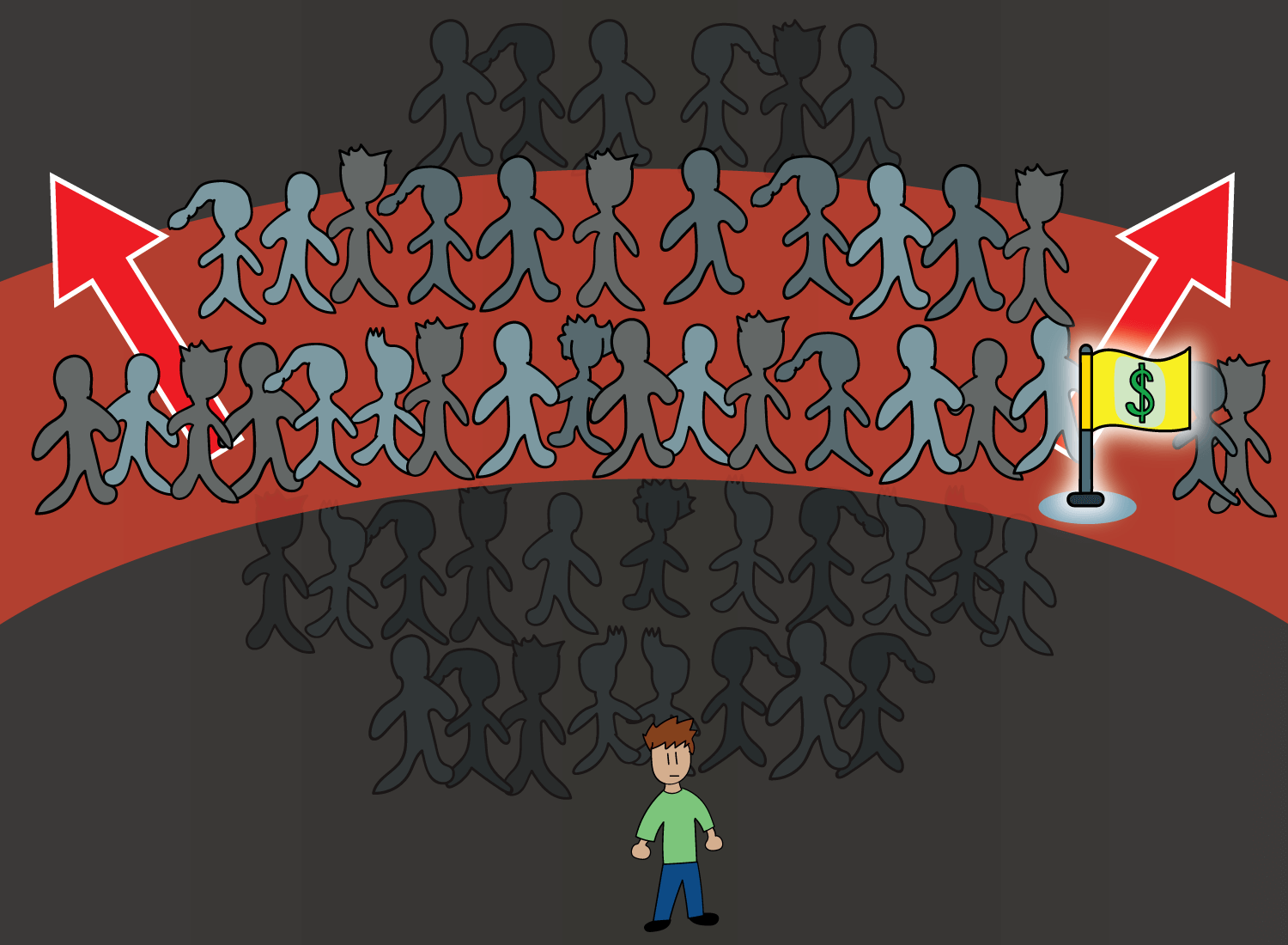
This may be a more cynical view here, but I feel that the “everyone is now accessible” promise is bullshit. If that truly were the case, social media companies wouldn’t prominently display follower counts to signal status, which are the parameters people use to decide who they want to engage with in the first place. For the most part, it’s an illusion that is held together by the prominent display of secondary connections, which makes everyone feel that they are much more connected than they initially thought.2
All this does is kindle the fire of envy, as the people that have what you desire seem to be everywhere. Not only that, they appear to have done it with relative ease because that’s what is generally advertised. Any announcement of success on social media comes with a strong degree of survivorship bias, but since we don’t follow people that have failed at their endeavors, we tend not to see it.
This is the battle that we face every day when we go on our phones, and when we compare ourselves against static profile pictures with polished thoughts. To make things worse, we face this problem silently, letting it eat away at us without acknowledging the struggle with anyone else. It’s a cancer that eats away at the soul, and just like cancer itself, it grows largely undetected, only to balloon at the end to consume you whole.
Fortunately, we are also equipped with the tools to fight this battle, and eventually win. Let’s go into how we can do just that.
To recap, envy results from the interplay of three things:
(1) A desired good,
(2) A rival, and
(3) A landscape of potential rivals.
When it comes to eliminating envy (or greatly diminishing it), it turns out that these three elements are the very things we need to address. By investigating each part on its own, we will be more aware of how they fan the flames of envy, and what we can do to quell that fire over time.
Let’s start with the root of it all:
Desire is the birthplace of envy, but remember that not all desires are created equal.
That may sound obvious, given that the desire to rob a bank has a different texture than the desire to eat more vegetables. However, we often forget that the things we want can be plotted against a spectrum that looks something like this:
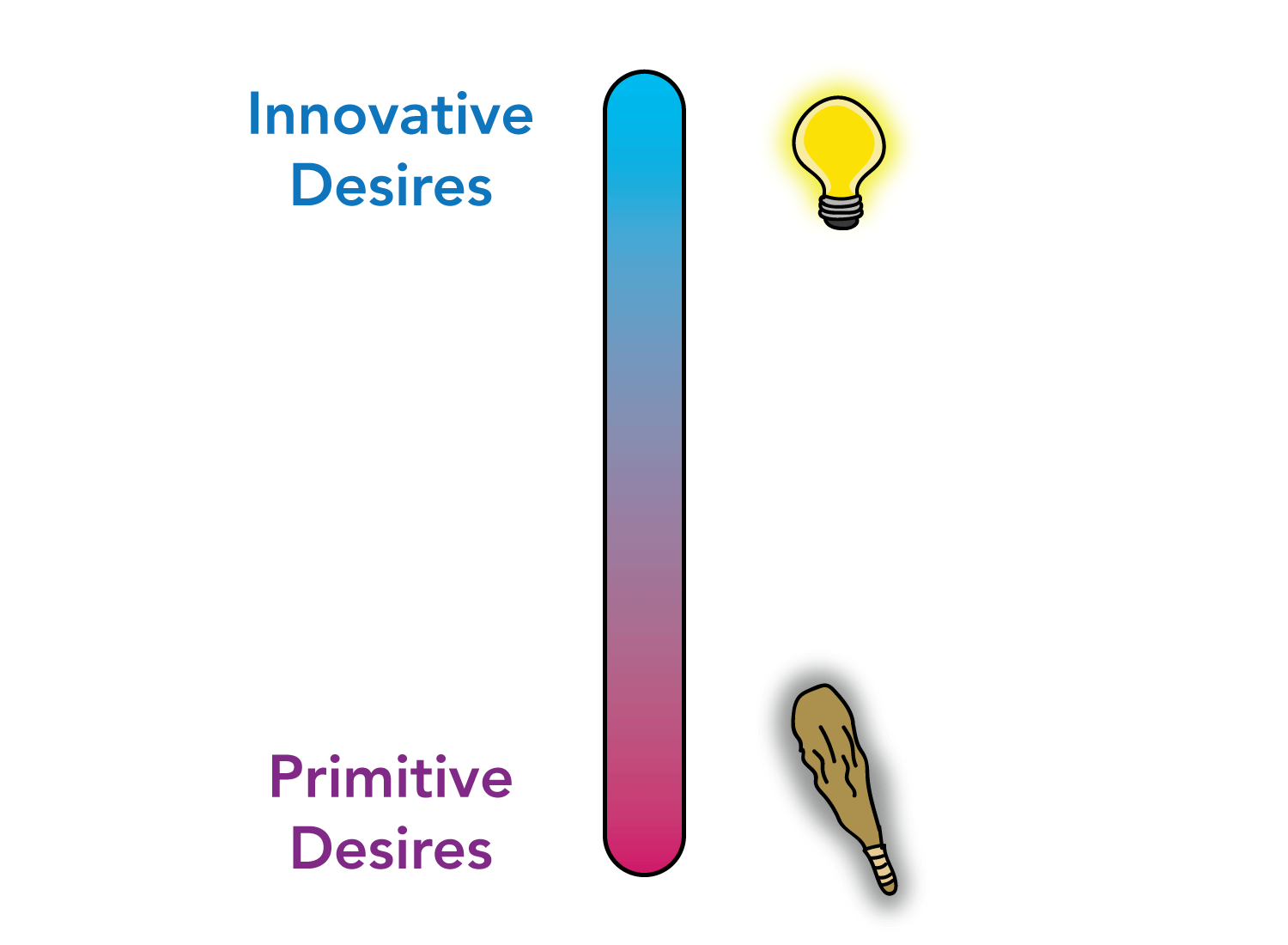
Our desires may feel like one gigantic blob, but in reality, they can be individually parsed and plotted against this spectrum.
The innovative desires are the ones that cater to the better angels of our nature. The ones that foster creativity, well-being, and are tailored to your unique mindset and life experiences. The primitive desires, of course, are the base-level wants that cater to the lowest parts of our nature. They are thoughtless, unoriginal, and anyone with a functioning human brain will want them.
The rule here is that the lower your desire is on this spectrum, the more likely it is that envy will have power over you.
The desire to be rich, famous, or have status is so commonplace that there will always be someone to personify what you want. If you want to have more followers, then guess what, you will envy the next “relatable” person that comes along with the following you’re looking for. The same goes for wealth. These primitive desires tend to have the quality of never being enough, as the goalpost moves whenever it has a specific person to move it to.
Instead, it’s best to cluster your desires toward the higher area of the spectrum. These are the innovative desires that cannot be externally validated or tied to another person’s progress, and are unique to your personal experiences. For example, “know more than I did yesterday” or “learn something interesting” are things that can only be tracked by your inner scorecard. No one can tell you how you’re doing, nor can they make you feel inadequate by numerically advertising their progress.3
In John’s case, he needs to take a good look at why he has this burning desire to get fabulously rich, and see how that’s going for him. If he finds that envy is a persistent problem, then it’s time for him to upgrade that desire to something more sophisticated and tailored. That way he will stop looking outward to gauge his sense of progress, and will learn how to use his inner compass instead.
Whenever you’ve pinpointed a rival that you’re consistently envious of, here’s a thought experiment worth running:
If that person didn’t possess the desired good, what would you think about him/her?
Chances are, you two would probably get along quite well. After all, one of the conditions of envy is that there is a high degree of relatability between you both, so if you ever had the chance to meet, you would likely have lots to talk about. You would find that there’s not so much distance between you and the rival as you once imagined.
Ultimately, you’ll realize that there is nothing about the rival as a whole that you want to become. You’re just envious of one particular element, which is that the rival possesses your desired good. But outside of that, you wouldn’t want much else. You’re largely okay with being you.
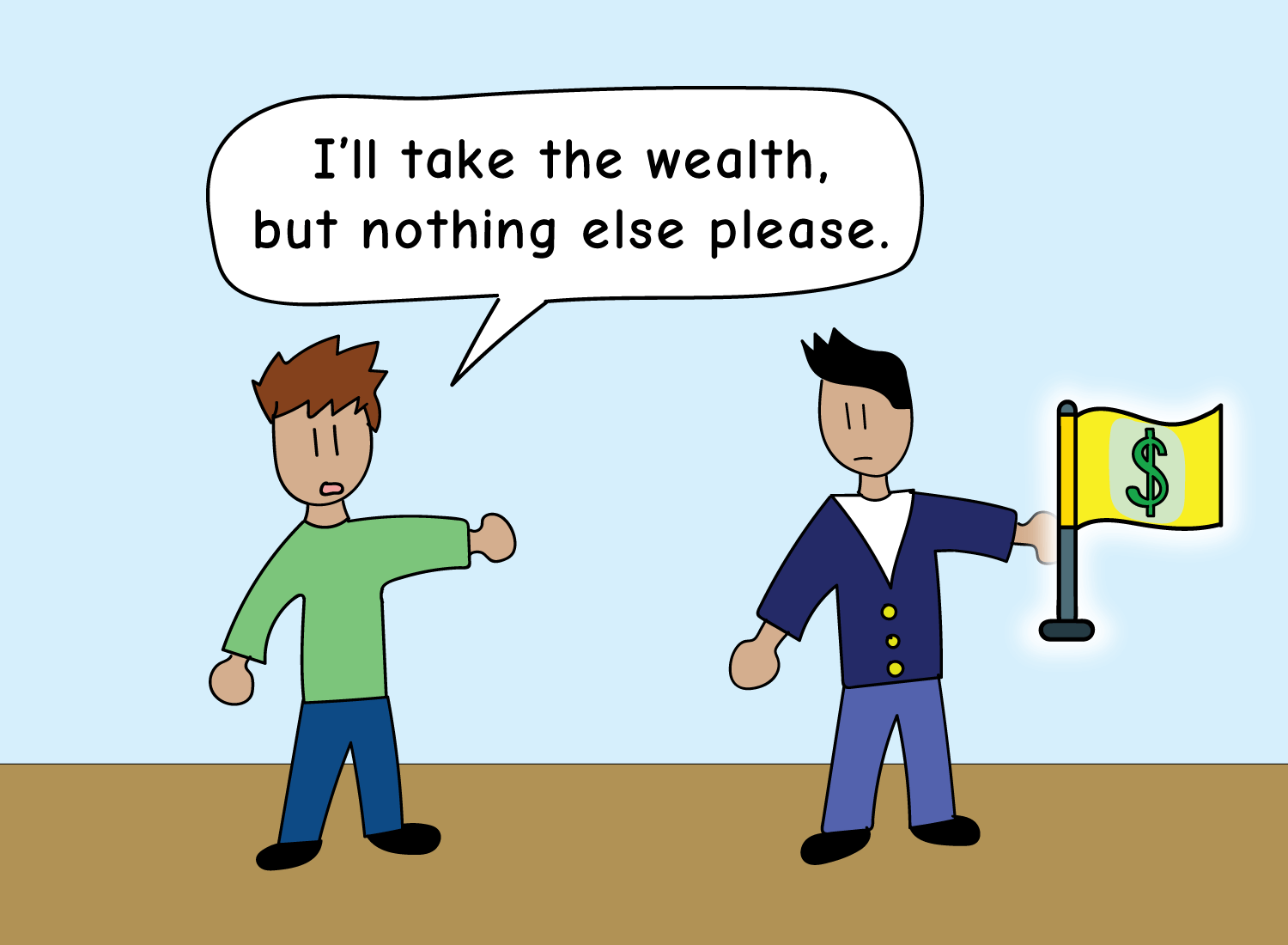
This reveals that you don’t want that person’s life, you just want what you desire. So rather than being envious of a person you don’t want to be in the first place, you can focus on fulfilling what you want for yourself.
This leads nicely into the final point:
Envy is at its highest when too much external noise has entered your mind.
When this happens, the best thing to do is to cloud out the entire landscape, and shut it all down.

In today’s world, people do this in the form of digital detoxes or some variant of that. But at its core, it’s about shifting every ounce of your attention toward the things that only you can do. Challenging work that stretches the mind. Mindfulness practices that require you to look within. These are the things that are impervious to external noise, and allow you to be fully immersed in your own headspace.
The interesting thing is that we already know which of our behaviors will reliably provoke envy. For example, we know that going on social media will make us feel shitty, but fuck it, we go on it anyway. It’s the same twisted mechanism we have of picking at a scab knowing that it’s going to cause long-term damage. We do it anyway because the power of the habit overrides the pain of the experience.
Envy is such an enduring emotion because it lives in the one habit that defines the human condition: our desire for external validation. We will put ourselves through a self-doubting hell just to know that we are seen, and if another person’s path to being seen seems a bit easier, we will envy that person’s journey. But of course, this constant state of comparison just digs you into a deeper hole.
The only way out is to temporarily break this habit, and to dedicate all your attention inward for a duration of time. To stop gazing into another person’s home, and instead work on cleaning up your own. And after you’ve done that, it’s important to stay in it for a while and focus on nothing else. After all, it is only in your own house where your inner judgment is cultivated.

At a certain point, however, we must leave the home and interact with the rest of the world, which is undoubtedly an inspiring place. There are so many amazing people and stories out there, but in the end, they’re only as amazing as we allow them to be. Envy is the greatest roadblock to recognizing this, and given our inability to speak openly about it, I’m convinced that it’s going to be one of the great mental health issues of our time.
I started this post with the intention of explaining what envy was, but am now realizing that the real message is about making it okay to admit when it’s a problem. To make it clear that the only reason I’ve thought so much about envy is because I’m not immune to it either.
The world is connected in a manner that has no precedent, and perhaps it’s time we stop pretending that we’re equipped to handle that reality. In order to accept what we are up against, we must first admit the limits of our capabilities, because then we know what we need to bridge the gap.
To do this effectively, there must be dialogue, which is the key to updating the norms we have around certain subjects. By arming ourselves with the capacity to talk about it freely, we finally have what it takes to fight the long battle against envy: the age-old cancer of the soul.
_______________

If you enjoyed this post, consider joining the More To That newsletter. You’ll be notified when a new post is up, and will get access to personal reflections that you won’t find anywhere else.
As a welcome gift, I will send you a 10-page ebook called How to Discover Great Ideas, and a pack of colorful wallpapers for your phone.
If you want to learn how to write posts like the one I shared above, check out The Examined Writer. It’s 3 hours of self-paced material, all designed to elevate your writing practice.
If you’d like to support the many hours that go into making these posts, you can do so at my Patreon page here.
_______________
Out of all the worthwhile problems in life, envy is not one of them:
Thankfully, Life Is Full of Problems
External validation is desired when you lose track of who you are:
A reminder to gauge progress using your inner scorecard:
此内容由惯性聚合(RSS阅读器)自动聚合整理,仅供阅读参考。 原文来自 — 版权归原作者所有。