









Beneath the surface of AI’s automation, productivity, and cost efficiency narrative lies a deeper question: What does AI actually change about marketing, and who is responsible for leading that change? The answer is that AI forces a redesign of how business and marketing work, a shift in the CMO remit, and a reappraisal of the traditional agency model that’s quickly loosing relevance.
To understand what’s happening with AI, let’s step outside marketing for a moment. When factories first adopted electricity in the late 19th century, many simply replaced steam engines with electric motors while leaving their existing vertical, constrained work formats intact. The result? Zero to minimal gains. It wasn’t until leaders redesigned workflows, factory layouts, and management systems around electricity that productivity and profits meaningfully improved.
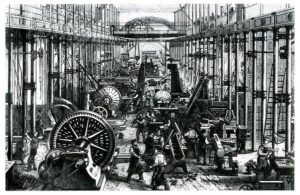
AI follows a similar pattern. Many organizations today attempt to “plug in” AI and use it to accelerate content production, optimize media, or reduce agency costs. And while those gains are real, they’re merely incremental. The real AI opportunity is less about efficiency and more about effectiveness. It’s less about doing the same work faster and more about reimagining how work gets done. It’s less about cutting costs and more about how to accelerate growth.
This shift places CMOs at the center of the AI conversation. Historically, marketing leaders are measured by their ability to scale campaigns, build brands, and optimize performance. Today, CMOs are expected to translate AI capabilities into business outcomes. Forrester’s research shows that CMOs are nearly as likely as COOs and CIOs to be the primary executive in charge of AI business strategy. This requires the CMO to, first, become a change leader that guides a business and marketing transformation inside the organization. But they can’t do it alone. They need trusted partners to help their marketing functions navigate change management, technology implementation, and the new fundamentals of AI marketing.
Too many agencies are still focused on delivering marketing faster, cheaper, and at greater volume. Agencies built business models to scale production, media activation, content, and labor-intensive execution. But AI is at odds with those economics. When machines can generate content, optimize media, and automate workflow, the value of execution erodes. AI commoditizes execution by making speed, scale, and optimization abundant.
The agencies best positioned to succeed will be the ones that reassess and redefine their role in CMOs’ partner ecosystems. Change-agent agencies will help CMOs advance from experimenting with AI to operationalizing it, from deploying tools to redesigning workflows, and from optimizing campaigns to orchestrating marketing-led growth. They will help CMOs answer today’s burning questions:
The transformation underway is much larger than any single brand, marketing organization, agency, channel, tech partner, or advertising conference. It’s about what marketing is responsible for, who is accountable for delivering it, and how it evolves. For CMOs, the opportunity is to step into a broader leadership role and redefine how marketing contributes to growth. For agencies, the opportunity is to reclaim their role as change agents of innovation and creative problem-solving. If they succeed, they’ll reinvent creativity.
In our latest report, CMOs’ AI Imperative Demands Change-Agent Agencies, we explore the evolving remit of CMOs and how agencies can shift from execution to orchestration to recapture their role as trusted advisors.
Forrester clients interested in learning more about change-agent CMOs and agencies can set up a guidance session with Jay Pattisall.
此内容由惯性聚合(RSS阅读器)自动聚合整理,仅供阅读参考。 原文来自 — 版权归原作者所有。