








Co-founded by Refik Anadol and Efsun Erkılıç, Dataland opens with an immersive work that connects technology to the natural world.
Is art created through AI worthy of museum recognition? The use of generative AI to make artwork is a Marmite topic – disparaged as a blow to creativity or heralded as the chance for incredible visual experience. Championing the latter is Dataland, a new museum devoted to the medium, which opens on 20 June in Los Angeles. Co-founded by digital artist Refik Anadol and his studio partner Efsun Erkılıç, the institution aims to be a “living museum”, in which the artwork is constantly evolving.
The building was developed with architects Gensler, best known for designing the first 100 Apple Stores and the Shanghai Tower, China’s tallest building. Dataland’s new home consists of five galleries across 2,300 sq metres of public space (about the size of a standard blue-chip gallery in New York’s Chelsea neighbourhood). The building was also realised in collaboration with climate and sustainability consultancy Arup. Ethics and ecological thought are high on the agenda here – something that is also evident in the programme.
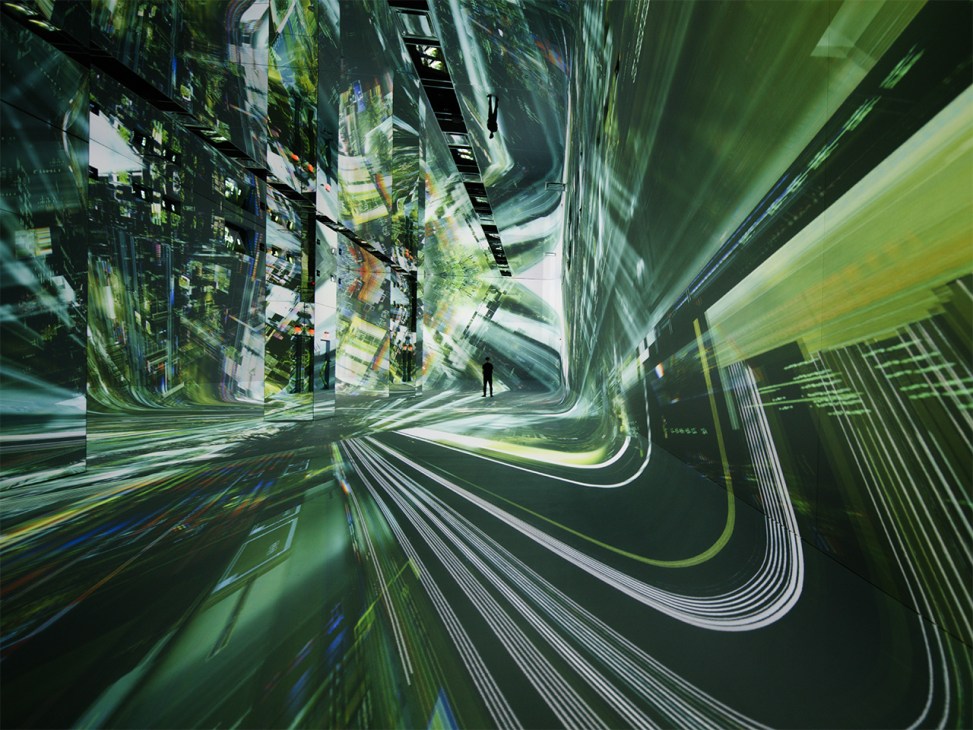
Dataland’s first major show features Anadol’s Machine Dreams: Rainforest, one of a series of ongoing immersive works highlighting the natural world. The artwork uses “permission-based” datasets provided by the Smithsonian, the Getty Foundation and London’s Natural History Museum, among other sources. The large nature model at the heart of Anadol’s work is shaped by ecological data – such as temperature, light and moisture – streaming in real time from rainforests around the globe. The work also reflects biofeedback taken from the audience in the room.
“The work is in continuous production,” says Anadol. His work is immersive, surrounding its viewers with continuously moving images. The piece’s aim is to highlight the human connection to the environment, even nodding towards the spiritual. The idea is epitomised through a collaboration with the Amazonian Yawanawá people in Brazil: Nixiwaka, an indigenous chief, political activist and spiritual leader of the Yawanawá people, has named the computational system “Ruwe Pinu”, meaning “iron spirit”, bringing an ancestral practice of naming forest presences into a technological context. The artist’s work resists greenwashing by aiming to create a mode of sourcing and using data in a way that is collaborative rather than extractive.
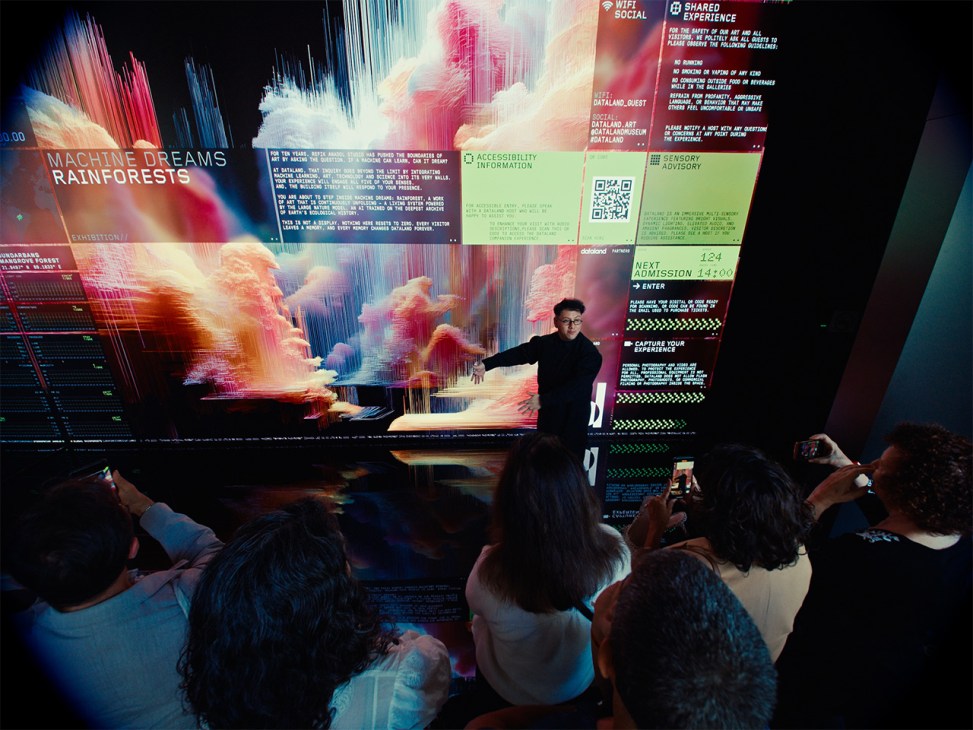
Anadol’s immersive and psychedelic work garners the kind of public adoration many artists dream of. Nevertheless, this is not just a vanity project. “Dataland’s mission has always extended beyond a single practice,” says Anadol. “The museum is committed to building a comprehensive collection of AI art, and to presenting work by digital and AI artists more broadly.”
Dataland launched an artist residency programme in partnership with Google Arts & Culture in October 2025. Selected artists will spend six months developing new projects at the intersection of AI and creative practice, and the work will be showcased on site. In an era of AI fascination – and resistance – this is a space that aims to make digital art a firm part of the cultural future.
Dataland opens on 20 June.
此内容由惯性聚合(RSS阅读器)自动聚合整理,仅供阅读参考。 原文来自 — 版权归原作者所有。