


Tokyo’s allegiance to Washington is compromising its economic special relationship with Beijing.
Earlier this week the Japan-ROC Diet Members’ Consultative Council, a cross-party group of Japanese lawmakers, approved a motion to adopt a new name that includes the word “Taiwan”. Currently led by Keiji Furuya, a member of the ruling Liberal Democratic Party (LDP), the group was founded in 1973, a year after Japan – along with the UK, Australia and many others – severed diplomatic relations with the island in what amounted to an acceptance of Beijing’s “One China” principle.
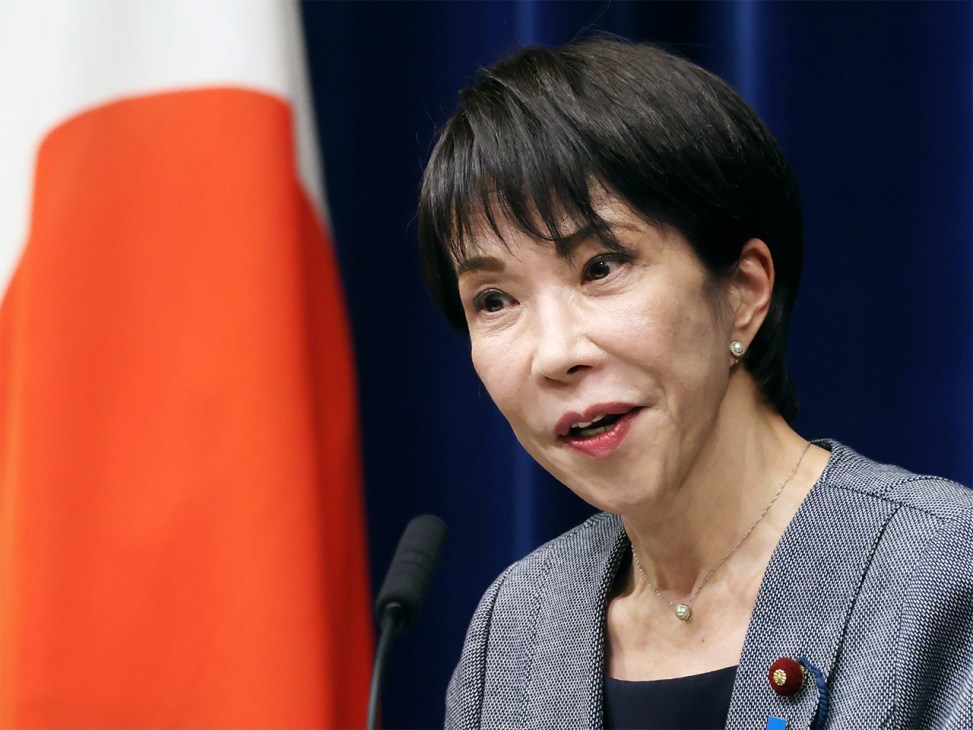
Though Furuya framed the name change in terms of his country’s “unshakable bond” with Taiwan, it was, of course, a provocation aimed squarely at China. He and his group were trolling. Relations between East Asia’s biggest economies have been at a low point since Japan’s blundering prime minister, Sanae Takaichi, declared last November that a Chinese attack on the self-governing island could constitute “an existential crisis” for her nation, potentially justifying military action. Beijing naturally took this as an affront to its sovereignty and responded with a series of retaliatory measures, from travel bans to seafood import restrictions.
The new combativeness between Japan and China is a symptom of the increasing fragility of US influence in East Asia and serves the long-term strategic interests of neither Tokyo nor Beijing. Despite still unresolved grievances over atrocities committed by the Imperial Japanese Army during the Second World War and a mutual distrust born of rivalry, the two countries have long flourished as economic partners. Between 1972, when relations between Tokyo and Beijing were normalised, and as recently as the mid-2010s, they operated in concert almost as a single industrial force. Japan focused its foreign aid on Chinese infrastructure throughout the 1980s and 1990s, and later supplied a significant proportion of the hi-tech components and materials that China needed for its own manufacturing sector. It was a mutually beneficial arrangement that helped Beijing to establish itself as an industrial titan and kept Tokyo’s balance of trade in surplus.
China remains Japan’s most important trading partner and among the largest investment destinations for the nation’s companies. Yet Tokyo is bound by its commitments to Washington, which views Japan’s permanent vassalisation as key to its China-containment strategy (and has more than 50,000 soldiers stationed in the country, perhaps to ensure that things stay that way). Takaichi and the supine LDP have been happy to comply, poking China in the eyeball every chance that they get – from signing up to the US-led “Pax Silica” coalition, designed to reduce Chinese dominance in rare-earth processing, to announcing negotiations with the Philippines to delimit the maritime boundary of their exclusive economic zones (at the expense of China’s claimed rights).
For now, though, business pragmatism still prevails. Last Thursday, the Japanese Chamber of Commerce and Industry in China released a white paper showing that, despite trade restrictions and heightened political tensions, Japan’s integrated circuit exports to China had soared by almost 48 per cent in 2025. It was a small sign that the old partnership isn’t quite dead – and a reminder of the mutual benefits of the Sino-Japanese relationship.
此内容由惯性聚合(RSS阅读器)自动聚合整理,仅供阅读参考。 原文来自 — 版权归原作者所有。