




For our first hack day of 2024 we kicked off with a grand theme around all the major events of the world, including sport and upcoming elections around the world. Hackers played around with the idea of using python programming language and real-time mobile telemetry data to influence the outcome of UK elections, they proposed a bold new journalistic geometry, added fun polls, quizzes and newsletters sign ups to the live blog, as well as posed the question: “ Can bedrock do what CAPI can do?”
And that’s only 4 of the 19 amazing hacks produced and presented over the two-day event!
Here is a selection of our winning concepts and designs from the day:
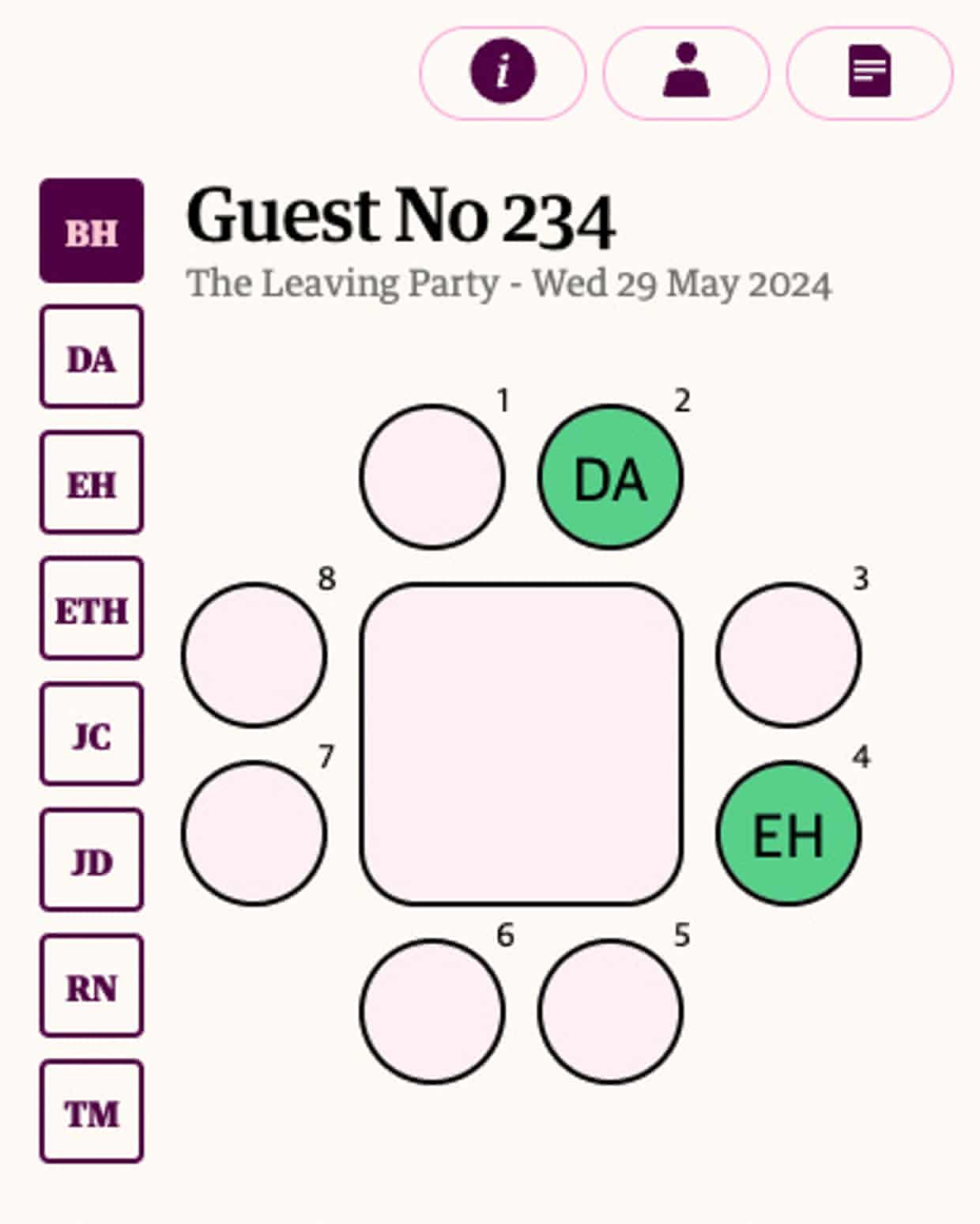
Best conceptual hack: Guest
A new ‘dinner party’ puzzle from Freddie, Abo, Chloe, Ara, Ilhan and Andrew, where readers need to find the right seating plan for a list of guests from the week’s news. Expect to meet politicians, athletes, actors, musicians and more - dead and alive!
Best technical hack: favicon-rendering
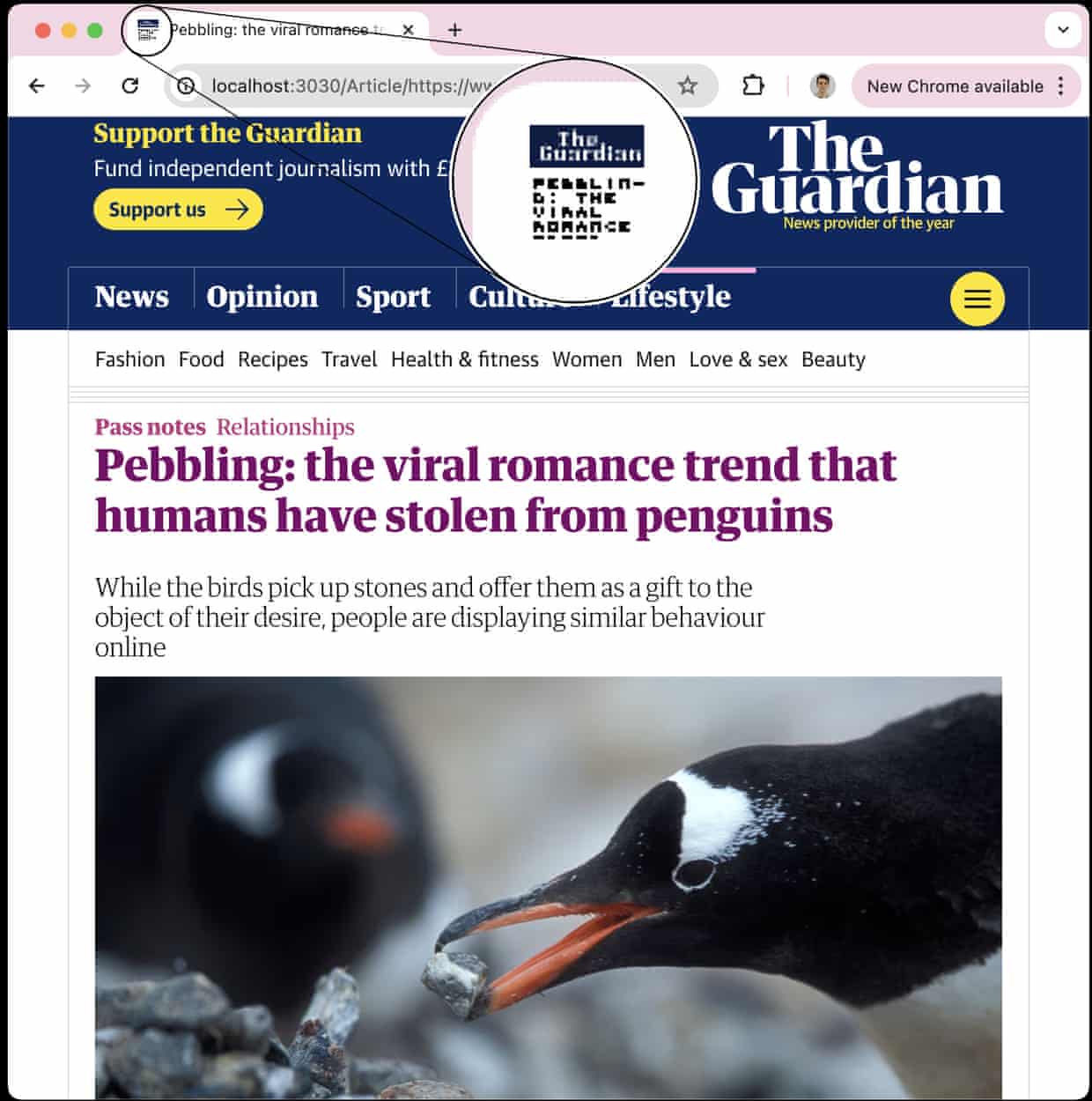
Rhys created a hack involving favicons, the small icons in the top of a browser that indicate the current website. The Guardian’s favicon currently displays their logo, but some websites use favicons to communicate information, like Gmail’s unread email count. Rhys wondered about further possibilities for The Guardian’s favicon and developed a hack with two parts:
-
A counter in the favicon for unread liveblog entries, which would appear on liveblogs.
-
A more experimental demo that displayed a tiny version of the Guardian article being read entirely within the favicon. This included a Guardian header, real-time scrolling, all the article text, and images.
Most entertaining hack: Guardian Priority
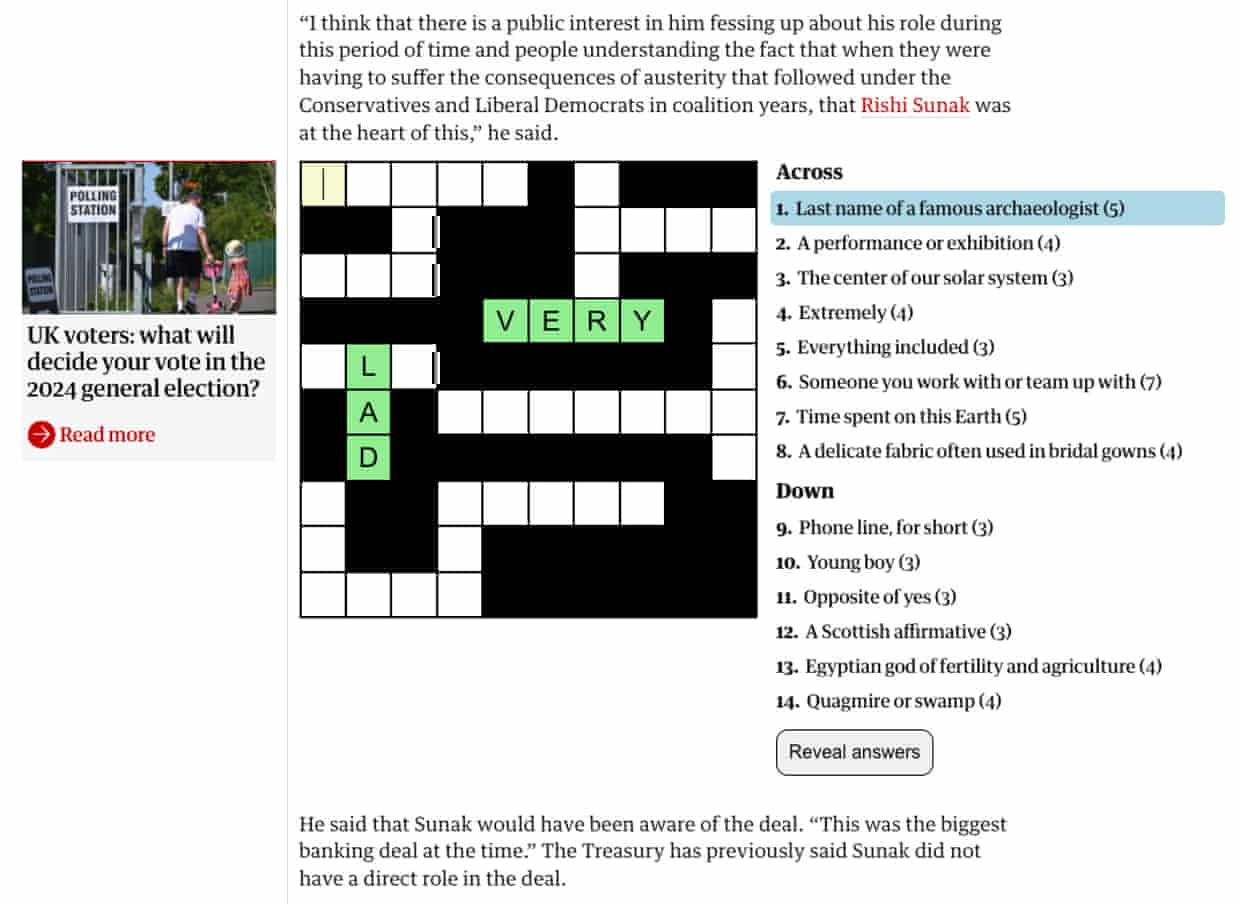
The Guardian only publishes a small handful of puzzles every day, but hundreds of articles containing thousands of paragraphs of text. “Priority Puzzles” is a browser extension from Simon which converts paragraphs into playable crosswords. Simply click on any paragraph and its letters are arranged into a square grid, words are found, and clues are generated using AI.
Best past the post (Most on theme): Big event in July
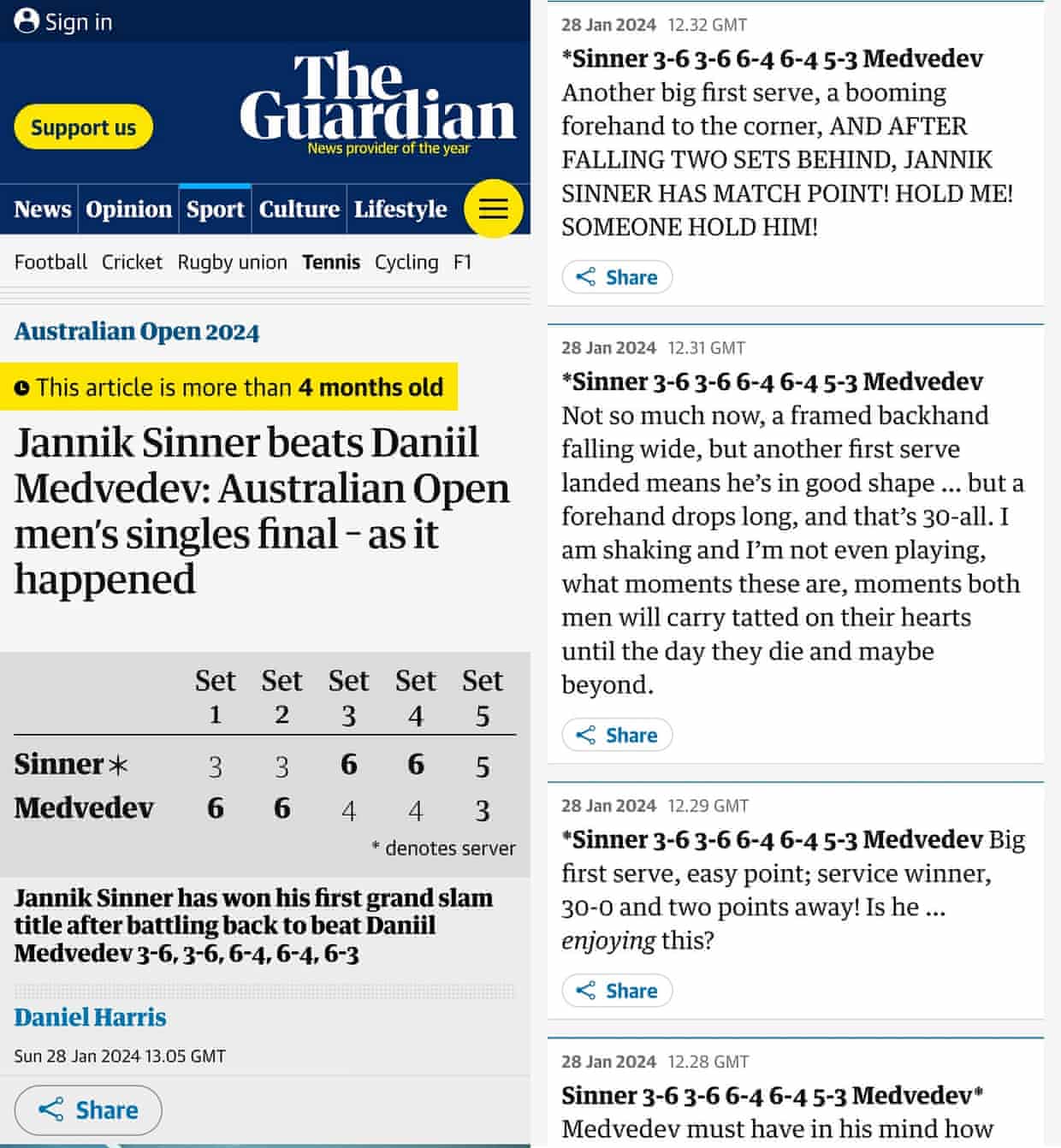
Jamie worked on a way to include tennis scores in our liveblogs. Journalists often write live updates of games in tennis matches that include scores written in a consistent text format. We can parse this format into structured data, and display the scores using a tabular representation at the top of the blog.
As always, we would like to extend a well deserved congratulations to all the winners, as well as a huge thank you to everyone who participated and the many people behind the scenes who help make our hack days happen.
Finally, a few thoughts from our Director of Engineering, Mariot Chauvin:
Hack day is an excellent way for organisations to experiment quickly with innovative ideas and for participants to develop technical skills and improve cross-discipline collaboration.
We have been organising hack days regularly at the Guardian for the last 15 years and they are always a special moment. A moment suspended in time, in a technological digital world evolving at an accelerating, frantic pace, and within news organisations disrupted in their business models.
What I found remarkable with this edition, is the fact that the four winners are representative of the necessary evolutions of a news organisation to adapt to the transformation of the media industry value chain: structuring content, building a distinctive gaming experience, and using technology as an edge.
In a context where the generation of high quality content (being article, podcast or video) is becoming a commodity, the value of a news organisation shifts from publishing content to encoding knowledge. This involves curating, verifying, and structuring content to provide a tailored user experience. The Guardian recently launched a new recipe app that leverages a properly modelled recipe datastore extracted from our archive. Jamie’s hack is another example of how useful structured data can be to improve user experience.
The Guest and Guardian Priority hacks are examples of distinctive games, which have been at the heart of the New York Times digital revenue strategy. In 2021, the leading American organisation was already generating $20 million in yearly revenue from their strategic investment in that market, which has since grown. This highly successful strategy explains why they spent $3 million to acquire Wordle. Today, Wordle is one of their main drivers for subscription acquisition. As gaming is expected to continue growing over the coming years, and with platforms launching their own offerings for common games (crosswords, sudoku, etc.), successful news organisations will emulate The New York Times’ strategy and offer distinctive gaming experiences to attract new audiences and convert them to support their journalism.
Finally, in order to be able to better serve their audience needs, news organisations will need to use technology as a competitive advantage. New technologies can be used to address specific audience concerns and enhance their experience. The recently launched private cloud is an excellent example of how Apple maintains an edge in data privacy and user data protection. While Rhys’s favicon-rendering hack is not meant for readers, it demonstrates clever use of technology. The launch of the Tor onion service, which enables readers to safely access our journalism, also required significant ingenuity. More generally investigative journalism is an area at the Guardian where we will continue to increase our use of technology to enable breaking important stories.