









The following is adapted from a keynote talk I delivered at Config in May 2025. I’ve edited it slightly for clarity, but wanted to share these thoughts on craft, quality, and the choices we make as creators in an age of AI.
The modern world has made huge advances in knowledge, technology, and skill. We can build faster than ever. We know more than ever. Yet quality still feels so rare. So many things feel unfinished, broken, or forgettable – why?
That’s the question I’ve been trying to answer, almost my whole life. I remember as a kid, seeing bikes at the store, some of them just felt wrong. I couldn’t understand why someone would go through the effort of making something and not make it beautiful.
Later in my life, I realized it’s because many don’t care, many opt for cost, and many just do what’s easy. What I was noticing, even as a child, was the presence or absence of craft.
Before machines, everything was made by hand. A tool, a chair, a door. They reflected the skill and care that was put into them. Some things were rough. But when someone puts their full attention into the work, the result could be truly great.
This is what craft is about — the deliberate attention put into making something excellent, not because someone is checking, but because it matters to the maker.
Then came the industrial revolution and mass production. We started losing the connection to craft. We began to optimize for costs, speed, and quantity.
We’ve been living our own version of this in the software industry. In the beginning, small teams crafted software with care. They took pride in what they built.
But over time, the teams grew and the process started to look more like a manufacturing line. As we learned to ship to the cloud multiple times a day, we started to change how we work and think.
“Just ship it.”
“Move fast and break things.”
We replaced purpose with metrics. If it didn’t move a metric, it didn’t matter. Even we, as designers, stopped asking; “Does this feel right?.” Instead, we started asking: “Does it convert?”
Experiments and A/B testing replaced judgment. Optimizing for a process replaced craft.
The interesting thing is that this cycle keeps happening in the same way with each technological advancement, it’s nothing new. In 1927, Earnest Elmo Calkins wrote in The Atlantic:
“The directing minds, absorbed in the new wonder of so many things made so easily [...] aggravated that fact by producing the bad design in incredible quantities.”
“We passed from the hand to the machine, we enjoyed our era of the triumph of the machine [...] and then we began to miss something in our cheap but ugly products.”
You see this common cycle play out. Craft exists naturally at the beginning. Then technology comes along and makes it easier or quicker to create things, and so we’re pulled away from craftsmanship. But then we start to miss it (in our work and the products we buy) and in response we seek quality, which causes a revival of craft.
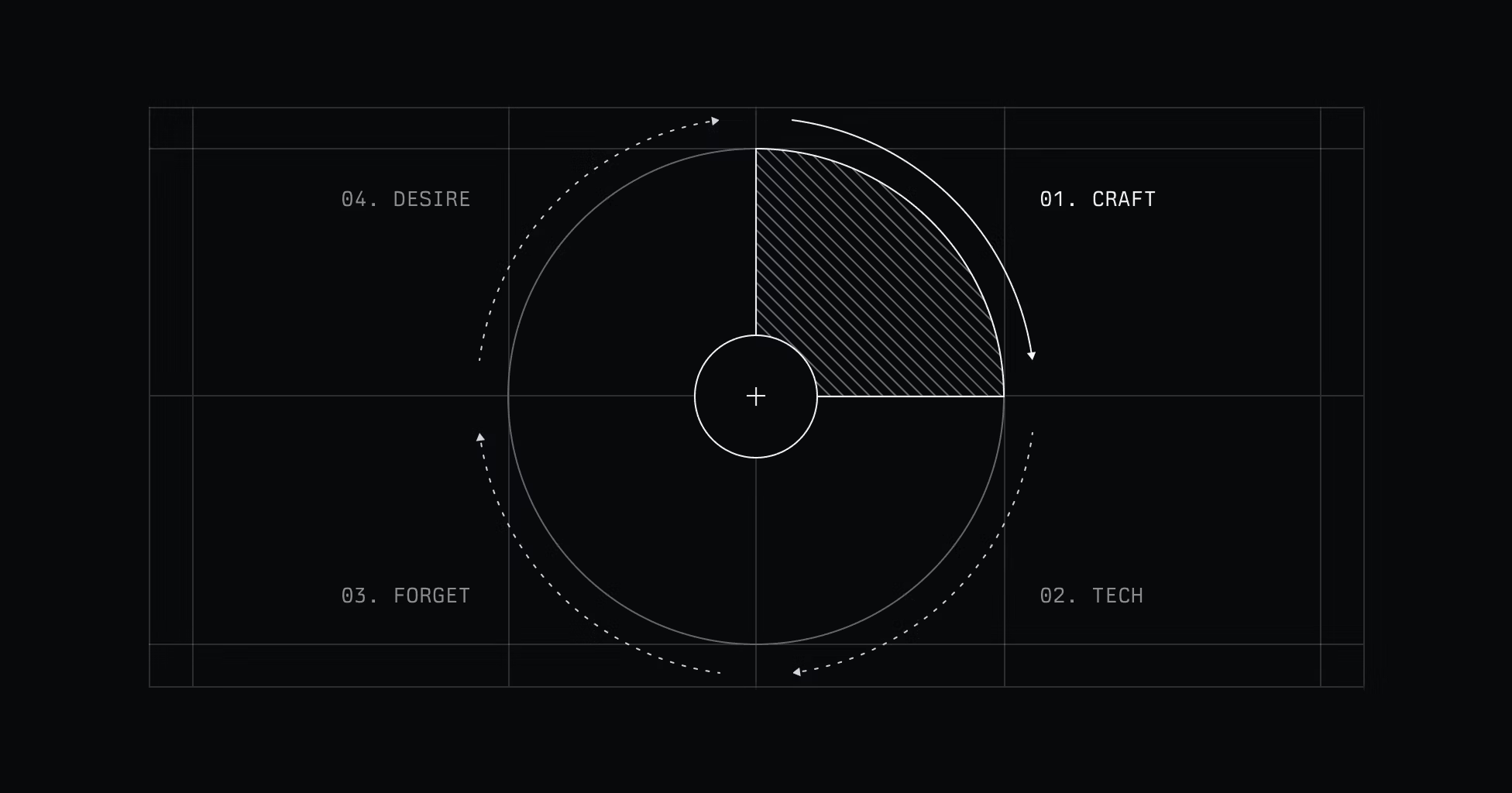
Today, we’re at a familiar moment in the craft cycle. Maybe even bigger than before.
AI feels more like a change in substrate, rather than just another tool. Like electricity, the internet, or the mobile phone, it changes the material conditions of how we make things by putting near-instant creation in everyone’s hands.
While mass production separated the maker’s hand from the object, AI attempts to separate the maker’s judgment and taste from creation itself.
With each prompt, we’re trying to outsource not just labor, but the craft itself — the thinking, the intuition, the care. Yet craft, by its nature, can never be fully outsourced. The qualities that make something truly excellent come from being deeply involved in the entire process.
Technology makes it faster to build, but harder to care.
The craft we’ve been discussing is essentially the input that creates quality. When something is crafted with care and attention, it possesses a certain feeling — a quality that’s difficult to define but impossible to miss.
Christopher Alexander called it “quality without a name.” He wrote: “There is a central quality which is the root criterion of life and spirit… It is objective and precise, but it cannot be named.”
It’s when something feels alive. When something feels right, even if you can’t exactly describe why. You know when it’s there. And you know when it’s not. Like a door opening and closing perfectly, it’s satisfying.
At Linear, we recently did an interview series on quality. My takeaway from those interviews with different makers was that everyone approaches it differently. There isn’t a single right way to operate or create quality.
But one thing was common with everyone: The belief and need to seek that quality. Seeking the feeling of rightness, even when it was hard.
While some seek quality, it’s still not that common. Time after time, working in companies and teams, I heard: “Quality doesn’t matter, we have other priorities.”
The conventional wisdom in tech is that quality doesn’t scale. That pursuing craft is too slow, too expensive, too precious for business realities. That at a certain point, you have to choose between growth and craft.
This belief is so pervasive that it’s rarely questioned. Companies optimize for immediate metrics and quick wins, assuming quality will somehow take care of itself (it never does).
While I understood the reasons, I never fully believed in them. In the back of my mind, I always believed that if you actually try to do it, it can work. So when I started Linear, quality became a central part of the business. Not just because it was important to me personally, but also because I saw it as a way to win.
In a crowded market of issue tracking tools, Linear stood out through quality. Quality creates gravity — it pulls people in rather than requiring us to push. One team would experience Linear, tell others, and adoption would spread organically throughout organizations. This natural flywheel of experience to advocacy to adoption to loyalty has powered our growth far more effectively than traditional tactics ever could.
Linear became profitable by year two. And by year four, we had more than 10,000 paying customers with effectively zero marketing spend. Turns out when you build something that feels just right, your customers will do your marketing for you.
When I talk about quality, I don’t just mean product quality. I mean the whole customer experience. So, how do we build for quality at Linear?
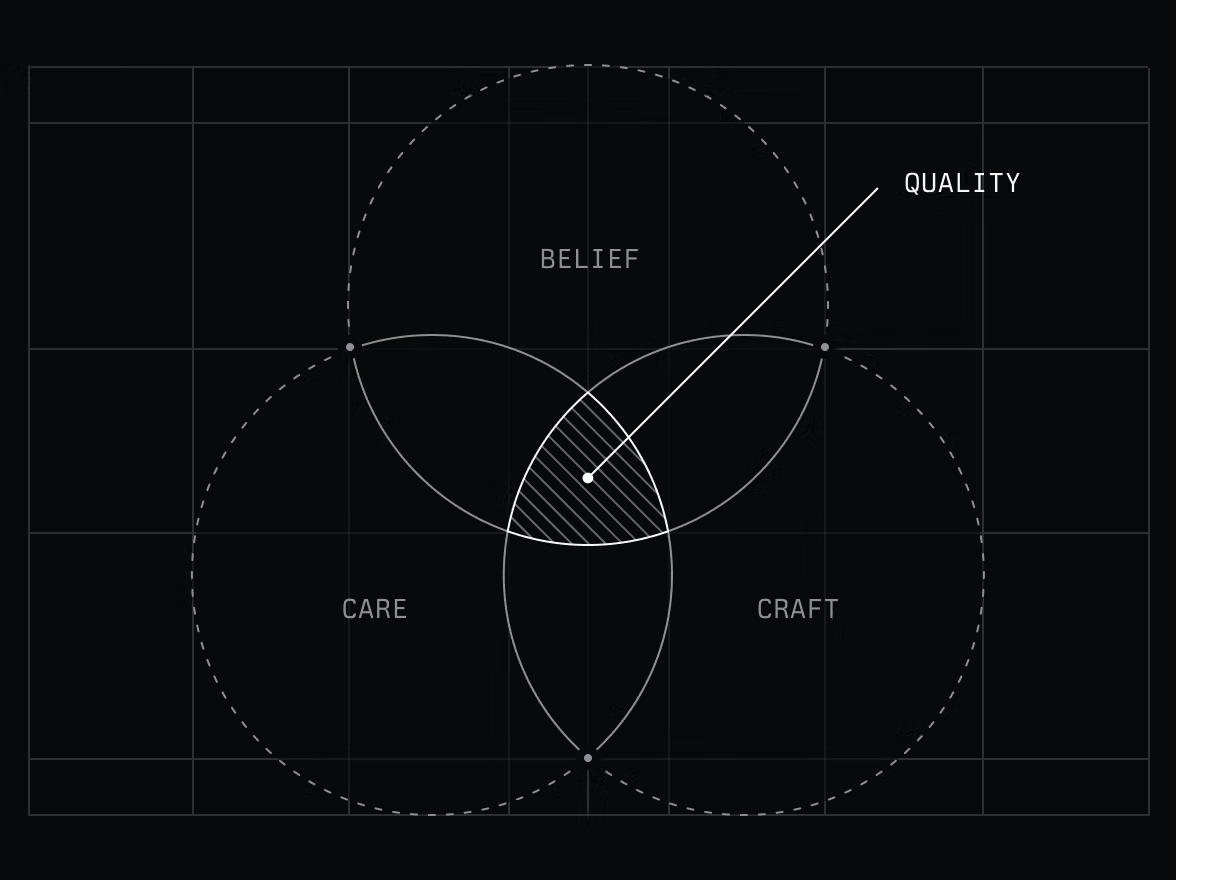
I’ve learned that building quality requires three elements working together: The belief that quality matters fundamentally, the skill and taste to recognize it, and the willingness to care deeply about the user’s experience.
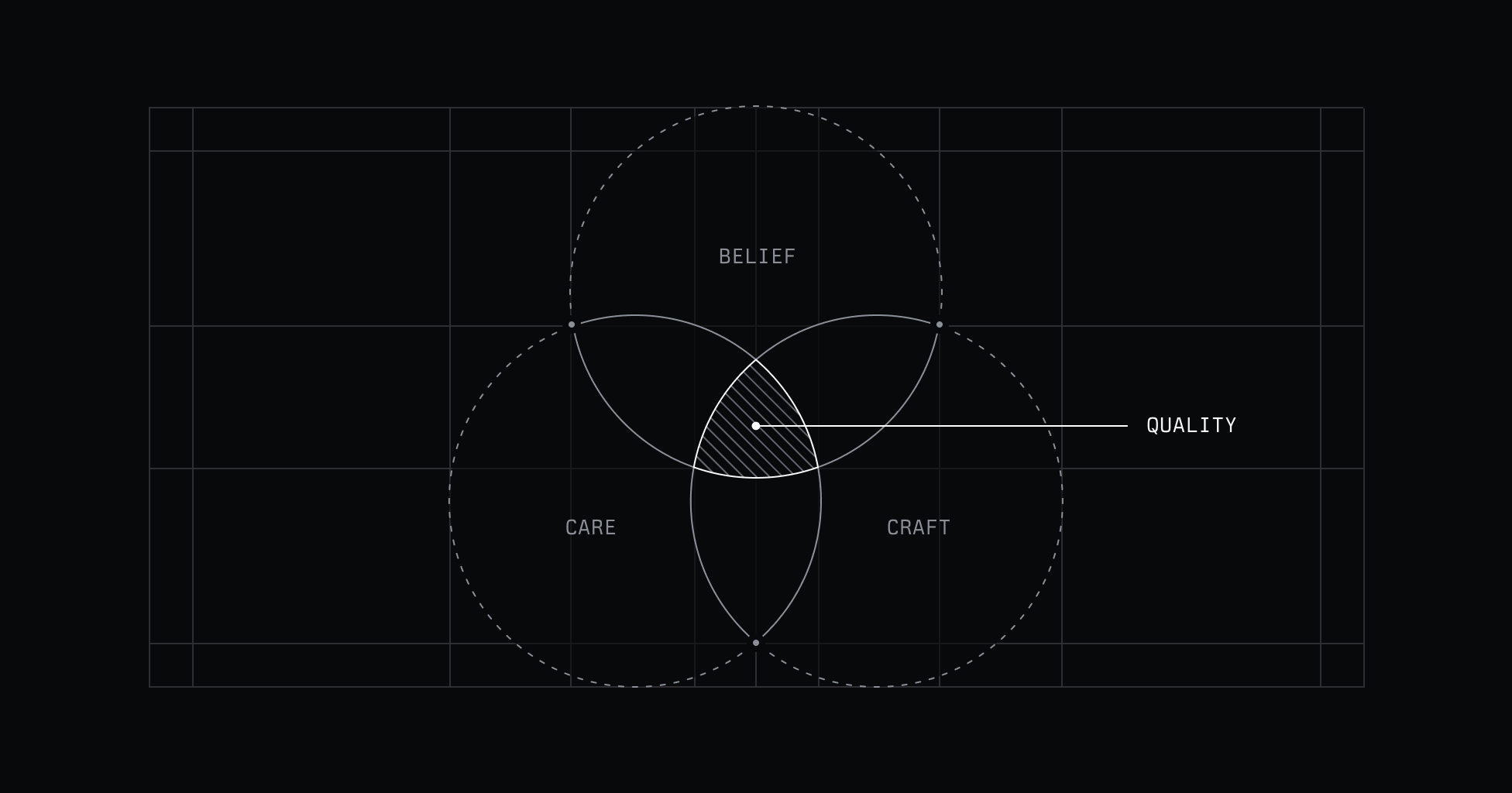
The cycles of technology always drive us toward prioritizing speed and cheapness. We forget the craft. We stop paying attention to quality. And while we can’t stop these shifts, we also don’t have to surrender to them.
Quality is a choice we can make every day.
We can choose to care and put it in our work.
We can seek that feeling of rightness.
It starts with an individual. It can scale through teams and companies, but it always starts with an individual — you. Individuals who seek the quality without a name. Even when it’s not measurable or when the world tells them no.
I genuinely believe it’s the right thing to do, and I know it’s good for business. So If there is one trend I’d like to start, it’s this one. Regardless of what the world around us might tell us, let’s make this choice – let’s keep making things we’re proud to put our names on.
此内容由惯性聚合(RSS阅读器)自动聚合整理,仅供阅读参考。 原文来自 — 版权归原作者所有。