


惯性聚合 高效追踪和阅读你感兴趣的博客、新闻、科技资讯
阅读原文 在惯性聚合中打开

推荐订阅源

Recent Commits to openclaw:main
Simon Willison's Weblog
Threat Intelligence Blog | Flashpoint
S
Schneier on Security
Cyberwarzone
Cyberwarzone
NISL@THU
NISL@THU
The Last Watchdog
The Last Watchdog
Security Archives - TechRepublic
The Hacker News
The Hacker News
Schneier on Security
K
KPMG report finds enterprise disconnect between AI and its ROI | CIO
Help Net Security
Help Net Security
Scott Helme
Scott Helme
SecWiki News
SecWiki News
Security Latest
Security Latest
T
Threat Research - Cisco Blogs
L
LINUX DO - 最新话题
L
Lohrmann on Cybersecurity
TaoSecurity Blog
TaoSecurity Blog
K
Kaspersky official blog
Attack and Defense Labs
P
Privacy & Cybersecurity Law Blog
Hacker News - Newest:
Hacker News - Newest: "LLM"
L
LINUX DO - 热门话题
N
News and Events Feed by Topic
Know Your Adversary
Know Your Adversary
Forbes - Security
Forbes - Security
cs.CV updates on arXiv.org
Google DeepMind News
T
Tor Project blog
P
Palo Alto Networks Blog
Cisco Talos Blog
Cisco Talos Blog
A
Arctic Wolf
O
OpenAI News
T
The Exploit Database - CXSecurity.com
C
CXSECURITY Database RSS Feed - CXSecurity.com
AI
AI
N
News and Events Feed by Topic
博客园 - Franky
T
Threatpost
D
Darknet – Hacking Tools, Hacker News & Cyber Security
Engineering at Meta
Engineering at Meta
S
SegmentFault 最新的问题
C
Cyber Attacks, Cyber Crime and Cyber Security
N
Netflix TechBlog - Medium
V2EX - 技术
V2EX - 技术
B
Blog RSS Feed
Hacker News: Ask HN
Hacker News: Ask HN
D
Docker
博客园 - 三生石上(FineUI控件)

Linear Blog

Introducing Loops - Linear Teaching an agent to auto-fix bugs - Linear Now Linear writes the code, too - Linear Reviewing code in the agent era - Linear Code Intelligence for Linear Agent - Linear How we hire at Linear - Linear Output isn’t design - Linear How we use Linear Agent at Linear Post mortem on Linear security incident on March 24th, 2026 A calmer interface for a product in motion Design is more than code - Linear How our Customer Experience team works in Linear - Linear Continuous planning in Linear - Linear Designing remote work at Linear - Linear Self-driving SaaS: When software runs itself - Linear A Linear spin on Liquid Glass - Linear Best practices for designing Linear Dashboards - Linear Why we committed to a zero-bugs policy - Linear How Commure uses Dashboards to track performance and guide planning - Linear How we built Triage Intelligence - Linear Giving our team liquidity through Linear’s first tender offer - Linear How Cursor integrated with Linear for Agents - Linear Quality Wednesdays: How we trained our team to see what doesn’t work - Linear Our approach to building the Agent Interaction SDK - Linear Inside Mercury’s six-month journey building with AI agents - Linear Building our way: Announcing our Series C - Linear Why is quality so rare? - Linear Design for the AI age Building what customers need, not just what they ask for - Linear The profitable startup - Linear Why and how Scale migrated to Linear - Linear Simplifying support at scale: How Pleo uses Linear Asks - Linear How we built multi-region support for Linear How we redesigned the Linear UI (part Ⅱ) - Linear A design reset (part I) Rethinking the startup MVP: Building a competitive product | Linear Descript's internal guide for using Linear Post mortem on Linear incident from Jan 24th, 2024 | Linear Why and how we do work trials at Linear Using AI to detect similar issues Planning for unplanned work How we run projects at Linear - Linear Linear raises $35M Series B led by Accel - Linear How we think about customer experience at Linear - Linear Scaling the Linear Sync Engine - Linear Welcoming Cristina Cordova to Linear How we built Project Updates Settings are not a design failure Linear – 2021 Wrapped Fast growing startups are built on Linear Building at the early stage Linear raises $13M in Series A funding from Sequoia Capital Invisible details - Building contextual menus - Linear Practices for Building — Linear is now open for all Startups, Write Changelogs Linear’s Next Chapter: Announcing our $4.2M Seed Round
Code review should be fast - Linear
Tuomas Artman · 2026-05-28 · via Linear Blog

Today we’re launching Diffs, a new way to review pull requests inside Linear.

Why we built Diffs

When we started Linear, we set out to improve the experience of building software, which had been full of friction for too long. We obsessed over making the core workflow feel fast, fluid, and enjoyable to use.

Code review has stayed painfully slow while everything else sped up. Growing PR volumes from coding agents are putting further strain on an already creaking process. So much so that the speed gained from using agents gets swallowed in review.

Diffs is designed to keep code review fast without sacrificing the rigour of the work.

We approached Diffs with a short list of beliefs about what review should be:

  • Fast. Reviews should open near-instantly
  • Focused. Reviews should show what matters and strip out the noise
  • In context. Code should sit next to the issue, project, and customer signal behind the change

To begin with, we’ve focused where the friction was loudest.

Knowing what to review first

Review requests get buried in your email inbox and the queue offers no guidance on what is urgent, because every PR in the list looks roughly the same. The requester shouldn’t have to spam your Slack DMs to get your attention.

Reviews sit inside Linear next to the rest of your work, where priority is visible because everything else competing for your attention is right there too. Each Diff is attached to the issue and project that produced it, so you can see when one is blocking something critical and weigh it against what else is on your plate.
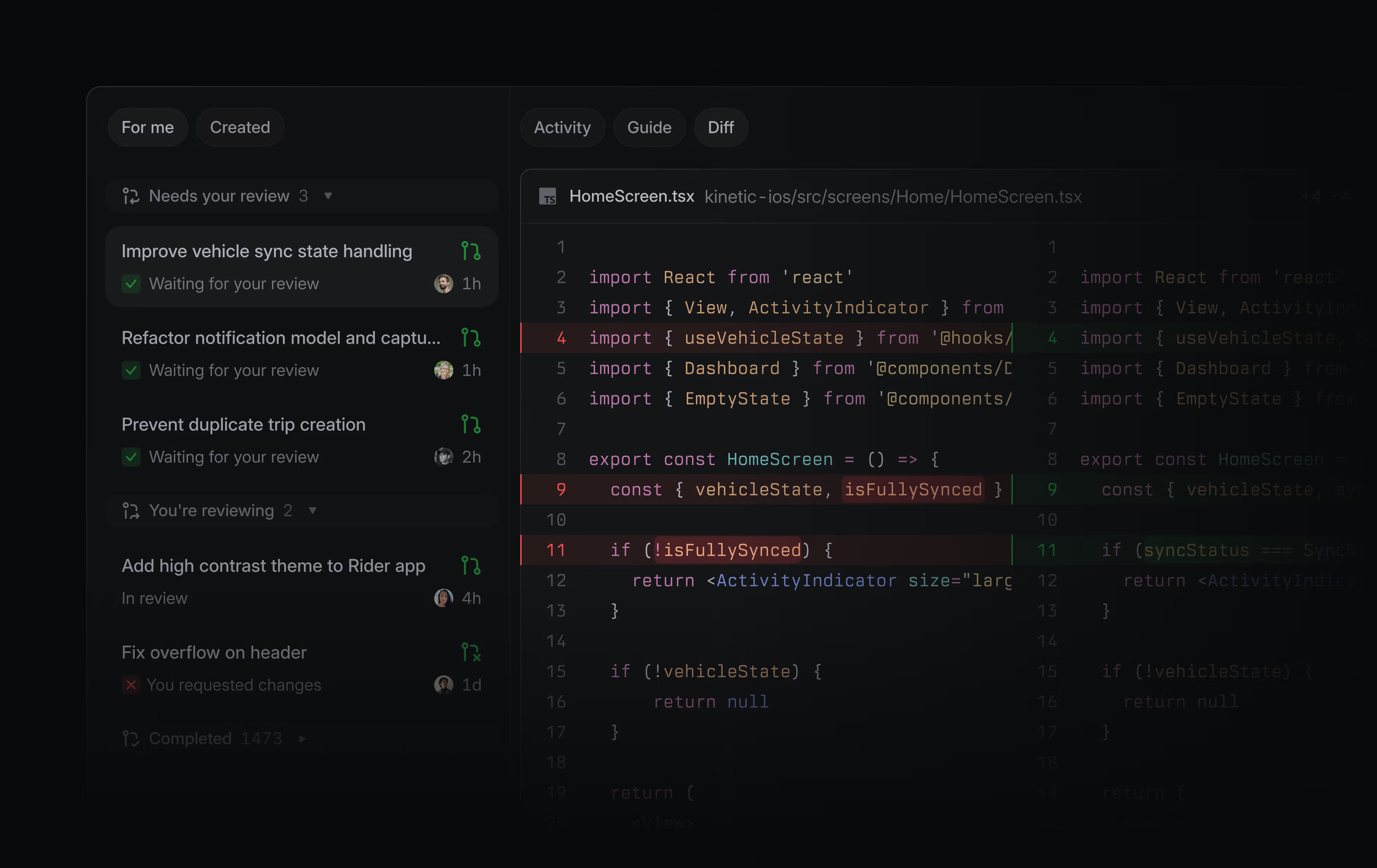
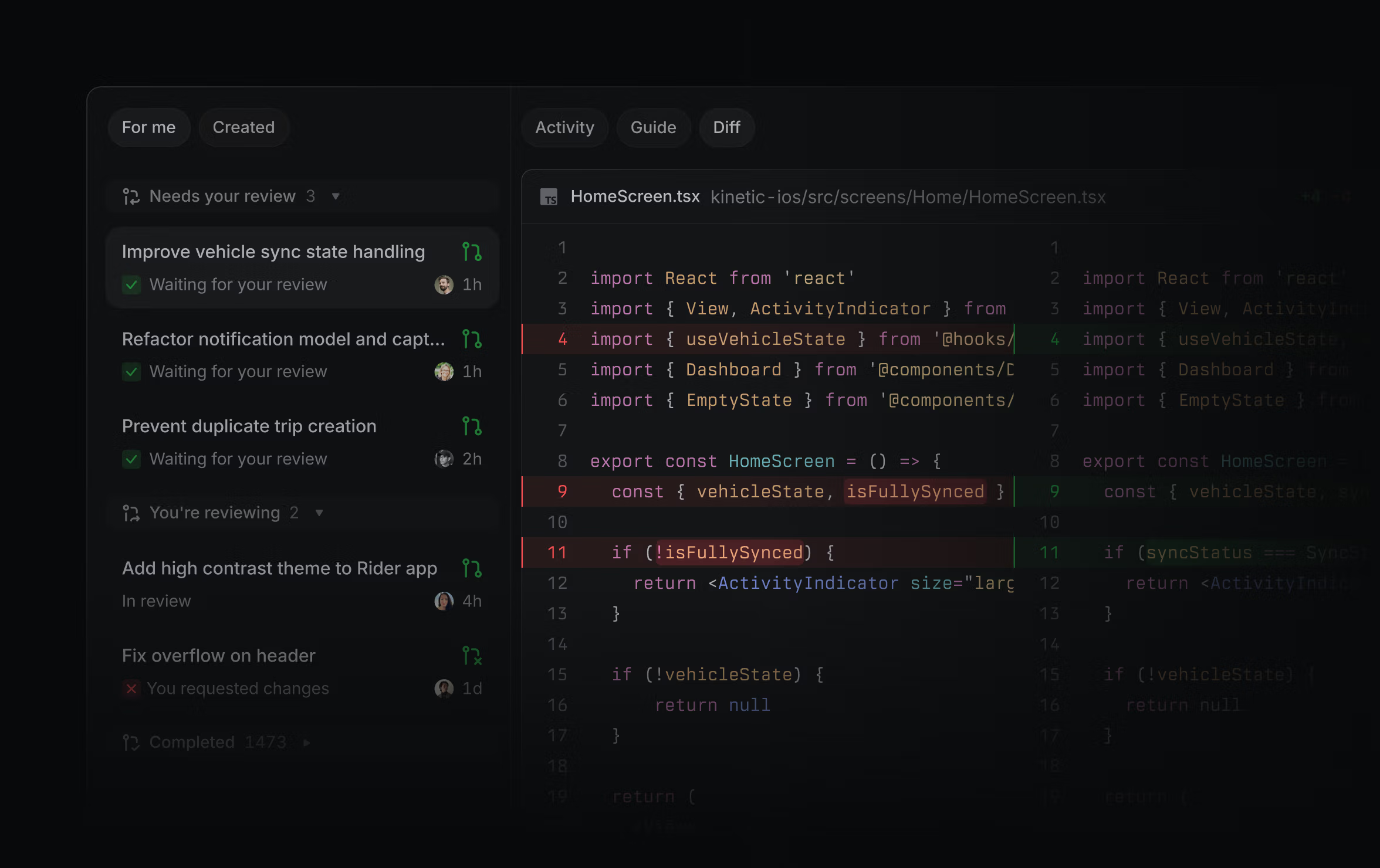
UI showing the Reviews tab in Linear

UI showing the Reviews tab in Linear

Getting through a huge diff

Large pull requests are usually reviewed in whatever order the filesystem produced the files, with formatting churn and refactoring noise mixed into the substantive edits. Reviewer attention runs out before the diff does, and the rest gets either skimmed or rubber-stamped. Stacked diffs emerged as a workaround, but it’s a lot of overhead to compensate for tools that can’t handle a large diff.

Guided reviews in Linear break the diff into chapters that follow the order the work was reasoned through. It shows you the core of the change first, then walks you through the consequences, with auxiliary changes and glue code kept separate. A 2,000-line PR becomes legible in a single sitting.
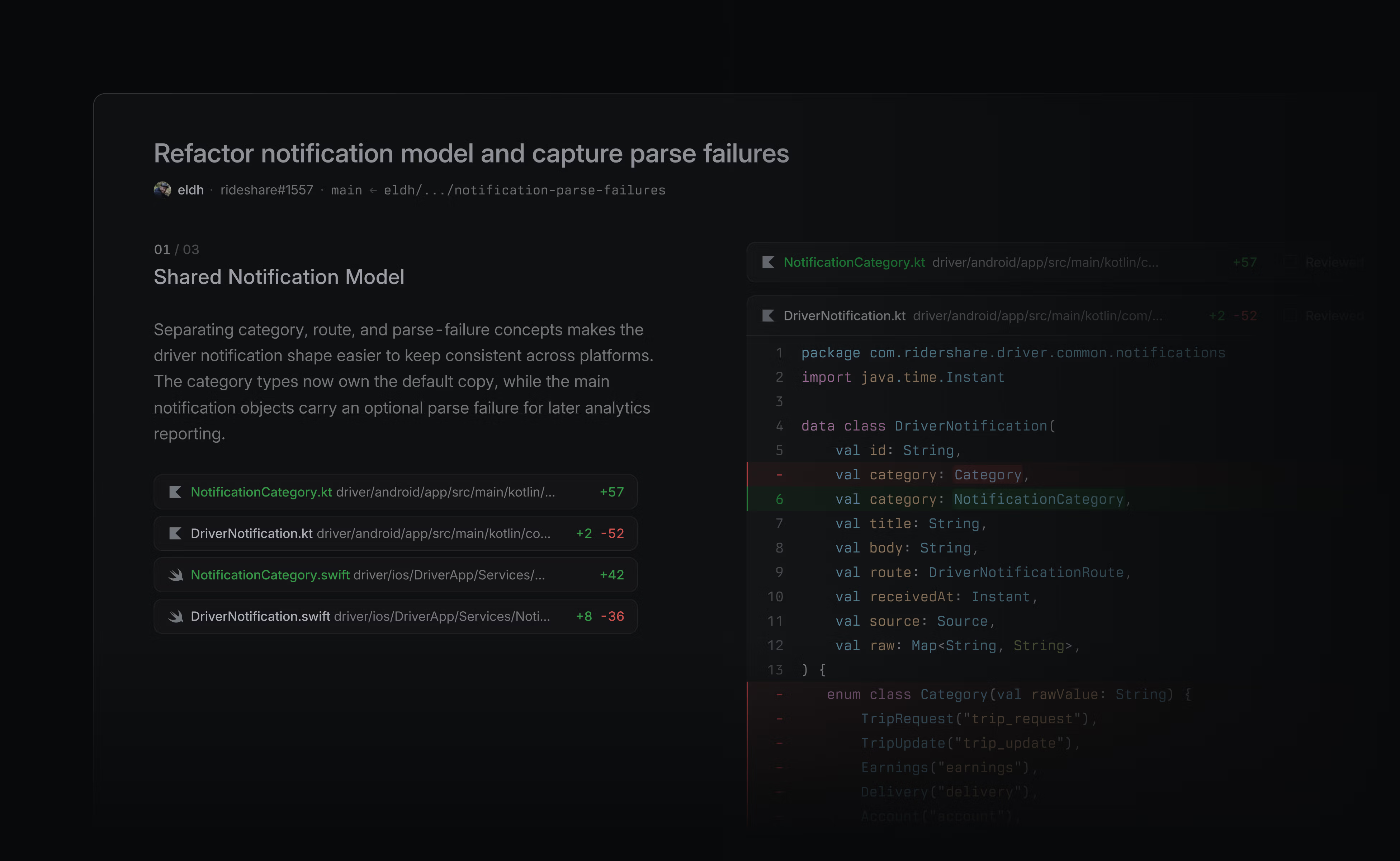
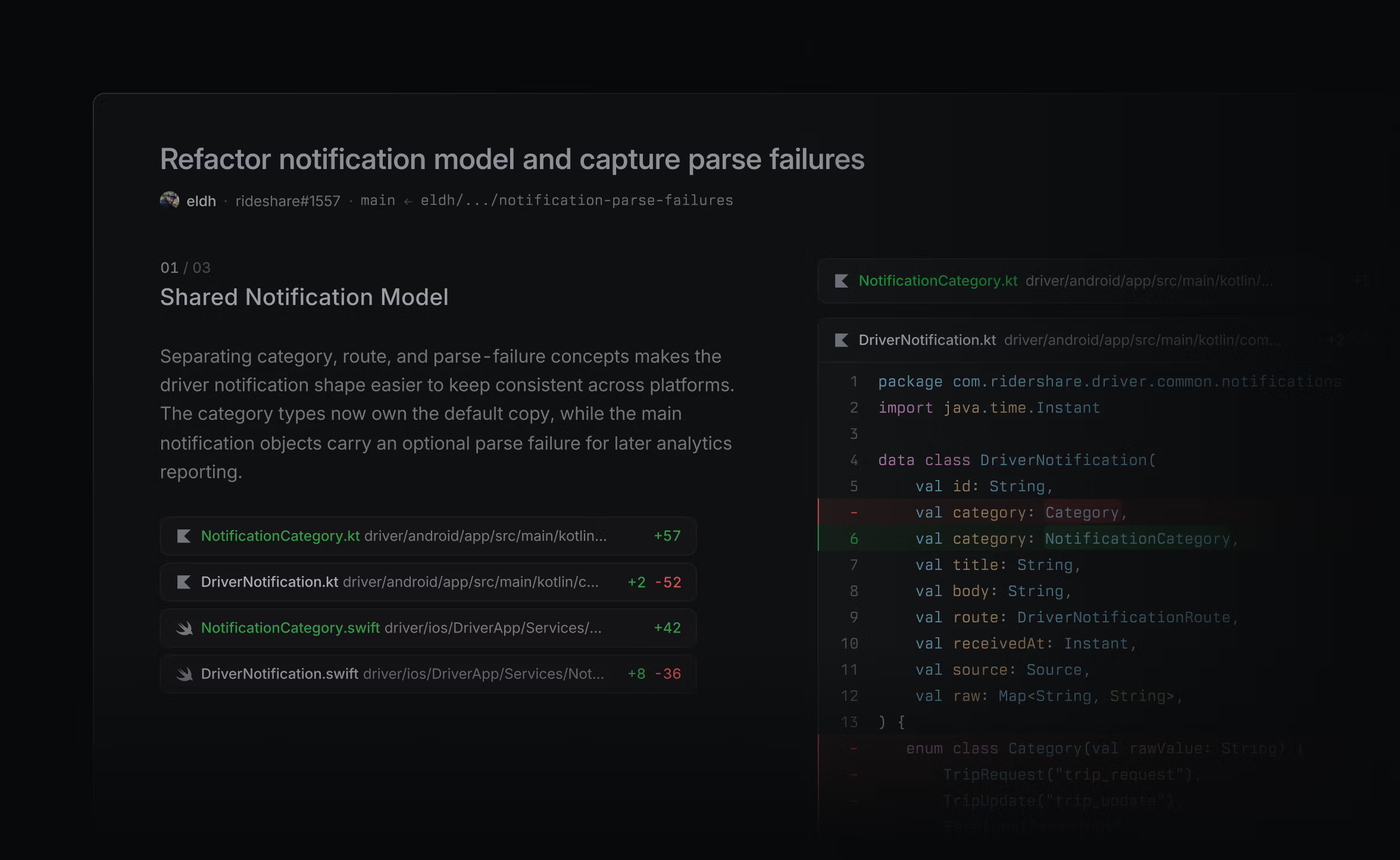
UI showing Guided Reviews in Linear

UI showing Guided Reviews in Linear

Structural diff highlighting strips the formatting changes that have nothing to do with what the program does, so what is left on the page is the actual change rather than the noise around it.
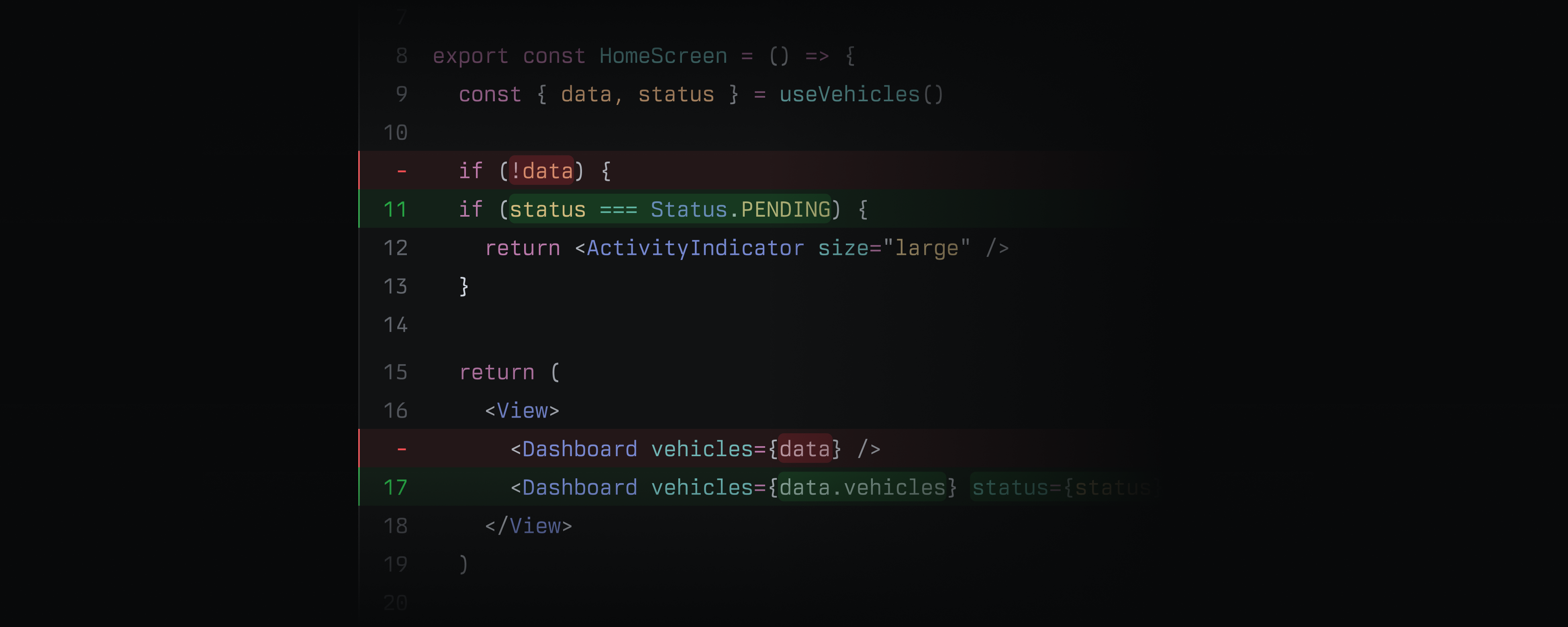
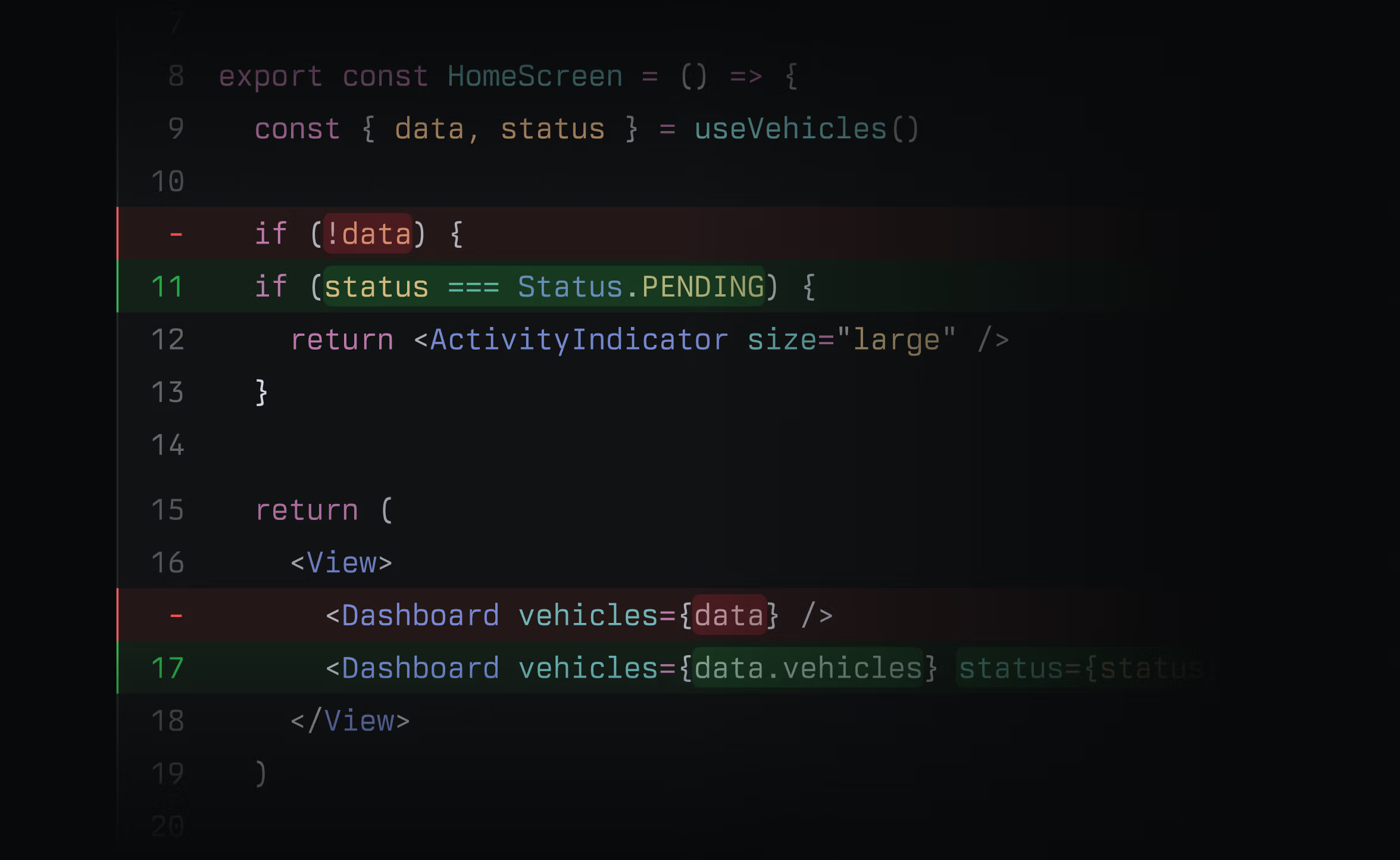
UI showing structural diff highlighting in Linear

UI showing structural diff highlighting in Linear

Piecing together why it matters

A reviewer’s main job is to figure out why the change should exist at all, rather than just checking if the code is correct. This is a slower process when context is spread across multiple tools and tabs.

Because reviews live inside Linear, the issue, project, and customer signal that inspired the change are right there alongside them. There’s no chase across tools, because Linear has already assembled the picture and structured it for you.
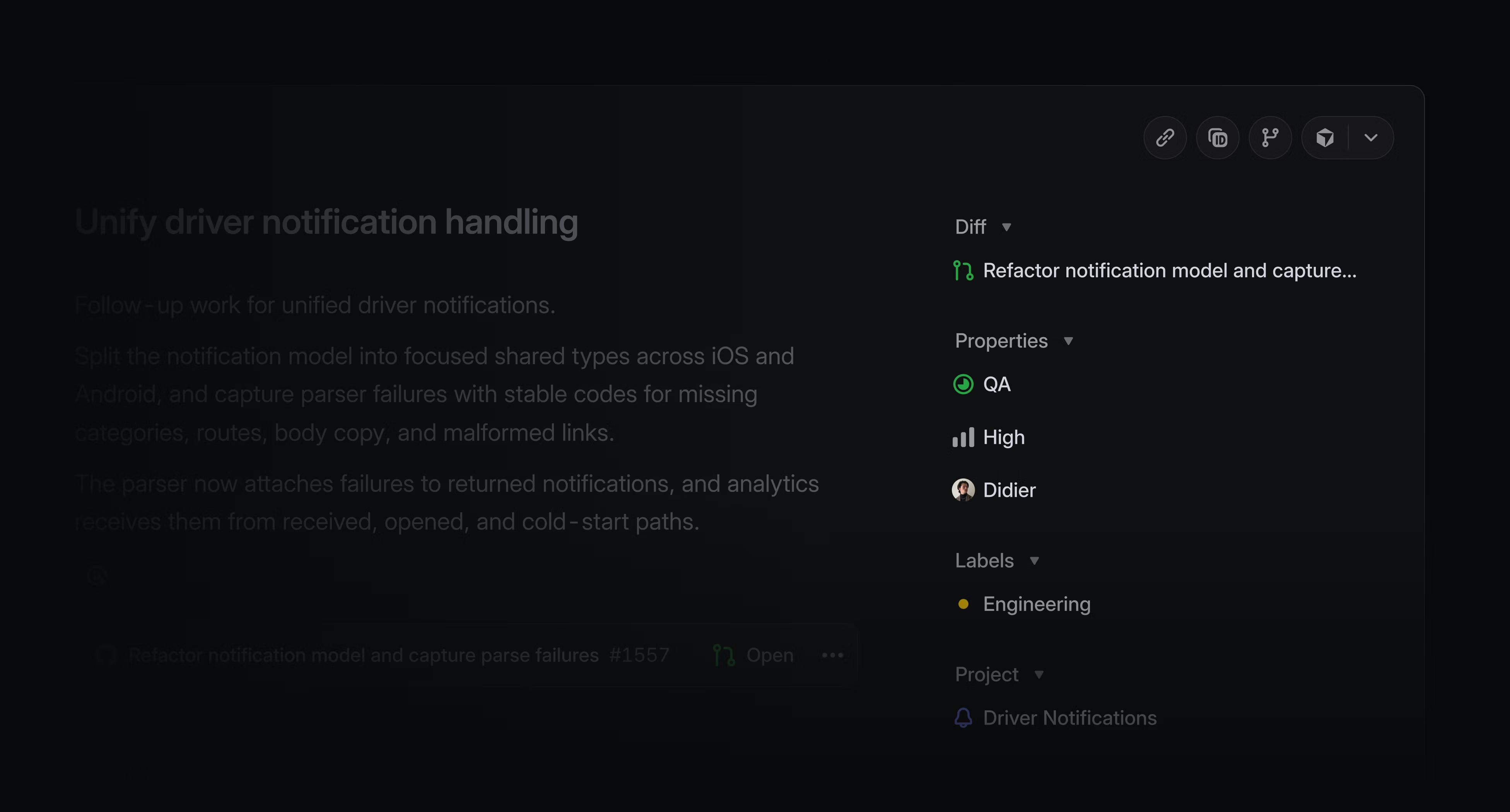
Linear UI showing a diff in product context

The new shape of review

Agents have absorbed most of the line-by-line correctness work that used to take up a lot of time. What’s increasingly left is the layer above the code itself, which is whether the change fits the architectural system the team has and solves the problem the customer actually reported. Diffs removes the friction around reviews, giving the reviewer the time and attention to do that judgement work.

Linear Diffs is the latest step in a workspace Linear has been building for years, where every stage of shipping a product happens in the same place. There’s more of the workflow to come.

Available on all Linear plans starting today, see the Changelog for setup steps.