Many organizations have transitioned from traditional service-based delivery models to a product-based approach. Driven by the rise of agile working, this transformation represents a fundamental shift in how business value is planned, measured, and delivered.
However, even after making the move, many organizations are still refining how to fully realize the benefits. According to Gartner, 70% of CIOs now expect their organization to operate with a product-based delivery model within the next five years. To succeed, leaders must determine how to structure teams, report performance, and allocate funding in ways that reflect products rather than services – a transformation that’s complex but essential for success.
Many teams operate with a focus on only one part of the picture: Finance sees GL-aligned totals; Engineering tracks teams, tickets, and velocity; and the PMO monitors projects and milestones.
This siloed approach is not uncommon. In fact, only 10% of organizations that have implemented a product delivery model have also adopted a structured approach to managing dependencies.
Without a shared product view across financials and operations, leaders struggle to answer important questions around their products, such as:
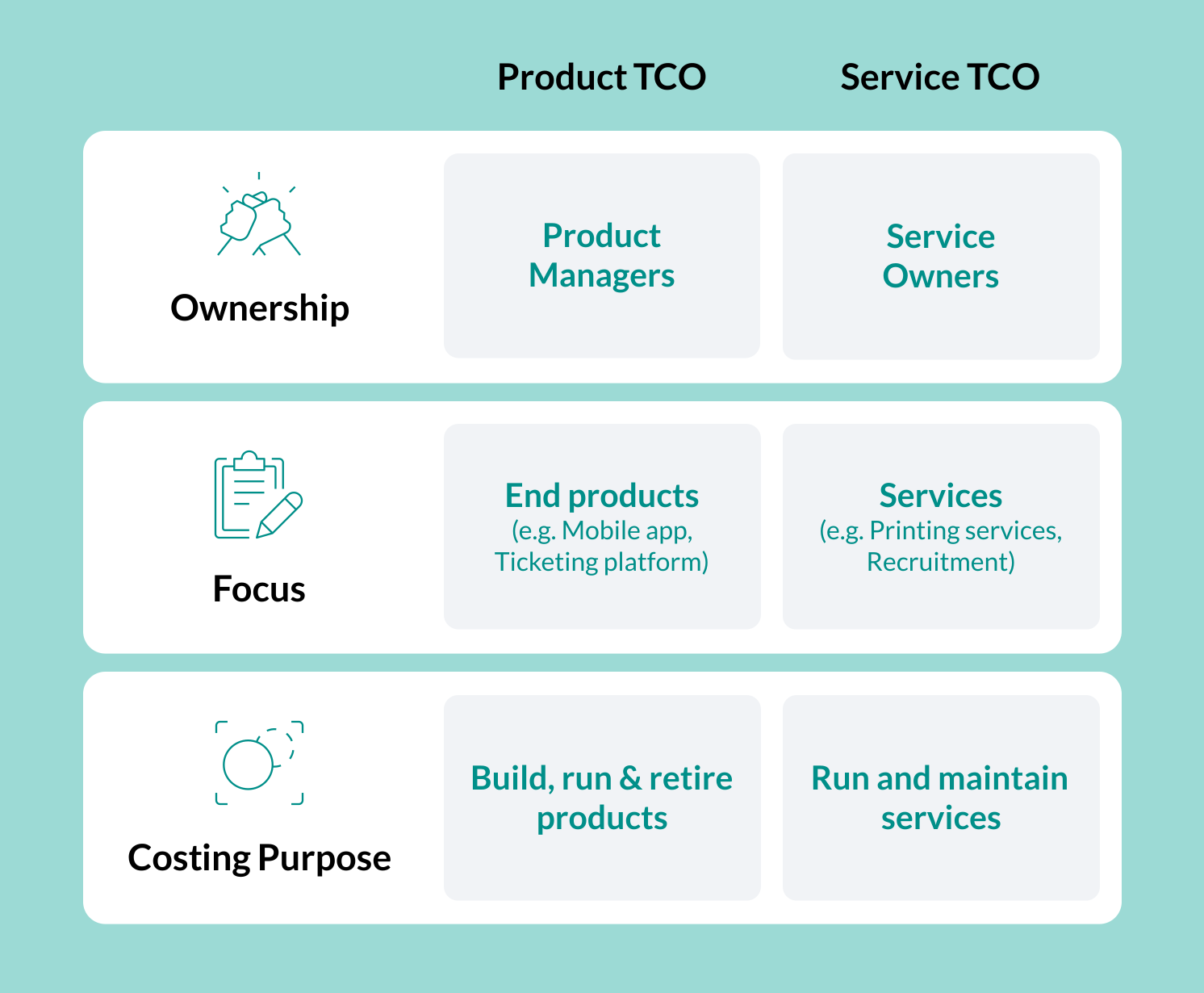
To answer these questions, leaders need visibility into Product total cost of ownership. This means getting a comprehensive, end-to-end view of what it really costs to build, run, and maintain a product – such as a mobile app or web platform – across its lifecycle. This not only helps teams focus their analysis on the products delivered, but it also reinforces the end value that comes from such investments.
On the other hand, Service TCO is primarily used by Service Owners to understand the costs of delivering IT services – such as Support, Strategy & Planning, or Communication & Collaboration services. While Product TCO focuses on the cost of building and maintaining products, Service TCO provides visibility into the operational services that support the organization.
That’s where IBM Apptio’s newest solution comes in – a purpose-built solution that delivers end-to-end visibility into product costs and portfolio composition across the product lifecycle. IBM Apptio Product TCO unifies financial and operational data – connecting OpEx, CapEx, and cost drivers across consumers, applications, and projects into a product-centric view.
By linking financials directly to products, it empowers leaders to:
Here’s what the solution provides:
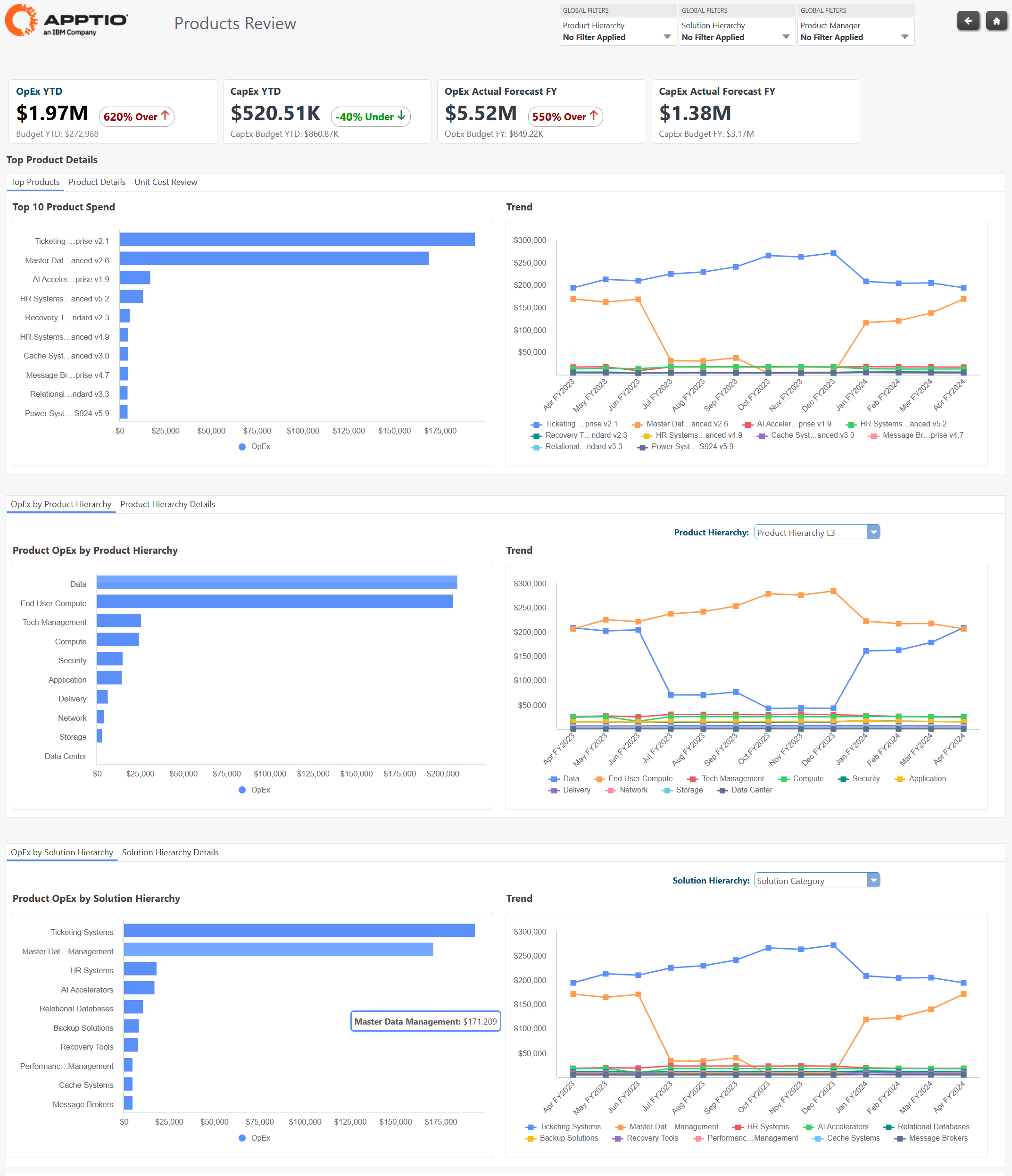
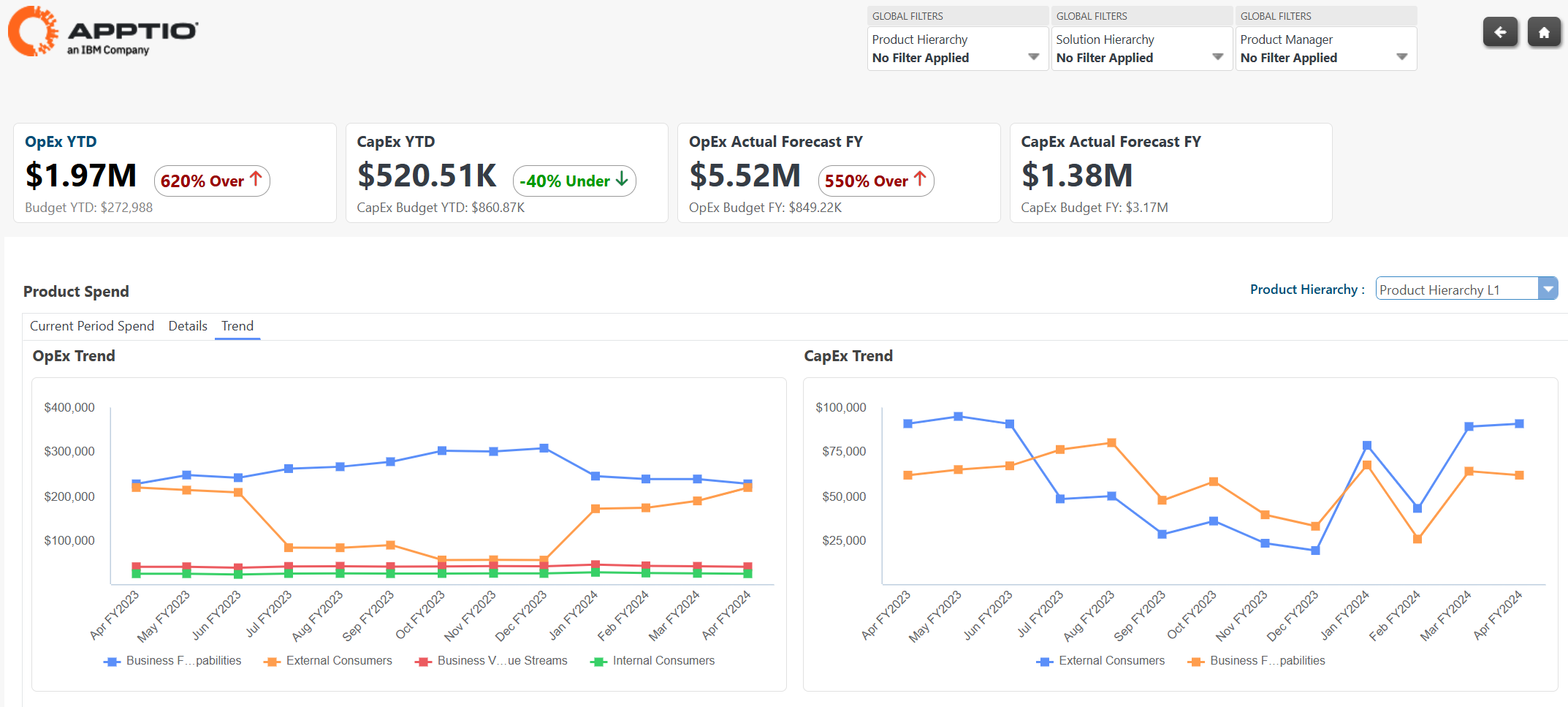
Gain continuous visibility into product costs and the factors that drive them. With automated allocation of OpEx and CapEx directly to products, Product and Finance teams can clearly see how spend across consumers, applications, projects, and other areas roll up to the product level.
These insights empower leaders to uncover cost and composition inefficiencies and variances, align investments to products, and focus the investment where it matters most.
Answer questions like:
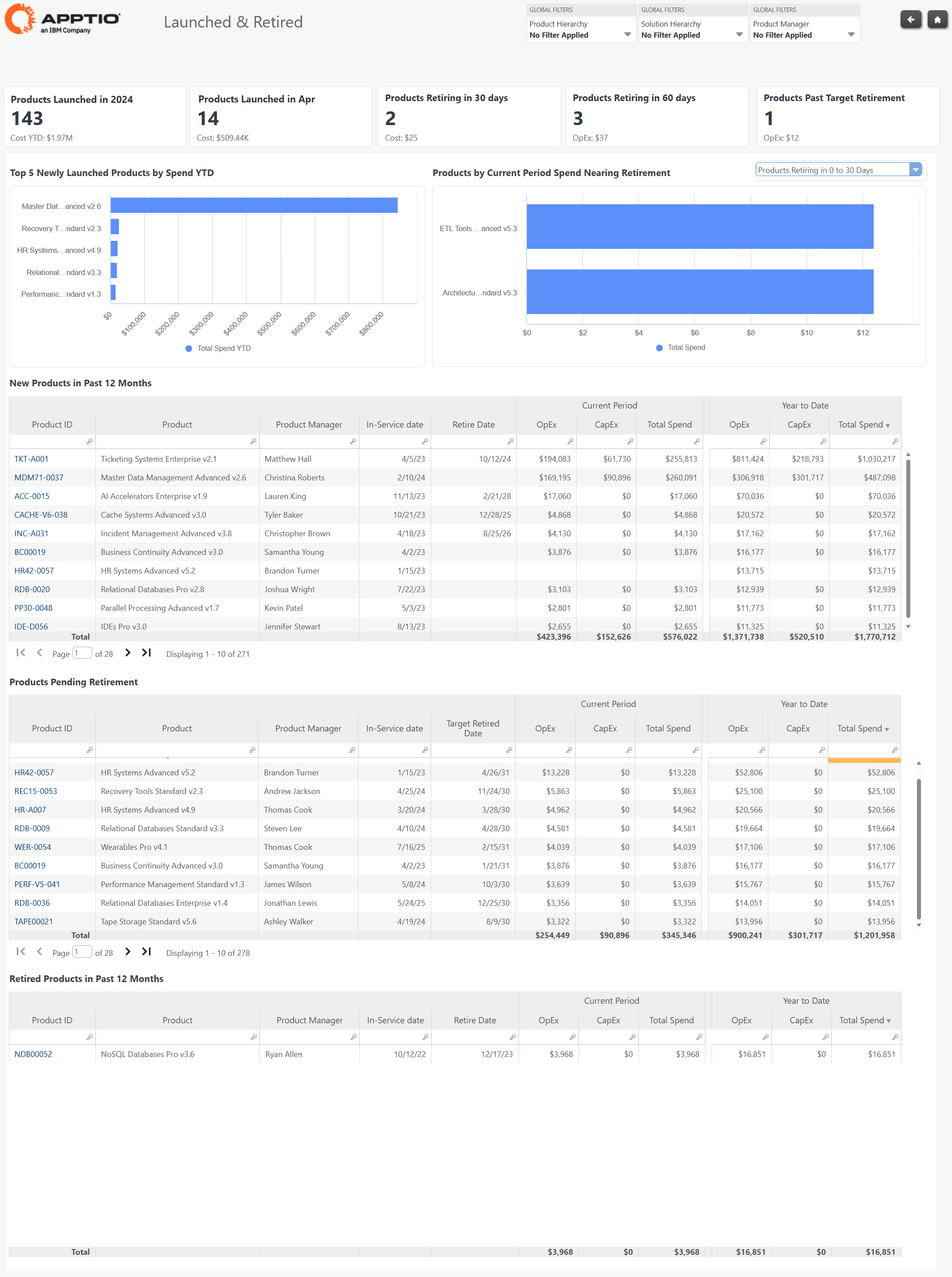
Manage product resources and investments across every stage of the lifecycle – from launch to retirement. Get a snapshot of your product portfolio to see what products are new, aging, or approaching retirement – and ensure OpEx and CapEx are aligned with each lifecycle stage to avoid overinvesting in aging products and underinvesting in those that drive business growth.
With this insight, organizations can make informed product spend decisions, ensuring product portfolios stay optimized, relevant, and aligned to strategic priorities.
Answer questions like:
Create flexible portfolio views tailored to every stakeholder’s needs. Roll up products by a customizable five-level product hierarchy and the TBM’s standardized taxonomy, enabling easy comparison across portfolio views and delivery models. This adaptability is especially valuable for organizations with hybrid delivery models – spanning both products and services – to ensure a consistent way to represent and report on their various business portfolios and hierarchies.
With a consolidated, filterable view of all products, Portfolio, Finance, and Business leaders can pinpoint which product families dominate spend, where to allocate funding, and how portfolios align to organizational strategy.
Answer questions like:
Together, these capabilities provide the foundation for product intelligence. Whether you’re transitioning to a product delivery model or managing a hybrid model, IBM Apptio Product TCO delivers the financial and operational visibility needed for organizations to confidently manage their product portfolios.
Bring your teams together for a more transparent, proactive, and value-driven organization that thrives in the modern product era.
Sign up for a demo to learn more.
此内容由惯性聚合(RSS阅读器)自动聚合整理,仅供阅读参考。 原文来自 — 版权归原作者所有。