惯性聚合 高效追踪和阅读你感兴趣的博客、新闻、科技资讯
阅读原文 在惯性聚合中打开

推荐订阅源

Scott Helme
Scott Helme
有赞技术团队
有赞技术团队
阮一峰的网络日志
阮一峰的网络日志
雷峰网
雷峰网
D
Docker
Stack Overflow Blog
Stack Overflow Blog
Hugging Face - Blog
Hugging Face - Blog
爱范儿
爱范儿
奇客Solidot–传递最新科技情报
奇客Solidot–传递最新科技情报
MyScale Blog
MyScale Blog
A
About on SuperTechFans
博客园 - 【当耐特】
U
Unit 42
H
Help Net Security
博客园 - 三生石上(FineUI控件)
V2EX - 技术
V2EX - 技术
T
Tor Project blog
博客园 - 叶小钗
G
Google Developers Blog
S
Securelist
Security Latest
Security Latest
Threat Intelligence Blog | Flashpoint
cs.CL updates on arXiv.org
T
Threat Research - Cisco Blogs
aimingoo的专栏
aimingoo的专栏
C
Cybersecurity and Infrastructure Security Agency CISA
博客园_首页
V
Vulnerabilities – Threatpost
P
Palo Alto Networks Blog
T
The Exploit Database - CXSecurity.com
The Register - Security
Recorded Future
Recorded Future
NISL@THU
NISL@THU
量子位
L
LangChain Blog
C
CXSECURITY Database RSS Feed - CXSecurity.com
C
Cyber Attacks, Cyber Crime and Cyber Security
C
CERT Recently Published Vulnerability Notes
The Hacker News
The Hacker News
D
DataBreaches.Net
小众软件
小众软件
罗磊的独立博客
Forbes - Security
Forbes - Security
The Last Watchdog
The Last Watchdog
Jina AI
Jina AI
I
InfoQ
S
Schneier on Security
Recent Announcements
CTFtime.org: upcoming CTF events
S
Secure Thoughts

Apptio

How IBM Apptio Delivers Data Center Value in the Age of AI - Apptio Managing K8s Agent Updates at Scale with Helm and Terraform - Apptio GitOps with IBM Kubecost: Preventing Argo CD Rollbacks - Apptio GitOps with IBM Kubecost: API-Driven Rightsizing - Apptio It’s Here: Meet the New IBM Apptio Report Studio – A Faster, More Intuitive Approach to Reporting - Apptio New Tech, Same Rules: Cloud Lessons for an AI Advantage - Apptio IBM Cloudability Advanced Containers for Kubernetes FinOps - Apptio The Next Era of IT Financial Management Reporting with the New IBM Apptio Report Studio - Apptio From Guesswork to Confidence: Introducing Intelligent Forecasting for Tech Spend Planning - Apptio Smarter Technology Spend with AI-Driven Financial Intelligence - Apptio Budgets Are Up, Confidence Isn't: 2026 Global Tech Investment Insights - Apptio IBM Kubecost 3.1: Kubernetes Resource Quota Rightsizing - Apptio Driving FinOps Forward in 2025 and Beyond - Apptio How Banks Can Optimize IT Spend Without Sacrificing Impact - Apptio Introducing IBM Apptio Product TCO: Turn Product Spend into Strategic Investments with Clear, End-to-End Total Cost of Ownership and Unit Costs: Creating a Strategic Lens for IT Investment Decisions - Apptio Workforce Management: The Engine of Strategic Portfolio Management - Apptio FinOps for AI: Enabling the Next Wave of Cloud Innovation - Apptio IBM Kubecost 3.0: Faster, Smarter, and Built for Scale - Apptio Introducing IBM Apptio Mainframe TCO: Complete Visibility into Mainframe Costs and Usage - Apptio Essential K8s Cost Metrics for Reducing Spend - Apptio The New Standard for Strategic Portfolio Management: Financial Visibility at Every Level - Apptio K8s Cost Ownership: Who’s Responsible and How to Make It Work - Apptio Kubecost 2.8: Centralized Custom Pricing and a Big Performance Leap with ClickHouse - Apptio Unlock the Power of IT Financial Management with IBM Apptio Essentials - Apptio Full Transparency for Smart AI Investments with IBM Apptio’s AI Total Cost of Ownership & Usage - Apptio What’s New in IBM Apptio Planning - Apptio Labeling in Kubernetes: From Metadata to Money-Saving Insights - Apptio Innovative Approaches to Drive Tech Spend Management with AI, Analytics, and Automation - Apptio Discover Kubecost on Apptio’s Website: Enhancing FinOps with Kubernetes Insights - Apptio How Kubecost Collections Works: From the Engineers Who Built It - Apptio Kubecost 2.7 Release Highlights - Apptio Introducing Hybrid IT TCO Impact: IBM Apptio’s Newest Solution to Manage Your Evolving Hybrid Environment - Apptio FinOps Essentials: Best Practices for Finance Teams - Apptio Upgrading Your Kubecost Experience - Apptio Kubecost 2.6 Release Highlights - Apptio Kubernetes Efficiency: Cut Waste, Not Performance - Apptio FinOps Essentials: Best Practices for Product Teams - Apptio Optimizing GPU Monitoring for AI Efficiency - Apptio Kubecost 2.5 Release Highlights - Apptio FinOps Essentials: Strategies for Smarter Cloud Spending - Apptio Achieving Cost-Effective Scaling in Kubernetes - Apptio Celebrating OpenCost’s Journey to CNCF Incubation - Apptio Unlocking Technology Value: The Essential Role of TBM in Modern IT Management - Apptio The Complex Costs of AI: Investments, Funding, and ROI Tracking - Apptio Addressing Carbon Emissions in IT: The New Business Imperative - Apptio Kubecost Brings NVIDIA GPU cost monitoring for AI workloads in 2.4 - Apptio Kubecost Launches Support for Oracle Cloud - Apptio Kubecost 2.4 Release Highlights - Apptio Evolving Container Cost Visibility with IBM Cloudability - Apptio Transforming the Way You Manage Your Digital Portfolios: IBM Apptio and ServiceNow - Apptio Maximizing Kubernetes Cost Efficiency with Kubecost and Amazon EKS - Apptio FinOps Foundations: Strategies for Cross-Team Alignment - Apptio Managing Kubernetes Costs in a Multi-Cloud Environment - Apptio Unlock Kubernetes Savings with Kubecost’s Automated Actions - Apptio Celebrating a Milestone: Kubecost Surpasses 10 Million Installs - Apptio Kubernetes Pricing: On-Premises Versus Cloud Environments - Apptio Maximizing Multi-Cloud Efficiency with Kubecost APIs - Apptio Aligning Tech Financials and Labor Resources - Apptio Kubecost 2.3 Release Highlights - Apptio IBM Cloudability Introduces New Innovations for FinOps Practitioners - Apptio Kubecost Launches the First Kubecost Certification - Apptio Enhancing Cloud Reporting: Attributing Costs to Kubernetes Applications - Apptio Building a FinOps Solution for All - Apptio Navigating the Growing Complexities of Technology Spend Management - Apptio Apptio Introduces New Products to Elevate Technology Value - Apptio Developing a Strategy for Kubernetes Cost Monitoring - Apptio Visualize your Kubernetes Network Costs - Apptio Getting Highly Accurate and Granular Cost Metrics with Kubecost - Apptio 8 Steps to Achieve Enterprise Agile Planning Success - Apptio FinOps and TBM at Public Sector Summit - Apptio Introducing Kubecost Collections - Apptio Apptio & ServiceNow launch new Application Portfolio Management capabilities - Apptio Beyond the Hype: A Balanced View of AI Adoption - Apptio 2.1 Release Highlights - Apptio Starting your Technology Business Management Journey: A Guide for Smart Technology Investments with Apptio Cost Management - Apptio IBM Cloudability: 2023 Innovation in Review - Apptio Kubecost 2.0 Packaging - Apptio Kubernetes Readiness Probe: Tutorial & Examples - Apptio Kubernetes Health Check - How-To and Best Practices - Apptio Introducing Kubecost 2.0 - Apptio Kubernetes Liveness Probe: Tutorial & Examples - Apptio Kubernetes Cluster Size: Your Guide to Optimization - Apptio EKS Cost Monitoring: The Kubecost and AWS Solution - Apptio Kubernetes Deployment Strategies: Tutorial & Examples - Apptio Guide to Kubernetes Management Tools - Apptio Automate Your Rightsizing Workflows with IBM Cloudability and ServiceNow - Apptio Kyverno and Kubecost: Real-time Kubernetes Cost Management - Apptio Making Smarter IT Decisions With Apptio Plus ServiceNow Breaking Down Silos Between Finance and Agile Teams With Lean Budgeting - Apptio Maximize Cloud Savings Without Running Afoul of AWS RI Marketplace Enforcements - Apptio Cost-Effective Deployment Policies With Kyverno - Apptio Tracking Waste on Kubernetes Clusters - Apptio Blending FinOps With Observability - Apptio 3 Key Opportunities for Finance Teams in SAFe 6.0 - Apptio Kubecost Predict Part 2: Introducing the Admission Controller - Apptio The CEO as the Chief Transformation Officer - Apptio Client Challenge Client Challenge Client Challenge
ITFM Maturity: The Next CIO Imperative in the Age of Innovation - Apptio
Mohammad Azharuddin · 2026-01-13 · via Apptio

IT financial management (ITFM) maturity is a CIO imperative. As hybrid IT, SaaS, and AI increase complexity and cost, organizations without ITFM capabilities can misalign investments and miss opportunities — and are ultimately unable to understand the value their IT investments are generating. Drawing on 18+ years of experience helping IT leaders manage $650+ billion in IT spend, Apptio created the ITFM Maturity Model. IT, finance, and business leaders can use this five-stage road map to assess their current status and take actionable steps toward more effectively optimizing IT spend and maximizing business value.

The ITFM Maturity Model

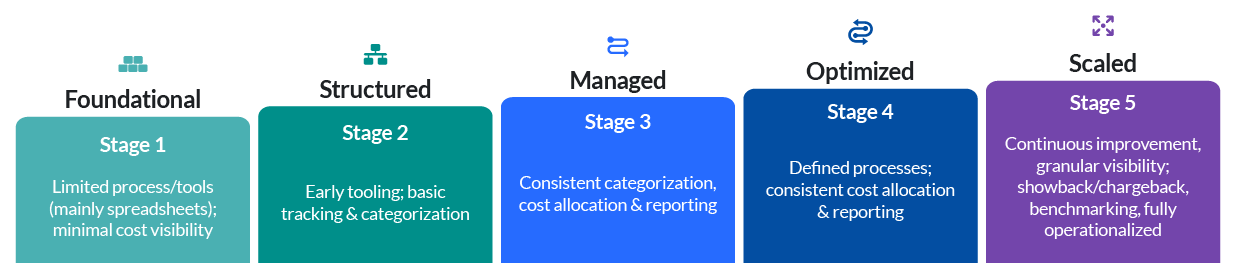
The ITFM Maturity Model is designed to turn the perceived complexity of the ITFM journey into a clear, streamlined path forward. Each of the five stages has distinct capabilities, KPIs, and outcomes. The model helps organizations understand where they are and what steps will deliver the greatest impact next, whether that’s improving cost visibility, strengthening business partnerships, getting a better sense of the value their IT spend is delivering, or scaling ITFM practices to drive innovation.

ITFM Maturity Model Summary - ITFM Maturity: The Next CIO Imperative in the Age of Innovation - Apptio

Stage 1: Foundational

Organizations at this level typically use manual processes and spreadsheets developed by finance, IT finance, or project leaders to track, manage, and forecast IT spend. This approach:

  • Enables initial visibility into IT spend, surfacing gaps in data and sparking early conversations
  • Identifies what IT cost data is either incomplete or the org doesn’t have (e.g., vendors, IT workforce, applications, and subscriptions)
  • Reveals blind spots related to IT budgeting that can inform future investment decisions and priorities

Capturing spend data is an essential first step, but varied data formats, quality and approaches make it difficult to see the full picture. Without a unified view, organizations face blind spots that can lead to overspending and misaligned investments.

Stage 2: Structured

Moving beyond foundational capabilities, Stage 2 begins when organizations start to adopt dedicated ITFM tools that bring in needed automation and enable better cost tracking and overall visibility. Stakeholders now receive understandable data about IT usage and cost in consistent formats on a regular schedule. This improvement often results in better engagement and dialogue between IT and business leaders.

New capabilities can include:

  • Some automation of financial data aggregation and reviews (ETL processes)
  • A shift from ad hoc to continuous rollout of financial practices

The benefits also evolve. Most teams see:

  • A reduction in manual effort and errors, freeing up time for analysis and improving data reliability
  • Repeatable, scalable processes that support consistent planning and review
  • Higher use and trust in IT cost data, which can strengthen business partnerships

Stage 3: Managed

Once IT spend data is more structured and data quality increases, teams can manage costs more effectively and optimize key areas of the IT environment, such as applications and services. In Stage 3, IT finance leaders share a reliable cadence of information and may also pilot cost showback processes. The ITFM team is considered a strategic partner in the matching of investments to organizational objectives, rather than just a cost center or data provider.

ITFM capabilities have advanced to:

  • Leveraging richer, more consumptive data feeds
  • Conducting proactive, IT-led financial analysis
  • Optimizing IT investments using TCO analysis and unit economics

The outcomes expected from this level of ITFM maturity are also significant:

  • More-granular analysis and defensible, data-backed decisions
  • Improved trust and strategic partnering with business leaders about critical investment decisions
  • Clear alignment of IT spend with business value

Stage 4: Optimized

Once IT leaders are seen as managing IT spend effectively, teams are in the position to optimize IT spend. Accordingly, Stage 4 is an inflection point for many organizations. Teams are leveraging comprehensive cost models that capture the full IT estate to understand TCO and unit economics and make informed decisions. At this stage, ITFM practices become more standardized and scalable, embedded across the business to support strategic planning.

Core, embedded capabilities include:

  • Integration of ITFM tooling with core financial systems (such as ERP) to create a trusted single source of truth for IT spend
  • Multi-year, dynamic forecasts driven by IT value and services
  • Advanced rationalization of applications and services, leveraging advanced TCO and unit economics modeling

Consequently, these sophisticated ITFM capabilities yield more benefits. Among them:

  • Unified planning and reporting, and trusted partnerships with business functions
  • Improved long-term planning, as well as agility to meet changing business needs
  • Strategic discussions around IT consolidation, modernization, and investment

Stage 5: Scaled

The ITFM practice engages in continuous improvement of capabilities and processes while expanding its role as a trusted partner in the strategic investment decision-making process. The higher level of automation of cost management and communication allows team members to focus on analysis and business decision-making. With ITFM capabilities fully embedded across the organization, ITFM team members function as enablers of innovation, growth, and competitive advantage, as well as operating effectiveness.

How to Use the Model

Reaching ITFM maturity will look different in every organization, depending on the organization’s capabilities, strategy, and available investment resources. The important thing is to get started. Here are three steps to consider:

  1. Identify gaps in KPIs. These could relate to cost allocation coverage, budget cycle time, automation of data feeds, or forecast accuracy.
  2. Determine the stage your organization is in and where it wants to be.
  3. Prioritize next steps based upon value and strategy.

Our model draws on Apptio’s 18+ years’ experience along with 1,800+ deployments across industries and geographies. It helps teams at every stage identify gaps, prioritize improvements, and strengthen ITFM practices, enabling IT leaders to demonstrate and maximize the business value of IT investments.

Moving up the ITFM maturity curve is rarely a linear process and involves a host of decisions and trade-offs. But we’ve helped hundreds of organizations across sectors make that journey successfully.

ITFM Maturity Model Poster promo - ITFM Maturity: The Next CIO Imperative in the Age of Innovation - Apptio

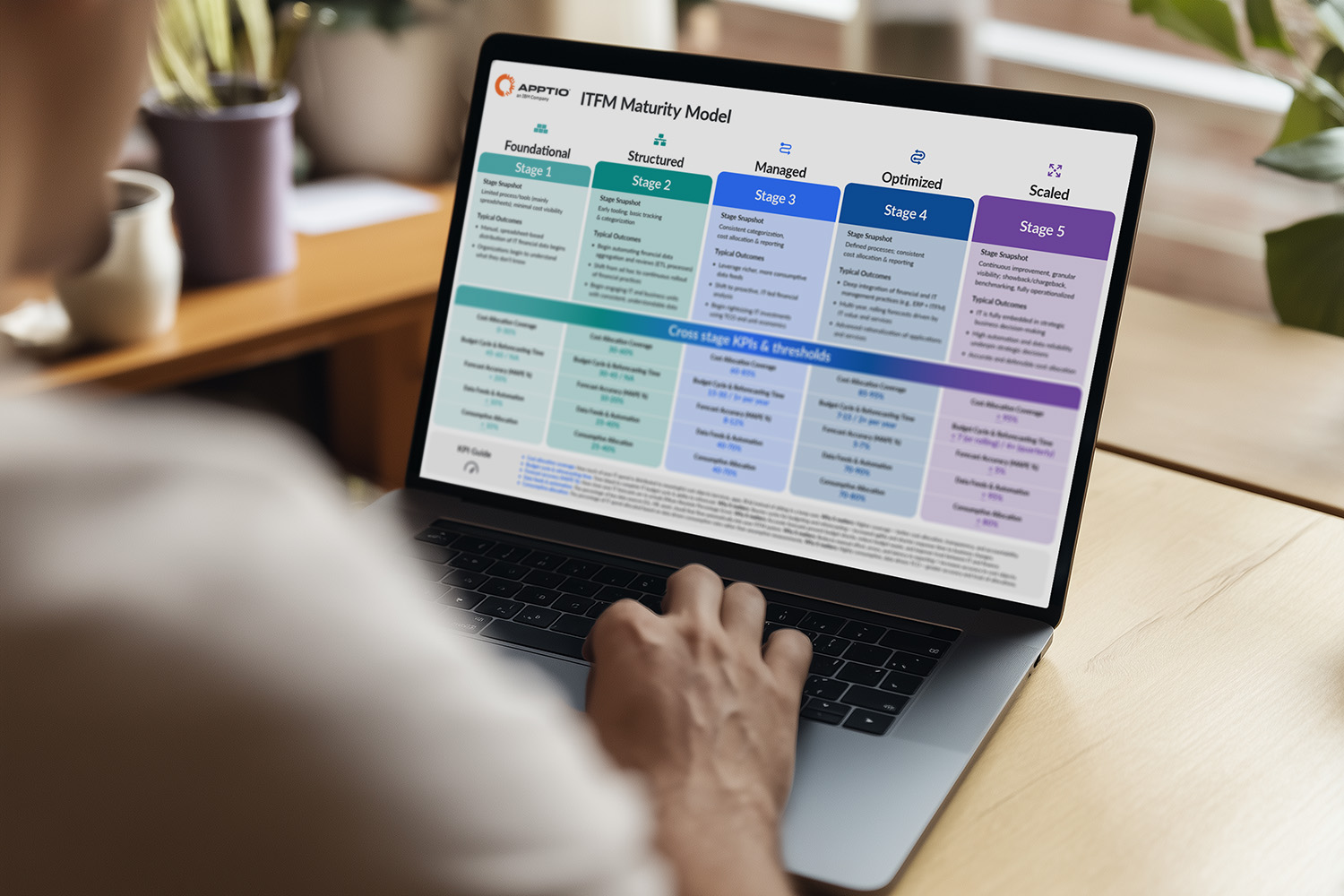
Ready to get started? Download the ITFM Maturity Model Poster to keep the stages front and center and read theITFM Maturity Model Handboo for more information.

We’re happy to receive feedback on the model, answer any questions, and explore how we can support your team. Contact us to discuss how we can work together.