
惯性聚合 高效追踪和阅读你感兴趣的博客、新闻、科技资讯
阅读原文 在惯性聚合中打开

推荐订阅源

D
DataBreaches.Net
罗磊的独立博客
M
MIT News - Artificial intelligence
G
Google Developers Blog
V
V2EX
D
Docker
博客园_首页
The Cloudflare Blog
人人都是产品经理
人人都是产品经理
Y
Y Combinator Blog
WordPress大学
WordPress大学
T
Tailwind CSS Blog
博客园 - 司徒正美
J
Java Code Geeks
L
LangChain Blog
博客园 - 三生石上(FineUI控件)
B
Blog RSS Feed
博客园 - 【当耐特】
小众软件
小众软件
Apple Machine Learning Research
大猫的无限游戏
大猫的无限游戏
P
Proofpoint News Feed
freeCodeCamp Programming Tutorials: Python, JavaScript, Git & More
博客园 - Franky

Superuser

OpenDev’s Quiet 15-Year Marathon – Superuser From GitLab SaaS to Full Sovereignty: Hosting GitLab in an OpenStack Cloud – Superuser We Made an OpenStack Cloud Tell Its Own Story – Superuser Do the invisible security work, too – Superuser ALASCA/SCS Sovereign Cloud for International Telecommunication Union (ITU) – Superuser How the University at Buffalo Modernized Its Research Cloud with OpenStack – Superuser A Hybrid Private Cloud as an AI Factory – Superuser How India’s Payment Backbone Runs on Open Source – Superuser What AI Builders Can Learn From a Decade of Open Source CI – Superuser How Pinaka ZTi Builds Sovereign Clouds Governments Can Actually Trust – Superuser KDDI’s Private Cloud Supporting Communications – Superuser When Vietnam’s Cloud Infrastructure Is No Longer the Bottleneck – Superuser Sovereign AI Cloud – Superuser How France’s National Railway Runs on Open Source – Superuser Why Digital Sovereignty Depends on Invisible Labor – Superuser Ongoing Development and Next Steps for DOCOMO and Tacker – Superuser Why AI Agents Need Stronger Sandboxing and What the Kata Containers Community Is Doing About It – Superuser A Guide to Manila Security and Terraform Integration – Superuser A Strategic Growth Opportunity for Open Infrastructure – Superuser NTT DOCOMO’s Journey of Virtualization for Mobile Networks – Superuser How Rapifuzz CyberKshetra Built a Scalable Cyber Range on OpenStack (and Cut Costs by 60%) Integration of the Octavia module (Load Balancer as a Service) in an OpenStack Cloud Environment – Part 2 – Superuser OpenStack Case Study: CloudVPS – Superuser The 10th China Open Source Hackathon Recap: Projects, Talks, and More – Superuser Inside CERN’s Open Data portal – Superuser Taking the OpenStack ops manuals to the next level – Superuser Making your first contact with OpenStack – Superuser How tech giant Tencent uses OpenStack – Superuser Managing port level security in OpenStack – Superuser Using Ansible 2.0 to launch a server on OpenStack – Superuser
NTT DOCOMO’s Tacker Activity – Superuser
Yuya Kuno · 2026-02-03 · via Superuser

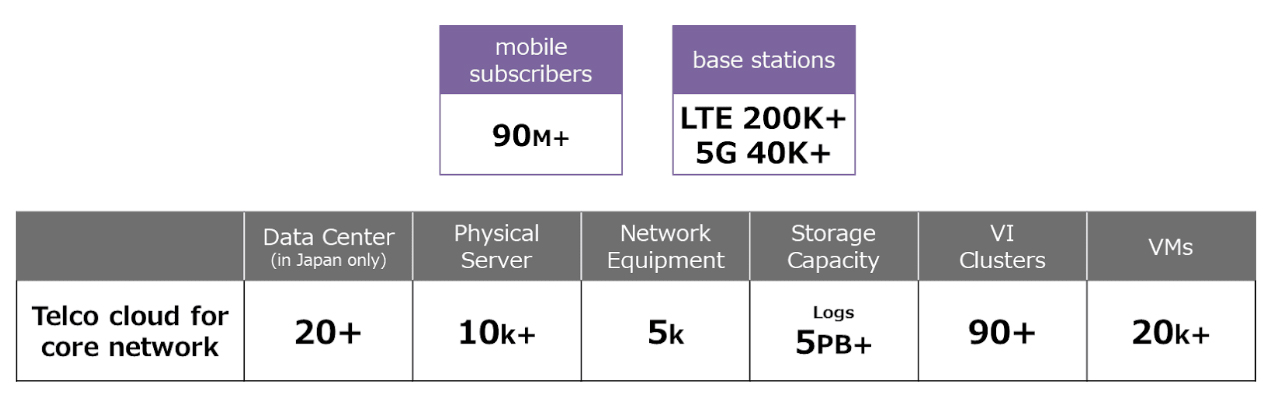
Figure 1: real number of DOCOMO business

1. Tacker ecosystem with Operator

OpenStack is one of key component to realize NFV. OpenStack supports to manage a lot of compute nodes and network of resource pools which provide virtual resource for Virtualized NFs(VNFs). DOCOMO also uses OpenStack to virtualize NFs for economic, high performance and reliable infrastructure. In initial phase, DOCOMO uses 4 Specific VNFMs for each VNF vendors on OpenStack infrastructure.

Tacker is Generic VNFM specified in ETSI NFV to manage multi-vendor VNFs on multi-clouds. DOCOMO uses Tacker in commercial and is migrating from Specific VNFMs to Tacker as Generic VNFM, because it is difficult to maintain all Specific VNFMs when platform is upgraded, and it is complicated to introduce new type of infrastructure such as Container infrastructure. Therefore, DOCOMO decided to use Generic VNFM to manage all type of VNFs on multiple infrastructures.
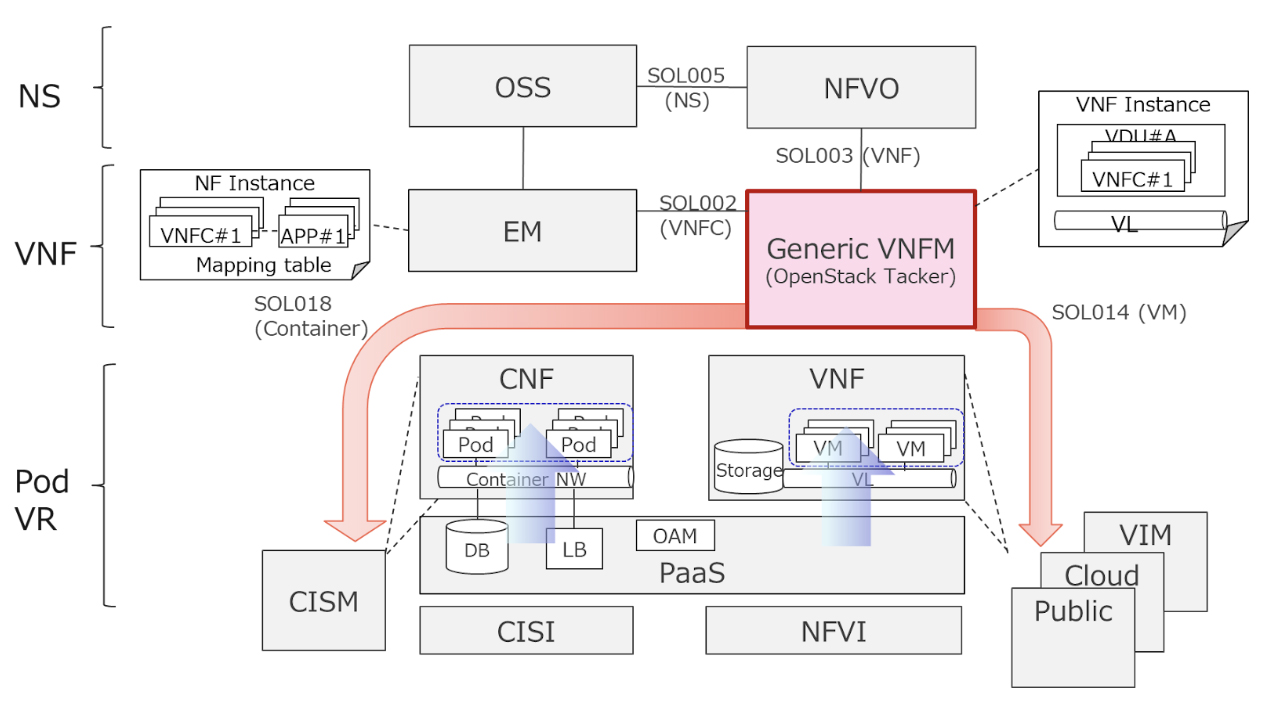
Figure 2: Generic VNFM

In order to manage multi-vendor VNFs for multi-domain on multi-clouds, unified specification is important for DOCOMO. OpenStack Tacker is key bridge among operator development, standards and open sources as figure 3. Tacker has proven that it can be operated as a generic VNFM that is compliant with the ETSI NFV Standard, resolving various lessons.
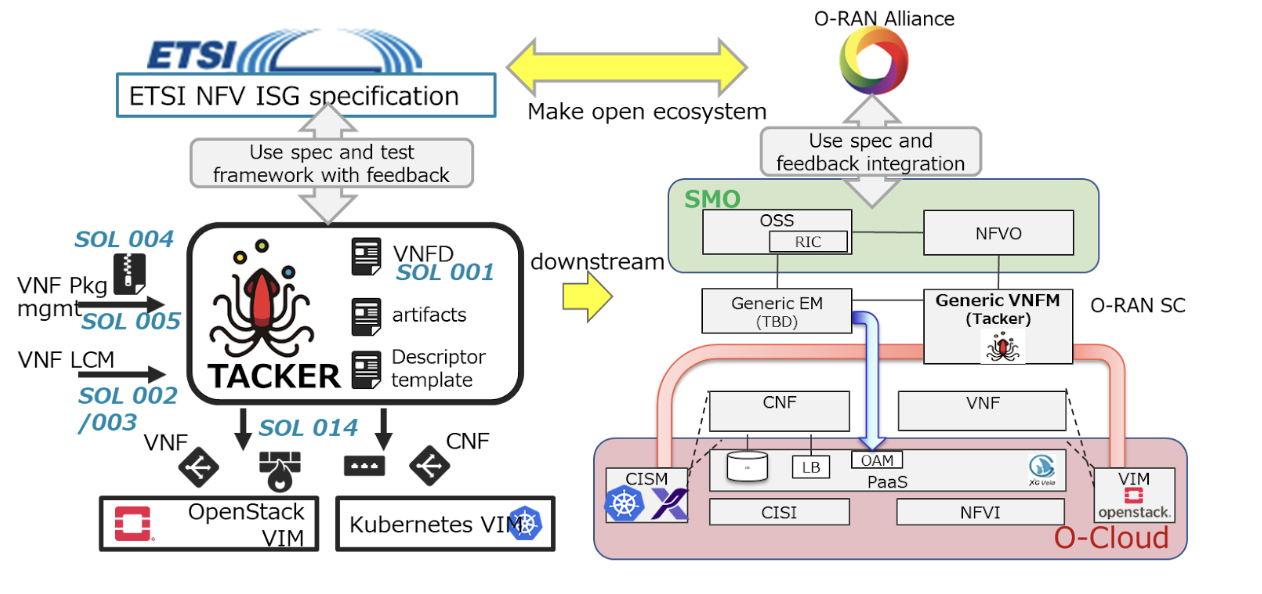
Figure 3: unified ecosystem

2. Commercialize Tacker

Tacker is one of major components in OpenStack, and many bugs have been already resolved in long history and revision. Now the Tacker is mature for large scale commercial level from quality, performance and reliability perspective. Although integration in operator environment is required, such as redundancy of DB, monitor Tacker itself and user management, Tacker is simple and light product of VNFM. There are several deployment options, container based, VM based and standalone depending on operator’s environment.

Operator can easily integrate with VNF by creating SOL001 based VNF Package, script for mgmt-driver, and virtual resource descriptor (HOT or Helm). Since Tacker can support Instantiate VNF, Terminate VNF, Scale VNF, Heal VNF, Upgrade VNF and error-handling, Tacker meets commercial use cases for any type of VNF through the fulfillment of key lifecycles defined by ETSI NFV.

By these accumulated quality improvements, flexible environment adaptation, and integration with VNFs, Tacker has become a product suitable for commercial level as Generic VNFM. DOCOMO and Tacker will lead platform of telco cloud among development, standard and open source.

Tags: , , , ,

  • Author
  • Recent Posts