



惯性聚合 高效追踪和阅读你感兴趣的博客、新闻、科技资讯
阅读原文 在惯性聚合中打开

推荐订阅源

Engineering at Meta
Engineering at Meta
G
GRAHAM CLULEY
Attack and Defense Labs
Threat Intelligence Blog | Flashpoint
T
Tor Project blog
T
Threat Research - Cisco Blogs
阮一峰的网络日志
阮一峰的网络日志
H
Hackread – Cybersecurity News, Data Breaches, AI and More
Vercel News
Vercel News
Google DeepMind News
U
Unit 42
freeCodeCamp Programming Tutorials: Python, JavaScript, Git & More
Spread Privacy
Spread Privacy
C
CXSECURITY Database RSS Feed - CXSecurity.com
量子位
T
The Blog of Author Tim Ferriss
Project Zero
Project Zero
Webroot Blog
Webroot Blog
雷峰网
雷峰网
C
Cyber Attacks, Cyber Crime and Cyber Security
Microsoft Azure Blog
Microsoft Security Blog
Scott Helme
Scott Helme
T
The Exploit Database - CXSecurity.com
cs.AI updates on arXiv.org
A
About on SuperTechFans
NISL@THU
NISL@THU
AWS News Blog
AWS News Blog
Security Latest
Security Latest
S
Schneier on Security
W
WeLiveSecurity
K
Kaspersky official blog
有赞技术团队
有赞技术团队
Cyberwarzone
Cyberwarzone
P
Palo Alto Networks Blog
TaoSecurity Blog
TaoSecurity Blog
G
Google Developers Blog
Exploit-DB.com RSS Feed
Schneier on Security
博客园_首页
博客园 - 司徒正美
Application and Cybersecurity Blog
D
Darknet – Hacking Tools, Hacker News & Cyber Security
C
Check Point Blog
www.infosecurity-magazine.com
Recent Commits to openclaw:main
cs.CV updates on arXiv.org
Know Your Adversary
Know Your Adversary
P
Privacy & Cybersecurity Law Blog
Hacker News - Newest:
Hacker News - Newest: "LLM"

Tenable Blog

wp2shell: WordPress Core Pre-Auth RCE FAQ | Tenable® SharePoint CVEs FAQ: CVE-2026-56164, CVE-2026-32201, CVE-2026-45659 | Tenable® Build agentic AI security at Tenable Swarm, Black Hat 2026 SonicWall CVE-2026-15409 and CVE-2026-15410 zero-day exploited | Tenable® Understanding Anthropic’s new AI agent Claude Tag’s access model in Slack 5 reasons to integrate AppSec data with your exposure management platform July 2026 Patch Tuesday: Largest Patch Tuesday 569 CVEs FedRAMP High, IL5, and zero trust: How federal agencies can secure cloud environments OMB M-26-14: Why federal agencies must fix asset visibility first CISO’s guide to CISA BOD 26-04 and risk-based security metrics for vulnerability management How much cyber risk does AI create for organizations? 457 million security issues. Here’s what you can do about it. The Developer Credential Economy: An inside look at the Miasma worm campaign Oracle Critical Security Patch Update June 2026 | Tenable® How Tenable helps federal agencies comply with CISA BOD 26-04 Get critical cyber risk context: Understanding control validation, CTEM & Tenable One CISA BOD 26-04: Frequently asked questions about the new risk-based patching directive Microsoft’s June 2026 Patch Tuesday Addresses 198 CVEs ( CVE-2026-49160, CVE-2026-50507) The June 2026 AI Executive Order: What federal agencies need to know and how Tenable can help Tenable joins Anthropic’s Project Glasswing to advance AI-era cyber defense Tenable CTO Vlad Korsunsky Q&A: Countering AI threat multipliers with AI-powered exposure management | Tenable CTO Q&A: C-suite views AI as massive threat, as cyber teams adopt exposure management to counter AI attacks Oracle May 2026 Critical Security Patch Update Addresses 35 CVEs Download pumping: New npm deception technique for supply chain attacks Inside the customer environment: Where threat actors, vulnerabilities, and exposed assets intersect EXPOSURE 2026 prepares cybersecurity professionals for the AI era Mini Shai-Hulud: Frequently asked questions about the TeamPCP npm and PyPI supply chain campaign CVE-2026-9082: Highly Critical SQL Injection Vulnerability in Drupal Core (SA-CORE-2026-004) Tenable One deepens third-party integrations with new Open Connector for unified risk visibility Implement agentic AI in cybersecurity with Tenable Hexa AI: Reduce cyber risk at machine speed Key findings from the Verizon DBIR 2026: Slower vulnerability remediation meets faster exploitation Frequently asked questions about the continued exploitation of Cisco Catalyst SD-WAN vulnerabilities (CVE-2026-20182) Bring out your dead: How agentic AI for cybersecurity helps you rid your cloud of forgotten, risky assets Fragnesia (CVE-2026-46300): Frequently asked questions about new Linux Kernel XFRM ESP-in-TCP privilege escalation Securing data centers in the agentic AI era Microsoft’s May 2026 Patch Tuesday Addresses 118 CVEs (CVE-2026-41103) Dirty Frag (CVE-2026-43284, CVE-2026-43500): Frequently asked questions about this Linux kernel privilege escalation vulnerability chain Why the approaching flood of vulnerabilities changes everything — and what to do about it The AI-vs-AI battle is already happening. Watch it live at EXPOSURE 2026. Anthropic’s CEO warns the “moment of danger” is real. But most are looking in the wrong place. Security for AI: A strategic framework for closing the AI exposure gap Vulnerability remediation: Match CVEs to asset owners in seconds with Tenable Hexa AI Copy Fail (CVE-2026-31431): Frequently asked questions about Linux kernel privilege escalation vulnerability Mastering agentic AI security through exposure management As the NVD scales back CVE enrichment, here’s what Tenable customers need to know Five steps to become Mythos ready Oracle April 2026 Critical Patch Update Addresses 241 CVEs Beating the Mythos clock: Using Tenable Hexa AI custom agents for automated patching Unlocking foundational visibility for cyber-physical systems with OT vulnerability management Claude Mythos: Prepare for your board’s cybersecurity questions about the latest AI model from Anthropic Microsoft’s April 2026 Patch Tuesday Addresses 163 CVEs (CVE-2026-32201) Crushing the Axios supply chain threat with Tenable Hexa AI: Use cases for agentic AI What to Know About CyberAv3ngers: The IRGC-Linked Group Targeting Critical Infrastructure CVE-2026-35616: Fortinet FortiClientEMS improper access control vulnerability exploited in the wild The developer credential economy: Why exposure data is the new front line in the supply chain war Frequently Asked Questions About the Axios npm Supply Chain Attack by North Korea-Nexus Threat Actor UNC1069 Supply chain attack on Axios npm package: Scope, impact, and remediations What’s new in Tenable Cloud Security: Custom policies, AWS ABAC, and research-driven protection Uncover prompt injection, insider threats with the Tenable One Model Refusal Detection Security for AI: A guide to managing the risks of vibe coding and AI in software development Meet Tenable Hexa AI: Agentic AI for exposure management
Bridging the gap: How to integrate Claude Security into the Tenable One Exposure Management Platform
Liat Hayun · 2026-05-01 · via Tenable Blog

Bridge the gap between AI-driven vulnerability discovery and prioritized remediation. Learn how to integrate Claude Security’s deep-logic analysis into Tenable One to unify your attack surface, eliminate noise, and focus on the risks that matter most.

Key takeaways

  1. As frontier AI models like Claude accelerate the pace of vulnerability discovery, security programs must shift their focus toward efficient exposure prioritization and remediation to avoid drowning in noise.
  2. Integrating Claude Security with the Tenable One Exposure Management Platform allows teams to centralize deep-logic code analysis alongside the rest of the attack surface. This unified view helps normalize raw AI findings into actionable intelligence and a prioritized remediation plan.
  3. The integration process involves scanning code in Claude, exporting the findings, and using the Tenable Open Connector to map and aggregate data attributes. Proper aggregation ensures that vulnerabilities are grouped by root cause, preventing the artificial inflation of risk scores and allowing teams to focus on critical issues.

The promise of AI in security is compelling: find vulnerabilities faster than ever before. But speed of discovery alone doesn’t make organizations safer.

As AI tools like Claude Security surface complex, deep-logic vulnerabilities at an unprecedented scale, the bottleneck has quietly shifted. Discovery is no longer the hard part. Remediation and prioritization are.

Security teams are being buried under a surge of new vulnerability data. When AI-generated findings pile up in silos, disconnected from the rest of your attack surface, they don’t reduce risk. They add noise. And more noise means more time spent triaging instead of fixing.

To keep pace, organizations need to do more than discover faster. They need to normalize AI-driven findings against the rest of their attack surface to understand which ones actually pose a business risk. 

By bringing Claude’s advanced code security insights directly into the Tenable One Exposure Management Platform via the Tenable One Open Connector, you can transform a flood of raw data into a unified, prioritized remediation plan.

Step 1: Run the security scan in Claude

The process begins by leveraging Claude’s deep-reasoning capabilities to perform a comprehensive security analysis of your codebase. Whether triggered via console or performed periodically, Claude Security can automatically identify complex logic flaws and vulnerabilities in a code repository of your choosing:
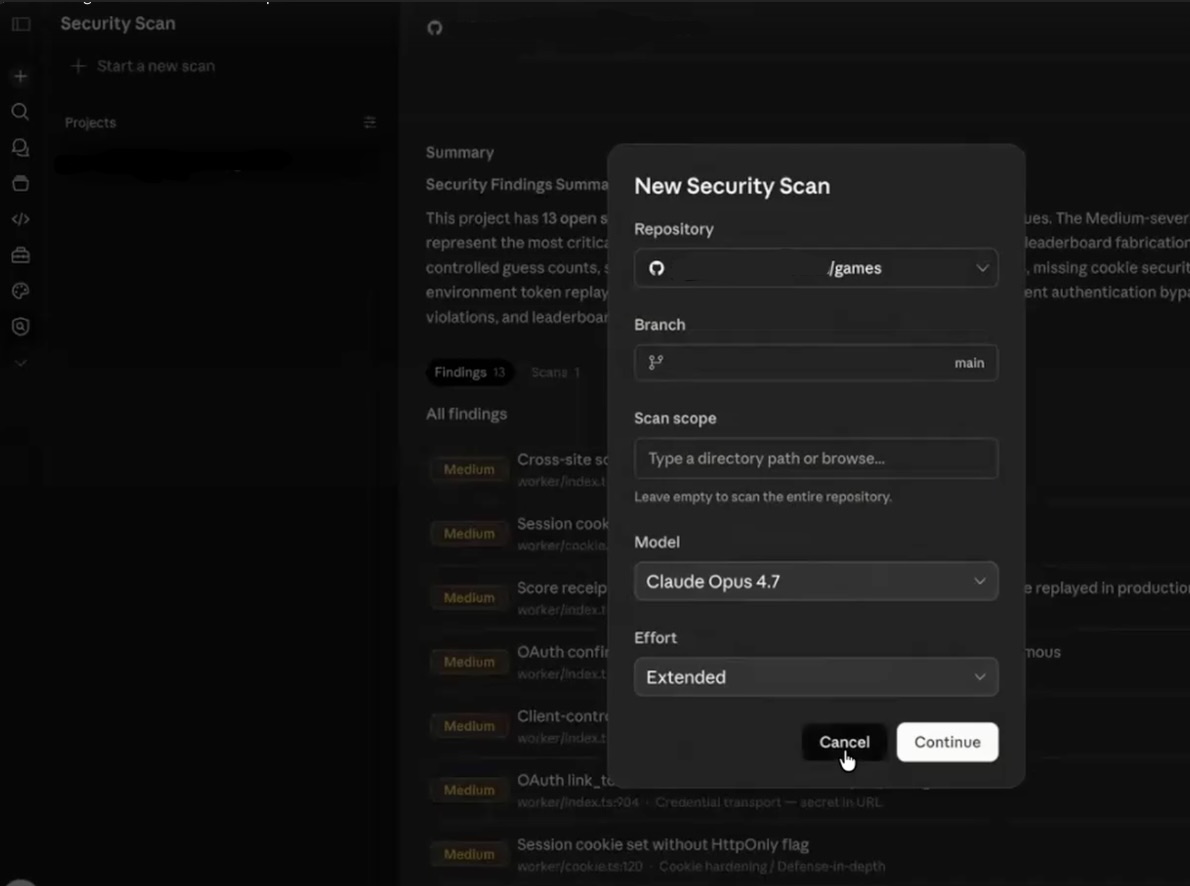
 

Screenshot showing Claude security


The first stage of the integration is generating raw security intelligence. Within the Claude Security interface, you’ll define the scope by connecting your target repository and selecting the appropriate branch (e.g., main). You can then choose the AI model used in the scan and the level of effort in which it should run. 

In this example, we are using Claude Opus 4.7 with the effort level set to Extended for a comprehensive review. Keep in mind that the duration and cost of this scan will depend heavily on the complexity of your code repository.

Once Claude Security has finished analyzing your repository, you will be presented with a summary of the open security findings.
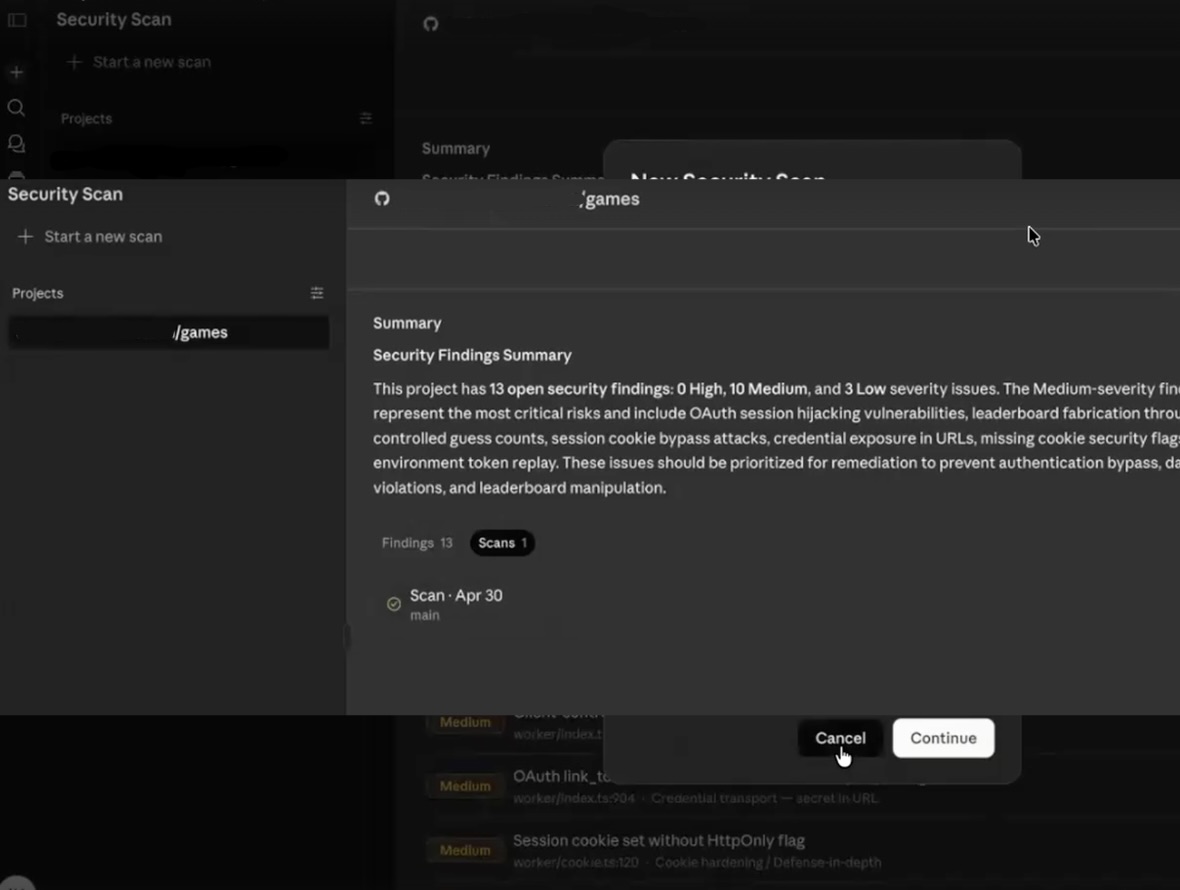
 

Summary of Cloud Security findings

Step 2: Export the findings

To be able to ingest these findings within Tenable One, findings need to be exported. This can easily be done by clicking on the “Export all findings” option available within the scan screen and selecting Download CSV.
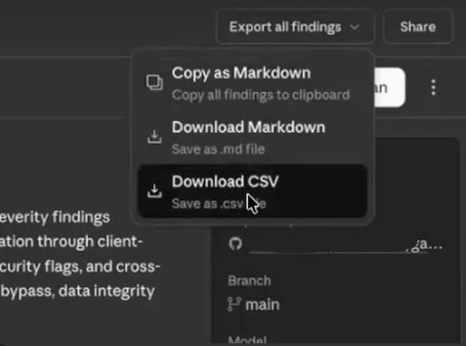
 

Screenshot showing how to export Claude Security findings


While a manual export is useful for initial validation and for the purposes of this review, manual processes cannot scale with the volume of vulnerabilities AI is capable of discovering. To truly bridge the gap, this workflow should be automated.

By leveraging Claude Security’s API webhooks and scheduled scans, you can automate the delivery of security findings directly to a secure cloud storage layer (such as Amazon S3). From there, the Tenable One Open Connector can be configured for continuous ingestion, ensuring your "single pane of glass" reflects your code’s security posture in near real-time without manual intervention.

Step 3: Set up the Tenable Open Connector

With the analysis complete, the focus shifts to centralizing that data within the Tenable Exposure Management platform. To account for the rapid evolution of AI-driven security tools, we utilize the Tenable One Open Connector. This approach allows security teams to seamlessly ingest Claude’s security findings into the Tenable platform, providing a versatile way to centralize AI-driven vulnerability data alongside the rest of your attack surface.

Within the Tenable One console, navigate to the Connectors management page to initialize a new Tenable Open Connector. We recommend a descriptive naming convention - such as "Claude Code Security" - to ensure clear attribution within your console.

To facilitate the data transfer, configure the connector with the following parameters:
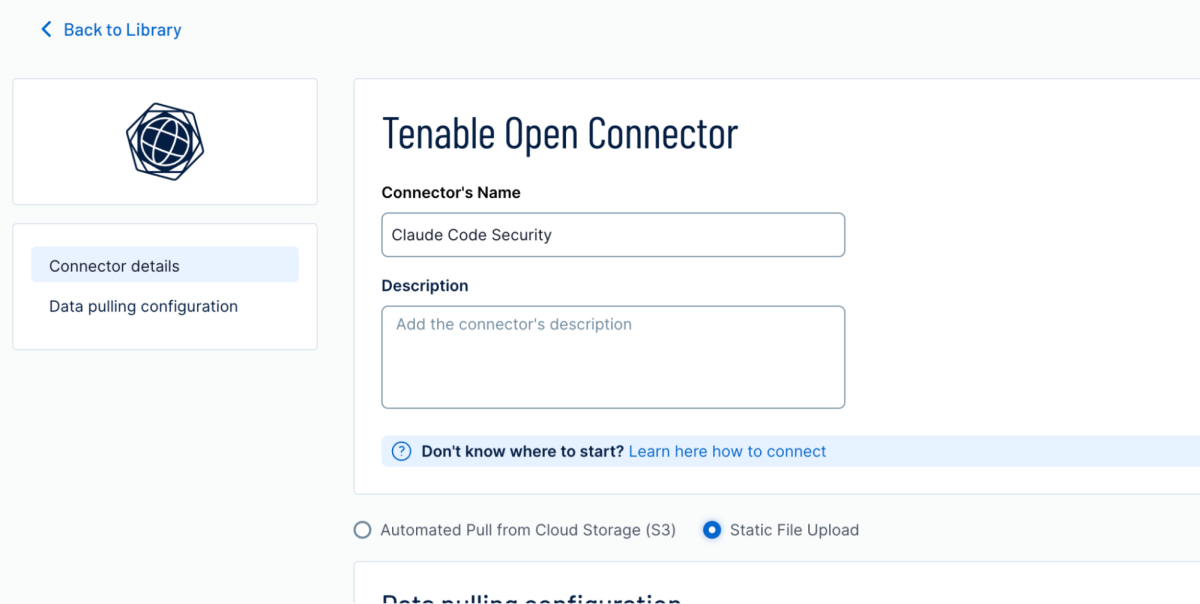
  • Data-pulling configuration: For uploading a single exported file, select the ״Static File Upload״ option.
  • Data update mode: Select ״Override Data (Full Fetch):. This is a critical setting for maintaining data integrity. By selecting "Full Fetch," each new upload serves as the definitive source of truth. This ensures the platform completely refreshes your posture, automatically clearing remediated issues and preventing your dashboard from being cluttered by stale "ghost" vulnerabilities.
     

Screenshot of Tenable Open Connector


Step 4: Map the data attributes

This is the most critical phase of the integration. For Claude Security’s insights to be actionable, they must be translated from raw AI findings into the structured vulnerability language that Tenable One uses to calculate risk.

Upon uploading your Claude-generated CSV, you will be directed to the Attribute Mapping interface. This is where you define the relationships between Claude’s discovery fields and Tenable’s exposure attributes.

Based on Claude's output, you should configure the mappings as follows:

  • Severity -> Severity
  • Status -> Finding State
  • Date created -> Asset Created Date
  • Repository -> Asset Name
  • Description -> Finding Description
  • CWE -> Finding CWEs
  • File path & Line -> Asset Generic Details (Custom)
  • Finding URL -> Finding Generic Details (Custom)
  • Name -> Finding Name

The final step is to define the uniqueness and aggregation logic. This tells Tenable One how to cluster individual findings so it can accurately calculate your Asset Exposure Score. Without proper aggregation, the same vulnerability found across multiple files could artificially inflate your risk score, creating the very "noise" we are trying to eliminate.

To ensure a clean data set, set the unique identifier to Finding Name.

By grouping based on the specific weakness identified, Tenable can consolidate multiple instances of a vulnerability into a single, high-context entry. This allows your security teams to focus on the root cause of the exposure rather than triaging hundreds of identical alerts. Once these logic parameters are set, you have successfully transformed Claude's raw AI discovery into a prioritized, enterprise-ready security asset.
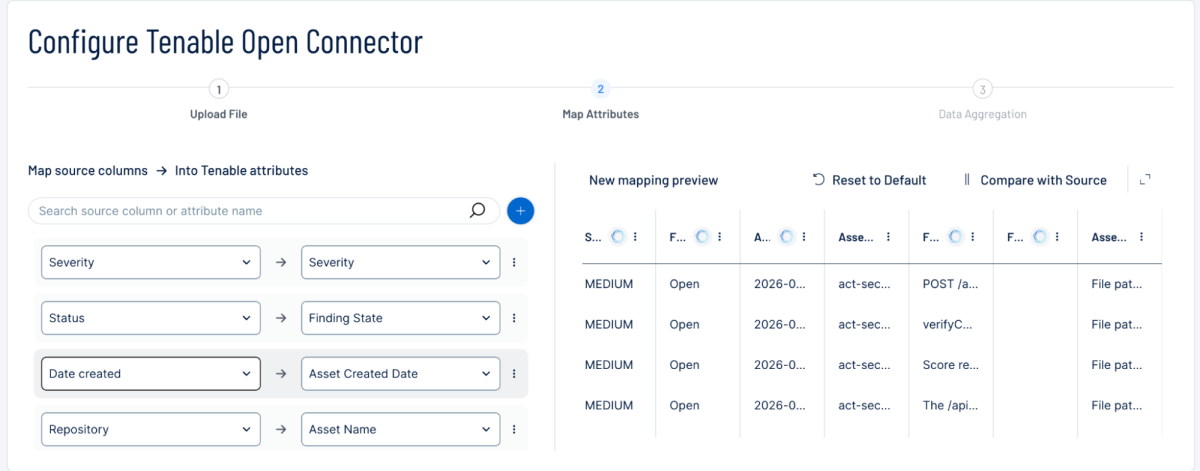
 

5 - Screenshot showing configuration UI for Tenable Open Connector


Step 5: Execution and review

Once your mapping and aggregation logic are confirmed, click Save and Execute.

Your new integration will appear in the Connectors list with a "Connecting" status as Tenable One begins the initial ingestion and normalization process.

 

6 - Screenshot of Tenable Open Connector UI

Within minutes, the "discovery bottleneck" begins to clear: Claude’s high-fidelity AI insights will populate your Tenable One dashboard, as distinct instances of weaknesses on your assets, fully integrated into your existing workflows and ready for prioritized remediation.
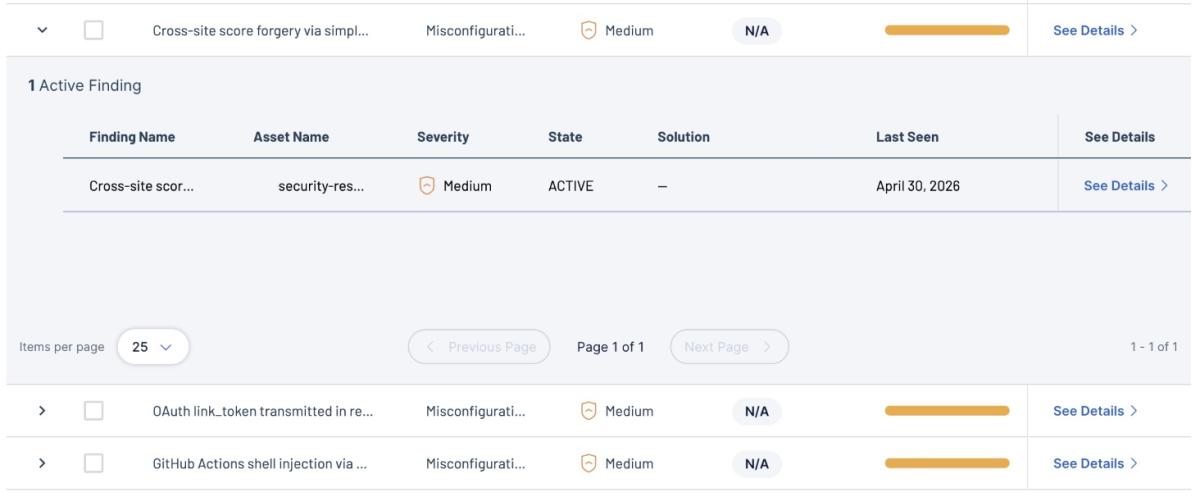
7 - Screenshot of Tenable UI with Claude Security AI insights

From AI discovery to actionable intelligence

By bridging Claude Security and Tenable One, you are doing more than just moving data between platforms - you are transforming a flood of raw AI findings into tracked, prioritized business metrics. Now you can understand how application code vulnerabilities may create new attack pathways or which ones are associated with revenue generating workloads. Static code risks will also inform resource decisions and executive communication as part of your exposure management governance to help you answer, "how secure am I" in this new AI-driven world.

In an era where AI can discover vulnerabilities faster than any human team can fix them, the goal of security operations has shifted. Success is no longer measured by the volume of your findings, but by the speed and accuracy of your response.

Why leave your most advanced security insights in a silo? By centralizing Claude’s deep-logic analysis within the Tenable Exposure Management Platform, you give your team the context they need to focus on what actually matters. You aren't just managing vulnerabilities; you are managing your entire attack surface from a single, unified source of truth.

Liat Hayun

Liat Hayun

VP of Product and Research, Tenable Cloud Security

Liat Hayun is the VP of Product and Research at Tenable Cloud Security. Prior to joining Tenable, Liat co-founded and served as CEO of Eureka Security, a data security company that was acquired by Tenable. Before co-founding Eureka Security, Liat spent over a decade leading cybersecurity efforts at the Israeli Cyber Command and at Palo Alto Networks. As VP of Product Management at Palo Alto Networks, Liat led the development of Cortex XDR and the company’s managed threat hunting service.