







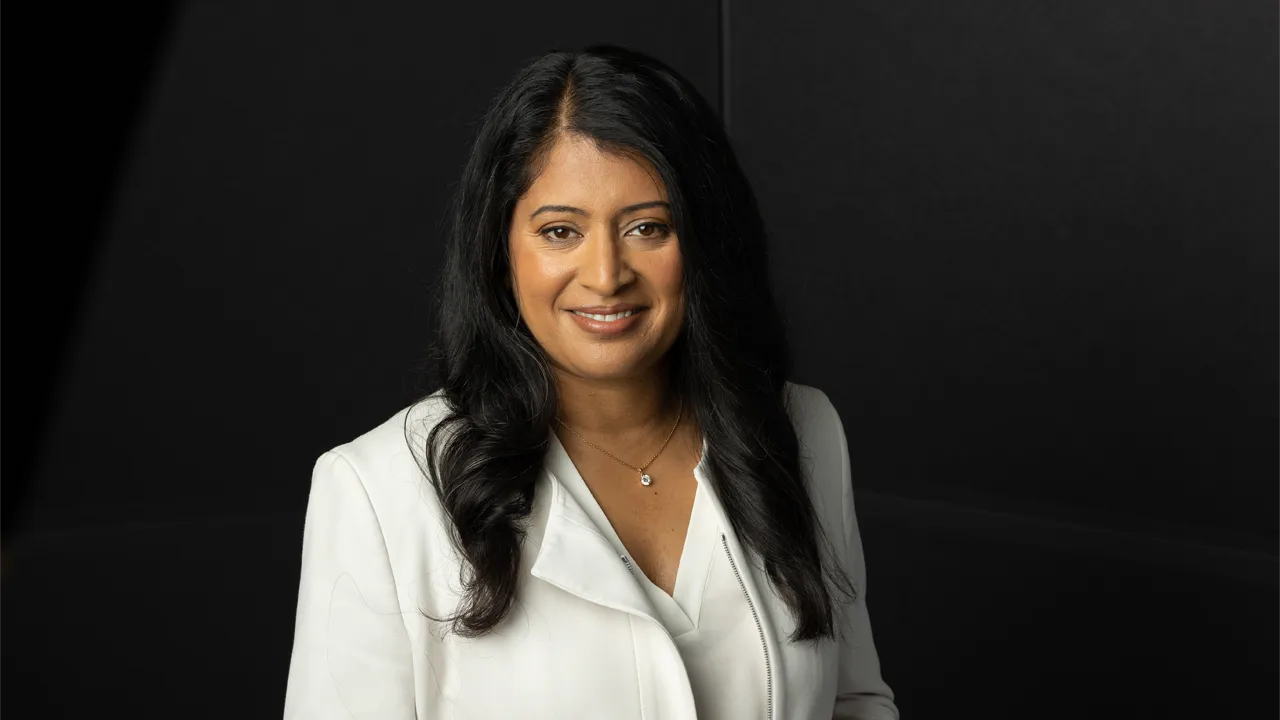
Sejal Amin, CTO of Priceline
In the AI era, it's no longer enough for software engineers to be whizzes at writing code. In this installment of the IT Leaders Fast-5 -- InformationWeek's column for IT professionals to gain peer insights -- Priceline CTO Sejal Amin explains why she wants to hire engineers who demonstrate solid leadership skills and can not only leverage AI but also command a room.
Amin has held a number of CTO positions at organizations, including Shutterstock and Thomson Reuters, and has a background in both economics and computer science. At Priceline, she has prioritized shifting the organization from being "oriented around functions" to a product operating model. As AI permeates Priceline, Amin is focused on ensuring employees are trained to both use AI effectively and identify the right metrics to track ROI.
This column has been edited for clarity and space.
What decision -- technical or organizational -- made the biggest difference recently, and why?
Related:IT Leaders Fast-5: Ed Fox, MetTel
Arriving in 2024, I was really looking at how product and tech are collaborating, what the organizational model was and how effective it was. I made the decision to shift to a product operating model to reshape our organization with those principles and concepts in mind. It's made a really big impact on our teams, how we operate and the speed at which we're delivering.
We were pivoting from an organization that was really functionally organized. Functional organizations are really great because, over time, people build expertise in their craft or function -- but over time, that gets harder to scale. The product operating model is less oriented around functions and much more oriented around the products and services that the product and tech organization manages.
"We're investing heavily in technical leaders, not just technical contributors." -- Sejal Amin, CTO, Priceline
The concept is to create team structures around the products and services that you manage, and you do that at scale. It's optimized for speed, delivery and flow of work throughout the organization. When a team knows what products and services they manage, it creates a really strong sense of ownership and accountability. The feedback loops between building and learning get tighter, and issues are addressed faster. We're clearly operating faster, and we have the metrics to show for it.
Some of the challenges, like with all things, was about taking and teaching people through the change. But everybody was ready for it and willing to learn. There wasn't very much resistance.
Related:Chief AI Officer on course-correcting when AI moves too fast
What didn't go as planned recently -- and what did it force you to rethink?
From a CTO's perspective, AI is constantly shifting all day, every day, but it's also expanding who can build, who can contribute, and that's a really good thing. It's a positive shift.
We're seeing enthusiasm from everywhere, not just engineers, but across the organization, and that creates opportunities. But we also need to focus on how to use tools and how to channel all of that energy more responsibly. When code is generated, it doesn't mean that it can find its way to production just with the snap of a finger.
AI accelerates development significantly, but speed isn't the goal on its own. It needs to be integrated into our workflow. This isn't just technical shift, it's a cultural shift. We have to create space for innovation, and space for people to think about what it means to their work.
We have a governance policy that was set up right at the outset. Initially, we were using a committee to vet new AI tools and the application of those tools. But now it's not just about tool approval, and we have set up an enablement committee around it. Now that people have the tools, they need help in applying the tools -- like training.
Related:Shutterstock CTO's playbook for scaling AI without vendor sprawl
We also want to start prioritizing our most important use cases and baseline metrics. If we're spending money on software, we're measuring the impact of what that tool is. We're starting to treat AI as a portfolio of work, rather than a bunch of mini little innovations or many little projects that run across the organization.
Where are you investing in talent right now -- and what are you consciously not investing in?
Many years ago, there was a saying called "the 10x developer," but we've moved past that expression. For a long time, the engineering and the tech industry really doubled down on engineers who could write really clean code in isolation, even if they couldn't hold a productive conversation with their team or the product manager. AI has made that persona or that archetype obsolete.
What differentiates a great engineer is their judgment, their product instinct, and their ability to collaborate before the build starts. I want to be hiring for versatility, resilience and comfort with ambiguity -- all of those softer skills. We need people who can thrive when priorities shift, when conditions change and when new tools come along.
We're investing heavily in technical leaders, not just technical contributors. Those are people who can hold a room and hold a roadmap at the same time. Honestly, it's easier said than done. Engineers who define the next decade aren't the ones who are writing the most code. They're the ones that are collaborating. I'm talking about that in the context of engineering, but that's true across all functions.
What recent external development is most likely to change how your organization operates, even indirectly?
[President and CEO of Nvidia] Jensen Huang was interviewed recently off the back of his Nvidia conference. And he stated that one way to measure engineering contribution was token consumption. He said he sees tokens as a very measurable, spendable resource. The way he's framing that is having a big impact on how many companies think.
He said the cost of an engineer is not just the salary, but it's also tokens spent. He had a very draconian view. He said it's $X in salary, and that engineer gets $X in tokens, and he or she needs to spend half of that in the first six months on the job. He's essentially arguing that the future of the engineer isn't someone who writes code, it's someone who orchestrates AI systems. It's someone who consumes tokens as a spendable resource, the way the previous generation consumed compute cycles.
That forces you to completely rethink how you evaluate talent, how you structure teams, how you budget for engineering, and so we're having all of that conversation here actively.
What I find most interesting is whether Jensen is right about that specific metric. Has the conversation shifted from should we use AI, to how we measure the humans who do use it? I think it's fundamentally different question, and everyone everywhere is talking about how to figure that out. Because he's out there making the statements, it's going to change and shift a lot of things. It's shifting the way that we're thinking.
What have you read, watched, or listened to recently that changed how you think about leadership or technology -- even slightly?
I'm constantly changing it up. I like to stay in the head of product people, so I listen to Lenny's Podcast.
When I need to stay on top of what's going on in the engineering world, I listen to The Pragmatic Engineer or Engineering Enablement. Both of those are podcasts that talk about what's going on in engineering teams, not just what leadership thinks is happening. I love The Atlantic's Nicholas Thompson's The Most Interesting Thing in tech -- that's on my daily rotation. He has a talent for surfacing that one signal that matters that day. And so I like to read that every morning. But then there's a few others about building AI, like the Dwarkesh Podcast.
Get more IT leadership updates and insights three times a week direct to your inbox with the InformationWeek newsletter.

Senior Editor, InformationWeek
Kelsey Ziser is a senior editor at InformationWeek, where she covers C-suite dynamics, data strategies and the evolving cybersecurity threat landscape.
Kelsey also oversees the publication's IT Leaders Fast-5 column, which brings peer insights to IT professionals, and the tech layoffs tracker. She has been with InformationWeek since September 2025.
Before joining InformationWeek, she spent nine years at sister publication Light Reading, reporting on a broad range of topics including smartphones and devices, AI, satellite connectivity and enterprise networking. Kelsey has a Bronze Regional Azbee Award in the Technical Article category. Outside of work, she enjoys reading four (or 12) books at once, watching movies about space travel, crafting and tending to an ever-growing collection of houseplants. Kelsey has a bachelor's degree in journalism and mass communication from UNC-Chapel Hill and is based in Raleigh, N.C. She can be reached at [email protected] or on LinkedIn.
此内容由惯性聚合(RSS阅读器)自动聚合整理,仅供阅读参考。 原文来自 — 版权归原作者所有。