


惯性聚合 高效追踪和阅读你感兴趣的博客、新闻、科技资讯
阅读原文 在惯性聚合中打开

推荐订阅源

小众软件
小众软件
让小产品的独立变现更简单 - ezindie.com
WordPress大学
WordPress大学
月光博客
月光博客
Hugging Face - Blog
Hugging Face - Blog
博客园 - 聂微东
博客园 - 【当耐特】
博客园_首页
The Cloudflare Blog
freeCodeCamp Programming Tutorials: Python, JavaScript, Git & More
Apple Machine Learning Research
Last Week in AI
Last Week in AI
酷 壳 – CoolShell
酷 壳 – CoolShell
大猫的无限游戏
大猫的无限游戏
雷峰网
雷峰网
量子位
钛媒体:引领未来商业与生活新知
钛媒体:引领未来商业与生活新知
T
Tailwind CSS Blog
IT之家
IT之家
OSCHINA 社区最新新闻
OSCHINA 社区最新新闻
GbyAI
GbyAI
V
Visual Studio Blog
F
Fortinet All Blogs
Martin Fowler
Martin Fowler

Latest Politics News | Frontline | Frontline

BJP turns Women’s Reservation Defeat into a New Campaign Plank in Uttar Pradesh Dantewada Cricket Event and India’s “Post-Maoist” Claim Maharashtra’s Sugar Mills Face a Deepening Economic Crisis Election Commission Bias in West Bengal Polls 2026? Tamil Nadu election 2026: Cash-For-Votes and Missing Voters One Year After Pahalgam: Violence, State Response, and Kashmir Narrative Tamil Nadu Assembly Election 2026: Why the Unattached Urban Voter Holds the Key in a Waveless Contest West Bengal Election 2026: Kudmi, Adivasi, Matua Identity Politics Explained When majoritarian march meets its first hard stop Will Didi prevail over Delhi? What Nithin Raj’s death says about caste in Kerala’s private colleges West Bengal election 2026: Identity politics, vote banks, and the BJP vs Trinamool battle Exclusive interview | Tamil Nadu Chief Minister M.K. Stalin talks about Assembly election 2026, fiscal authoritarianism, and the fight for federalism Women’s Reservation Bill 2026: Modi’s Delimitation Trap Exposed What was wrong with BJP's so-called Women Reservation Bill J&K liquor controversy explained: Tourism, revenue, and politics | The Kashmir Notebook Ep 13 Delhi Pink Saheli Card 2026: Domicile Rule Hurts Women Manipur’s Rumour Economy: How Disinformation Fuels Mob Violence Punishing the South: Modi’s Delimitation Plan and the Politics of Control The Vijay Factor AIADMK Delta Strategy: Can Leema Rose Win? Maharashtra Shows Why Women’s Reservation May Aid Elites CBI Reply in Kejriwal Case Exposes Judicial Conflict Norms Tamil Nadu Election 2026: Social Media Narratives, War Rooms, and Players Modi’s Roadshow and BJP’s High-Stakes Push in South Tamil Nadu SIR West Bengal Voter Exclusion Case 2026 TN Assembly Polls 2026: Senthil Balaji and SP Velumani Clash for Western Belt Supremacy Women’s Reservation Act Amendments Raise Delimitation Fears Partha Chatterjee’s For a Just Republic and the Limits of the People-Nation Hungary Election 2026: Orbán Defeated, Magyar Wins Big
AAP’s Collapse: From Anti-Corruption Force to Party in Cr...
2026-04-25 · via Latest Politics News | Frontline | Frontline
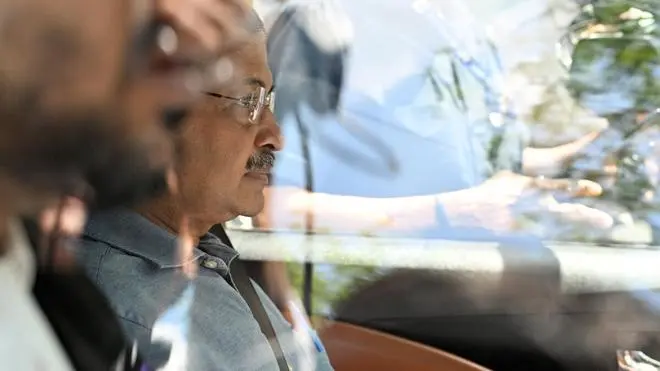
Former Chief Minister and AAP national convener Arvind Kejriwal reaches High Court in New Delhi on April 6, 2026.

Former Chief Minister and AAP national convener Arvind Kejriwal reaches High Court in New Delhi on April 6, 2026. | Photo Credit: Shashi Shekhar Kashyap/ The Hindu

Born out of the 2011 anti-corruption movement, the AAP once represented a genuine disruption in Indian politics—sweeping Delhi with 67 of 70 seats in 2015 and promising a new kind of governance for the aam aadmi. A decade later, the collapse is hard to overstate. The party won only 22 seats in the 2025 Delhi elections, its top leaders faced arrest in a liquor policy scam, and the last week of April 2026 brought the most visible sign yet of a party fracturing from within: seven MPs—including Raghav Chadha, Sandeep Pathak, and Harbhajan Singh—quit and are expected to join the BJP. Kejriwal tried personally to stop them. He could not.

The reports and analyses collected below were published over the past several years, but read together now, they serve as a sharp background to what is unfolding—and offer pointers to where AAP may be headed. From the centralisation of power around one leader, to the contradictions of a party that campaigned on clean governance and stands accused of the opposite, to the voters who believed and then stopped—they trace how it came to this, and ask whether AAP can survive as anything more than a Punjab government on borrowed time. With elections in Gujarat, Goa, and Punjab approaching, the party must stabilise, rebuild, and persuade its own workers that the movement still means something. Whether it can is far from certain.

Read on: