








The Supreme Court of India has, from time to time, been called on to intervene in the critical debate on sustainable development versus environmental protection. It famously stayed the construction of the Sardar Sarovar Project for five years, only to grant a green signal for the construction in 2000 in a divided judgement. Often, it was the last resort for citizens who had no other recourse. In November 2025, it drew criticism when then Chief Justice of India B.R. Gavai overturned, by a 2:1 majority, the apex court’s earlier order in May against post facto environmental clearances for projects that violated environmental norms.
Justice Gavai was in the news for other controversial statements as well, particularly on homeless people whom he described as “parasites”. The environmental group Vanashakti, based in Mumbai, had challenged such retrospective clearances after projects came up. A year earlier, in 2024, after the disastrous landslide in Wayanad, Kerala, Justice Gavai had remarked that development should not come at the cost of the environment, and there was much disappointment over his action in endorsing retrospective approval for projects.
On May 11, a Supreme Court bench hearing an appeal against an order of the National Green Tribunal (NGT) regarding the expansion of the Pipavav port in Gujarat made news for the judges’ remarks on environmentalists. While the bench said there was no question of compromising on the environment, it did not admit the appeal. It allowed the petitioners to appeal before the same NGT bench which rejected their demand to review the environmental clearance granted for the expansion.
The bench comprising the Chief Justice of India Surya Kant and Joymalya Bagchi observed, “Show us a single project where these environmentalists have said we welcome this.” This and other comments passed during the hearing, which were widely reported, included, “You want to stall everything in the name of the environment. “How can the country develop without infrastructure?" has drawn sharp reactions from a spectrum of environmental groups, which are fighting for the law to be enforced and are seeking redress in courts of law.
At a time when the climate change crisis is overtaking the planet and the entire country is witnessing various kinds of protests, including those against tree felling, the views of the highest court of the land were unexpected. While the Pipavav port expansion was proposed over a decade ago and an environmental clearance (EC) was obtained in 2012, it had expired in 2019, and this was extended to June 2024. A fresh one was issued last year in 2025, after which local residents from Pipavav challenged it in the NGT.
There has not been much work done on the port’s expansion since 2012, except for a first-aid station and the employees’ rest, according to the minutes of the Expert Appraisal Committee of the Union Ministry of Environment held in May 2025. In the letter dated 22 July 2025, from the Ministry of Environment, Forests and Climate Change, granting the new EC, it was stated that the project could not be started due to macro-economic conditions, business scenarios and trade-related factors. It was only on October 29, 2025, that a Memorandum of Understanding (MoU) worth ₹17,000 crore was signed between the Gujarat Maritime Board and Gujarat Pipavav Port Limited (APM Terminals) Pipavav Port.
Pipavav port requires 18,243 hectares, of which 600 acres are from villages nearby, with a number of water bodies, mangroves and salt pans, and it is located in an area which witnesses 90 per cent of the fish landings in Gujarat. Few court orders have colour photos, but the NGT order is profusely illustrated since it is taken from the Environmental Impact Assessment (EIA) report. The EIA clearly documents the extensive flora and fauna in the area and points to the rich wildlife diversity as well. However, the EIA contends that the expansion will not harm wildlife.
What is exceptional about the NGT order passed by its western zone bench on November 26, 2025, is that over 40 of the 44 pages are excerpted from the EIA for the expansion, which gave a clean chit to the port. The petitioners in their appeal to the Supreme Court stated that the NGT order did not review the case on merit, and it was dismissed at the admission stage. After copiously citing from the contentious EIA, which “concluded that the port in question emerges as a haven for avian diversity", the NGT said there was no significant adverse impact of this port on the biodiversity, and there was no sufficient ground to entertain this appeal.
Norma Alvares, an environmental lawyer, told Frontline that there seems to be a fundamental divergence between the way the government and citizens view development, and that courts are unwilling to examine these aspects in detail. And hence, they seem to be annoyed when cases or Public interest litigations (PILs)s are filed, questioning the government’s decisions on the project. The courts seem to be thinking the government examines these matters in detail and puts up these projects, but citizens find that the projects are to enhance business deals, and they want to protect their natural environment and livelihoods.
She said it is very unfortunate that a Supreme Court judge and the Chief Justice of India, no less, should make a remark that castigates citizens for approaching the Supreme Court in an appeal against the NGT judgement. It is not right for the judge to condemn citizens who perceive that a project is affecting their right to life, she pointed out. “After all Article 21 which is related to the right to life has been expanded by Supreme Court to include the right to a healthy environment and if citizens find out by due research that a particular project is going to affect, not their own environment but the environment of the people in the surrounding areas, well then I think, it is their right and duty to protest it in some form. They could take to the streets, go to the government, but if all else fails, we can have the courts of law. It is their right and duty to approach the courts then and point this out before it is too late”, she said.
Moreover, the rights under Articles 21, 48A (which makes it the duty of the state to ensure environmental conservation) and Article 51A(g) to protect and improve the natural environment also encompass the right and duty to approach courts. Secondly, the concept of PIL was given five decades ago when Justice P.N. Bhagwati took up a postcard on the rights of prisoners, she pointed out. In recent times, the courts have framed rules for PILs, which means that PILs are acceptable and they have become a part of legal jurisprudence, she explained. So when citizens exercise that right to approach the court, you cannot condemn them for coming to court, she said. It’s a different matter if the PIL or case has no value.
The court can examine it and reject it, that they are entitled to, but to outright condemn citizens for coming to the courts is not right at all, she pointed out. Thirdly, the right to appeal is a statutory right given to persons who approach the NGT in a litigation. “You cannot be accused of doing something wrong when people exercise the right given to them under the law. You cannot turn around and say why you people come to court to appeal a judgment when the NGT has gone into it. That’s a statutory right given to you to appeal, “ she added.
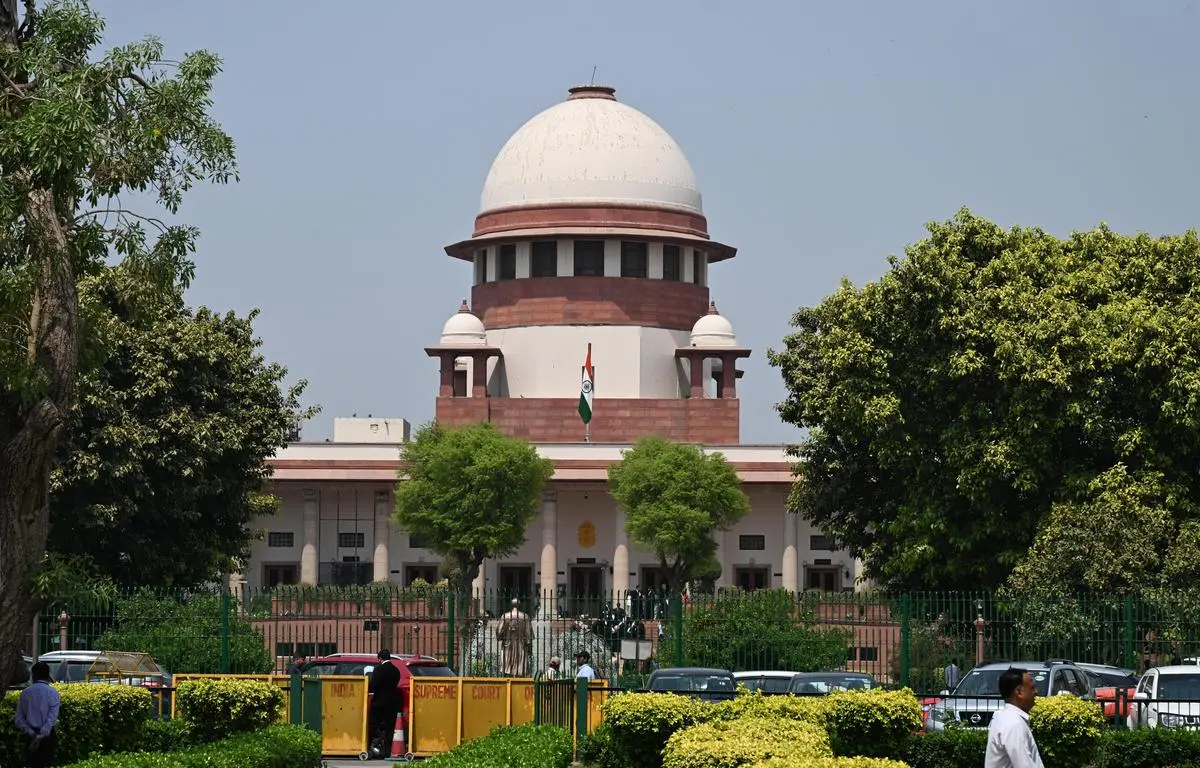
A view of Supreme Court, in New Delhi. The Supreme Court’s recent remarks on environmental litigation, made during a hearing on the Pipavav port expansion in Gujarat, have renewed attention on how the judiciary is responding to challenges against large infrastructure projects and environmental clearances. | Photo Credit: SUSHIL KUMAR VERMA
As a campaigner who has used the courts extensively, Stalin D., director of Vanashakti, told Frontline that it is “unethical, unprofessional and improper” for the Chief Justice to say what he did. The basic tenets of justice say that a person should get a fair trial. If a judge is prejudiced and has a preconceived notion about issues, the proper protocol would be to recuse themselves from hearing such cases, not sit there and pass random remarks, he said.
The judges have no idea of the level of commitment, the risks and dangers and the harassment that environmental activists have gone through. If you take statistics, then 80 per cent of the appeals in the NGT are dismissed in favour of the violators of law, and the 20 per cent that succeed get stayed by the Supreme Court. It is a case where the institution has let down the people, he remarked. “What are we environmentalists doing? Are we doing something that is not within the purview of law? We are only demanding the upholding of the law," he said.
Science and technicalities
Environmental matters are matters of science and technicalities, and if the court finds it is ill-equipped to deal with the technicalities of cases, then let it appoint independent experts, he suggested. Also, there are considerable delays now in judgments. For example, he cited the case filed by his organisation against the proposed dumping ground in Kanjur Marg in Mumbai. It took from 2009 to 2025 to get a favourable order from the Bombay High Court staying the dumping ground, but the special leave petition in the Supreme Court was disposed of by the then CJI Gavai in three minutes. Environmentalists take on considerable risks to fight cases, and some of them are even killed, he added. Instead of honouring their commitment, you cannot make such sweeping statements which do not reflect the seriousness of the issue, he said.
“The biggest challenge is that now you are attacked personally and accused of filing motivated petitions. Can I make a sweeping statement that all judges are corrupt? You cannot generalise. If you know your biases are clouding your judgement, then you should not hear the case. From 2009 to 2026, I am fighting cases, and then the Supreme Court makes fun of us," he rued. This kind of personal attack gradually increased after 2014 when institutions were steadily brought under the control of the government, and the judiciary began to behave like an extension of the executive, he alleged.
Environmentalists said they did not rush to court but first explored other avenues with the executive. Neelam Ahluwalia, Founder Member, People for Aravallis, said, “It has been very shocking to hear the recent remarks of the Chief Justice of India. As citizens working to protect our natural ecosystems, we are only fulfilling our duty under Article 51A (g) of the Indian Constitution. Filing RTIs, writing to the government authorities and approaching the courts to save our carbon sinks, water recharge zones, pollution sinks and wildlife habitats is what we do other than creating awareness in the public regarding ways to reduce our individual and collective environmental footprint.
At a time when India is one of the most vulnerable countries in the world to heat, climate, and water stress, protecting our forests, hills, rivers, water bodies, and biodiversity-rich zones is critical so that we can leave an inhabitable planet for our future generations. Allowing projects at the cost of destroying nature is not progress. This thinking will push our nation towards ecological collapse a lot faster than expected. The CJI, our judiciary, politicians, bureaucrats, and the public—all stakeholders—need to understand this and act accordingly.”
When he heard the CJI’s remarks, Joseph Hoover was devastated. “He made us feel like villains,” he remarked. A former wildlife board member of the Karnataka government and Managing Director of the United Conservation movement to save the forests in the Western Ghats, Hoover said the CJI’s remarks were “demoralising as we put our hearts and minds into what we are doing and we have no agenda. We are only trying to save our precious forests. For a CJI to say this really hurts; we are genuine in our case, we are leaving our family, fighting battles, and the Supreme Court should encourage us by saying we are following the Constitution.”
He said, like others, he was not averse to development or the country becoming a superpower. But this should not come at the cost of forests and food security. “We have less than 20 per cent of good forests when it should be 33 per cent, according to the National Forest Policy. Of that, barely four per cent is for wildlife protection. How much are you going to destroy? Are we going to live on money? It is not that we want to fight the system; we are only keen on protecting forests and doing something good,” he pointed out. No one is stopping development, but in the current climate change crisis with droughts, floods and excessive rain, the human-animal conflict is increasing manifold.
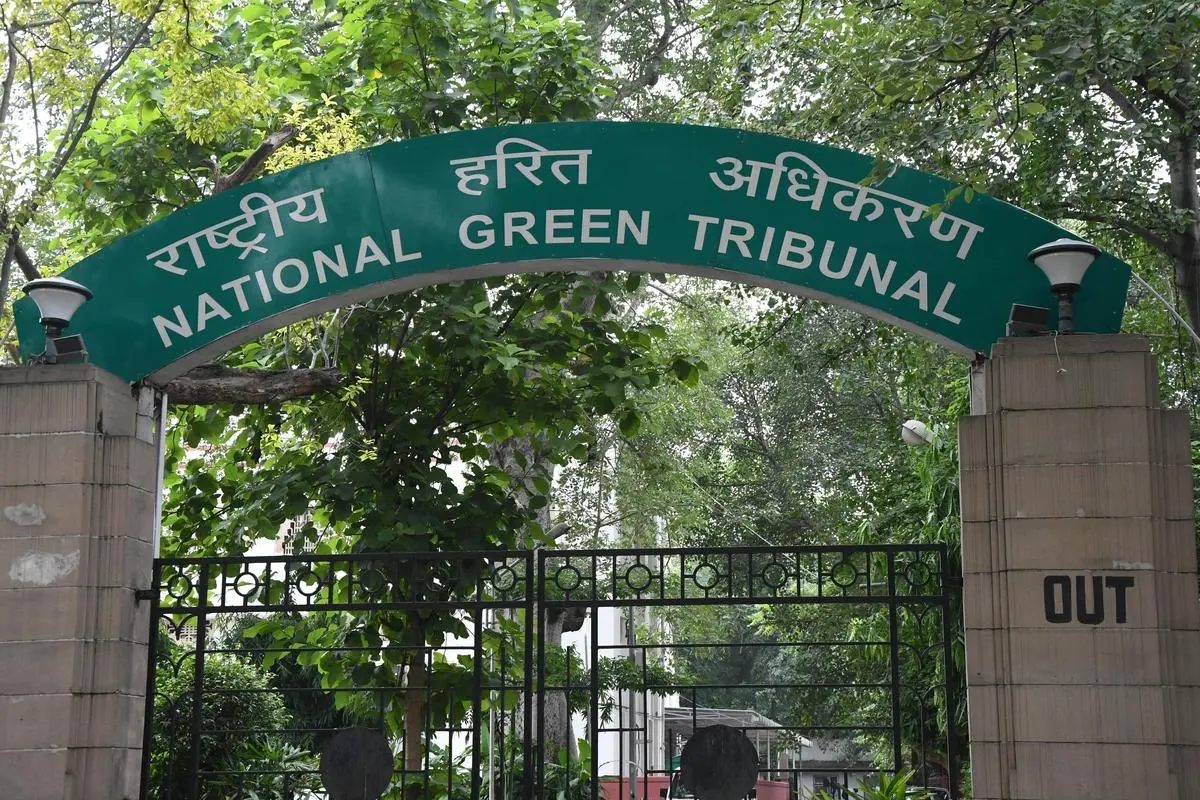
The National Green Tribunal office at Faridkot House, in New Delhi. Environmental groups and activists have raised concerns over delays in environmental adjudication and the increasing dismissal of appeals at the admission stage, even as courts continue to be a key forum for contesting development projects. | Photo Credit: V.V. Krishnan
“If you cannot safeguard the little that’s left, where are we going? I am waiting for the day when there is no water in our taps; only then will people realise how connected things are. We are only saying to protect something for future generations. And then you have the Supreme Court saying we are not interested in development and making statements as if we have nothing else to do in life,” he added. Such an attitude can prevent future generations from taking up real causes, he feared.
Over the years, the Supreme Court has delivered path-breaking judgements on conservation, and it also formed the Central Empowered Committee in 2002 to assist the court on environment and forest matters. Environmentalists have also observed a change in the courts’ approach, and Alvares said over ten years, courts are finding themselves overwhelmed by the number of PILs and cases. There is definitely a change in the way the judiciary looks at PILs from the time some decades ago when they welcomed PILs and tried to further their scope.
EIA’s role
The Pipavav port expansion case rested on challenging the approval of the port based on the EIA, among other factors, which has been a controversial tool for securing project clearance. The EIA has to be made public before the hearings, which are mandatory for large projects, but for some time, neither the EIA nor the public hearings have been conducted with any level of integrity. With over half the country living in rural areas and subsisting on agriculture, land and livelihoods are intricately connected. When large projects are thrust into their midst, often without any consent or consultation, these communities are thrown into disarray, and the activism and support that has ensured that they are represented and can make their voices heard is also under attack.
Ports, highways, mines, dams and other projects continue to threaten the livelihoods of hundreds of communities. Protest and contention have a place in a democracy, and who is not an environmentalist in these times of global warming? However, there is a move to defame first journalists by labelling them as “presstitutes” and then activists as “Urban Naxals” and now environmentalists as some sort of evil cabal which is undermining “development”. The Supreme Court’s observations come at a precarious time for free speech and rights. The apex court has set so many remarkable precedents for environmental conservation and oversight for projects, and it remains an avenue for justice when all else has failed. While many of the orders passed by it are slowly being undermined, the citizens of this country still repose faith in this institution for justice and hope that it will continue to deliver.
Meena Menon, PhD, University of Leeds, is an independent journalist, researcher and author.
Also Read | Ken-Betwa’s first flood may arrive before the dam fills
Also Read | Mumbai’s Kolis vs Mumbai’s ‘development’