


Actor and director Revathy loves flying from Kochi International Airport — and she flies for work at least twice a month. “It is designed in such a way that it has a single floor for most processes and you go through so easily. Even the pick-up area for cabs is organised so well,” she says. It handles 180-225 flights per day as compared to bigger airports like Delhi and Bengaluru, which handle 800 to 1,450, respectively. “Goa’s airport was also comfortable when I flew from there with my parents, who both used wheelchairs. But Bengaluru’s T2, while beautiful, is too long a walk!”

Revathy
For millions of Indians who choose to fly, airport design is crucial. It makes all the difference between a pleasant travel experience and one filled with stress, serpentine queues and dimly lit interiors. Airport architecture and design are no longer about just efficiency. Today, globally, the focus is on modernising terminals, enhancing sustainability, and creating intuitive design to improve passenger experience. And India is catching up, even while collapsed roofs and glass panels shattering continue to make headlines.

“Terminal 2 in Mumbai is well maintained and easy to get through. Also, the staff are attentive. While travelling from there last year, I had not booked a wheelchair. But they noticed my gait and made it a point to request one for me. It made the whole journey so much smoother, and a welcome reminder how these positive experiences leave a lasting impression.”Yvonne RasquinhaSenior traveller
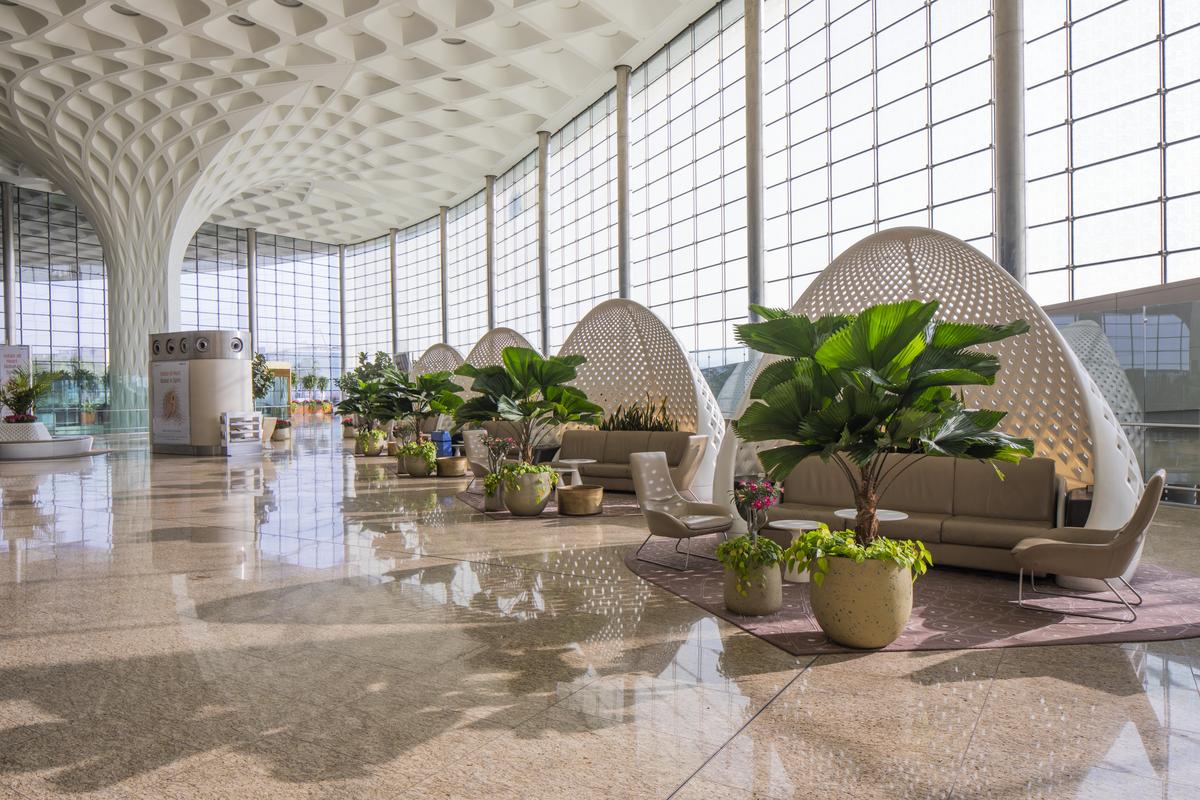
Mumbai T2
Indian airports, in fact, are having a moment — and not just on social media, where newer builds are attracting likes, views and kudos for their biophilic design, craft, and sustainability-forward expressions. This month, the inauguration of the Navi Mumbai International Airport signalled a step forward in hi-tech airport design rooted in Indian tradition and exemplary performance.
Designed by Zaha Hadid Architects, its lotus-inspired geometry and dual column system are striking. The lotus takes the form of 12 sculptural columns with anchors that rise like unfurling petals, while 17 mega columns carry the weight of the concentric petal-like roof canopies. Each roof segment is modelled to manage daylight, wind pressure, and monsoon drainage. Inside, among other design interventions, the check-in hall uses light architecture — such as hollow columns that act as vertical light wells, drawing sunlight deep into the passenger halls — to lend an airiness to the space.
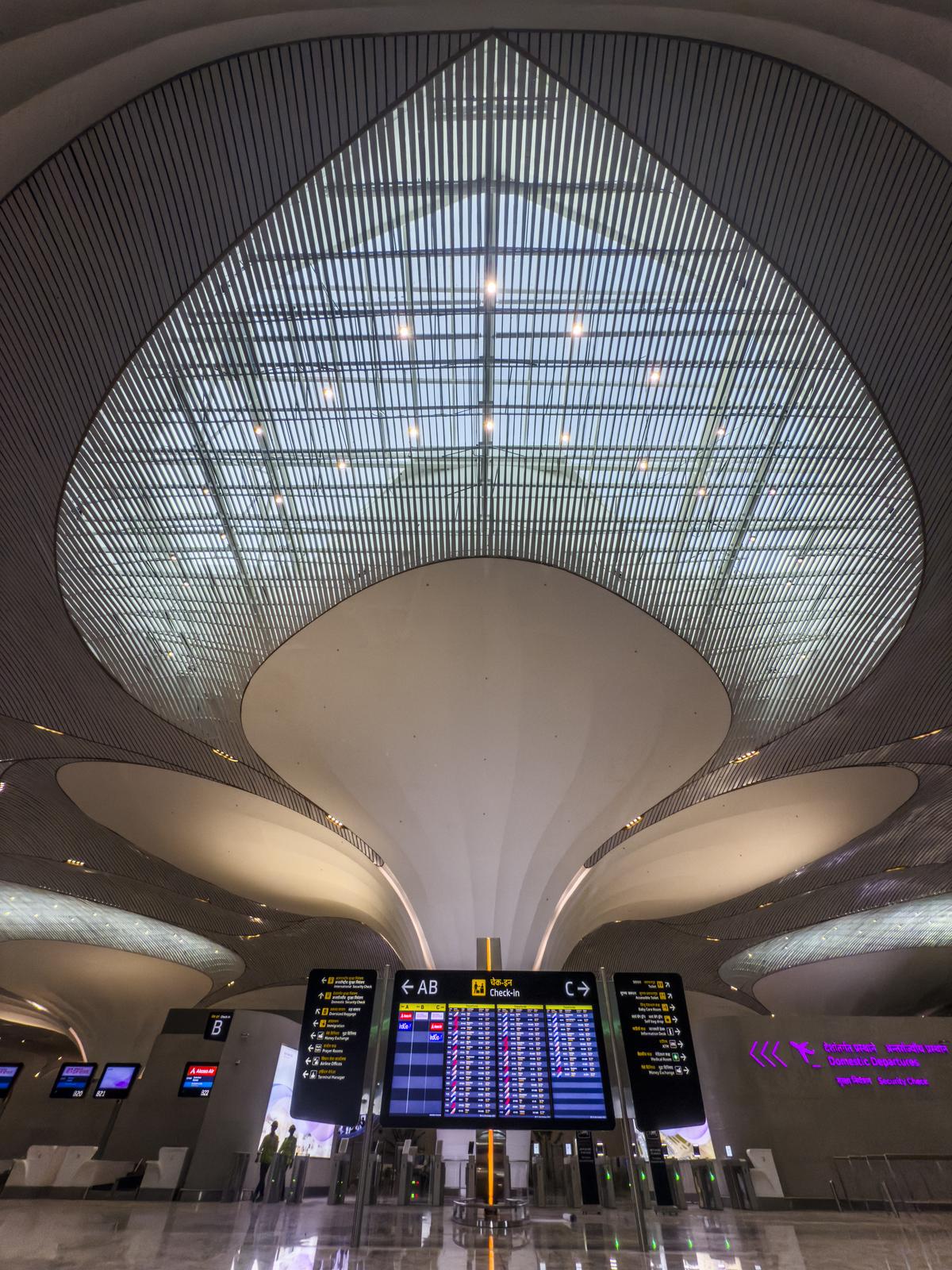
Navi Mumbai International Airport’s lotus-inspired geometry
Last month, at the International Architecture Awards in Athens, Guwahati International Airport’s Terminal 2 was feted for its cultural storytelling. Inspired by Assam’s role as the ‘gateway to the Northeast’, it draws on the resilience of local bamboo and the elegance of its orchids for its design. “The kopou phool or foxtail orchid is a symbol of beauty and celebration, and Assamese women wear it during the Bihu festival. In the terminal’s design, this elegance is paired with the versatility of bamboo,” explains Nuru Karim, principal architect of Mumbai-based Nudes Architecture, who designed the soon-to-be-inaugurated terminal.

Nuru Karim
Karim roped in local craftspeople to work on the bamboo structures, and made sure motifs from the region found pride of place — from the traditional jaapi (headgear fashioned from the leaves of palm trees) featured across the terminal’s decor, to the wall panelling that integrates the gamocha pattern with its lovely interplay of red and white. Another highlight: a ‘sky forest’. “The landscape design features tropical and subtropical plants native to Assam, alongside bamboo groves and flowering shrubs,” shares Karim.
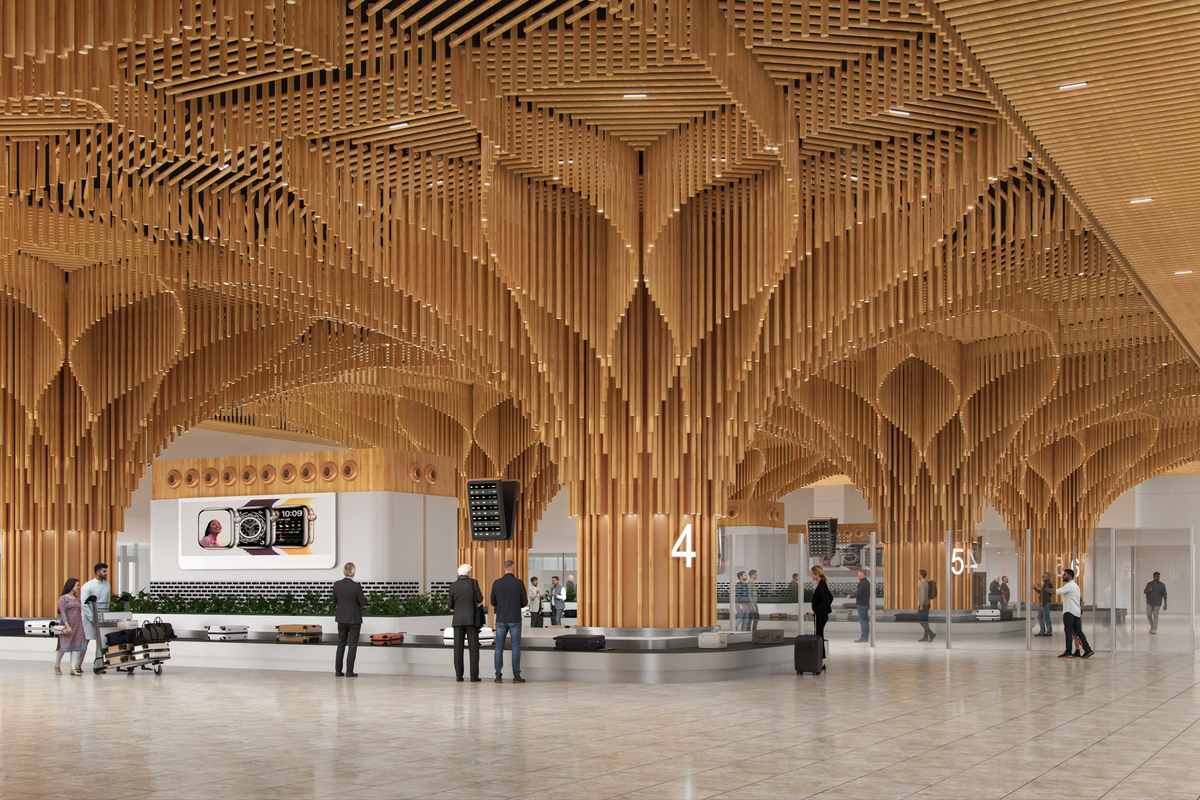
Guwahati International Airport’s Terminal 2
But before it all, there was Bengaluru’s Kempegowda International Airport Terminal 2, which made headlines in 2023 when it bagged the prestigious Prix Versailles Special Prize for an Interior for bringing the ‘garden’ into the airport terminal. From bamboo bells suspended from high ceilings dripping with local plants, to lantana elephants and even an indoor waterfall and cactus garden, the design was carefully curated to reflect conversations with locals, says Peter Lefkovits, principal architect at Skidmore, Owings and Merrill (SOM). “We spoke with people who grew up in the city and reminisced about tree-lined streets and a certain nostalgic longing for that era. Our aspiration for the terminal was to integrate sustainability using locally sourced materials — ivory brown granite, umber red bricks, and steel, and integrate local art forms.” Between the gate concourses and the terminal building, the “forest belt” spans a 90-metre-wide stretch of planted landscape as passengers cross open-air bridges.
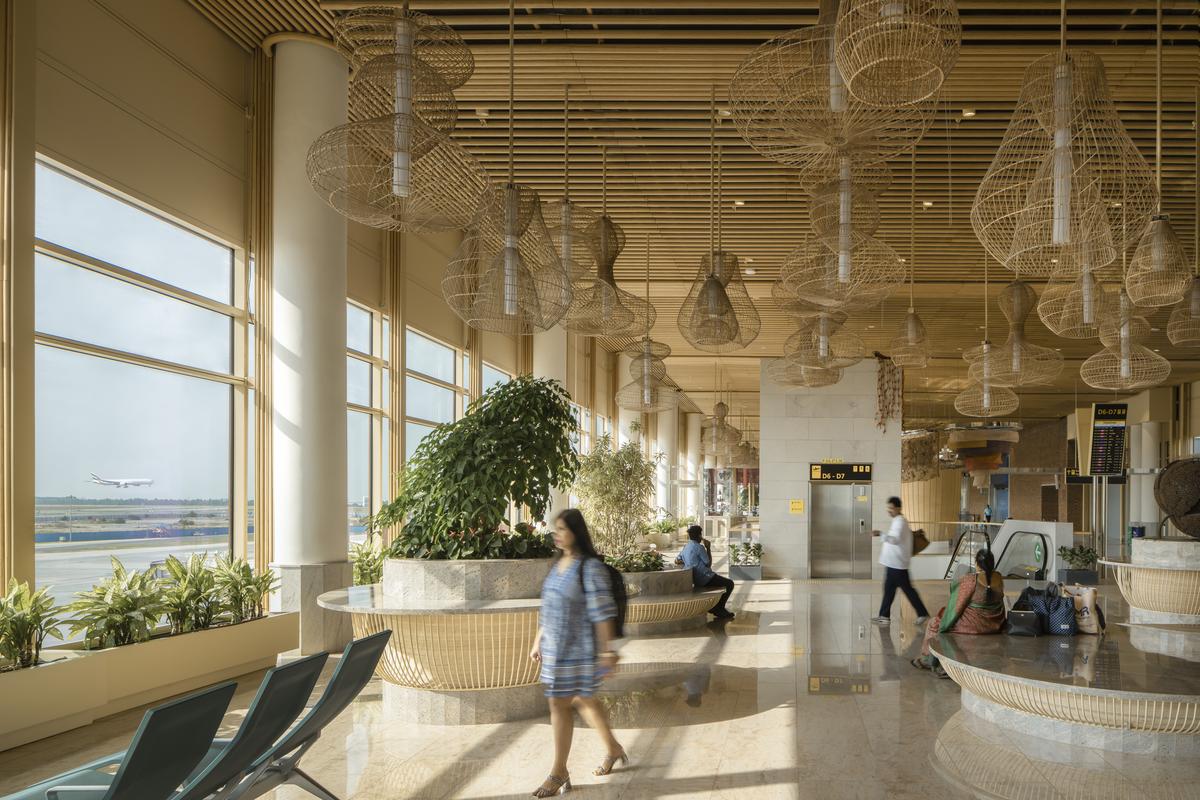
Kempegowda International Airport Terminal 2 | Photo Credit: Ekansh Goel
“Sometimes, beauty gets in the way of functionality. I found Bengaluru’s T1 has a cleaner Swiss design celebrating natural lighting, while T2 is more bejewelled but takes very long to navigate. T1 is also easier to manoeuvre from entrance to gate.”Chitra VishwanathArchitect
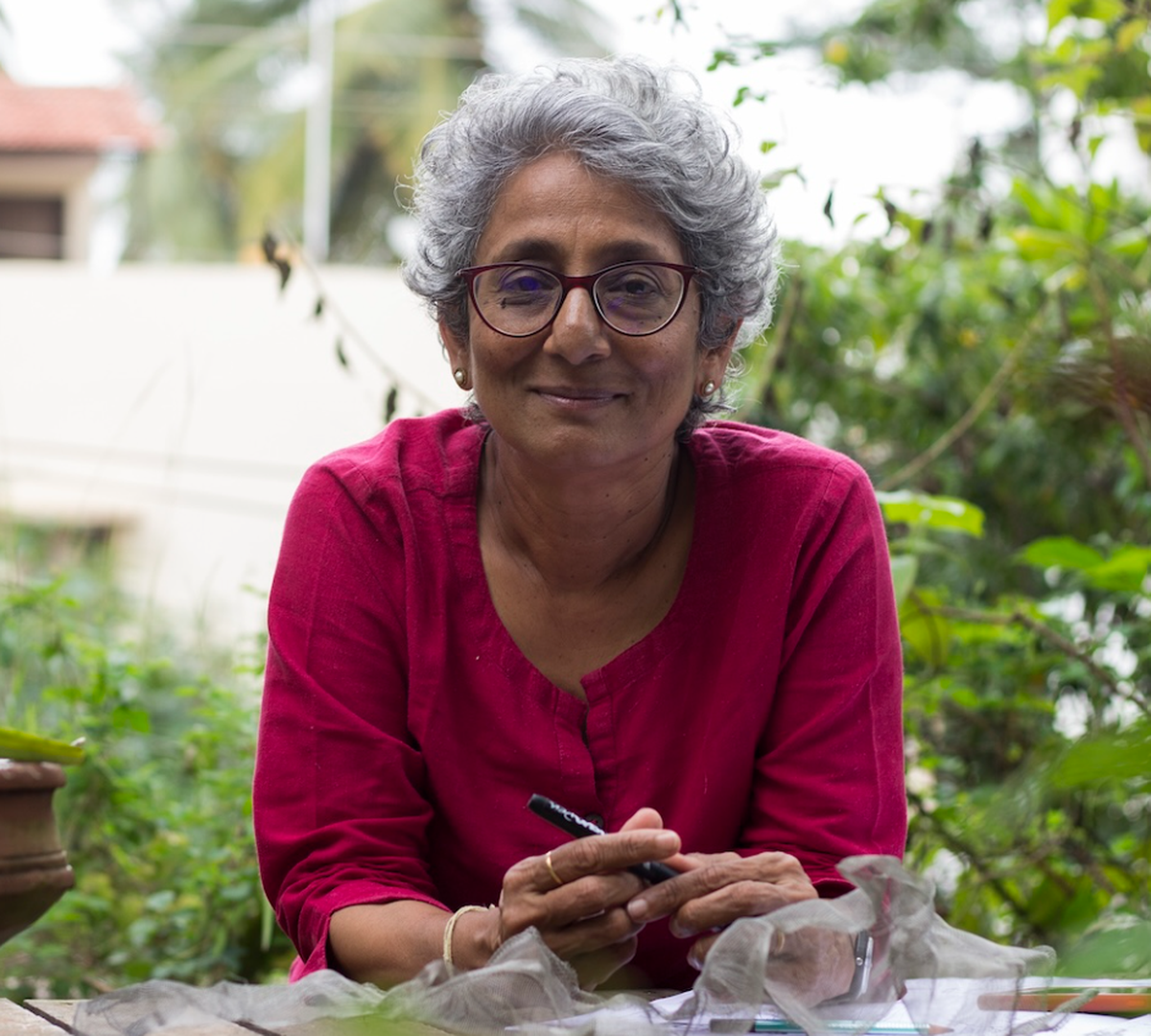
Chitra Vishwanath
Once upon a time, airports were purely functional, focused on operations and with limited design thinking. Delhi-based architect Gautam Bhatia recalls when the airport was “a derelict warehouse of a building that came alive only when a plane arrived. Even then, both the facilities and the staff were skeletal and essential to basic operations. Baggage was handled manually, passengers never frisked”. Today, however, with India’s air traffic exceeding 350 million in 2024, the country has the third-largest aviation market globally. To meet this robust growth, airport architecture cannot be just about aesthetics.
Delhiite Divya Prabhu, mother to two toddlers, believes airports could make travel so much easier. “If only they had clean, sanitised strollers available at entry points, instead of making us walk halfway across,” she says. “We have travelled via the airports in New Delhi, Goa and Mumbai, and we have missed simple things like clean bathrooms with diaper changing tables, and play areas.”
This unique programme helps travellers with hidden disabilities (low vision, autism, dementia, hearing loss) receive special assistance. Started at the U.K.’s Gatwick Airport in 2016, the programme is available at the Rajiv Gandhi International Airport in Hyderabad, and the Kempegowda International Airport in Bengaluru. Typically, a counter at the entrance will hand out a sunflower motif lanyard or button, and all wearers are then assisted to a separate gate, following protocols but with assistance.
If you are a senior, then wheelchair access as you enter the airport and shorter distances to navigate are more important, says 76-year-old Usha Varma. “I usually fly out of Bengaluru and it’s a beautiful space, but we need immediate wheelchair access to travel through such a large terminal, especially if you have a carry-on bag in tow,” says Varma. Her pick of best airports are Abu Dhabi and Japan. “The staff is kind and they are proactive with wheelchairs.”

Usha Varma (left)
For Bengaluru-based Vinita Chaitanya, travel is a work necessity. Constantly on the move, airports feature frequently in the interior stylist and designer’s day-to-day, and she is vocal about them, even taking to Instagram Stories to document the best and the worst. The new lounge at Bengaluru’s T2 she deems “well designed, with plenty of space to relax while you wait”, but points out that security lines could be better managed. “For every 10 security lines, there’s only one for women. That needs to change,” she states. “We need to space out elevators for those with wheelchairs and have more than one escalator leading to the baggage carousels. That space needs to be better managed.”

Vinita Chaitanya
Newer projects are factoring in aircraft size, air traffic, security requirements, and design features such as biophilic interiors and intuitive wayfinding — using natural light and curved pathways — to balance passenger experience with the functional needs of the airport. One of the areas they are succeeding in is embracing a sense of place by honouring indigenous materials and craftsmanship, and shaping guest experience through regionally inspired dining and art installations by local artists. At Kempegowda, for example, SOM used materials such as bamboo, brick, and natural stone, a combination that is rarely seen in airports. In Guwahati, Karim used bamboo extensively “to lower the carbon footprint, and green corridors to improve the microclimate”. At Kochi, Revathy says the wooden furniture immediately connects her to the State. “It’s a nice touch, and I don’t know how they maintain them!”
Function and aesthetics cannot be all that an airport offers. The best terminal designs also use empathy as a tool to cater to travellers’ needs, abilities, and emotions. Ligi Sunil and her husband Sunil Baby used to travel regularly with their son, Jaiden, who had cerebral palsy. When he passed away in 2023 at the age of 18, the couple founded 18NotOut in Bengaluru in his memory. It assists families in planning accessible travel through airports, stations and hotels, tailoring itineraries to people with special needs. “I would rate T2 at the Bengaluru Airport the best for people with special needs and disabilities, and that’s gender and age agnostic. Post booking, KIAL has a WhatsApp group that guides them to the airport entrance where they are greeted by a staff member who stays with them through the journey,” says Baby. “In terms of training, the airport has far more nuance in the way they approach families and children, and how they lead people to the room for those with neurodivergence. However, we need more thought into designing food courts that are open to wheelchairs at the table, more handholding around the baggage carousel, and the use of the aerobridge with passengers on wheelchairs.”
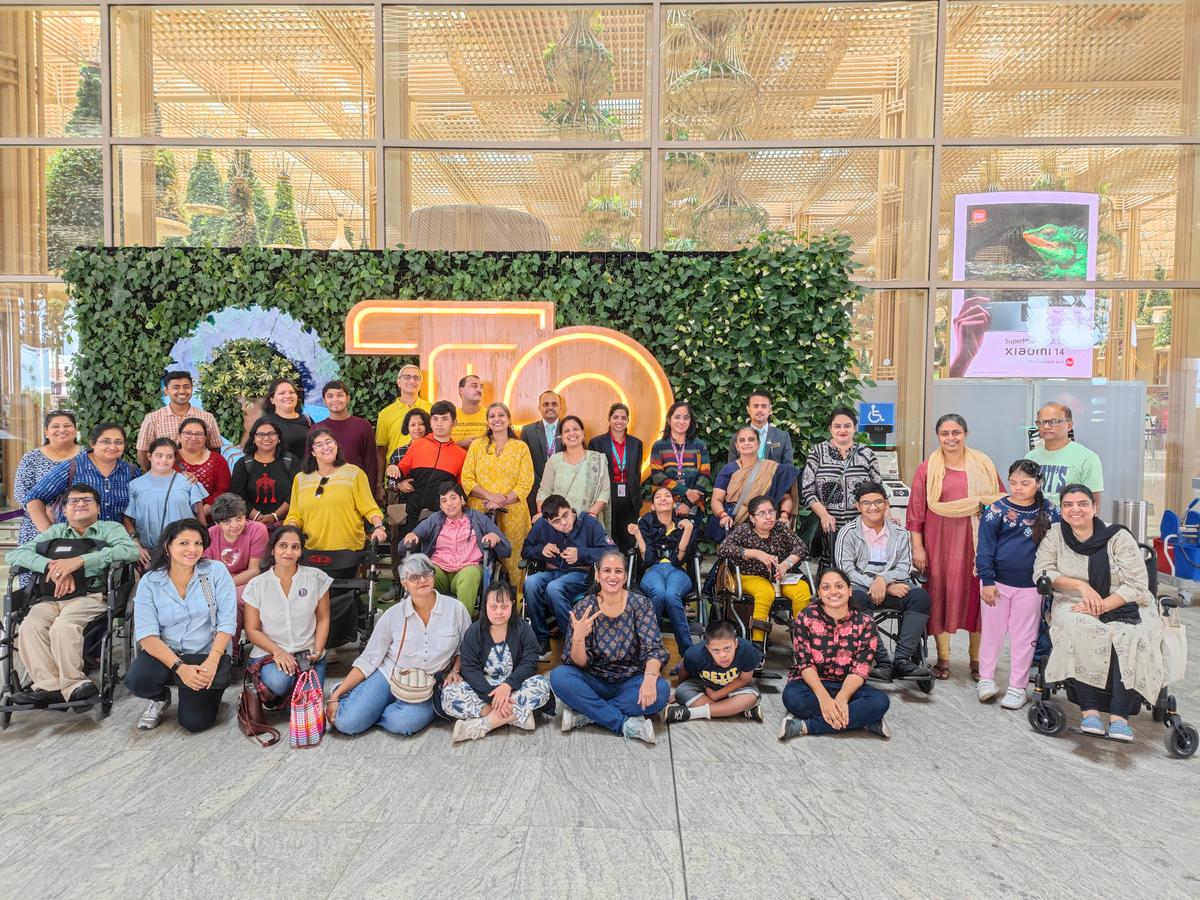
18NotOut in Bengaluru
Vinaya Chinnappa, CEO of social enterprise Incluzza, a part of EnAble India group (which provides a wide range of disability inclusion services to organisations), says that being someone who travels with prosthetic limbs is tough, and certain provisions can make travel more inclusive. “Travel must go beyond compliance, from the physical infrastructure to the staff who need to be sensitised to act with empathy while dealing with the needs of passengers. Earlier, people had to remove prostheses to go through security, but now that protocol has changed. That’s a step in the right direction.” Incluzza helped design the Sensory Room at the Bengaluru airport, the first of its kind in the country, to cater to a spectrum of people who are not neurotypical. Chinnappa explains, “Many passengers need assistance to remain calm and we offer low sensory inputs, softer sounds and weighted blankets. We have received positive responses on social media, and other airports have reached out to explore such initiatives.”
India has 117 domestic and 33 international airports (according to the Ministry of Civil Aviation). With the numbers only set to grow, it is imperative to have a deep understanding of long-term needs, with built-in flexibility to absorb future technology. “All gates at T2 in Bengaluru are equipped with ‘swing’ capacity, or the flexibility to handle different wide-body and narrow-body aircraft,” explains Lefkovits. “This plan allows the terminal to thrive as an international travel destination as it increases annual passenger capacity.” Many airport designers are taking a modular approach too, mixing agent desks and fully automated stations. This ‘plug and play’ approach means as the technology changes, airports can swap out those elements without having to reconfigure the space.
“Walking through Bengaluru T2 feels like the holiday begins the moment you step through the doors. It is beautiful, vibrant, and alive with greenery; I love the cane and bamboo, which give it this warm, earthy charm. The only missing thing is complimentary buggies for seniors who don’t necessarily depend on wheelchairs, but find it difficult to walk long distances. That simple gesture would make an already wonderful experience absolutely perfect.”Dipti Varma NarainFounder, The Silver Surfers Club

Dipti Varma Narain
The integration of digital systems, IoT, and automation is also making travel more seamless and efficient. But while technology such as DigiYatra allows for time efficiency, there are other factors that need attention in several Indian airports. For instance, as the gateways to a country, attention to well-lit spaces at the first point of entry is crucial. “At most airports, the immigration line can be a forbidding, dimly lit area instead of being bright, airy and welcoming. It makes the whole process intimidating,” says Mumbai-based Abha Narain Lambah, the conservation architect behind the revival of the David Sassoon Library and Reading Room, and a frequent traveller with an expectedly critical eye for design. “Having a certain amount of natural lighting solves this, and intuitive wayfinding also helps people navigate the spaces easily. Bengaluru and Mumbai T2 are good examples for this, as there’s ample natural light.”

Abha Narain Lambah
Chaitanya has a bone to pick about international transfers. “You often have to leave the airport and re-enter with your bag. At Delhi, I had to get my bags and transfer them to a second luggage belt, all located in different areas. It’s such an inconvenience at 3 a.m. That can definitely be streamlined.” The interior designer adds that the signs at the Dubai airport to specify queue wait times are helpful, and could be a lesson for us. “We can also balance technology with personnel; train them to direct passengers well [seniors or those with visible or invisible disabilities]. And more medical facilities spread over terminals is also a good idea.”
In August, two toy poodle therapy dogs were recruited by Hyderabad’s Rajiv Gandhi International Airport. Since then, the dogs, accompanied by trained handlers, interact with travellers for four to six hours each day — helping calm and comfort them — at designated areas after the security check point, both in the domestic and international departure areas.
While there are lounges aplenty, many travellers ask that architects look into creating smaller open areas and more free play areas. Delhi architect Bhatia feels airports should incorporate a rooftop open garden lounge that taps into the local milieu and weather. “We can opt for open areas where security protocols can still be maintained. Jakarta airport is interesting in that respect; they have seasonal plants over the walking paths,” he says. Prabhu says that among all the fancy stores and restaurants, there should be “a small kiosk for parents where you can find wipes, and other travel essentials for young children. Places to engage kids are also so important”.
“An important aspect is to design pod hotels and rooms, like they have in Japan, for airports that host a lot of layovers. Instead, we are stuck for hours, without room to stretch and relax.”Gautam BhatiaArchitect
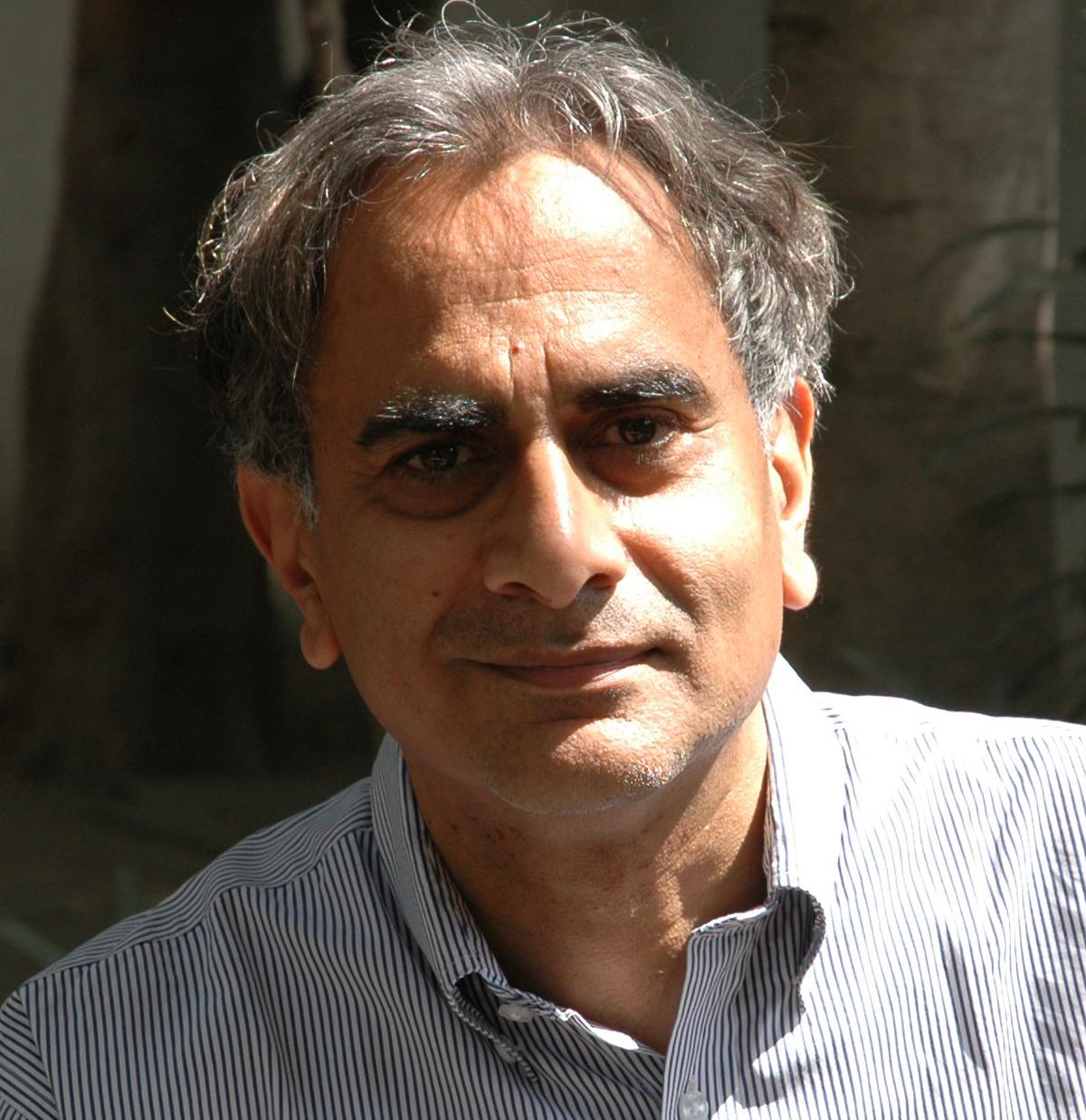
Gautam Bhatia
At older airports, a lot of this can be addressed by renovation or retrofitting, provided that their structural integrity remains sound and aligns with long-term plans. “Retrofitting helps conserve resources, preserve heritage, and modernise existing systems,” says Karim of Nudes Architecture. “However, when structural limitations or rising passenger demand exceed safe and efficient capacity, a complete rebuild becomes the more practical and future-ready solution.”
As per the International Air Transport Association, the number of operational airports in India has grown from 74 to 162 in just under a decade, with plans for expansion to 350 by 2047. Meanwhile, the global airport construction market is projected to reach $1.8 trillion by 2030, according to February’s ‘Airport Construction – Global Strategic Business Report’ from Research and Markets. All this means that trends will change constantly — think AI, robotics for passengers, and net-zero terminal buildings (aviation contributes to 2%-3% of global greenhouse gas emissions).
“Internationally, Helsinki is my favorite. It is the quietest airport I’ve been to; it has great interactive digital visuals showing the change of seasons and grounds you to the space. In India, my favourite is Bengaluru’s Terminal 2. From the choice of material with red brick to lots of natural light, it is beautiful and peaceful. Mumbai does art so well, with a great array of work on display. I think we are doing well with clean air, well-managed spaces, and better bathrooms in in Indian airports. But going forward, we need better and more quiet spaces — if you want to take a call or nap, you need acoustically-sealed spaces.”Iram SultanInterior designer

Iram Sultan
According to S.R. Sikka, principal architect of New Dehli-based Sikka Associate Architects, which has designed 30 Indian terminals over four decades, “Sustainability and climate resilience must be embedded at the core of airport design. It begins with climate-responsive planning: optimising orientation, daylighting, shading, and natural ventilation to reduce energy demand. Equally important is on-site renewable energy generation, and adaptive design strategies that build resilience — through stormwater management, flexible infrastructure, and materials suited to changing climatic conditions.”
From mid-2025, the Delhi International Airport Limited has introduced Del Vibes across the Indira Gandhi International Airport. It transforms the airport terminals into a concert venue, with music and dance performances, and workshops. While the schedule is subject to change, travellers can expect Bengali Fusion by the Pancham Group (October), ghazals by Sursangam Group (November), and Konkani music by Nacho Group (December).
Karim echoes this, adding that in the future, “terminals could be built with smart materials that are climate resilient, respond to passengers with haptic technology, and even create their own clean energy”. Technology would play a big part, too. “With AI managing flows, waiting areas may disappear, and the terminal itself will act like a sentient environment — spaces that can sense people, understand moods, and adjust light, sound, or air to improve comfort. By mid-century, the airport may no longer feel like a machine for travel, but more like a living organism — part transport hub, part public square, part power plant — reshaping how we travel, interact, and belong,” he concludes.
The freelance writer is based in Chennai.
此内容由惯性聚合(RSS阅读器)自动聚合整理,仅供阅读参考。 原文来自 — 版权归原作者所有。