





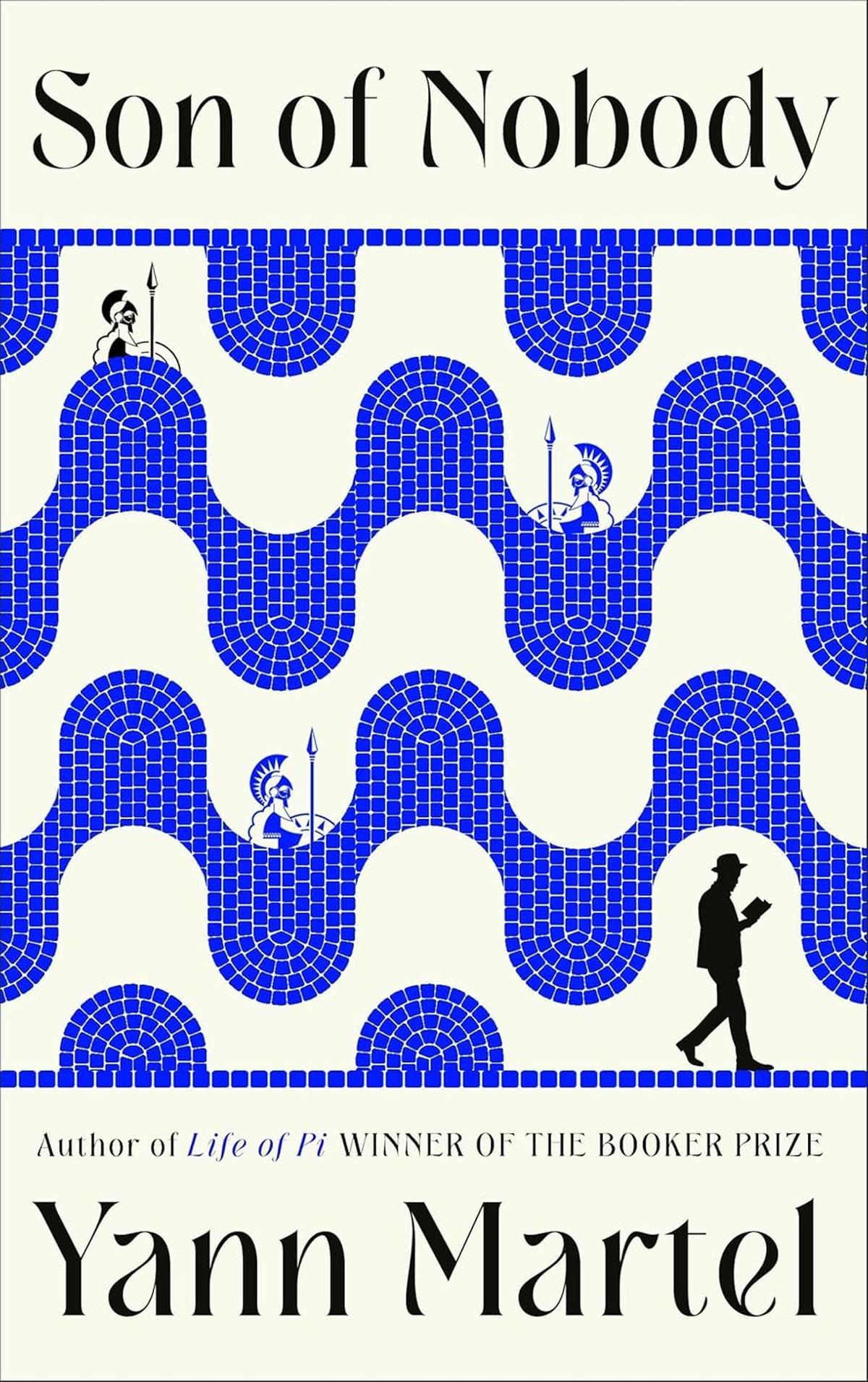
In his first novel in a decade, Canadian author Yann Martel — best known for the 2002 Booker Prize-winning Life of Pi — explores the animus of the Trojan War through a fragile marriage. But Son of Nobody (Canongate) is also much more than that. Martel narrates the two tales and the bridges between them as a translation of a fictitious new myth — “The Psoad” — and its footnotes. The result is an inventive meditation on myth, memory and the stories people tell to survive disappointment. Excerpts from an interview:

 In Life of Pi, the revelation that Pi’s story might be a fantasy arrives as a shock. In Son of Nobody, the hints that Harlow, the protagonist, may be projecting “The Psoad” accumulate from early on. Did you want the reader to suspect Harlow sooner than they suspected Pi?
 In Life of Pi, I wanted to point out in stark terms that life can be read in radically different ways. In this case, either in a flatly possible way [the story without animals], or in a less plausible, more satisfyingly colourful way [but just as harrowing — the story with animals]. I wanted to present that choice only at the end, when all the evidence, so to speak, was presented. In Son of Nobody, it isn’t a question of choice. “The Psoad”, the lost Trojan War epic at the centre of the novel, isn’t a replacement for The Iliad; it’s rather a supplement. The two stories aren’t in competition, as they are in Life of Pi. As I point out in the novel, The Iliad is a myth, with no historical facts to back it. Throughout the novel, I remind the reader of this. The intent is not to diminish Homer but rather to point out that The Iliad’s underpinnings are no more solid than those of “The Psoad”. Both stories are myths. That being so, I didn’t want to claim in the novel that Harlow’s discovery rested on a solid archaeological find, because that’s beside the point. A newfangled story is no less true [or false] than an old myth.
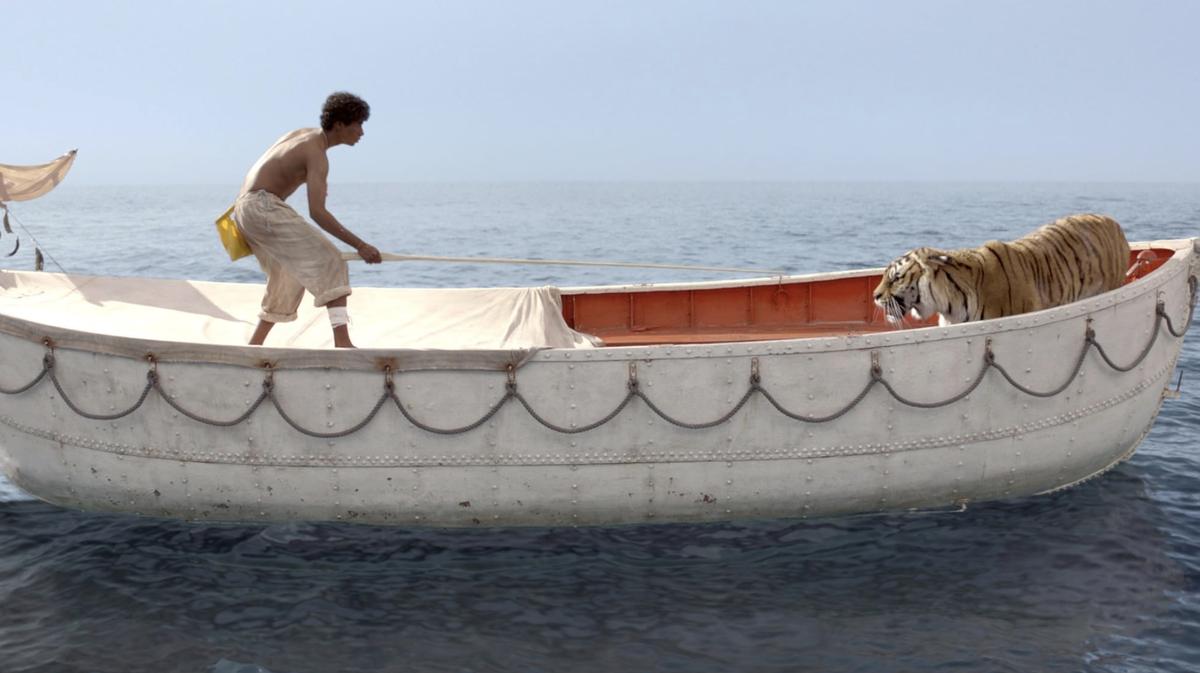
A still from the 2012 movie adaptation of Yann Martel’s ‘Life of Pi’.
Michael Greenstein noticed in The Seaboard Review that you might have named the soldier Psoas, author of “The Psoad” in your book, after Fernando Pessoa, and Pessoa was a poet of invented selves who could say what the author couldn’t. What is it that the ancient soldier can bear that Harlow can’t?
What a lovely near-coincidence, what a proof that a reader co-creates a text! I think neither Psoas nor Harlow Donne can bear their fates, to have all their dreams wrecked, to have everything come to nothing. The only thing left hanging is destination. Psoas ends up a living man in Hell. Where will Harlow end up? Perhaps it is that Psoas has arrived where Harlow is heading — unless Harlow can stir himself and move forward on that other foot of Western consciousness, its other foundational myth, the story of Jesus. That is how the West has walked, one foot Troy/wrath, the other foot Jesus/love.

You’ve said that you wanted to give the footnote a starring role. But footnotes are by definition subordinate and there’s an inherent tension between that lowly position and the emotional weight Harlow’s commentary eventually carries. Is there a reason you’ve literally pushed the commoner’s voice to the bottom?
History and institutions loom over us, can loom over us, all of them telling us that we are small and of little consequence — but does that diminish the emotional weight each of us carries within ourselves? And is it not so that history is made, institutions can stand, individuals can dominate, only through the collective will, understanding and consent of their constituent parts? The big is made up of the small. To give a starring role to footnotes and to Psoas of Midea, the son of nobody, is to give a starring role to the essential ordinary citizen, in life as in print. Your plaint of a commoner’s voice being “pushed… to the bottom” refers to older texts, older times.
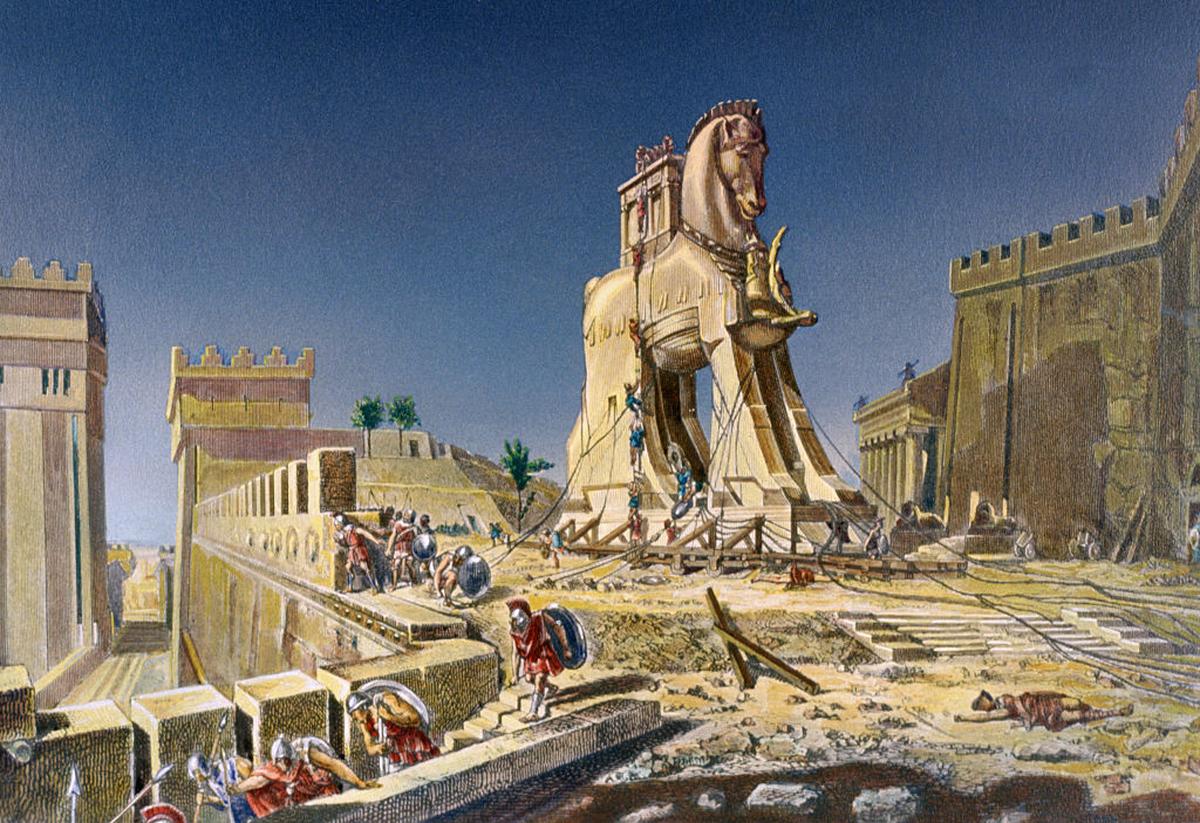
An engraving depicting the Trojan horse by French painter Henri-Paul Motte. | Photo Credit: Getty Images
Son of Nobody asks the breakdown of a marriage to bear the weight of the Trojan War. When you decided to mirror a decade-long siege in a couple falling apart, how did you think about the risk that the domestic would trivialise the epic?
What would be the point of mirroring an old war with a modern war? That might be of interest to historians of war: the evolution of military technology, changes in field tactics, the study of strategic triumphs and failures, and so on. But few of us today experience war first-hand, so to dwell on two wars would exclude the life experience of most readers. They would just read from the outside. Better to parallel something they might actually know, and a relationship falling apart, a couple at war with itself, that is something most people know, or can intuit. Anyway, whether you’re in hell because you’ve been to war literally — against the Trojans — or metaphorically — against your wife or husband — you’re in hell. And you can’t really trivialise a myth; you can only fail to make it your own.
What interested you about a protagonist who responds to catastrophic personal failure by building or claiming to have found an alternative epic?
Because what else is he supposed to do? To fail and then to accept failure is truly to fail. Better to fail and then to try to build. Or do you mean Harlow delaying his return to Canada after the tragedy that hits him? In that case, I wanted him to make a decision that seemed necessary to him but foolish, a gross blunder, just as Agamemnon goes off to Troy after sacrificing his daughter Iphigenia. How could he do that? But he had to, because otherwise he would have missed his fate. It’s a question the Ancient Greeks asked at Troy, and Harlow at Oxford: Is my work worth it? Will my sacrifice gain me that immortality I seek?
mukunth.v@thehindu.co.in