







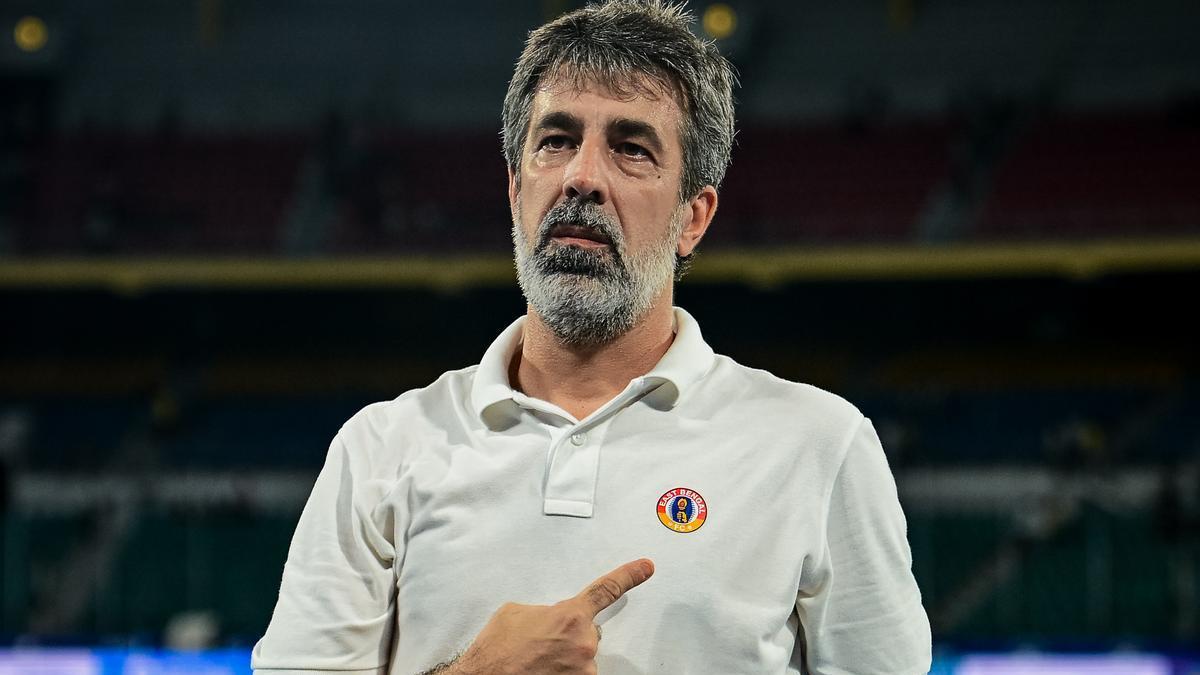
After guiding East Bengal to ISL success, Oscar Bruzon is set to leave this summer. | Photo Credit: East Bengal

After guiding East Bengal to ISL success, Oscar Bruzon is set to leave this summer. | Photo Credit: East Bengal
After guiding Emami East Bengal FC to a landmark Indian Super League (ISL) title, head coach Oscar Bruzon gave out a measured and analytical analysis while reflecting on his side’s remarkable campaign.
Speaking after the championship-winning run that ended a wait of 22 years for a top division title, Bruzon downplayed heightened emotional outbursts and instead highlighted consistency, tactical adaptability and collective belief as the key factors of East Bengal’s success.
While acknowledging the significance of the derby against Mohun Bagan Super Giant, he insisted the triumph should be viewed in the wider context of overcoming all the top sides in Indian football. The coach also spoke at length about his footballing philosophy, the transformation within the squad and his assessment of the current state and future potential of the Indian national team.
How do you assess East Bengal’s success this season?
I see this achievement with a sense of normality, even though I understand how important it is for the club and the supporters after so many years. Obviously, there is emotion because East Bengal has finally achieved glory again in the form of a major title, but football teaches you to remain balanced.
This is a profession where you are judged every week based on results. Because of that, the most important thing is to control your emotions and not get carried away by either success or disappointment.
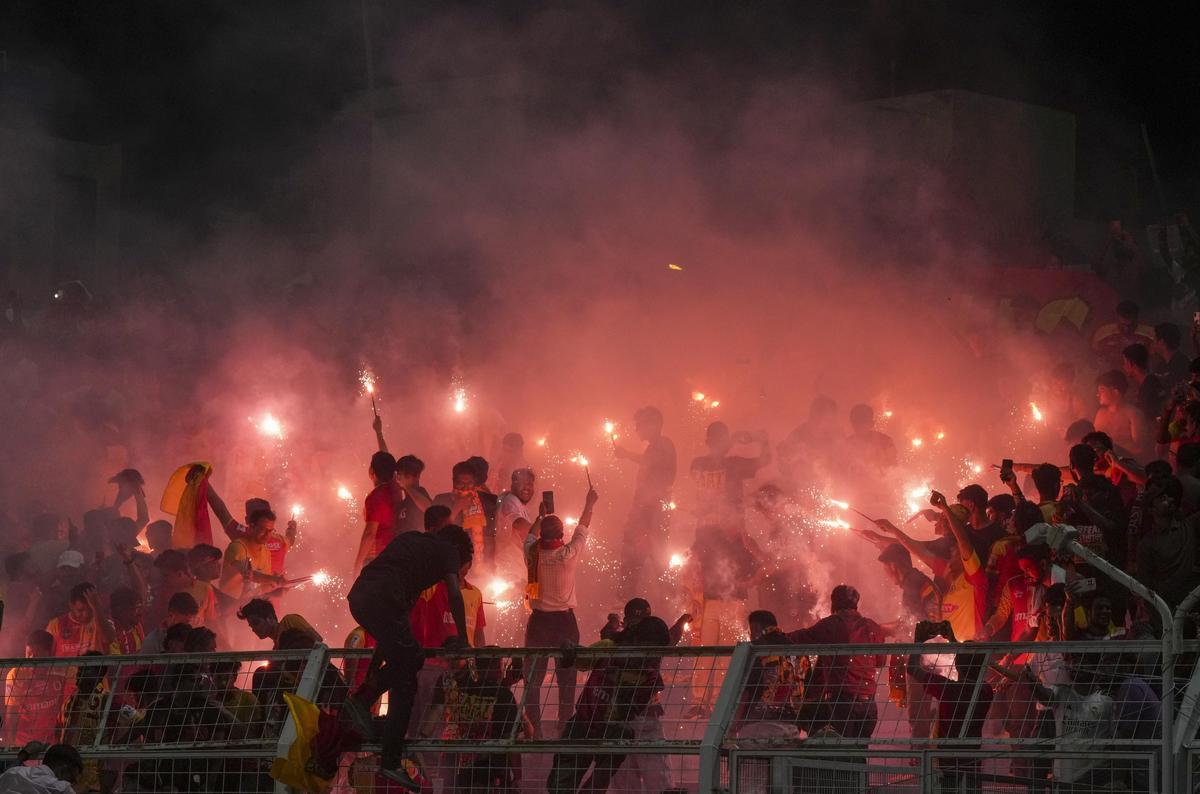
East Bengal supporters celebrate with flares after the club ended a 22-year wait to win a top division league title. | Photo Credit: PTI
East Bengal supporters celebrate with flares after the club ended a 22-year wait to win a top division league title. | Photo Credit: PTI
We were dreaming of this achievement and working towards it throughout the season, but now I think the emotions should belong mainly to the supporters and fans, who waited so long for this moment.
You joined midway through last season. What were the major tactical and technical changes you introduced?
There were many adjustments. Tactically, we wanted to move away from rigid structures and fixed positions. In Indian football, players are often assigned very static roles, but modern football requires adaptability and fluidity.
We worked extensively on dynamic football - positional rotations, flexible formations and adapting according to the opponent and the specific moments within a match. Sometimes you need to dominate possession; other times you need to react quickly and play more directly. The players gradually understood this philosophy and became more comfortable with it.
READ | Red-and-Gold reborn: How East Bengal became ISL champion under coach Oscar Bruzon
But beyond tactics, the biggest challenge was building a collective mentality. When I first arrived, I felt the team lacked unity and a clear identity. There was not enough belief that we could dominate matches against the best clubs in the country.
Slowly, we developed that confidence. Perhaps, we did not yet have all the resources or belief necessary to become a truly dominant side last season. But this season, I think we showed the characteristics of a winning team in every sense.”
Before this triumph, many felt the East Bengal-Mohun Bagan rivalry had become uneven because of Mohun Bagan’s recent success. Do you think this title changes that narrative?
To be honest, I do not think Mohun Bagan should occupy too much space in this celebration. I know comparisons are inevitable because the derby is such a massive part of football culture here, but I want this title to be recognised for what East Bengal achieved independently.
Our success was not about defeating one rival. It was about competing against all the top clubs in Indian football. We faced strong teams like FC Goa, Mumbai City FC, Bengaluru FC and Kerala Blasters - clubs that had all been champions or major contenders in recent seasons of the ISL.
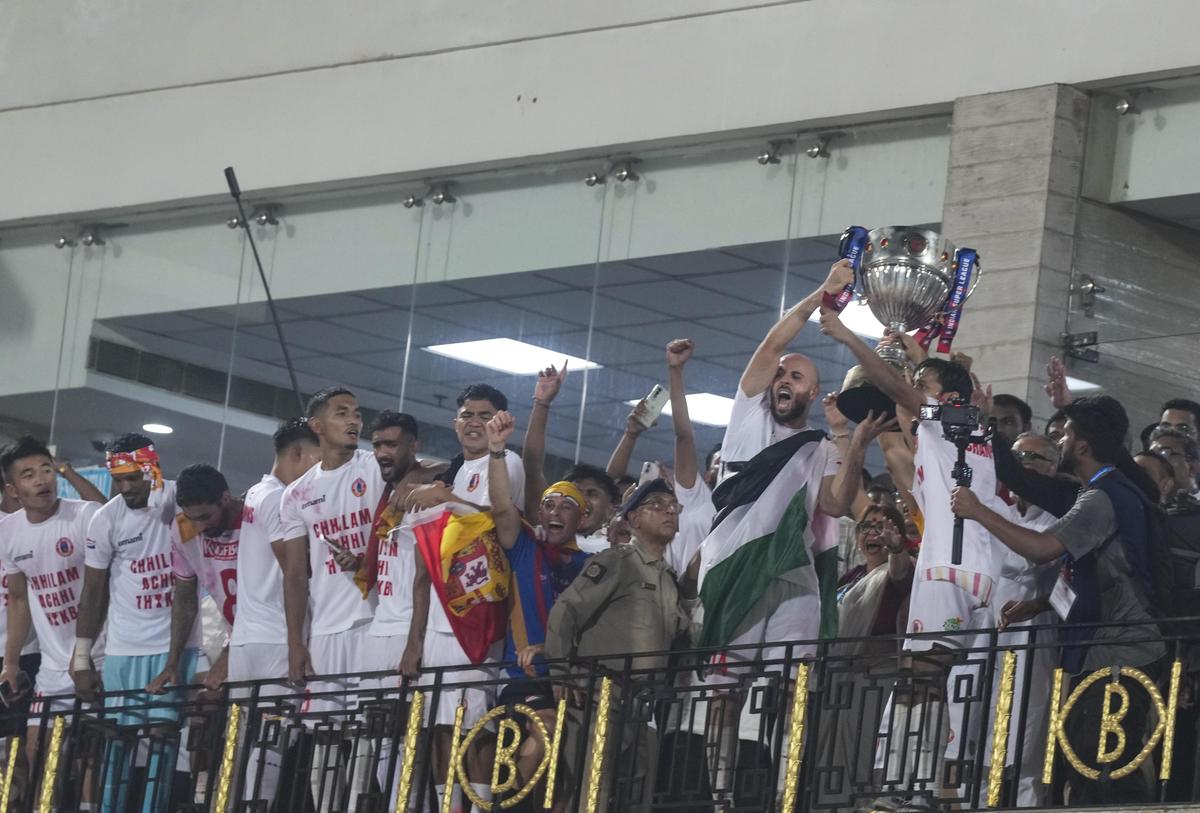
East Bengal players celebrate with the ISL trophy. | Photo Credit: PTI
East Bengal players celebrate with the ISL trophy. | Photo Credit: PTI
This year, we managed to surprise many people because we were the most consistent side throughout the campaign. That consistency, across an entire season against the best teams in the league, is what truly defines champions.
How significant was the dramatic late moment in the derby, especially Prabhsukhan Gill’s crucial last-minute save?
It was significant because of the timing and the emotions surrounding the situation, especially after Mohun Bagan equalised late in the game. But if I analyse the match calmly, I believe we should have finished the game much earlier.
We completely dominated large parts of the derby and created many clear opportunities. Players like Bipin (Singh), Anton (Sojberg) and Youssef (Ezzejjari) all had chances to score. So while everyone will remember the final save and the tension of the last moments, I also remember how many opportunities we created before that.
In my opinion, when you look at the balance of the game, we were clearly the better side, especially in terms of the chances we produced.
Coming from a football culture with intense rivalries, how do you place this derby result in the broader context of the league title?
The derby was undoubtedly a key moment because it arrived near the end of the season and had major implications for the title race. But I do not think we won the league simply because we were better than Mohun Bagan in one match. We reached that stage because of all the hard work we had done throughout the season before the derby. The league is a reward for months of consistency, discipline and good performances against every opponent.
Both clubs entered the derby knowing that even a draw would still leave us in a strong position. That itself shows the importance of the work done before that game. So the title should be understood as the result of sustained excellence across the entire league campaign.
Did your coaching experiences across different teams in India and Bangladesh contribute to this transformation?
Absolutely. Every experience I have had shaped me as a coach. My time in the Maldives, Bangladesh and India gave me a deep understanding of football in South Asia, while my years in Spain helped define my football philosophy.
Working with clubs like Mumbai City and Goa exposed me to different styles and competitive environments within Indian football. Before that, my experiences in Spain - especially with Mallorca and at the Celta de Vigo academy - were extremely important because I learned in environments focused heavily on player development, tactical intelligence and producing high-level footballers. All those experiences together helped build the coach I am today.
You have observed Indian football for over a decade. How do you evaluate its progress?
For me, the overall progression of Indian football has been very positive. When I first arrived in India in 2011, the game was at a very different stage compared to today.
Over the years, I have seen major improvements in infrastructure, league organisation, professionalism and the quality of Indian players. Earlier, football talent was concentrated mainly in a few regions such as Goa, the North-East, Bengal and institutions like Tata Football Academy.
Today, football has spread much more widely across different states and regions. The pool of competitive Indian players is larger and the general level has improved significantly. So even though there are still challenges, the long-term evolution has been clear.
Yet the national team has struggled recently. Why do you think the progress has not fully reflected there?
It is true that the last two years have been disappointing, especially in the World Cup and Asian Cup qualification campaigns. The results were not in line with the progress many people expected.
But I do not think it is fair to ignore all the development that happened before because of one difficult cycle. When I first came to India, the national team was ranked much lower internationally. Over the last decade, there was clear progress in terms of competitiveness, and India also managed to break into the top 100 of the FIFA rankings.
Football works in cycles. Sometimes there are setbacks, but that does not mean the overall development process has stopped.
Are you hopeful about the future of Indian football and the national team?
Yes, definitely. A new World Cup cycle is beginning after the tournament in the United States, Canada and Mexico, and India must use this period intelligently.
The immediate target should be to consistently qualify for the Asian Cup and continue reducing the gap with the strongest Asian nations. With the World Cup expanding to 48 teams, countries like India have a greater opportunity to dream realistically about qualification in the future. The key is to continue progressing steadily, improving competitiveness and believing that the gap with the best teams can keep becoming smaller.
Published on May 27, 2026
此内容由惯性聚合(RSS阅读器)自动聚合整理,仅供阅读参考。 原文来自 — 版权归原作者所有。