
惯性聚合 高效追踪和阅读你感兴趣的博客、新闻、科技资讯
阅读原文 在惯性聚合中打开

推荐订阅源

钛媒体:引领未来商业与生活新知
钛媒体:引领未来商业与生活新知
MongoDB | Blog
MongoDB | Blog
博客园_首页
博客园 - 三生石上(FineUI控件)
博客园 - 聂微东
B
Blog RSS Feed
D
Docker
IT之家
IT之家
大猫的无限游戏
大猫的无限游戏
OSCHINA 社区最新新闻
OSCHINA 社区最新新闻
阮一峰的网络日志
阮一峰的网络日志
罗磊的独立博客
Recent Announcements
freeCodeCamp Programming Tutorials: Python, JavaScript, Git & More
A
About on SuperTechFans
The GitHub Blog
The GitHub Blog
G
Google Developers Blog
V
V2EX
量子位
雷峰网
雷峰网
月光博客
月光博客
云风的 BLOG
云风的 BLOG
奇客Solidot–传递最新科技情报
奇客Solidot–传递最新科技情报
T
Tailwind CSS Blog

Latest Business News, Business News India Today | The HinduBusinessLine

Draft CAFE-3 Norms: Govt eases penalties, focuses on carbon credit trading for auto sector Modi seeks opposition backing to implement women’s reservation before 2029 polls West Asia crisis: Ludhiana handtool export units face labour, gas supply shortages, high input costs Patent application filings in India rise 30.2% to 1.43 lakh in 2025-26: Goyal Meet the man with 138 degrees: Dashrath Singh, an ex-serviceman, earns latest qualification from IGNOU Europe missed AI bus, but India has potential to catch up: Former WEF Director AIG Hospitals, ICMR team up for digital health innovation Juno Joule Bio Fuels begins construction of compressed bio-gas project in Telangana Legendary playback singer Asha Bhosle dies at 92 Signature Global cuts net debt by 77% to ₹200 crore in FY26 Iran aims to restore majority of refining capability within two months Supreme Court to hear on Monday pleas related to SIR of electoral rolls in West Bengal US, India hold engagements to advance defence cooperation Trump shares article suggesting option with him to enforce naval blockade on Iran NCLAT reaffirms project-specific insolvency proceedings against realty firms Iran-US talks in Pakistan ended without deal as Tehran cites ‘excessive demands’ from US Two supertankers U-turn in Hormuz as US-Iran talks break down Time has come to implement Women's Reservation Act: PM Modi's letter to LS, RS floor leaders Iran war diverts US military, attention from Asia ahead of Trump's summit with China's leader Trump says China will have big problems if it ships arms to Iran India will soon become self-reliant in defence sector, find itself among leading nations of the world: Rajnath Singh Pakistan to continue facilitating US-Iran talks, says Dar; urges ceasefire More than 2,000 people killed by Israeli strikes in Lebanon during Israel-Hezbollah war: officials Iran denies US claims of mine clearing ships’ passage through Strait of Hormuz AI to reduce uncertainties and expand opportunities - RBI DG EAM Jaishankar meets members of Indian community in UAE 4 ways war in Iran has weakened United States in great power game US-Iran talks fail after 21 hours in Islamabad, JD Vance cites nuclear deadlock Delhi EV Policy: Electric 3-Wheelers Only by 2027, 2-Wheelers by 2028 Islamabad talks: US and Iran begin negotiations aimed at ending West Asia conflict
Tamil Nadu farmer turns coconut losses into profitable ag...
By PTI · 2026-05-29 · via Latest Business News, Business News India Today | The HinduBusinessLine
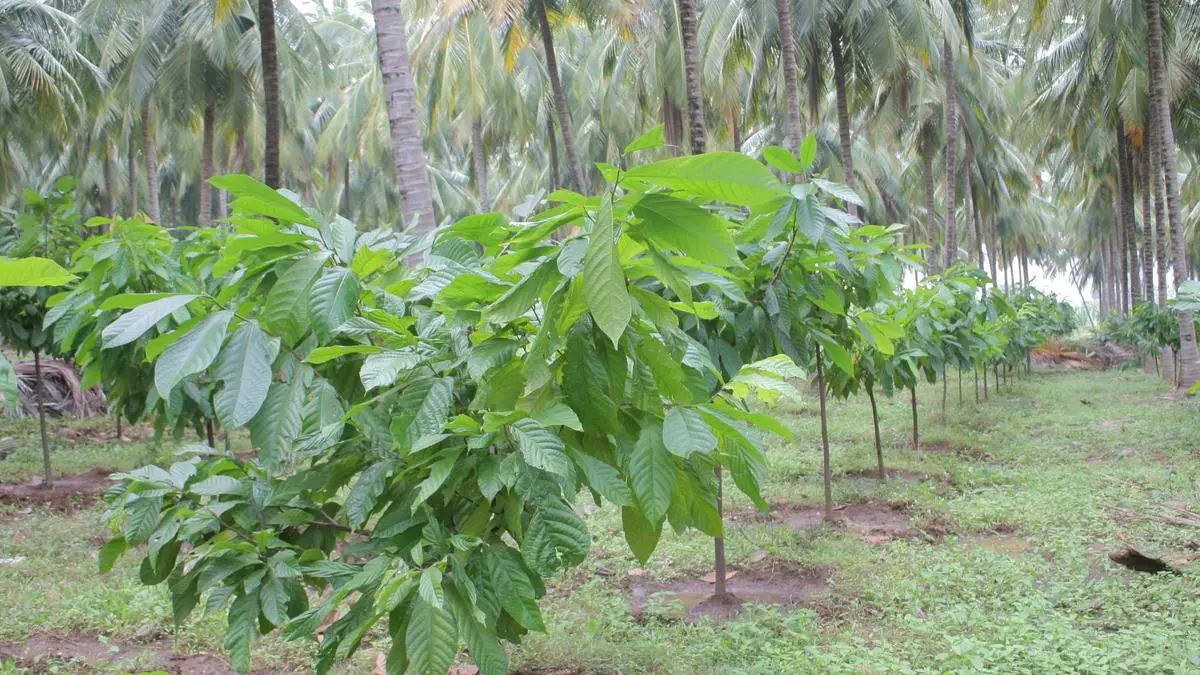
A farmer from Pollachi in Tamil Nadu has transformed his loss-making coconut farm into a profitable multi-crop, tree-based agriculture model, earning up to ₹3 lakh per acre annually and recognition as a UN FAO Soil Farmer Hero. (A representative photo)

A farmer from Pollachi in Tamil Nadu has transformed his loss-making coconut farm into a profitable multi-crop, tree-based agriculture model, earning up to ₹3 lakh per acre annually and recognition as a UN FAO Soil Farmer Hero. (A representative photo) | Photo Credit: K Ananthan

A Tamil Nadu farmer who once lost Rs 200 on every coconut tree he grew, has transformed his 11 hectare holding into a Rs 2.5-3 lakh per acre enterprise through multi-crop, tree-based farming — earning him recognition as a UN FAO Soil Farmer Hero.

Valluvan (58), who cultivates in Pollachi district, said he was spending Rs 500 per tree annually while earning just Rs 300, leaving him in a cycle of losses before he overhauled his approach in 2009.

“I was losing money on every coconut tree I owned. I knew I had to find a solution,” he told reporters here.

The turnaround came after he encountered Isha Foundation’s The Save Soil - Cauvery Calling programme, promoted by spiritual leader Sadhguru Jaggi Vasudev, which advised a shift to multi-crop, multi-tier tree-based agriculture.

From three crop varieties, Valluvan now cultivates over 14 types on the same land — coconut, nutmeg, pepper, seven banana varieties, turmeric, elephant yam, curry leaves and 30 tree varieties.

Income rose steadily from Rs 30,000 to Rs 2.5-3 lakh per acre annually, while soil organic carbon content climbed from 0.5 per cent in year one to 1.56 per cent by year seven.

Farm survives droughts with low-water agriculture methods

The farm also withstood two severe droughts, including a 2017 crisis when groundwater levels dropped beyond 1,000 feet and no rain fell for two consecutive years — a period when many neighbouring farmers felled their coconut trees.

Through mulching and rainwater harvesting pits, the farm retained sufficient moisture without additional irrigation.

It now uses one-tenth of the water previously required, and Valluvan expects to eliminate irrigation needs entirely within a few years.

“Even sensitive crops like nutmeg and pepper, which farmers say need lots of water, survived without extra irrigation,” he said.

Multi-crop farming seen as climate and income safeguard

The farm’s multi-crop model also functions as an economic hedge, said Anand Ethirajalu, Project Director at Save Soil - Cauvery Calling.

“If coconut prices fall, his nutmeg saves him. If nutmeg also falls, his banana saves him. He has a series of crops,” Ethirajalu said, comparing the strategy to a cricket team with equally competent substitutes.

Since its 2019 scaling, Cauvery Calling has planted 13.4 crore trees on private farmland across Tamil Nadu and Karnataka — roughly 10 per cent of the 242 crore trees targeted to restore year-round flows in the Cauvery river basin.

Ethirajalu, however, flagged scaling, funding and policy barriers as key obstacles to wider adoption, calling for drip-irrigation support for timber crops, removal of restrictive state-level timber-sale regulations, and insurance and subsidy schemes for tree-based agriculture.

“Tree-based agriculture is the only solution for global warming and the climate crisis threatening the entire world,” Valluvan said.

Published on May 29, 2026