





Automatic Reference Counting(ARC)是iOS 4.0以上,在Xcode 4.2以上新建工程时可以选择开启的内存管理功能。看上去是可选择功能,但开启后对编程有较大影响,所以值得仔细考究一番。
首先,正如 Automatic Reference Counting名称所表达的意思,自动引用计数并不是垃圾自动回收,并非如JavaScript中,只管声明变量或成员,而由解释器自动地决定其是否释放。
在ARC下有如下限制:
release是不可调用的,
dealloc不可直接调用,并且不能[super dealloc]
唯一直观的方法是
str=nil;
但即使如此,只是之后的代码无法用str去引用原字符串对象而已,原字符串所用内存未必被释放。如以下情况:
NSString *strTest = [[NSString alloc] initWithFormat:@"%@", @"One!!!" ];
NSString *strOwned = strTest;
strTest = nil;
NSLog(@”%@”, strOwned);
结果是输出 One!!!
原因是所有声明的对象,默认都是strong,只要对象被strong对象引用一次,count(实际对象计数器)就被加1,上例子中 strTest指向的@"One!!!"被strOwned引用了一次,即使自己被置为nil(ARC世界中表示release,count减一),count依然不为0,所以内存并没有释放,而直到 strOwned=nil的时候,@"One!!!"才真正被释放。
这个释放机制的过程在上面的简单情况中还是很好理解的,那么来看看下面的情况:
NSString *strTest = [[NSString alloc] initWithFormat:@"%@", @"One!!!" ];
NSString *strTest2 = [[NSString alloc] initWithFormat:@"%@", @"Two!!!" ];
NSString *strTest3 = [[NSString alloc] initWithFormat:@"%@", @"Three!!!" ];
NSString *strTest4 = [[NSString alloc] initWithFormat:@"%@", @"Four!!!" ];
NSString *strTest5 = [[NSString alloc] initWithFormat:@"%@", @"Five!!!" ];
NSString *strTest6 = [[NSString alloc] initWithFormat:@"%@", @"Six!!!" ];
NSString *strTest7 = [[NSString alloc] initWithFormat:@"%@", @"Seven!!!" ];
array = [[NSMutableArray alloc] init];
[array addObject:strTest];
[array addObject:strTest2];
[array addObject:strTest3];
[array addObject:strTest4];
[array addObject:strTest5];
[array addObject:strTest6];
[array addObject:strTest7];
在某处执行
[array removeAllObjects];
strTest~ strTest7是否被释放?
回答这个问题首先要回答,array的对象是否被引用?
见如下声明:
NSString *strOwned;
__weak NSString *strWeak;
__weak NSString *strWeak2;
NSString *strStrong;
strOwned = [array objectAtIndex:0];
strWeak = [array objectAtIndex:1];
strWeak2 = [array objectAtIndex:2];
strStrong = strWeak2;
以下输出各是什么?
清单3
NSLog(@"%@", strOwned);
NSLog(@"%@", strWeak);
NSLog(@"%@", strWeak2);
NSLog(@"%@", strStrong);
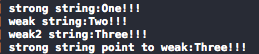
执行
[array removeAllObjects];
之后,以上各输出为:
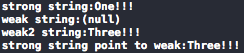
这里比较 strWeak 和 strWeak2的结果是比较有意思的,同样是声明为weak,strWeak2只是被strong的strStrong引用过后,所用对象便也无法由来源(这里是array)释放了,这可能也是复杂工程中容易出错的原因吧。
最后,如果array中各字符串对象被另一个类的成员所引用,如下
myObj = [[MyObject alloc] init];
myObj.strStrong = strTest6;
myObj.strWeak = strTest7;
执行
[array removeAllObjects];
之后,清单3的执行结果又是如何呢?回答这个问题前,先考虑下 myObj本身是strong还是weak,情况有何不同?
此内容由惯性聚合(RSS阅读器)自动聚合整理,仅供阅读参考。 原文来自 — 版权归原作者所有。