


惯性聚合 高效追踪和阅读你感兴趣的博客、新闻、科技资讯
阅读原文 在惯性聚合中打开

推荐订阅源

F
Fortinet All Blogs
Microsoft Security Blog
Cyber Security Advisories - MS-ISAC
Threat Intelligence Blog | Flashpoint
Vercel News
Vercel News
Application and Cybersecurity Blog
C
Check Point Blog
cs.AI updates on arXiv.org
W
WeLiveSecurity
The Hacker News
The Hacker News
L
LINUX DO - 热门话题
T
Tenable Blog
Hugging Face - Blog
Hugging Face - Blog
Google Online Security Blog
博客园 - Franky
P
Proofpoint News Feed
H
Hacker News: Front Page
P
Privacy & Cybersecurity Law Blog
月光博客
月光博客
P
Proofpoint News Feed
Exploit-DB.com RSS Feed
The GitHub Blog
The GitHub Blog
云风的 BLOG
云风的 BLOG
博客园_首页
www.infosecurity-magazine.com
C
CERT Recently Published Vulnerability Notes
Forbes - Security
Forbes - Security
I
InfoQ
Stack Overflow Blog
Stack Overflow Blog
OSCHINA 社区最新新闻
OSCHINA 社区最新新闻
Attack and Defense Labs
N
News and Events Feed by Topic
博客园 - 叶小钗
T
Threat Research - Cisco Blogs
aimingoo的专栏
aimingoo的专栏
D
Darknet – Hacking Tools, Hacker News & Cyber Security
小众软件
小众软件
大猫的无限游戏
大猫的无限游戏
MongoDB | Blog
MongoDB | Blog
CTFtime.org: upcoming CTF events
Hacker News - Newest:
Hacker News - Newest: "LLM"
钛媒体:引领未来商业与生活新知
钛媒体:引领未来商业与生活新知
博客园 - 司徒正美
O
OpenAI News
G
Google Developers Blog
Martin Fowler
Martin Fowler
罗磊的独立博客
S
SegmentFault 最新的问题
T
Tor Project blog
量子位

Latest from Live Science

Naked mole rats wage bloody wars of succession to choose a new queen — but one colony did something scientists… Can the US be trusted with the moon? A law scholar raises concerns after Artemis II Lyrid meteor shower 2026: See spring's first rain of 'shooting stars' peak in moonless skies $3 million prize goes to duo whose research led to first sickle cell CRISPR therapy 700-year-old mummy from Bolivia contains earliest confirmed evidence of strep throat bacteria in the Americas New pain-relief opioid could be much less addictive than morphine, rodent study finds Experimental drug doubles one-year survival in pancreatic cancer Science news this week: Physicists witness faster-than-light darkness pinpricks, humans are still evolving, and some… Archaeologists discover perfectly circular ancient Egyptian temple that may have been used for sacred water rituals Some polar bears are adapting to their melting habitat. Will it be enough to save the iconic species? 2 supermassive black holes may collide 100 years from now ‪—‬ and Earth would feel it Anglo-Saxon burial holds an older sister cradling her little brother after they both died 1,400 years ago, possibly of… Colorado River may have pooled and spilled over to form the Grand Canyon, solving a long-standing mystery ‪—‬… 'We all screamed when it happened': Bright-green fireball meteor caught exploding over famous Viking raid site… Northern lights may be visible from several US states Friday and Saturday as giant hole opens up in sun Hackers used AI to steal hundreds of millions of Mexican government and private citizen records in one of the largest… The first black hole ever discovered is spewing 'dancing jets' at half the speed of light Stephen Hawking's black hole information paradox could be solved — if the universe has 7 dimensions 'Something's missing': Most thorough-ever study of the cosmos proves we still can't explain how the… 'Human evolution didn't slow down; we were just missing the signal': Large DNA study reveals natural selection led to more redheads and less male-pattern baldness Artemis II quiz: Is your knowledge of NASA New study confirms lobsters feel pain, driving scientists to call for a ban on boiling them alive This humanoid robot does all your housework for you ‪—‬ and its makers say it Ancient process that created rare earth elements discovered — and it could help us locate desperately needed deposits Strange mammal ancestor laid huge, leathery eggs —‬ and it was key to surviving the world 73 moon landings? NASA Diagnostic dilemma: A woman heard voices telling her she had a brain tumor ‪—‬ and scans confirmed she did Triassic croc relative from Ghost Ranch, New Mexico finally identified after nearly 80 years in museum basement There were Physicists witness pinpricks of darkness moving faster than the speed of light ‪—‬ without breaking the laws of relativity Mini lake meets snowy rim of Canada's oldest ice mass — Earth from space Stone Age tombs in Scotland reveal 'webs of descent' among male relatives 'Oslo patient' likely cured of HIV after getting stem cell transplant from his brother, who is genetically… Antiseptic-tolerant germs spread through the air in hospitals, early study hints Homo erectus' tools include stunning geodes and fossils, possibly as a way to connect with the cosmos, study finds 'Really, really weird': Physicists entangle two moving atoms for the first time, validating 'spooky'… www.livescience.com Sperm quality is at its peak in the summer, study finds Scientists are trying to build a vaccine that works against almost any respiratory pathogen  — here's… Idol of Pomos: A 5,000-year-old fertility figurine from Cyprus that wears a miniature version of herself on a necklace Human ancestors butchered and ate elephants 1.8 million years ago, helping to fuel their large brains Ancient Egyptian stone monument depicting a Roman emperor as a pharaoh discovered in Luxor 'Human minds shouldn't have to go through' this: Artemis II crew recalls unreal moment when Earth disappeared — Space photo of the week Does the moon look the same from everywhere on Earth? I found a new meteor shower — and it comes from an asteroid getting baked to bits by the sun AI for breakup texts? How 'sycophantic' chatbots are messing with our ability to handle difficult social… Science news this week: Artemis II splashes down, the world's fattest parrot bounces back, and the Shroud of Turin… 10 Artemis II photos that define humanity's return to the moon Do the microbes in your gut influence what foods you like? 'I'm at a loss for words': Artemis II mission comes home to joy and cheers after historic 10-day mission There are 'reasons to be confident' about faulty Artemis II heat shield ahead of 25,000 mph reentry, space… The moon is green and brown? Why scientists are already excited about Artemis II's historic lunar photos 'I've seen the movies. What a horrible way to die': What it's like to be sucked into a tornado and… 'More questions than answers': Experts baffled by Alaskan mammal-eating orcas spotted near Seattle Changing 'just one DNA letter' in female mice triggers growth of male genitalia Aoshima: Japan's tiny 'Cat Island' where felines hugely outnumber humans 'Welcome home, Integrity': Artemis II crew return to Earth after 'bullseye landing' caps historic… AI war games almost always escalate to nuclear strikes, simulation shows Ancient Korean society practiced human sacrifice and high inbreeding, researchers find There's an issue with the Artemis II heat shield, but NASA isn't worried. Here's why. Chimpanzees in Uganda are locked in a deadly 'civil war' after their group split apart — and scientists… James Webb telescope spots 'stingray' galaxy system that could solve the mystery of 'little red… 'RIP, Comet MAPS': Watch the superbright sungrazer become a 'headless wonder' after being ripped… Scientists create new type of encryption that protects video files against quantum computing attacks Western states face above-normal wildfire threats this summer. New maps reveal which areas are most at risk. Science history: Doctor hypothesizes that 'transmissible proteins' can cause disease, contradicting a 'central dogma' of molecular biology — April 9, 1982 Keratin may act as a 'brake' for skin inflammation, pointing to potential treatments 'No one knows what they are': Researchers discover new type of cell that's seen only during pregnancy 16th-century silver coin discovered near Strait of Magellan marks the spot of a doomed Spanish colony How to see Comet PanSTARRS as it brightens in the night sky this week Diagnostic dilemma: Woman's 'biologically implausible' infection led her to sneeze 'worms' out… 'In every continent where humans are present, water bankruptcy is manifesting itself': Exiled Iranian scientist Kaveh Madani on our desperate need to preserve our most precious resource California declared war on smog in the 1970s. The knock-on effects were huge. 'They are literally everywhere': The shocking story of how forever chemicals polluted the world DNA reveals ancestry of man buried in Stone Age monument in Spain, but his religion remains a mystery 'So much magic': Artemis II shares first images from the far side of the moon, including new… AI 'mirages' mean tools used to analyze medical scans could fabricate their findings World's fattest parrot — on the verge of extinction 30 years ago — has record-breaking breeding season It's one of the best toothbrushes we have tested (and it's not Oral-B) Physicists moved volatile antimatter by truck for the first time ever — paving the way for groundbreaking new… Deadly, vivid-green mass sprawls across South African reservoir — Earth from space The Artemis II astronauts have just flown farther from Earth than any humans in history Artemis II moon flyby begins: How to watch and what to know AI-written code can beat humans at biomedical analysis, some studies find. What does that mean for the field? 'A cure on the horizon': Are we finally close to ending type 1 diabetes? 'They could spend 4 or 5 hours per day underwater': How humans adapted to the most challenging environments We went to Finland to hear about the new 'sand battery' that will turn stored renewable energy back into power… The hungriest black holes in the universe are running out of food, survey of 8,000 cosmic monsters reveals Beadnet dress: A 4,500-year-old ancient Egyptian funeral 'gown' that was in vogue during the Old Kingdom 'This generation's moment': How the Artemis missions will reframe humanity's relationship with the… Antarctica hides huge caches of gold, silver, copper and iron. As the ice melts, countries may race to harvest them. NASA telescope uncovers new mystery in supernova first spotted by Chinese astronomers 2,000 years ago —‬ Space… Diabetes rates are lower in high-altitude environments ‪‪—‬ and scientists may have discovered why Shroud of Turin, claimed to be Jesus' burial cloth, contaminated with carrot and red coral DNA What happened to the Minoan civilization? I've witnessed nearly 100 rocket launches. Artemis II was like nothing I've ever experienced. Science news this week: Artemis II lifts off, diabetes cured in mice, and smog in China shapes Arctic storms Fossil site in China reveals bevy of complex creatures lived prior to the Cambrian explosion, including a… Cheap, decades-old transplant drug delays full onset of type 1 diabetes Octopus quiz: Are you a sucker for cephalopod science?
How everything you do is being monitored in an AI-fuelled 'surveillance capitalism system' that's ramping…
Anne Toomey · 2026-04-27 · via Latest from Live Science
a photo of an eye looking through a keyhole
The U.S. government is using AI to speed analysis of government and commercial data about you. (Image credit: Andriano_cz via Getty Images)

On a Saturday morning, you head to the hardware store. Your neighbors' Ring cameras film your walk to the car. Your car's sensors, cameras and microphones record your speed, how you drive, where you're going, who's with you, what you say, and biological metrics such as facial expression, weight and heart rate. Your car may also collect text messages and contacts from your connected smartphone.

Meanwhile, your phone continuously senses and records your communications, info about your health, what apps you're using, and tracks your location via cell towers, GPS satellites and Wi-Fi and Bluetooth.

All this data quickly becomes commercially available, bought and sold by data brokers. Aggregated and analyzed by artificial intelligence, the data reveals detailed, sensitive information about you that can be used to predict and manipulate your behavior, including what you buy, feel, think and do.

Companies unilaterally collect data from most of your activities. This "surveillance capitalism" is often unrelated to the services device manufacturers, apps and stores are providing you. For example, Tinder is planning to use AI to scan your entire camera roll. And despite their promises, "opting out: doesn't actually stop companies' data collection.

While companies can manipulate you, they cannot put you in jail. But the U.S. government can, and it now purchases massive quantities of your information from commercial data brokers. The government is able to purchase Americans' sensitive data because the information it buys is not subject to the same restrictions as information it collects directly.

The federal government is also ramping up its abilities to directly collect data through partnerships with private tech companies. These surveillance tech partnerships are becoming entrenched, domestically and abroad, as advances in AI take surveillance to unprecedented levels.

Get the world’s most fascinating discoveries delivered straight to your inbox.

As a privacy, electronic surveillance and tech law attorney, author and legal educator, I have spent years researching, writing and advising about privacy and legal issues related to surveillance and data use. To understand the issues, it is critical to know how these technologies function, who collects what data about you, how that data can be used against you, and why the laws you might think are protecting your data do not apply or are ignored.
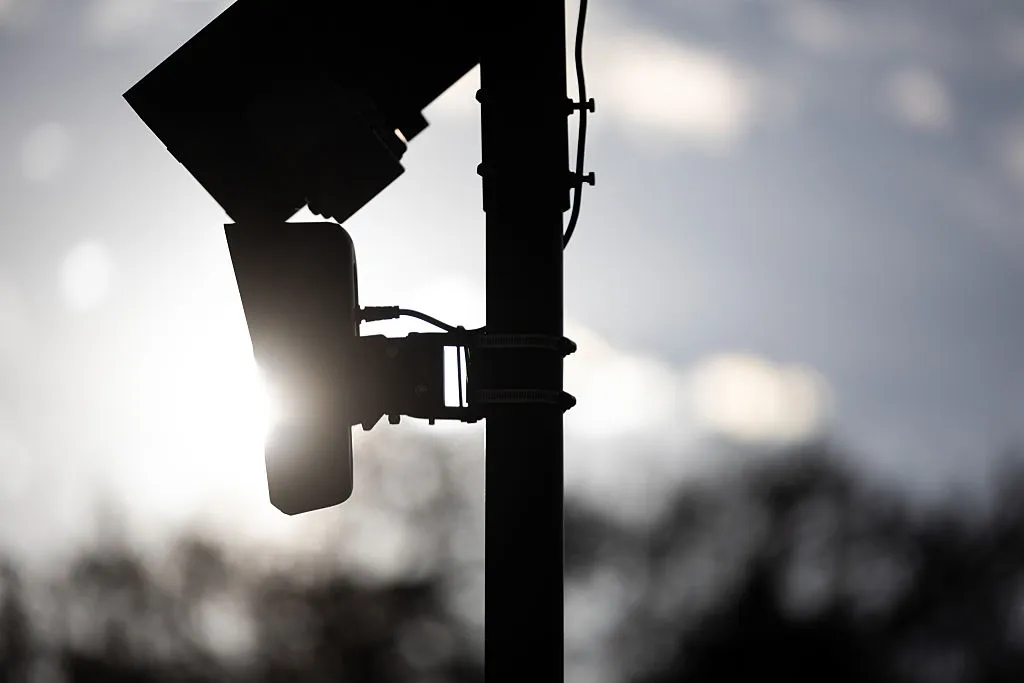
A silhouette of a Flock security camera mounted to a street pole.

Flock cameras have automatic license plate readers to identify who travels through a neighborhood. (Image credit: Bloomberg via Getty Images)

Big money for AI-driven tech and more data

Congressional funding is supercharging huge government investments in surveillance tech and data analytics driven by AI, which automates analysis of very large amounts of data. The massive 2025 tax-and-spending law netted the Department of Homeland Security an unprecedented US$165 billion in yearly funding. Immigration and Customs Enforcement, part of DHS, got about $86 billion.

Disclosure of documents allegedly hacked from Homeland Security reveal a massive surveillance web that has all Americans in its scope.

DHS is expanding its AI surveillance capabilities with a surge in contracts to private companies. It is reportedly funding companies that provide more AI-automated surveillance in airports; adapters to convert agents' phones into biometric scanners; and an AI platform that acquires all 911 call center data to build geospatial heat maps to predict incident trends. Predicting incident trends can be a form of predictive policing, which uses data to anticipate where, when and how crime may occur.

DHS has also spent millions on AI-driven software used to detect sentiment and emotion in users' online posts. Have you been complaining about Immigration and Customs Enforcement policies online? If so, social media companies including Google, Reddit, Discord, and Facebook and Instagram owner Meta may have sent identifying data, such as your name, email address, phone number and activity, to DHS in response to hundreds of DHS subpoenas served on the companies.

Meanwhile, the Trump administration's national policy framework for artificial intelligence, released on March 20, 2026, urges Congress to use grants and tax incentives to fund "wider deployment of AI tools across American industry" and to allow industry and academia to use federal datasets to train AI.

Using federal datasets this way raises privacy law concerns because they contain a lifetime of sensitive details about you, including biographical, employment and tax information.

Blurring lines and little oversight

In foreign intelligence work, the funding, development and controlled use of certain AI-driven gathering of data makes sense. The CIA's new acquisition framework to turbocharge collaboration with the private sector may be legal with proper oversight. But the line between collaborating for lawful national security purposes versus unlawful domestic spying is becoming dangerously blurred or ignored.

For example, the Pentagon has declared a contractor, Anthropic, a national security risk because Anthropic insisted that its powerful agentic AI model, Claude, not be used for mass domestic surveillance of Americans or fully autonomous weapons.

On March 18, 2026, FBI Director Kash Patel confirmed to Congress that the FBI is buying Americans' data from data brokers, including location histories, to track American citizens.

As the federal government accelerates the use of and investment in AI-driven spy tech, it is mandating less oversight around AI technology. In addition to the national AI policy framework, which discourages state regulation of AI, the president has issued executive orders to accelerate federal government adoption of AI systems, remove state law AI regulation barriers and require that the federal government not procure the use of AI models that attempt to adjust for bias. But using advanced AI systems is risky, given reports of AI agents going rogue, exposing sensitive data and becoming a threat, even during routine tasks.
A white striped sign holds the word "Anthropic" on it with the i being a backslash. The shadows from the letters show on the white sign.

Anthropic has been in an ongoing legal dispute with the US government over the use of Claude AI in surveilling US citizens. (Image credit: Bloomberg via Getty Images)

Your data

The surveillance capitalism system requires people to unwittingly participate in a manipulative cycle of group- and self-surveillance. Neighborhood doorbell cameras, Flock license plate readers and hyperlocal social media sites like Nextdoor create a crowdsourced record of all people's movements in public spaces.

Sensors in phones and wearable devices, such as earbuds and rings, collect ever more sensitive details. These include health data, including your heart rate and heart rate variability, blood oxygen, sweat and stress levels, behavioral patterns, neurological changes and even brain waves. Smartphones can be used to diagnose, assess and treat Parkinson's disease. Earbuds could be used to monitor brain health.

This data is not protected under HIPAA, which prohibits health care providers and those working with them from disclosing your health information without your permission, because the law does not consider tech companies to be health care providers nor these wearables to be medical devices.

People have little choice when buying devices, using apps or opening accounts but to agree to lengthy terms that include consent for companies to collect and sell their personal data. This "consent" allows their data to end up in the largely unregulated commercial data market.

The government claims it can lawfully purchase this data from data brokers. But in buying your data in bulk on the commercial market, the government is circumventing the Constitution, Supreme Court decisions and federal laws designed to protect your privacy from unwarranted government overreach.

The Fourth Amendment prohibits unreasonable search and seizure by the government. Supreme Court cases require police to get a warrant to search a phone or use cellular or GPS location information to track someone. The Electronic Communications Privacy Act's Wiretap Act prohibits unauthorized interception of wire, oral and electronic communications.

Despite some efforts, Congress has failed to enact legislation to protect data privacy, the use of sensitive data by AI systems or to restore the intent of the Electronic Communications Privacy Act. Courts have allowed the broad electronic privacy protections in the federal Wiretap Act to be eviscerated by companies claiming consent.

In my opinion, the way to begin to address these problems is to restore the Wiretap Act and related laws to their intended purposes of protecting Americans' privacy in communications, and for Congress to follow through on its promises and efforts by passing legislation that secures Americans' data privacy and protects them from AI harms.

This edited article is republished from The Conversation under a Creative Commons license. Read the original article. This article is part of a series on data privacy that explores who collects your data, what and how they collect, who sells and buys your data, what they all do with it, and what you can do about it.

Anne Toomey McKenna (she/her) is a licensed attorney, researcher, and Law Professor working for over two decades at the interdisciplinary intersection of technology, privacy, and law. Professor McKenna is currently an Affiliated Faculty with Penn State University’s Institute for Computational & Data Sciences and was formerly Penn State Dickinson Law’s Distinguished Scholar of Cyber Law & Policy before moving to Richmond for family. Professor McKenna sits on the Advisory Board and serves as Support Chair of the AI Policy Committee for the world’s largest technical professional organization, the Institute for Electrical and Electronics Engineers (IEEE), and Co-Chairs IEEE’s Privacy, Equity, and Justice in AI Subcommittee.

You must confirm your public display name before commenting

Please logout and then login again, you will then be prompted to enter your display name.