
惯性聚合 高效追踪和阅读你感兴趣的博客、新闻、科技资讯
阅读原文 在惯性聚合中打开

推荐订阅源

博客园 - 三生石上(FineUI控件)
D
DataBreaches.Net
博客园_首页
J
Java Code Geeks
Cyber Security Advisories - MS-ISAC
罗磊的独立博客
腾讯CDC
OSCHINA 社区最新新闻
OSCHINA 社区最新新闻
B
Blog
D
Docker
让小产品的独立变现更简单 - ezindie.com
A
About on SuperTechFans
博客园 - 聂微东
Stack Overflow Blog
Stack Overflow Blog
WordPress大学
WordPress大学
MyScale Blog
MyScale Blog
G
Google Developers Blog
博客园 - 司徒正美
aimingoo的专栏
aimingoo的专栏
小众软件
小众软件
Apple Machine Learning Research
博客园 - 叶小钗
M
MIT News - Artificial intelligence
Recent Announcements

The Independent Asia

Is it safe to travel to Japan? Latest advice after earthquake At least 14 dead and dozens injured after crash between two passenger trains in Indonesia Soaring energy costs threaten wildlife as families across Asia and Africa turn back to charcoal Strait of Hormuz crisis forces Thailand to revive $31 billion ‘Land Bridge’ plan Pakistan lifts central Islamabad lockdown as prospects dim for US-Iran talks Chinese scientists build ‘zero emission’ coal-fired battery 22 Buddhist monks found with 110kg of drugs on Bangkok flight, police say DeepSeek’s latest AI model launch met with muted response Lightning strikes leave 14 dead across Bangladesh amid seasonal storms At least 12 injured after BMW crashes into Bangkok petrol station KFC Japan earthquake: Hokkaido shakes a week after ‘mega-quake’ warning North Korea opens memorial museum for troops killed in Russia-Ukraine war Tributes pour in as legendary Indian photographer Raghu Rai dies at 83 Philippine officials say 2 Americans among suspected communist rebels killed in clash with troops Taiwan’s foreign minister arrives in Eswatini after president’s trip blocked amid China pressure claims Uncertainty clouds US-Iran talks as Iran’s top diplomat arrives in Pakistan Thousands evacuate in Japan as forest fires close in on homes Taiwanese Indigenous artist stripped of national prize after sexual assault conviction At least 194 children dead in just over a month as Bangladesh grapples with deadly measles outbreak Turkey is the latest country to ban children from social media. What are other countries doing? Bang Si-Hyuk: K-pop tycoon behind BTS avoids arrest in South Korean investor fraud probe There’s one way Japan’s ‘Iron Lady’ Takaichi is struggling to emulate her political hero Margaret Thatcher Industrial heritage inspires new creative outlooks Appeal of Chinese-style gold jewellery soars In Jingdezhen, what more can porcelain be? Consumer market attracts global brands First-quarter growth robust at 5% The Tale of KAHO: Haruki Murakami announces release date for first novel in three years Donald Trump faces diplomatic backlash after sharing ‘hellhole’ remark about India and China Passenger dies after collapsing on Cathay Pacific flight from Manchester
The ‘missing’ insect that is raising alarm bells about on...
Vishwam Sank · 2026-05-04 · via The Independent Asia

About one-third of India’s known dragonfly and damselfly species could have gone extinct due to rapid urbanisation in recent years, a first-of-its-kind survey reveals amid an alarming decline in global insect populations.

The landmark two-year survey across India’s pristine Western Ghats points to a worrying trend in the region, considered one of the world’s biodiversity hotspots.

Researchers warn that the likely local extinction of dragonfly and damselfly species is particularly alarming, as such species are sensitive to environmental changes, depending on freshwater ecosystems for reproduction.

The missing dragonflies and damselflies, also known as odonates, indicate that other groups of animals could also be under threat in this region.

These species are widely regarded as “indicator taxa” as they have a relatively short life cycle and quickly respond to changes.

Their absence in the Western Ghats directly reflects the ecological health of water bodies, scientists say.

Photograph shows a dragonfly

Photograph shows a dragonfly (AFP via Getty Images)

In the study, scientists from the Maharashtra Institute of Technology-World Peace University in the western district of Pune conducted rigorous fieldwork between February 2021 and March 2023.

They surveyed odonates in the region, covering a wide range of freshwater habitats, including rivers, streams, waterfalls, ponds, lakes, and dams.

Many of these locations were remote areas, with difficult terrains posing extreme logistical challenges.

Researchers recorded 143 distinct odonate species, including 40 species endemic to the Western Ghats.

However, they found that this represented only around 65 per cent of the species historically known from the region.

The survey points to a potential “35 per cent missing” or undetected dragonfly and damselfly species in the Western Ghats, a 1,600km mountain chain along India’s west coast.

This suggests there’s an alarming species decline, habitat degradation, and deeper ecological stress in the region.

“This study is a result of one of the most extensive Odonata surveys across Western Ghats,” said ecologist Pankaj Koparde, an author of the report.

“Our survey could recover only 65 per cent of known Odonata fauna of the Ghats, indicating a plausible loss of species and habitats,” he told local news.
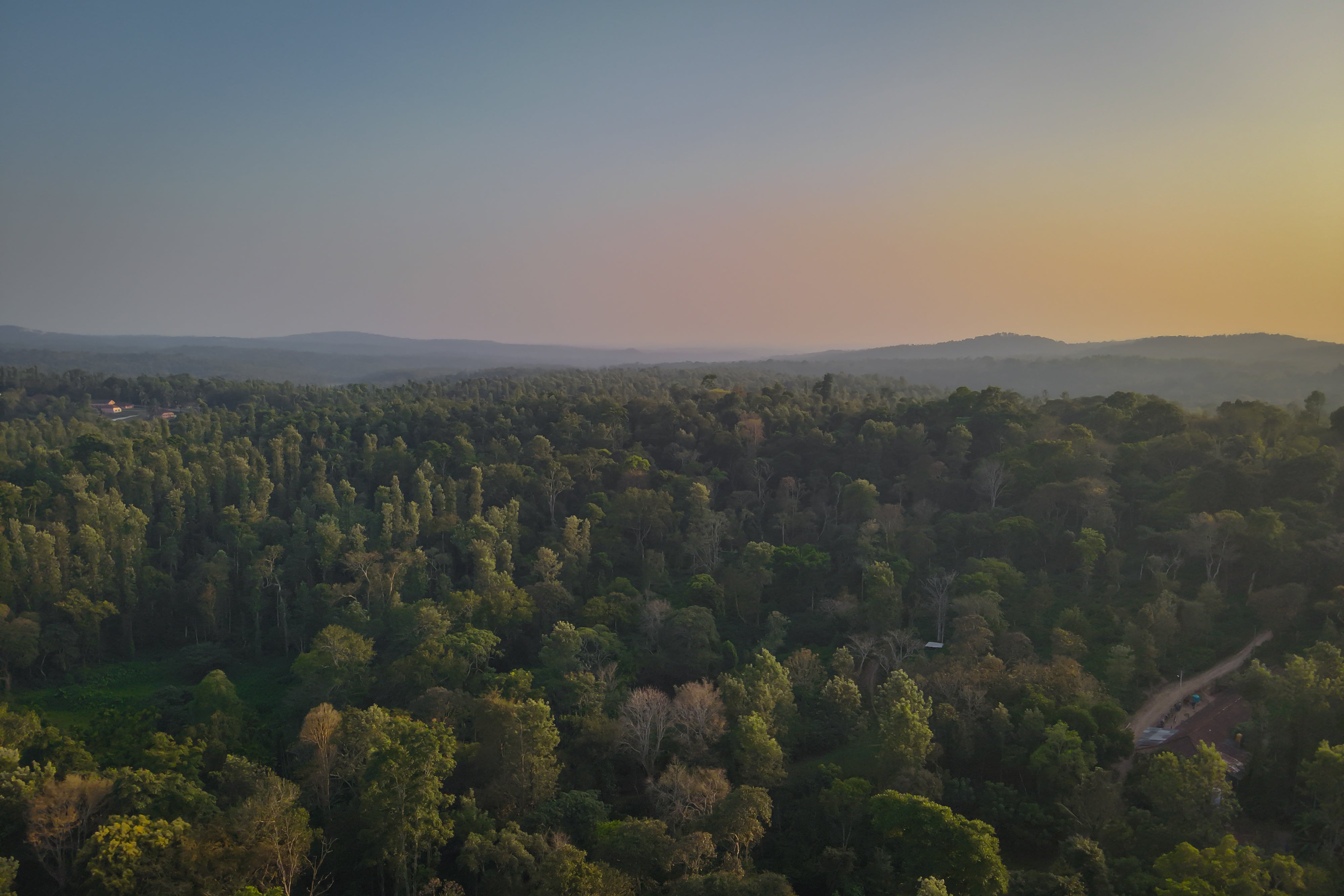
Aerial view shows the canopy of a coffee estate in the Western Ghats

Aerial view shows the canopy of a coffee estate in the Western Ghats (Getty Images)

The findings, according to researchers, point to multiple, intensifying threats to wildlife across the pristine Western Ghats, including infrastructure development, hydropower projects, severe pollution, and large-scale land-use changes.

Unregulated tourism, recurring forest fires and climate change are also fragmenting and degrading these ecosystems, they say.

Recent studies from the region also point to this trend, revealing a decline of freshwater animals in the area, aggravated by competition from thriving invasive non-native species.

The latest finding also comes amid a trend of rapid global decline in insect populations of about 1–2 per cent annually, with 40 per cent or more of species threatened by extinction.