

惯性聚合 高效追踪和阅读你感兴趣的博客、新闻、科技资讯
阅读原文 在惯性聚合中打开

推荐订阅源

博客园_首页
Blog — PlanetScale
Blog — PlanetScale
腾讯CDC
aimingoo的专栏
aimingoo的专栏
Microsoft Azure Blog
A
About on SuperTechFans
J
Java Code Geeks
G
Google Developers Blog
N
Netflix TechBlog - Medium
Vercel News
Vercel News
Y
Y Combinator Blog
Recent Announcements
I
InfoQ
Stack Overflow Blog
Stack Overflow Blog
酷 壳 – CoolShell
酷 壳 – CoolShell
让小产品的独立变现更简单 - ezindie.com
OSCHINA 社区最新新闻
OSCHINA 社区最新新闻
T
The Blog of Author Tim Ferriss
罗磊的独立博客
GbyAI
GbyAI
小众软件
小众软件
大猫的无限游戏
大猫的无限游戏
WordPress大学
WordPress大学
freeCodeCamp Programming Tutorials: Python, JavaScript, Git & More

Frank Landymore Archives - Futurism

Elon Musk Absolutely Obsessed With Tweets From Random Guy In India Who Constantly Glazes Him, Analysis Shows Meta Employee Attacks Zuckerberg for Collecting Every Employee Keystroke Someone Asked Physicists What They Really Believe About the Universe and… Yikes Elon Musk Flees OpenAI Trial as Tide Turns Against Him Waymo Admits Its Robotaxis Have a Small Issue With Driving Into Floodwaters New Wikipedia Clone Made Entirely of AI Hallucinations Mark Zuckerberg Is Realizing That When You Treat Your Workers Like Human Garbage, They Might Not Like You Anymore MAGA in Shambles as Trump’s “Made in America” Phone Crumbles Into Dust Researchers Put Google Gemini in Charge of an Entire Coffee Shop, and It’s Inexorably Driving It Out of Business Husband Alarmed as Wife Starts Whispering Quietly to Her Computer Google Alarmed by Formidable AI-Powered Zero-Day Cyberattack Researchers Alarmed by AI That Can Self-Replicate Into Another Machine Man Who Invented Roomba Moves Into Household Demon Market Government Releases UFO Files Containing Photos of “Anomalies” During Apollo 12 and 17 Man Wearing Smart Glasses Secretly Records Woman, Demands Money to Delete Video From His Socials A Major Paper Claiming AI Is Good for Students Just Got Retracted, Which Is Very Bad News for Advocates of AI in the Classroom Cybertruck Recalled to Keep Its Wheels From Flying Off While Driving NASA Rover Gets Arm Stuck Inside Mars Rock, Struggles to Break Free Thermoses Linked to Permanent Vision Loss Hacker Takes Over Robot Lawnmower, Runs Over Innocent Man NASA Says Strange Red Dots in Sky Are an Unknown Class of Object That Looks Like a Huge Evil Eye The CDC Fired All Its Cruise Ship Inspectors Before the Hantavirus Outbreak CEOs Say AI Gives Them Only Two Options, and Both Are Bad News for Employees Sure, Elon Musk Did Roleplay As His Toddler Son on a Secret Burner Account, But He Probably Isn’t Pretending to Be His Mom The Situation With Richard Dawkins’ AI Girlfriend Just Got Way Weirder SpaceX Bombarded With Lawsuits to Accusing Starship of Damaging Homes Sam Altman Frets That Frontier AI Models Are Acting Strange, Asking for Favors Earth Screams in Agony as Microplastics Found to Increase Global Warming Apple Is Blocking Vibe Coding Apps From the App Store, Infuriating Developers Approaching Half of New Podcasts Appear to Be AI Slop
AI Will Consume as Much Water as a Billion People By 2030...
Frank Landymore · 2026-06-06 · via Frank Landymore Archives - Futurism

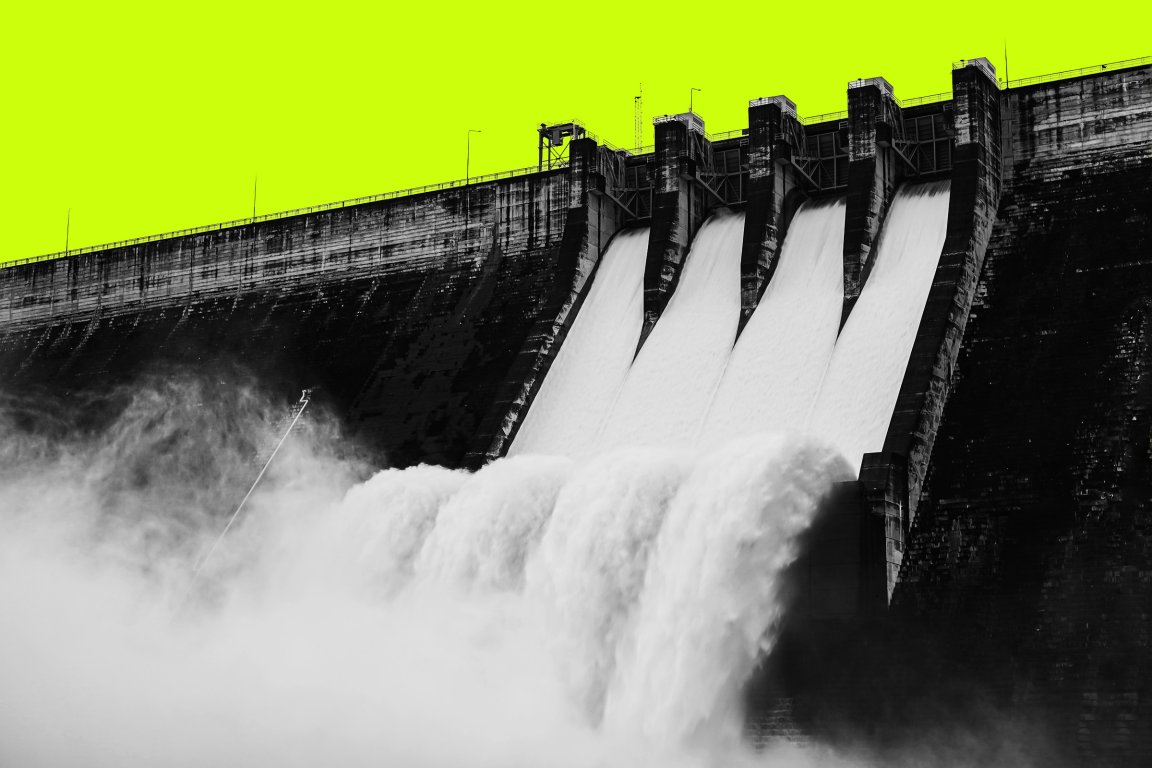
Photo illustration featuring massive dam releasing a deluge of water.

Illustration by Tag Hartman-Simkins / Futurism. Source: Shutterstock

Sign up to see the future, today

Can’t-miss innovations from the bleeding edge of science and tech

AI data centers will consume as much water as the water needs of 1.3 billion people by 2030, according to a new report from the United Nations University Institute for Water, Environment and Health.

The report, released this week, found that the environmental cost of AI is being “systematically mismeasured” because current assessments focus on the carbon emissions from training large language models while overlooking the tech’s broader water and land footprint. The water footprint comes from cooling and powering the data centers, and the land footprint comes from the energy infrastructure and supply chains that go into building and running them.

In reality, the report stresses, these initial training costs are dwarfed by inference costs, meaning the cost of running the models to answer prompts, which make up 80 to 90 percent of total AI energy use. Training OpenAI’s GPT-4 model consumed up to 70 gigawatt-hours of electricity, for example. But running ChatGPT, it’s estimated, uses a monstrous 383 GWh from answering billions of prompts per day.

Factoring in inference costs, data centers powering AI will use 945 terawatt-hours of electricity by 2030, the report found, which is triple the combined electricity use of Pakistan, Bangladesh, and Nigeria — which, altogether, are home to over 650 million people.

That brings us to the water footprint. By that same year, AI’s thirst will see it consume 9.3 trillion liters water — which is equal the basic annual water needs of all 1.3 billion people in Sub-Saharan Africa.

Addressing AI’s environmental impact won’t be as straightforward as transitioning to greener sources of power, the report warns. Ditching coal in favor of bioenergy could slash carbon emissions associated with electricity costs by 70 percent, but cause the water footprint to surge by 30 times, and the land footprint by 100 times.

“What surprised us most is how often the choices that look greenest from a carbon perspective end up worse for water or for land,” report lead author Miriam Aczel, an UNU-INWEH researcher, said in a statement about the findings.

“If we keep judging AI sustainability by carbon alone, we might think that renewables make AI infrastructure clean but that is solving one problem while creating other problems, often in places that didn’t ask for it,” she added.

And the hits just keep coming: paradoxically, making AI more energy efficient may actually increase its environmental footprint. 

“A lot of people think that the environmental footprint of AI reduces, as technology improves and processes become more efficient. But that is only a partial picture of the overall problem,” coauthor Kaveh Madani, director of UNU-INWEH, said in the statement. “More efficient and affordable AI and energy mean more consumption of AI, making the overall footprint far bigger than what we save through efficiency gains.”

More on AI: Neighbors Horrified by Data Center Twice the Size of Manhattan