


惯性聚合 高效追踪和阅读你感兴趣的博客、新闻、科技资讯
阅读原文 在惯性聚合中打开

推荐订阅源

Stack Overflow Blog
Stack Overflow Blog
J
Java Code Geeks
Last Week in AI
Last Week in AI
人人都是产品经理
人人都是产品经理
博客园 - 【当耐特】
钛媒体:引领未来商业与生活新知
钛媒体:引领未来商业与生活新知
C
Check Point Blog
月光博客
月光博客
腾讯CDC
Engineering at Meta
Engineering at Meta
博客园 - Franky
Vercel News
Vercel News
D
Docker
OSCHINA 社区最新新闻
OSCHINA 社区最新新闻
F
Fortinet All Blogs
Microsoft Security Blog
奇客Solidot–传递最新科技情报
奇客Solidot–传递最新科技情报
雷峰网
雷峰网
Google DeepMind News
Martin Fowler
Martin Fowler
GbyAI
GbyAI
B
Blog
Hugging Face - Blog
Hugging Face - Blog
T
Tailwind CSS Blog

Frank Landymore Archives - Futurism

Programmer Breaks Out of the Matrix Elon Musk Absolutely Obsessed With Tweets From Random Guy In India Who Constantly Glazes Him, Analysis Shows Meta Employee Attacks Zuckerberg for Collecting Every Employee Keystroke Someone Asked Physicists What They Really Believe About the Universe and… Yikes Elon Musk Flees OpenAI Trial as Tide Turns Against Him Waymo Admits Its Robotaxis Have a Small Issue With Driving Into Floodwaters New Wikipedia Clone Made Entirely of AI Hallucinations Mark Zuckerberg Is Realizing That When You Treat Your Workers Like Human Garbage, They Might Not Like You Anymore MAGA in Shambles as Trump’s “Made in America” Phone Crumbles Into Dust Researchers Put Google Gemini in Charge of an Entire Coffee Shop, and It’s Inexorably Driving It Out of Business Husband Alarmed as Wife Starts Whispering Quietly to Her Computer Google Alarmed by Formidable AI-Powered Zero-Day Cyberattack Researchers Alarmed by AI That Can Self-Replicate Into Another Machine Man Who Invented Roomba Moves Into Household Demon Market Government Releases UFO Files Containing Photos of “Anomalies” During Apollo 12 and 17 Man Wearing Smart Glasses Secretly Records Woman, Demands Money to Delete Video From His Socials A Major Paper Claiming AI Is Good for Students Just Got Retracted, Which Is Very Bad News for Advocates of AI in the Classroom Cybertruck Recalled to Keep Its Wheels From Flying Off While Driving NASA Rover Gets Arm Stuck Inside Mars Rock, Struggles to Break Free Thermoses Linked to Permanent Vision Loss Hacker Takes Over Robot Lawnmower, Runs Over Innocent Man NASA Says Strange Red Dots in Sky Are an Unknown Class of Object That Looks Like a Huge Evil Eye The CDC Fired All Its Cruise Ship Inspectors Before the Hantavirus Outbreak CEOs Say AI Gives Them Only Two Options, and Both Are Bad News for Employees Sure, Elon Musk Did Roleplay As His Toddler Son on a Secret Burner Account, But He Probably Isn’t Pretending to Be His Mom The Situation With Richard Dawkins’ AI Girlfriend Just Got Way Weirder SpaceX Bombarded With Lawsuits to Accusing Starship of Damaging Homes Sam Altman Frets That Frontier AI Models Are Acting Strange, Asking for Favors Earth Screams in Agony as Microplastics Found to Increase Global Warming Apple Is Blocking Vibe Coding Apps From the App Store, Infuriating Developers
Chinese Scientists Bioengineering Plants With Firefly Gen...
2026-04-04 · via Frank Landymore Archives - Futurism

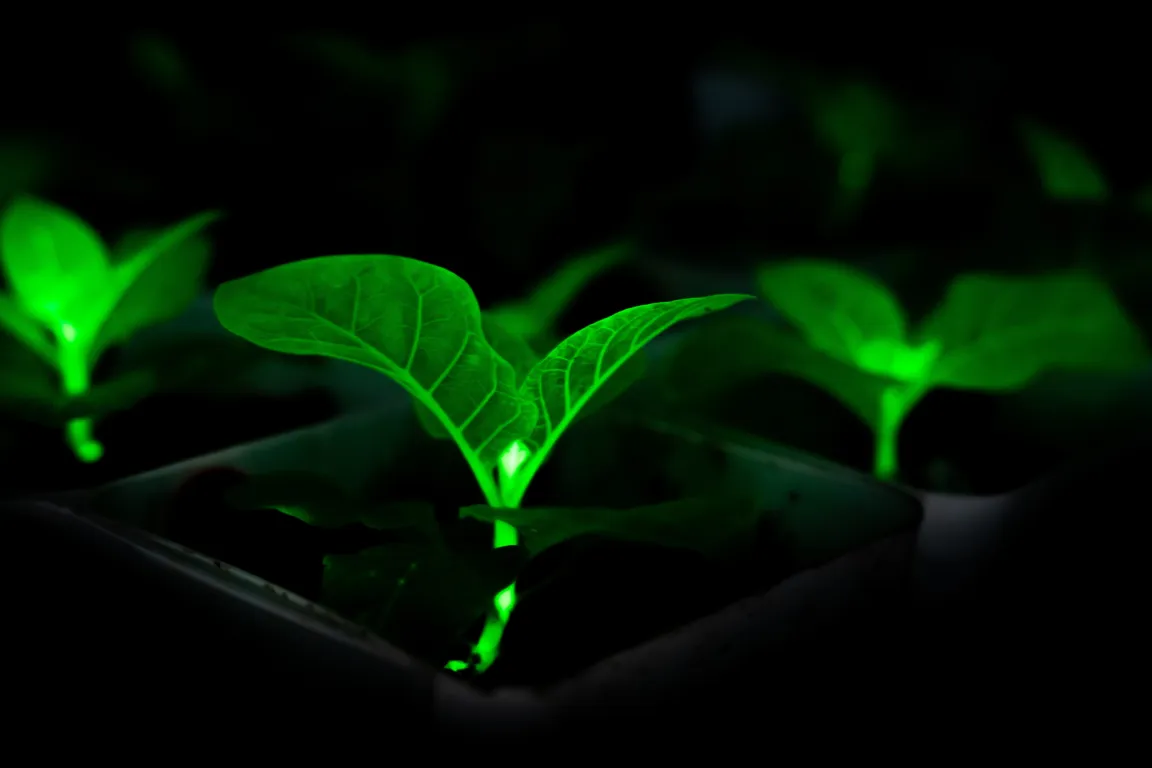
Green seedlings glowing brightly against a dark background, highlighting their vibrant leaves and delicate stems.

Magicpen Bio / Handout via Xinhua / Getty Images

Sign up to see the future, today

Can’t-miss innovations from the bleeding edge of science and tech

A shortcut to sprucing up any dreary urban locale is by throwing in some beautiful greenery. Now, Chinese scientists have unveiled new genetically engineered plants that can glow in the dark, which they say could be a compelling draw for tourism and even help light cities at night.

The bioluminescent flora were created by splicing genes from fireflies and glowing fungi into the plant cells, allowing them to emit a soft glow. Using these techniques, the scientists have modified over twenty species to glow in the dark, including orchids, sunflowers, and chrysanthemums, Euronews reports.

Li Renhan, founder of the biotechnology company Magicpen Bio which developed the plants, envisioned a spectacle comparable to an exotic alien planet.

“We’re dedicated to bringing this technology to cultural tourism and the nighttime economy,” Li told Euronews. “Imagine a valley filled with glowing plants in the dark, it would be like bringing the ‘Avatar’ world to Earth,” he added, referring to the popular sci-fi franchise.

The sheer number of species is impressive. Hype around glow-in-the-dark plants exploded around the release of the “Firefly Petunia” in 2024, a household plant sold by Light Bio. Much like the Chinese scientists’ invention, it was also made by injecting genes from bioluminescent mushrooms, glowing far brighter than previous efforts at gene-hacking glow in the dark plants. 

That was with a single species. Now, with over twenty of them, one could potentially populate an entire park or garden with magical-seeming verdure. They won’t replace streetlights, but will in at least certain darker sections of a city offer something different to their soul-crushingly municipal glare. Maybe a park and other public spaces could even remain accessible after dark without spending money to keep lights on.

“Beyond tourism, we could also use them in urban parks without the need for electricity,” Li told Euronews.  “These plants don’t need electricity. They only need water and fertilizer. They save energy, reduce emissions, and can light up cities at night.”

Last year, another team of Chinese researchers unveiled their own glow-in-the-dark succulents created by using very different means. Instead of gene-editing the plants, the team from South China Agricultural University injected metal nanoparticles into their leaves, including strontium and aluminum. The metals were “charged” by sunlight during the day, and then let off an afterglow during the night. By controlling the mixture of metals, the researchers could determine the color the plants glowed in.

If this spate of innovations in are anything to go by, we’re living in a golden — or glowing? — age of boutique, bioluminescent foliage.

More on biology: The Moon Astronauts Brought Along USB Stick-Sized Living Samples of Their Own Tissue