








BatchPhysicalHashAggRule match 条件会判断 isAggBufferFixedLength(agg)
为什么要求 aggCall 的类型是 Fixed Length 的才可以使用 HashAggregate ?
因为在 HashAggregate 中, 依赖于 BytesHashMap 数据结构来存储 keyValue 数据. 而 ByteHashMap 不支持变长的 value
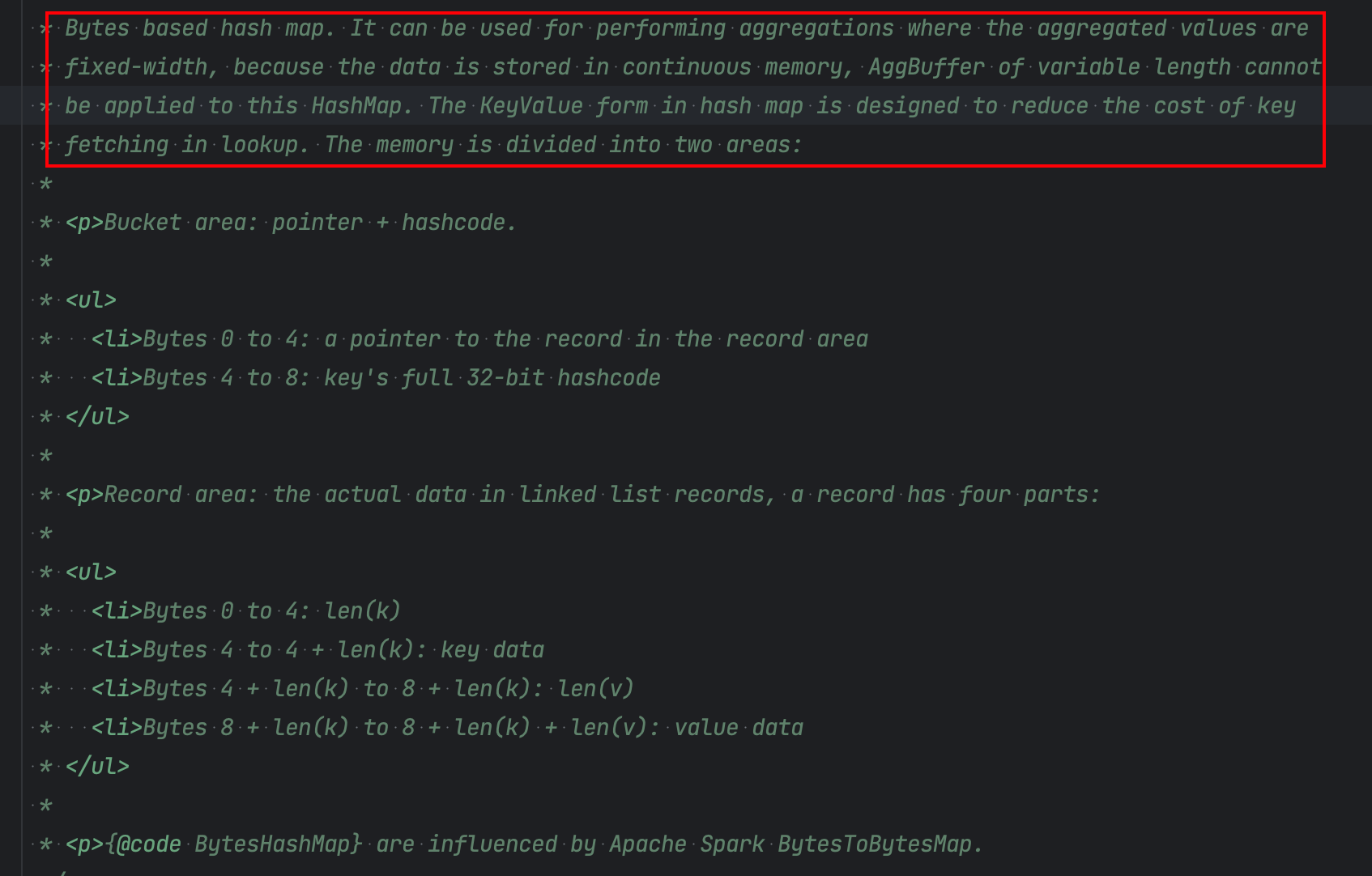
ByteHashMap 结构实现参考自 Spark BytesToBytesMap , 以二进制结构存储实现的 hashMap. 其目的就是绕过 JVM 的 GC, 直接将数据序列化之后存储到基于堆外的 MemorySegment 上.
数据分为两个部分 Bucket Area 和 Record Area. 分别存储 key 和对应的 record.
public BinaryRowData append(LookupInfo<K, BinaryRowData> lookupInfo, BinaryRowData value)
		throws IOException {
	try {
		if (numElements >= growthThreshold) {
			growAndRehash();
			// update info's bucketSegmentIndex and bucketOffset
			lookup(lookupInfo.key);
		}
		BinaryRowData toAppend = hashSetMode ? reusedValue : value;
		int pointerToAppended = recordArea.appendRecord(lookupInfo, toAppend);
		bucketSegments
				.get(lookupInfo.bucketSegmentIndex)
				.putInt(lookupInfo.bucketOffset, pointerToAppended);
		bucketSegments
				.get(lookupInfo.bucketSegmentIndex)
				.putInt(lookupInfo.bucketOffset + ELEMENT_POINT_LENGTH, lookupInfo.keyHashCode);
		numElements++;
		recordArea.setReadPosition(pointerToAppended);
		((RecordArea) recordArea).skipKey();
		return recordArea.readValue(reusedValue);
	} catch (EOFException e) {
		numSpillFiles++;
		spillInBytes += recordArea.getSegmentsSize();
		throw e;
	}
public int appendRecord(LookupInfo<K, BinaryRowData> lookupInfo, BinaryRowData value)
		throws IOException {
	final long oldLastPosition = outView.getCurrentOffset();
	// serialize the key into the BytesHashMap record area
	int skip = keySerializer.serializeToPages(lookupInfo.getKey(), outView);
	long offset = oldLastPosition + skip;

	// serialize the value into the BytesHashMap record area
	valueSerializer.serializeToPages(value, outView);
	if (offset > Integer.MAX_VALUE) {
		LOG.warn(
				"We can't handle key area with more than Integer.MAX_VALUE bytes,"
						+ " because the pointer is a integer.");
		throw new EOFException();
	}
	return (int) offset;
}
BytesHashMap 本身没有实现更新的功能, 但是 lookup 得到的结果 LookupInfo 中包含了 kv pair, value 作为 BinaryRow 是可以直接更新的.
public static final class LookupInfo<K, V> {
	boolean found;
	K key;
	V value;

	/**
	 * The hashcode of the look up key passed to {@link BytesMap#lookup(K)}, Caching this
	 * hashcode here allows us to avoid re-hashing the key when inserting a value for that key.
	 * The same purpose with bucketSegmentIndex, bucketOffset.
	 */
	int keyHashCode;

	int bucketSegmentIndex;
	int bucketOffset;
	}
例如 Hash Aggregate 的过程代码如下
val processCode =
  s"""
	 | // input field access for group key projection and aggregate buffer update
	 |${ctx.reuseInputUnboxingCode(inputTerm)}
	 | // project key from input
	 |$keyProjectionCode
	 | // look up output buffer using current group key
	 |$lookupInfo = ($lookupInfoTypeTerm) $aggregateMapTerm.lookup($currentKeyTerm);
	 |$currentAggBufferTerm = ($binaryRowTypeTerm) $lookupInfo.getValue();
	 |
	 |if (!$lookupInfo.isFound()) {
	 |  $lazyInitAggBufferCode
	 |  // append empty agg buffer into aggregate map for current group key
	 |  try {
	 |    $currentAggBufferTerm =
	 |      $aggregateMapTerm.append($lookupInfo, ${initedAggBuffer.resultTerm});
	 |  } catch (java.io.EOFException exp) {
	 |    $dealWithAggHashMapOOM
	 |  }
	 |}
	 | // aggregate buffer fields access
	 |${ctx.reuseInputUnboxingCode(currentAggBufferTerm)}
	 | // do aggregate and update agg buffer
	 |${aggregate.code}
	 |""".stripMargin.trim
当 lookup info 找到时, 就执行 aggregate.code, 以 sum 生成的 codegen 为例, 从 lookup info 中获取 Agg buffer, 计算完就直接回写 BinaryRow 了
 // look up output buffer using current group key
lookupInfo$10 = (org.apache.flink.table.runtime.util.collections.binary.BytesMap.LookupInfo) aggregateMap$9.lookup(currentKey$4);
currentAggBuffer$14 = (org.apache.flink.table.data.binary.BinaryRowData) lookupInfo$10.getValue();

// 累加
isNull$19 = isNull$18 || isNull$17;
result$20 = -1L;
if (!isNull$19) {
result$20 = (long) (field$18 + field$17);
}

// 更新
if (isNull$22) {
  currentAggBuffer$14.setNullAt(0);
} else {
  currentAggBuffer$14.setLong(0, result$22);
}
如果 BinaryRow 中的部分字段为变长, 是没法直接原地更新的, 这就为什么 Hash Aggregate 要求 agg buffer 为定长.
解决这个问题的, 最简单的思路就是, BytesHashMap 是为了去除 JVM 管理, 那为了简化对于非定长的, 还是 Fallback 到 JVM 的对象, Spark ObjectHashAggregate 就是这种思路.
但是这种情况下的问题是堆内存你不知道什么时候触发 spill. 基于非堆时, 已使用大小都是已知的, 而堆上就不确定了, 比较容易触发 oom 或者 GC 问题, Spark 中 flush 就按照保守估计的 key 超过一定数量就 spill.
但总的来说, 性能应该优于 SortAggregate 的
Spark:
Spark SQL 查询引擎– HashAggregateExec & ObjectHashAggregateExec
[SPARK-17949][SQL] A JVM object based aggregate operator
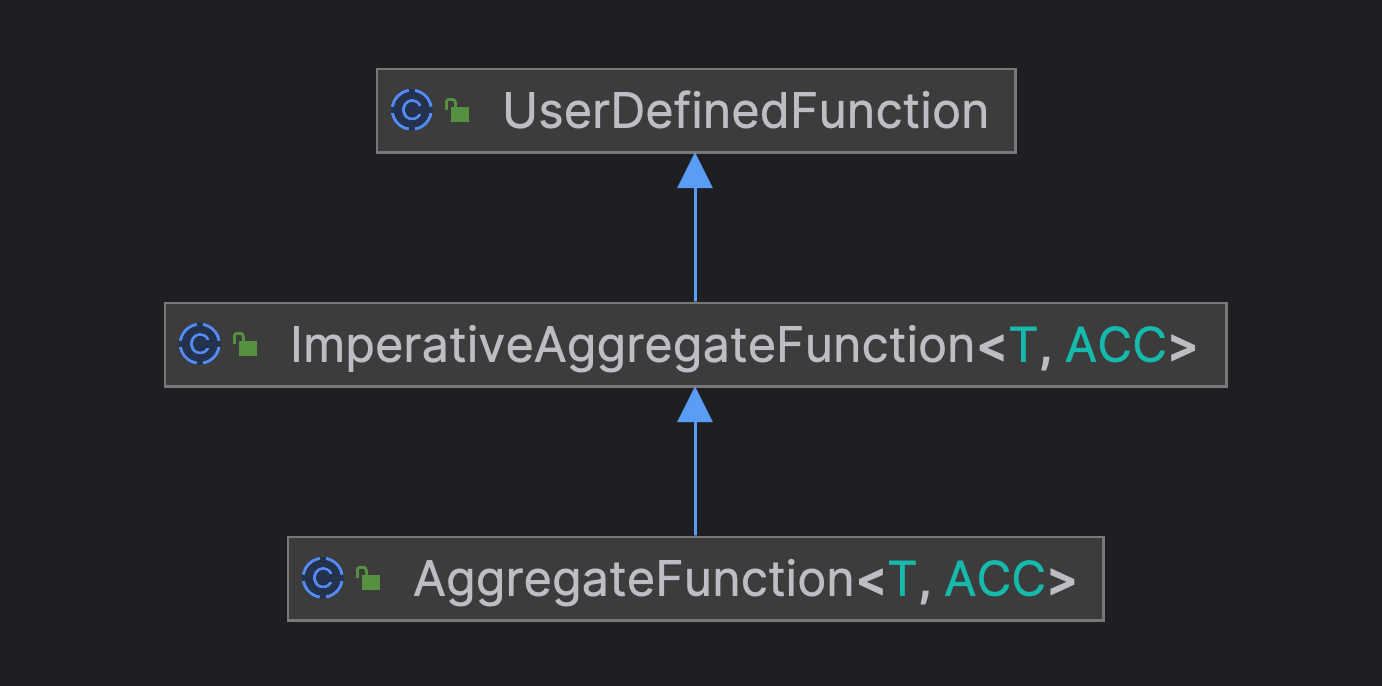
另一个限制是 HashAggregate 中强要求了 Agg 函数需要时 DeclarativeAggregateFunction 类型的. 聚合函数的实现有两类
public Expression[] accumulateExpressions() {
	return new Expression[] {
		/* sum = */ ifThenElse(
				isNull(operand(0)),
				sum,
				ifThenElse(
						isNull(operand(0)),
						sum,
						ifThenElse(isNull(sum), operand(0), adjustedPlus(sum, operand(0)))))
	};
}
public void accumulate(Row accumulator, String s) {
	 final String max = (String) accumulator.getField(0);
	 if (max == null || s.compareTo(max) > 0) {
	 accumulator.setField(0, s);
	 }
}
从直观来看, ImperativeAggregateFunction 的 accumulate 方法没有返回值, 所以 ACC 一定是个复杂类型, 否则累计值无法更新. 因此 ImperativeAggregateFunction 的 agg 类型一定不是 Fixed type.
而 DeclarativeAggregateFunction 的 accumulate 函数是一个表达式, 表达式是有返回值的. 比如 ifThenElse 最终返回的就是其中一个值. 因此可以直接为 Long 类型.
这一点上我觉得 ImperativeAggregateFunction 应该也是可以改造成这种形式的, 这样对于用户的 UDAF 来说是更友好的, 可以避免额外的包装, 硬生生变成一个非 Fixed Length 的类型.
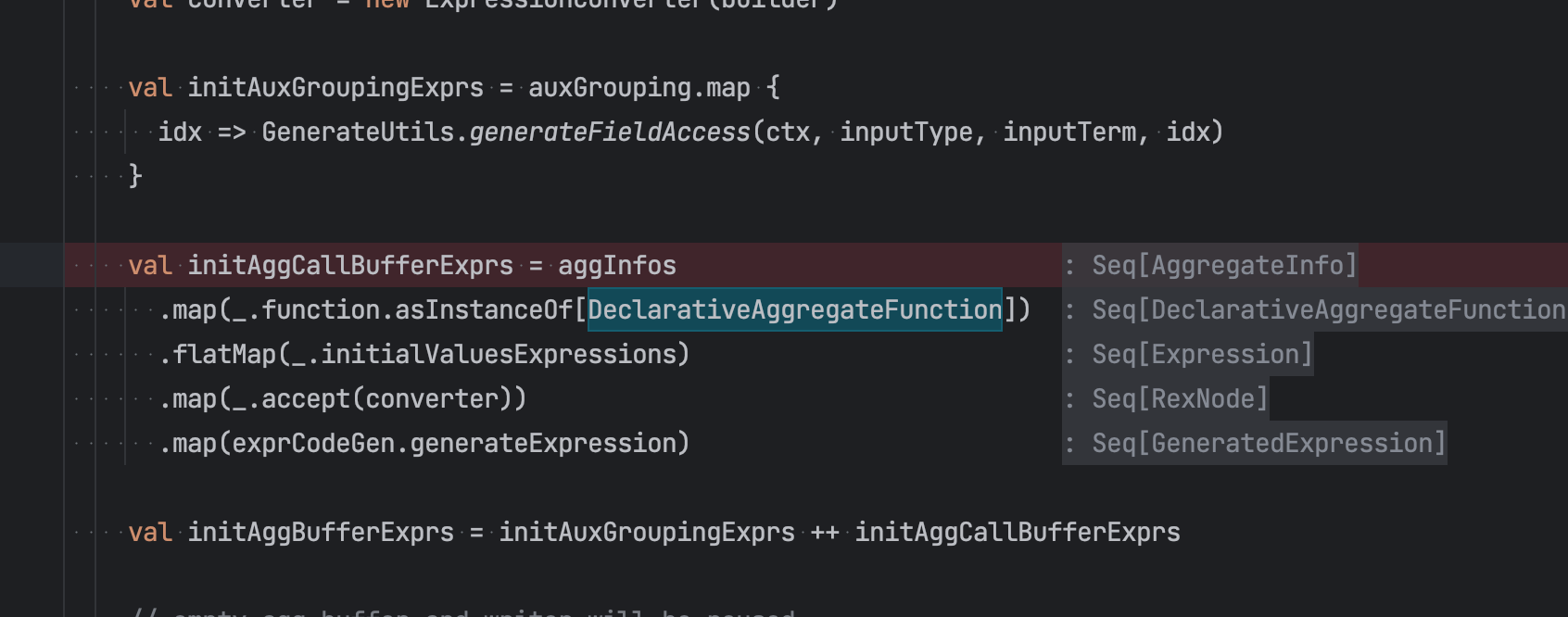
所以在 HashAggregate Codegen 目前只支持 DeclarativeAggregateFunction 声明的聚合函数. Codegen 中代码依赖. 由于上面 ImperativeAggregateFunction 的类型一定推导不出 Fixed type, 所以 ImperativeAggregateFunction 不会走到HashAggregate
从 Spark 来看 Agg 函数的接口会更清楚一些, spark 中有五类接口(也许更多)
org.apache.spark.sql.functions#udaf -> 创建出 ScalaAggregator 继承自 TypedImperativeAggregate 用户可以定义任意类型的 Agg Buf.从这个定义来看, 并没有说 ImperativeAggregate 适用于 Variable Length 的类型.
abstract class ImperativeAggregate extends AggregateFunction with CodegenFallback {

/**
* Initializes the mutable aggregation buffer located in `mutableAggBuffer`.
*
* Use `fieldNumber + mutableAggBufferOffset` to access fields of `mutableAggBuffer`.
*/
def initialize(mutableAggBuffer: InternalRow): Unit

/**
* Updates its aggregation buffer, located in `mutableAggBuffer`, based on the given `inputRow`.
*
* Use `fieldNumber + mutableAggBufferOffset` to access fields of `mutableAggBuffer`.
*
* Note that, the input row may be produced by unsafe projection and it may not be safe to cache
* some fields of the input row, as the values can be changed unexpectedly.
*/
def update(mutableAggBuffer: InternalRow, inputRow: InternalRow): Unit

/**
* Combines new intermediate results from the `inputAggBuffer` with the existing intermediate
* results in the `mutableAggBuffer.`
*
* Use `fieldNumber + mutableAggBufferOffset` to access fields of `mutableAggBuffer`.
* Use `fieldNumber + inputAggBufferOffset` to access fields of `inputAggBuffer`.
*
* Note that, the input row may be produced by unsafe projection and it may not be safe to cache
* some fields of the input row, as the values can be changed unexpectedly.
*/
def merge(mutableAggBuffer: InternalRow, inputAggBuffer: InternalRow): Unit
}

}
TypedImperativeAggregate, 他的接口定义就是泛型, 因此可以定义任意类型作为 ACC type. 这类接口就是上面所支持的 ObjectHashAggregate 的类型
  /**
   * Updates the aggregation buffer object with an input row and returns a new buffer object. For
   * performance, the function may do in-place update and return it instead of constructing new
   * buffer object.
   *
   * This is typically called when doing Partial or Complete mode aggregation.
   *
   * @param buffer The aggregation buffer object.
   * @param input an input row
   */
  def update(buffer: T, input: InternalRow): T

  /**
   * Merges an input aggregation object into aggregation buffer object and returns a new buffer
   * object. For performance, the function may do in-place merge and return it instead of
   * constructing new buffer object.
   *
   * This is typically called when doing PartialMerge or Final mode aggregation.
   *
   * @param buffer the aggregation buffer object used to store the aggregation result.
   * @param input an input aggregation object. Input aggregation object can be produced by
   *              de-serializing the partial aggregate's output from Mapper side.
   */
  def merge(buffer: T, input: T): T
val processCode =
  s"""
	 | // input field access for group key projection and aggregate buffer update
	 |${ctx.reuseInputUnboxingCode(inputTerm)}
	 | // project key from input
	 |$keyProjectionCode
	 | // look up output buffer using current group key
	 |$lookupInfo = ($lookupInfoTypeTerm) $aggregateMapTerm.lookup($currentKeyTerm);
	 |$currentAggBufferTerm = ($binaryRowTypeTerm) $lookupInfo.getValue();
	 |
	 |if (!$lookupInfo.isFound()) {
	 |  $lazyInitAggBufferCode
	 |  // append empty agg buffer into aggregate map for current group key
	 |  try {
	 |    $currentAggBufferTerm =
	 |      $aggregateMapTerm.append($lookupInfo, ${initedAggBuffer.resultTerm});
	 |  } catch (java.io.EOFException exp) {
	 |    $dealWithAggHashMapOOM
	 |  }
	 |}
	 | // aggregate buffer fields access
	 |${ctx.reuseInputUnboxingCode(currentAggBufferTerm)}
	 | // do aggregate and update agg buffer
	 |${aggregate.code}
	 |""".stripMargin.trim
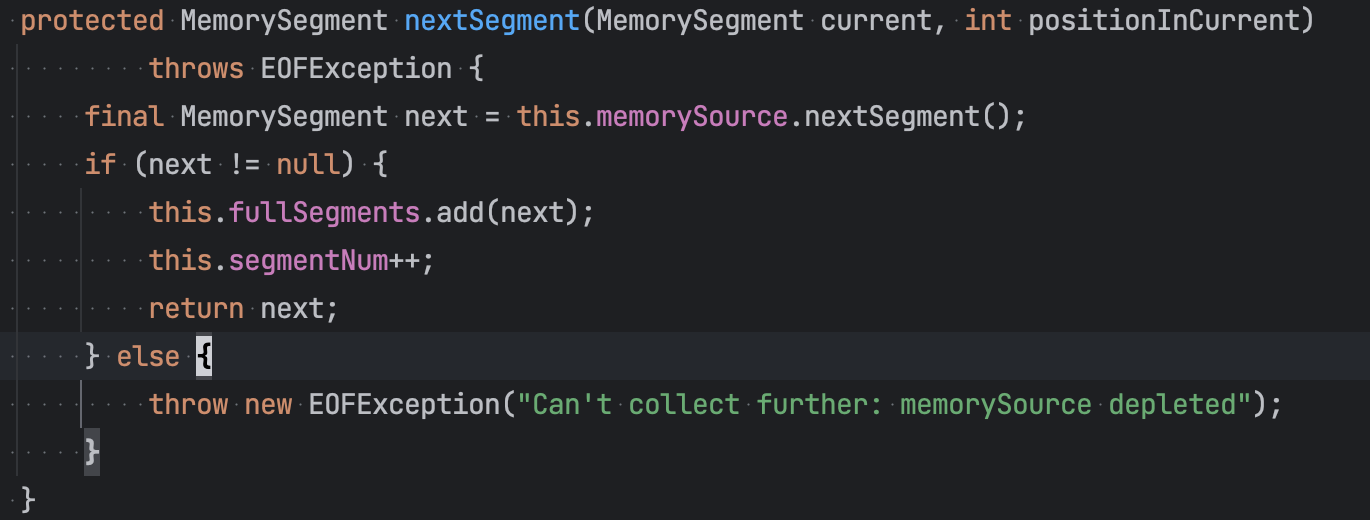
Append 写入数据时, 当内存不足时(申请 segment 申请不到), 会触发 EOFException. 在 processCode 的逻辑中就会执行 dealWithAggHashOOM 的逻辑. 这里会分两种
BytesHashMap 中保存的数据下发即 outputResultFromMap. 下发完成后清空 Map 再尝试插入一次 retryAppend s"""
|$logMapOutput
| // hash map out of memory, output directly
|$outputResultFromMap
| // retry append
|$retryAppend
""".stripMargin
  val dealWithAggHashMapOOM =
  s"""
     |$logMapSpilling
     | // hash map out of memory, spill to external sorter
     |if ($sorterTerm == null) {
     |  $createSorter
     |}
     | // sort and spill
     |$sorterTerm.sortAndSpill(
     |  $aggregateMapTerm.getRecordAreaMemorySegments(),
     |  $aggregateMapTerm.getNumElements(),
     |  new $memPoolTypeTerm($aggregateMapTerm.getBucketAreaMemorySegments()));
     | // retry append
     |$retryAppend
 """.stripMargin
val endInputCode = if (isFinal) {
  val memPoolTypeTerm = classOf[BytesHashMapSpillMemorySegmentPool].getName
  s"""
	 |if ($sorterTerm == null) {
	 | // no spilling, output by iterating aggregate map.
	 | $outputResultFromMap
	 |} else {
	 |  // spill last part of input' aggregation output buffer
	 |  $sorterTerm.sortAndSpill(
	 |    $aggregateMapTerm.getRecordAreaMemorySegments(),
	 |    $aggregateMapTerm.getNumElements(),
	 |    new $memPoolTypeTerm($aggregateMapTerm.getBucketAreaMemorySegments()));
	 |   // only release floating memory in advance.
	 |   $aggregateMapTerm.free(true);
	 |  // fall back to sort based aggregation
	 |  $fallbackToSortAggCode
	 |}
   """.stripMargin
} else {
  s"$outputResultFromMap"
}
outputResultFromMapoutputResultFromMapsortAndSpill 写入本地, 再执行 fallbackToSortAgg 的逻辑, 即执行 SortAgg此内容由惯性聚合(RSS阅读器)自动聚合整理,仅供阅读参考。 原文来自 — 版权归原作者所有。