在上一个项目中遇到一些jar包冲突的问题,之后还有很多人分不清楚dependencies与dependencyManagement的区别,本篇文章将这些区别总结下来。
当我们的项目模块很多的时候,我们使用Maven管理项目非常方便,帮助我们管理构建、文档、报告、依赖、scms、发布、分发的方法。可以方便的编译代码、进行依赖管理、管理二进制库等等。
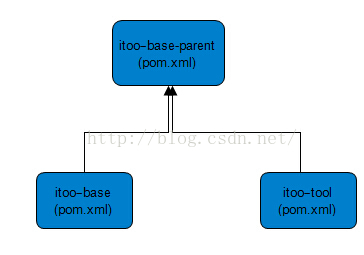
由于我们的模块很多,所以我们又抽象了一层,抽出一个itoo-base-parent来管理子项目的公共的依赖。为了项目的正确运行,必须让所有的子项目使用依赖项的统一版本,必须确保应用的各个项目的依赖项和版本一致,才能保证测试的和发布的是相同的结果。
在我们项目顶层的POM文件中,我们会看到dependencyManagement元素。通过它元素来管理jar包的版本,让子项目中引用一个依赖而不用显示的列出版本号。Maven会沿着父子层次向上走,直到找到一个拥有dependencyManagement元素的项目,然后它就会使用在这个dependencyManagement元素中指定的版本号。
来看看我们项目中的应用:
pom继承关系图:
依赖关系:
Itoo-base-parent(pom.xml)
<dependencyManagement>

        <dependencies>
            <dependency>
                <groupId>org.eclipse.persistence</groupId>
                <artifactId>org.eclipse.persistence.jpa</artifactId>
                <version>${org.eclipse.persistence.jpa.version}</version>
                <scope>provided</scope>
            </dependency>

            <dependency>
                <groupId>javax</groupId>
                <artifactId>javaee-api</artifactId>
                <version>${javaee-api.version}</version>
            </dependency>
        </dependencies>
    </dependencyManagement>
Itoo-base(pom.xml)
<!--继承父类-->
<parent>
        <artifactId>itoo-base-parent</artifactId>
        <groupId>com.tgb</groupId>

        <version>0.0.1-SNAPSHOT</version>
        <relativePath>../itoo-base-parent/pom.xml</relativePath>
    </parent>
        <modelVersion>4.0.0</modelVersion>
        <artifactId>itoo-base</artifactId>
        <packaging>ejb</packaging>

        <!--依赖关系-->
        <dependencies>
        <dependency>
            <groupId>javax</groupId>
            <artifactId>javaee-api</artifactId>
        </dependency>

        <dependency>
            <groupId>com.fasterxml.jackson.core</groupId>
            <artifactId>jackson-annotations</artifactId>
        </dependency>

        <dependency>
            <groupId>org.eclipse.persistence</groupId>
            <artifactId>org.eclipse.persistence.jpa</artifactId>
            <scope>provided</scope>
        </dependency>
    </dependencies>
</project>
这样做的好处:统一管理项目的版本号,确保应用的各个项目的依赖和版本一致,才能保证测试的和发布的是相同的成果,因此,在顶层pom中定义共同的依赖关系。同时可以避免在每个使用的子项目中都声明一个版本号,这样想升级或者切换到另一个版本时,只需要在父类容器里更新,不需要任何一个子项目的修改;如果某个子项目需要另外一个版本号时,只需要在dependencies中声明一个版本号即可。子类就会使用子类声明的版本号,不继承于父类版本号。
相对于dependencyManagement,所有生命在dependencies里的依赖都会自动引入,并默认被所有的子项目继承。
dependencies即使在子项目中不写该依赖项,那么子项目仍然会从父项目中继承该依赖项(全部继承)
dependencyManagement里只是声明依赖,并不实现引入,因此子项目需要显示的声明需要用的依赖。如果不在子项目中声明依赖,是不会从父项目中继承下来的;只有在子项目中写了该依赖项,并且没有指定具体版本,才会从父项目中继承该项,并且version和scope都读取自父pom;另外如果子项目中指定了版本号,那么会使用子项目中指定的jar版本。
它提出这一概念,为项目提供合理的默认行为,无需不必要的配置。提供了默认的目录
src ——> 源代码和测试代码的根目录
main 应用代码的源目录
Java 源代码
resources 项目的资源文件
test 测试代码的源目录
java 测试代码
resources 测试的资源文件
target 编译后的类文件、jar文件等
对于Maven约定优于配置的理解,一方面对于小型项目基本满足我们的需要基本不需要自己配置东西,使用Maven已经配置好的,快速上手,学习成本降低;另一方面,对于不满足我们需要的还可以自定义设置,体现了灵活性。配置大量减少了,随着项目变的越复杂,这种优势就越明显。
总结区别:
<dependencies>中的jar直接加到项目中,管理的是依赖关系(如果有父pom,子pom,则子pom中只能被动接受父类的版本);<dependencyManagement>主要管理版本,对于子类继承同一个父类是很有用的,集中管理依赖版本不添加依赖关系,对于其中定义的版本,子pom不一定要继承父pom所定义的版本。
转载于:http://blog.csdn.net/liutengteng130/article/details/46991829
此内容由惯性聚合(RSS阅读器)自动聚合整理,仅供阅读参考。 原文来自 — 版权归原作者所有。