






In our last blog (opens new window), we talked about the key differences between agentic AI (opens new window) and generative AI (opens new window)—two exciting ways that artificial intelligence can either create content or act independently. Now, let’s take things a step further by diving into how agentic AI actually works through something called the agentic workflow.
The agentic workflow takes Large Language Models (LLMs) (opens new window) like GPT (opens new window) beyond just reacting to prompts. Instead, it turns them into proactive problem-solvers. This means they can break down tasks into smaller steps, adapt as they go, and refine their results—all without needing someone to guide them constantly. It’s what makes the jump from merely generating content to genuinely getting things done.
In this blog, we’ll explore the core traits that make an AI agentic and take a closer look at the design patterns that help these models become more autonomous and adaptable. By understanding these patterns, we’ll see how LLMs are evolving to take on bigger roles across industries—becoming not just assistants, but independent agents capable of much more.
Now that we've covered the basics of what agentic AI is, let’s dive into its key characteristics and see what makes it unique.
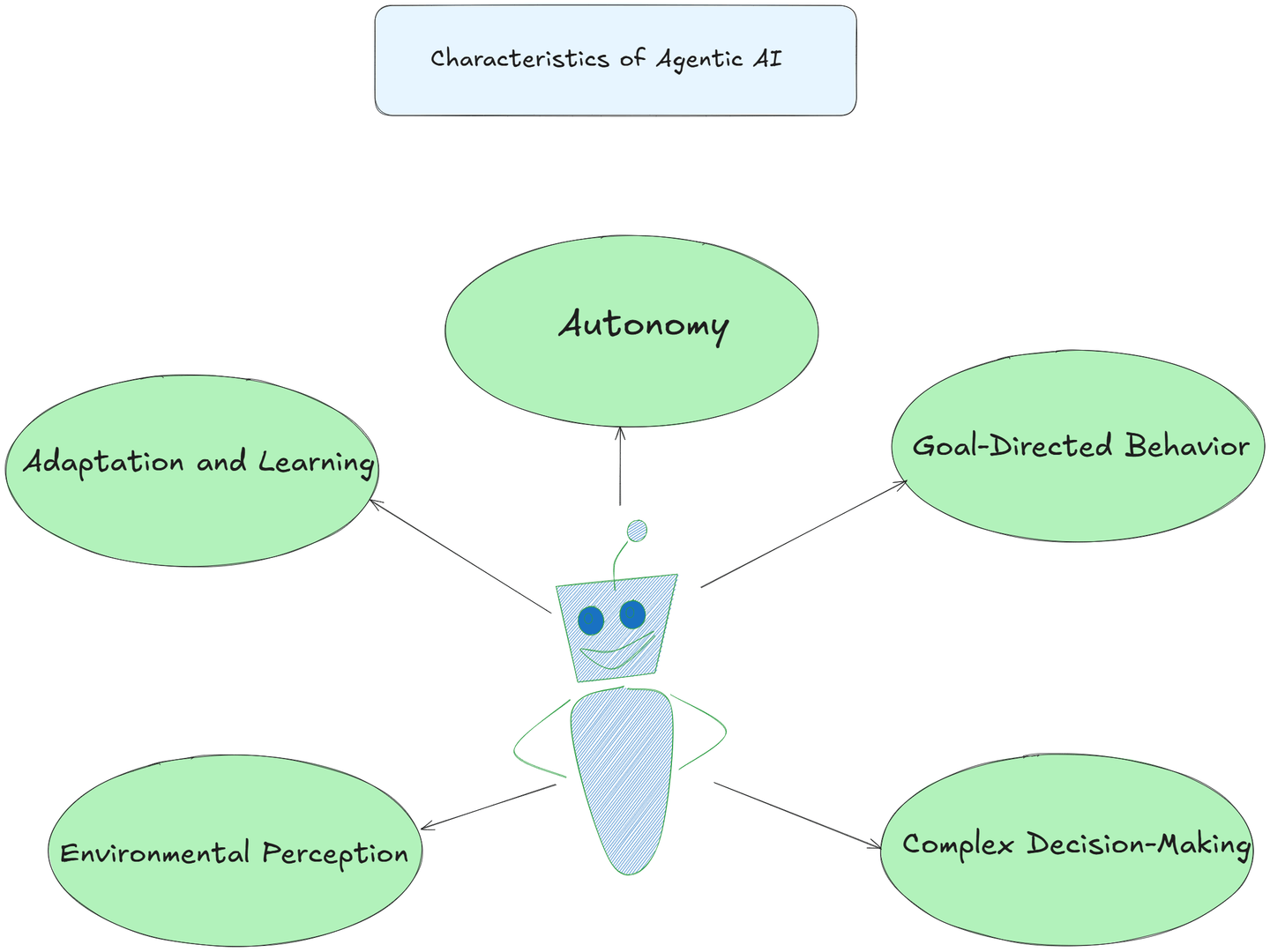
Autonomy: Agentic AI performs tasks independently without needing constant human guidance. It makes decisions and takes actions on its own, allowing it to work more efficiently and handle tasks with less supervision.
Goal-Directed Behavior: Agentic AI focuses on specific goals. It plans and takes actions (opens new window) that bring it closer to achieving those goals, whether completing a project, answering a question, or solving a problem.
Adaptation and Learning: Agentic AI adjusts its behavior based on new information or feedback. It learns from experience and improves its performance over time, making it more effective at handling tasks.
Complex Decision-Making: Agentic AI analyzes multiple factors and makes decisions that require more than just simple rules. It handles complex situations, weighs different options, and chooses the best course of action.
Environmental Perception: Agentic AI understands and responds to its environment. It senses changes around it and adjusts its actions accordingly, which allows it to react to new situations and make better decisions.
In this section, we will understand different design patterns that are used to develop an agent (opens new window), focusing on how these patterns enable the AI to function autonomously, adapt to changing environments, and collaborate effectively with other systems or agents to achieve complex goals. Four major patterns are being majorly discussed as follows:
We will explore each pattern one by one to understand their workflows.
The Reflection Pattern is a self-improvement method where an AI system looks at its performance after finishing a task. Just like a student checking their answers after an exam, the AI compares its results to the goal and finds mistakes or areas to improve. By understanding what went wrong, the AI can change its approach, like adjusting its programs or sensors, to do better next time. This process of looking back and learning from mistakes helps the AI keep getting better, leading to more accurate and efficient results over time.
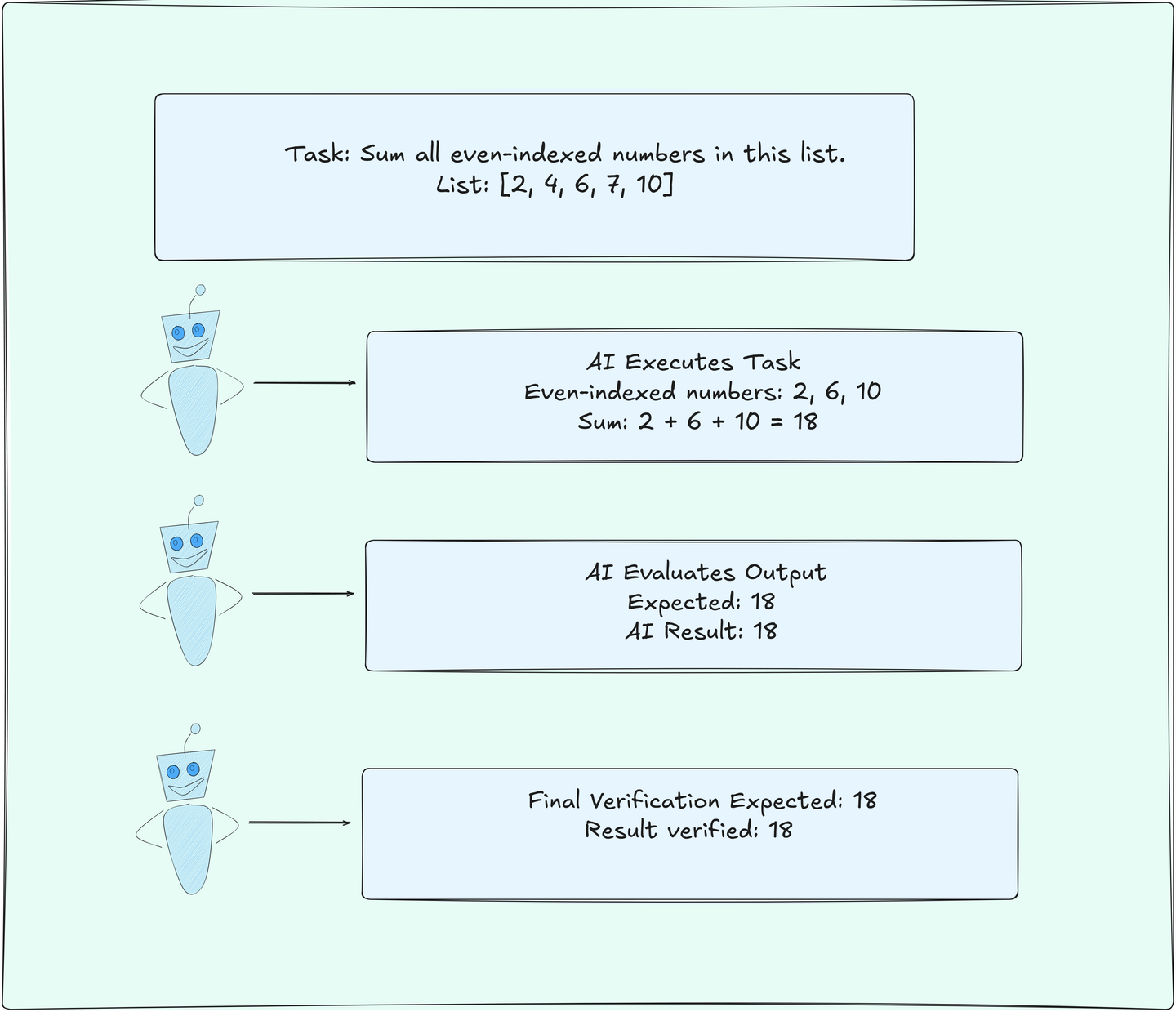
In the illustration, the AI is tasked with summing all even-indexed numbers from the list [2, 4, 6, 7, 10]. The AI first identifies the even-indexed elements: 2 (index 0), 6 (index 2), and 10 (index 4), then calculates their sum (2 + 6 + 10 = 18). Afterward, the AI evaluates its result (opens new window) and compares it with the expected output (18).
If the result is correct, the task is completed. However, if there is an error, such as the AI mistakenly summing the wrong indices, the reflection pattern prompts the AI to analyze its mistake. The AI will then adjust its logic and reattempt the task, repeating the process until it reaches the correct answer. This iterative process of evaluation, correction, and re-execution continues until the AI completes the task, ensuring that it improves over time and becomes more accurate.
The Tool Use Pattern is a strategy that enables an AI system to use external tools or resources (opens new window) to enhance its abilities and solve problems. By utilizing these tools, AI can access large amounts of information, perform complex calculations, and automate repetitive tasks. This pattern empowers AI systems to tackle more difficult problems, work more efficiently, and generate creative solutions. For example, an AI writing a story might use a language model to generate ideas, a search engine (opens new window) to find information, or a grammar checker to improve its writing. By carefully choosing the right tools, AI can achieve better results and expand its capabilities.
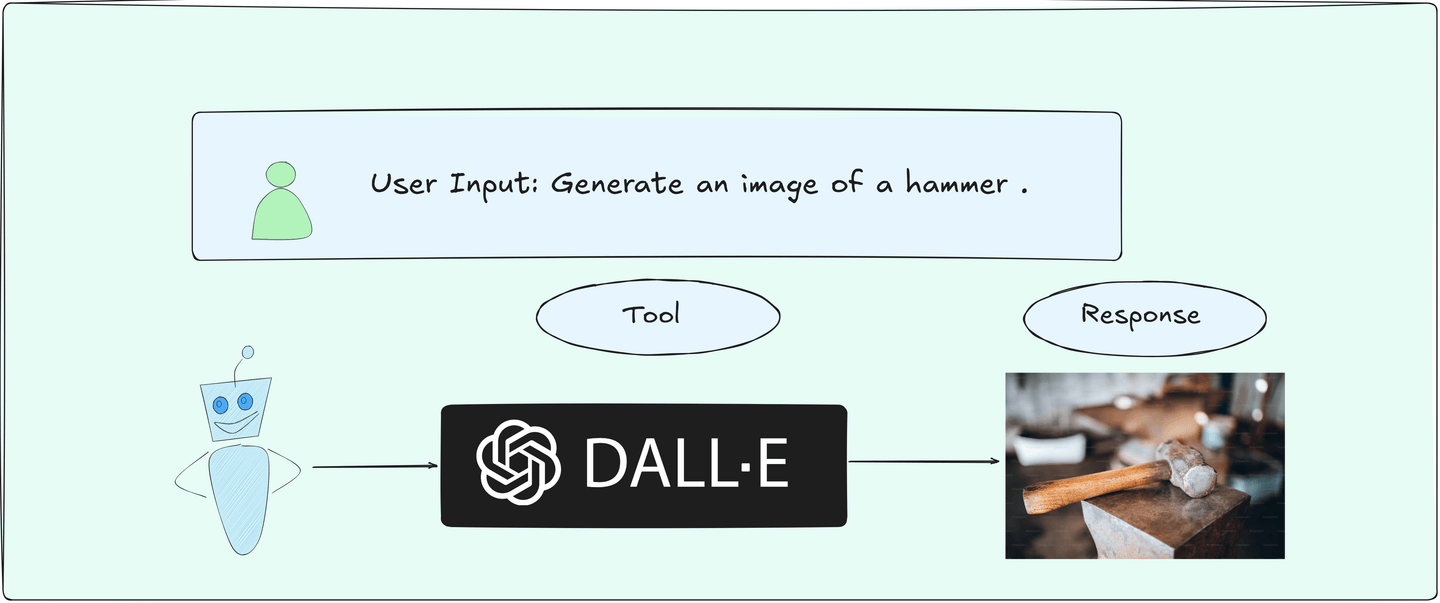
This illustration demonstrates the Tool Use Pattern in effect. A prompt is given to an AI system, depicted by the friendly robot: "Create an image of a hammer." To meet this request, the AI utilizes an external tool, specifically DALL-E (opens new window), which is an AI model that can create images based on textual descriptions. The AI transmits the prompt to DALL-E, which handles the request and creates an image of a hammer. The user is then shown this image as the AI's reply, illustrating how the AI successfully employed an external tool to accomplish the task.
Boost Your AI App Efficiency now
Sign up for free to benefit from 150+ QPS with 5,000,000 vectors
The Planning Pattern is a strategy where an AI system divides a task into smaller actions or steps to reach a goal. Rather than tackling a problem head-on, the AI initially devises a plan outlining the necessary actions and arranges the steps to accomplish the task effectively. The system subsequently adheres to this plan systematically to achieve the intended result. This method enables the AI to address more intricate issues by planning and arranging its actions in a coherent order.
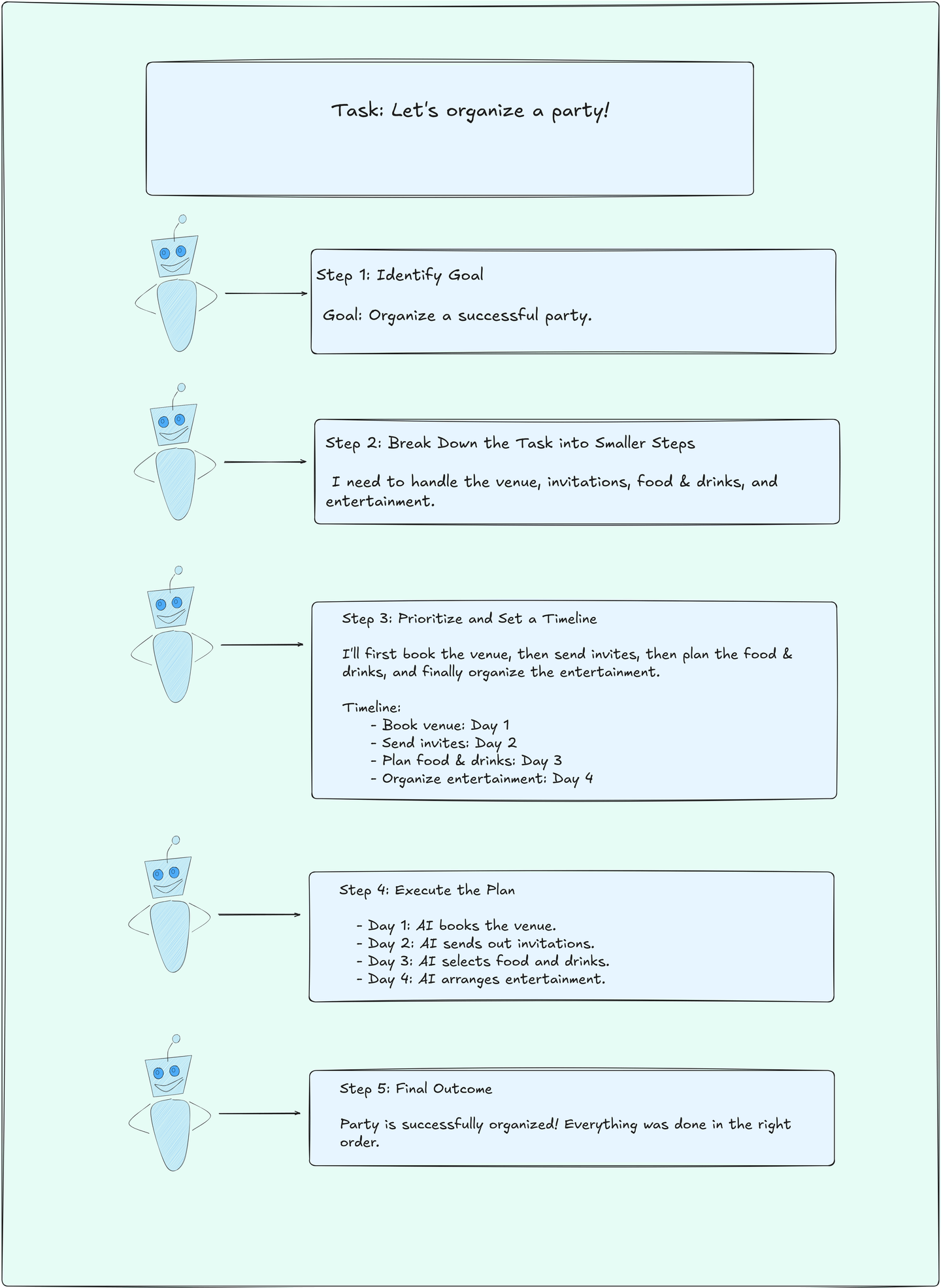
The illustration demonstrates how the AI breaks down a task into smaller, manageable steps to reach its goal. Instead of rushing to complete everything at once, the AI first creates a detailed plan and then follows it step by step. Each action is carefully chosen and fits into the overall plan, ensuring that the task is completed in an organized way, leading to a successful result. By following this structured approach, the AI makes sure nothing is overlooked and the goal is achieved efficiently.
The Multi-Agent Pattern describes a framework in which several autonomous agents (opens new window) (or AI systems) collaborate to address a problem or accomplish a goal. Every agent is built with a distinct range of abilities and duties, enabling it to execute particular actions within the larger task. Instead of depending on one AI to manage all parts of the task, the system divides the workload among different agents, with each providing its unique expertise or abilities.
These agents interact with each other, share information, and align their activities to guarantee the task is accomplished effectively. This teamwork method enables a more adaptable, scalable solution since agents can be included or excluded according to the task's complexity or needs. Moreover, because each agent operates independently, the system can better withstand failures since the other agents can keep functioning even if one agent faces a problem. Through the coordination of their actions, these agents can address bigger and more intricate issues than any single AI could manage independently.
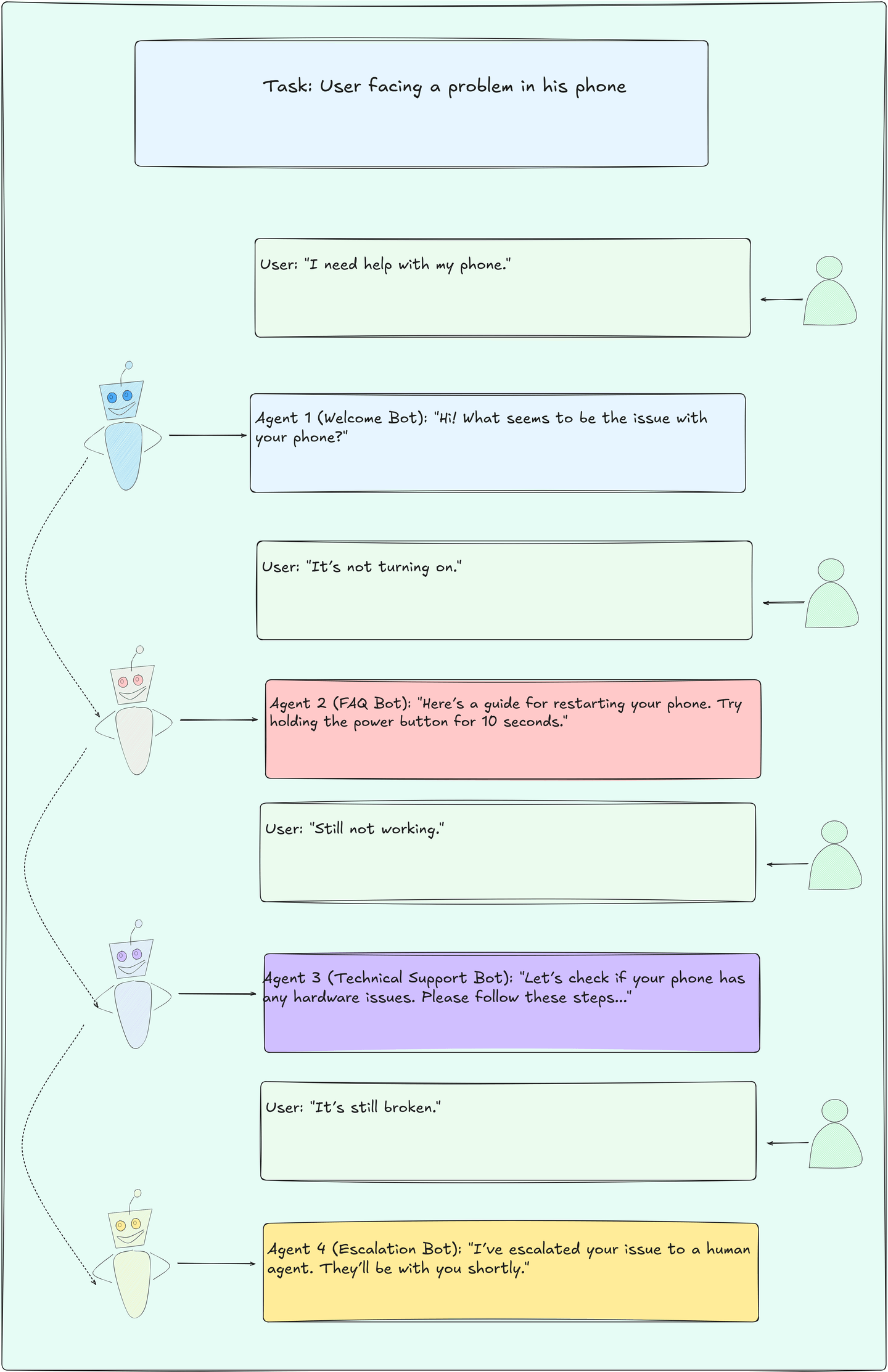
In this scenario, a customer interacts with a system of four chatbots, each acting as an independent agent with a specific job. The Welcome Bot greets the customer and gathers information about their issue. If the problem is common, the FAQ Bot provides answers. For more complex issues, the Technical Support Bot assists with troubleshooting, and if the issue remains unresolved, the Escalation Bot hands the case over to a human agent. Each chatbot works autonomously but collaborates with the others by passing the customer to the right bot, ensuring the issue is resolved efficiently. This setup is a multi-agent system because each chatbot is an independent agent, and together they cooperate to achieve the shared goal of resolving the customer's issue.
Here’s a comparison table that contrasts the four design patterns: Reflection Pattern, Tool Use Pattern, Planning Pattern, and Multi-Agent Pattern. Each pattern has distinct characteristics and use cases, which are summarized in the table below.
| Pattern | Reflection Pattern | Tool Use Pattern | Planning Pattern | Multi-Agent Pattern |
|---|---|---|---|---|
| Definition | Agents modify their own behaviour or knowledge at runtime. | Agents use external tools to accomplish tasks. | Agents create and follow plans to achieve specific goals. | Multiple agents work together to achieve a shared goal. |
| Key Focus | Self-awareness and dynamic adaptation. | Use of external resources or tools. | Goal-oriented decision-making based on plans. | Collaboration and coordination between agents. |
| Main Components | Introspection, behaviour modification. | External tools or systems used by agents. | Plans, actions, goal-setting, decision-making processes. | Independent agents, communication, collaboration. |
| Agent Behaviour | The agent adapts its behaviour dynamically. | The agent relies on tools to perform tasks. | The agent follows a plan to execute specific actions. | Agents perform specific tasks and cooperate with others. |
| Collaboration | Focused on individual agent behaviour with little external interaction. | External tools are used but no collaboration between agents. | Collaboration is limited to plan sharing or coordination. | Strong collaboration with agents coordinating actions. |
| Use Case | Adaptive systems requiring changes in behaviour. | Systems needing external resources for task completion. | Robotics and systems requiring structured task execution. | Distributed systems where agents perform coordinated tasks. |
| Complexity | Complex due to the need for introspection and behaviour changes. | Less complex, but dependent on external resources. | Complexity in generating and following detailed plans. | Complex due to coordination and communication between agents. |
Join Our Newsletter
Agentic AI brings some real advantages to the table—automating tasks, making smarter decisions, personalizing services, and working around the clock. By taking on these responsibilities, it helps reduce the need for constant human input, making everything more efficient, cutting down on costs, and giving businesses room to grow. Its ability to learn and adapt in real time makes it especially useful in fields like healthcare, finance, and customer service, where speed and accuracy are crucial.
The potential of Agentic AI is truly exciting. It can inspire new ideas, make processes smoother, and tackle challenging problems. In areas like healthcare (opens new window) and finance, AI agents can assist with diagnosing illnesses, identifying fraud, and automating repetitive tasks. As AI continues to advance, its ability to collaborate with other systems, make fair decisions, and manage risks will transform industries and open up new opportunities for businesses everywhere.
此内容由惯性聚合(RSS阅读器)自动聚合整理,仅供阅读参考。 原文来自 — 版权归原作者所有。